
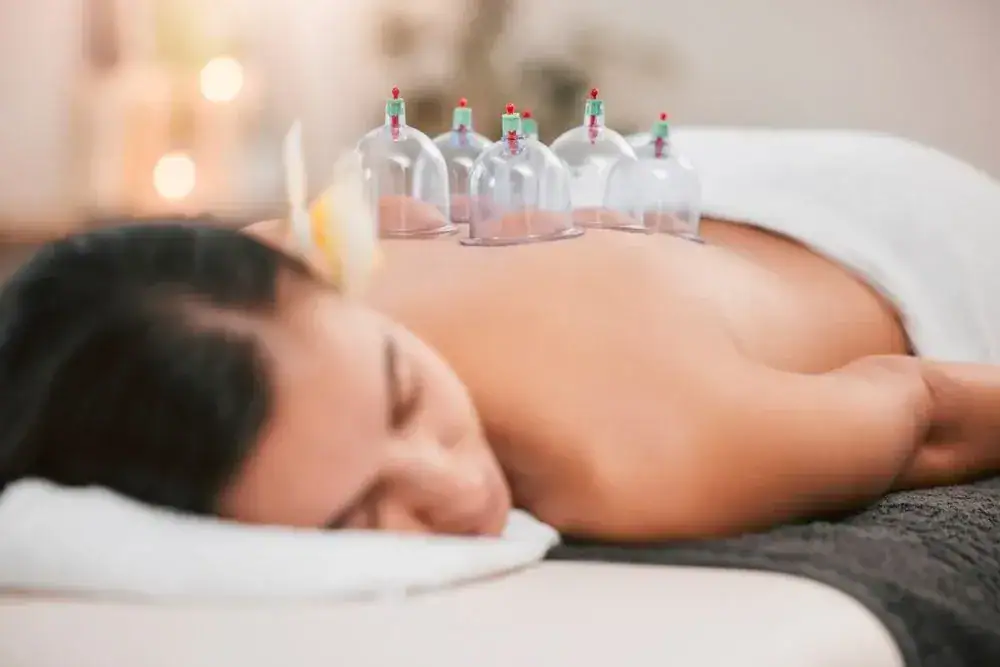

You’re dealing with pain that won’t quit. Maybe it’s your lower back after years of sitting at a desk, or your neck from looking down at screens all day. You’ve tried heat packs, stretching, maybe even medication that barely touches it.
Cupping therapy works by creating suction on your skin that pulls blood flow to the area and releases the tension trapped deep in your muscle tissue. It’s not magic—it’s increased circulation helping your body do what it’s been trying to do all along: heal itself.
What you notice first is the tightness easing up. Then the range of motion comes back. You can turn your head to check your blind spot without wincing. You can bend down to tie your shoes without that sharp catch in your lower back. The inflammation that’s been keeping you stuck starts to calm down because your body finally has what it needs to repair the damage.
This isn’t about chasing a trend. It’s about giving your muscles a way to release, your blood flow a way to reach injured tissue, and your body a break from relying on pills that mask symptoms instead of addressing the problem.
We’ve been providing physical therapy to Long Island residents since 2010. We’re licensed, Medicare-certified, and we accept nearly all commercial insurance plans.
Our physical therapists come to your home in Mineola because we know transportation is a barrier for many people dealing with chronic pain or mobility issues. Nassau County has over 300,000 residents age 60 and older, and a significant portion of them struggle to get to appointments.
We’re not a wellness spa offering cupping as an add-on. We’re licensed physical therapists who’ve integrated cupping into evidence-based treatment plans. That means you’re getting a therapy that’s supervised by medical professionals who understand musculoskeletal conditions, not just someone who took a weekend certification course.
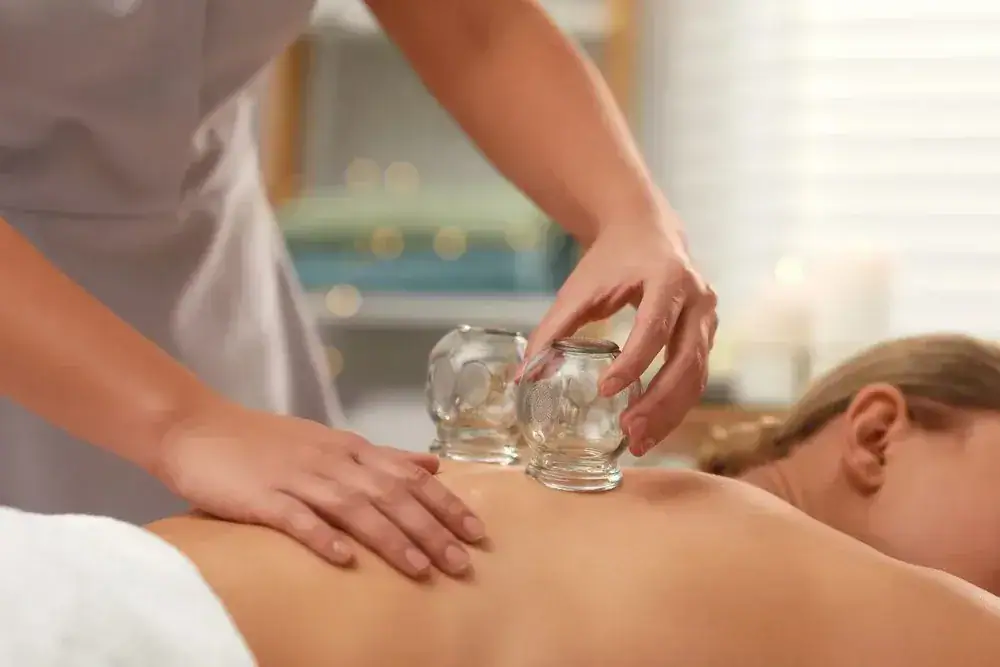
Your physical therapist starts with an assessment. We need to understand where your pain is, what movements make it worse, and what you’ve already tried. This isn’t a one-size-fits-all treatment.
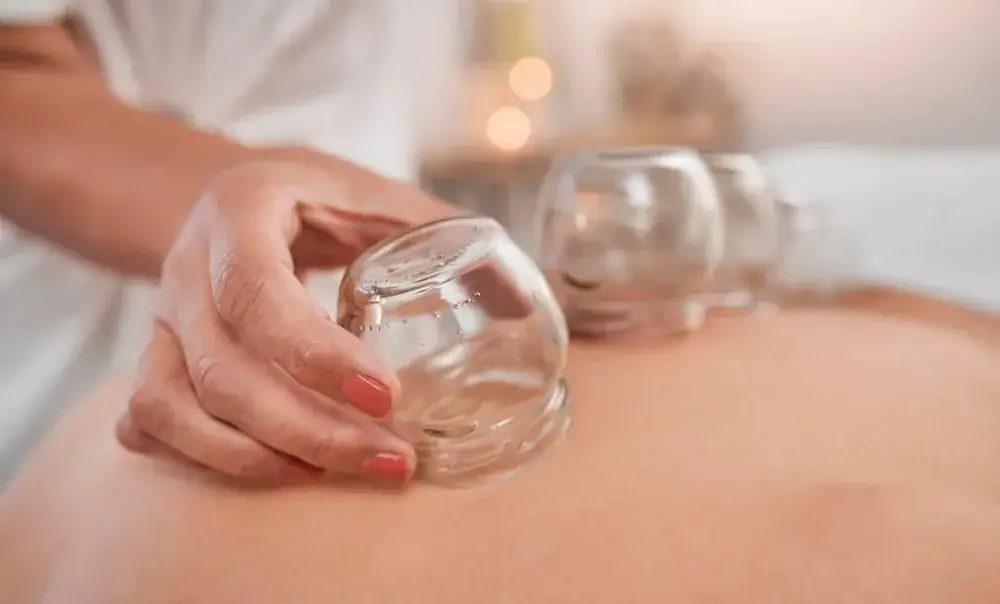
During dry cupping, we place specialized cups on your skin over the problem areas. The suction pulls your tissue upward, which increases blood flow to muscles that have been tight and restricted. You’ll feel the pull, but it shouldn’t hurt—most people describe it as a deep pressure that actually feels relieving.
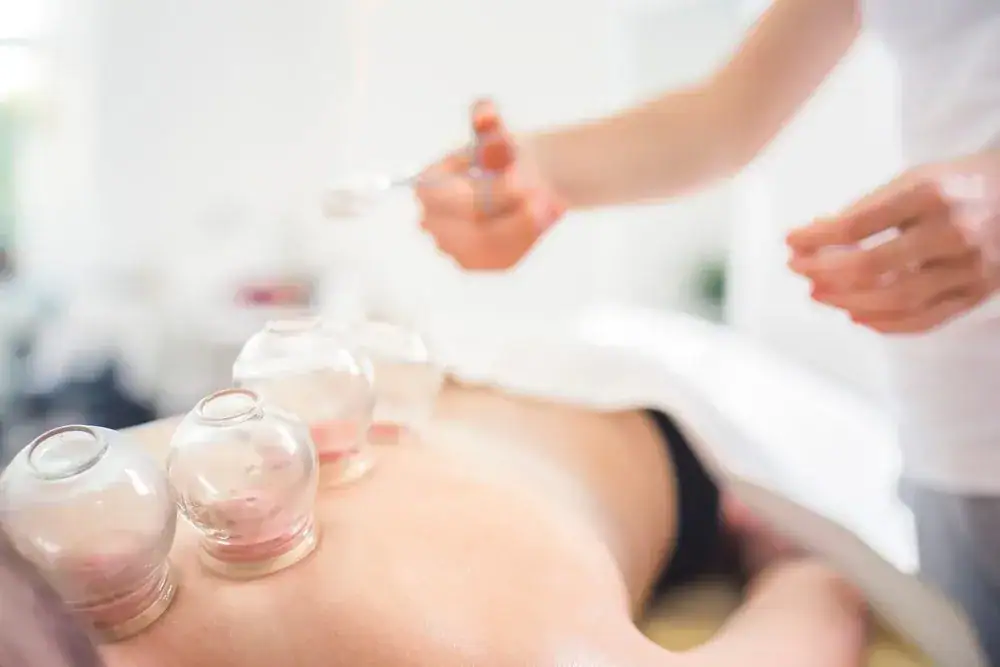
We leave the cups in place for several minutes while your body responds to the increased circulation. Some of our therapists use stationary cupping, others move the cups across your skin to release broader areas of tension. The approach depends on your specific condition.
After we remove the cups, you’ll likely see circular marks on your skin. They’re not bruises—they’re a result of the suction bringing blood to the surface. They fade within a few days to a week. What matters more is how your muscles feel: looser, less restricted, and often significantly less painful.
We typically combine cupping with other physical therapy techniques because it works best as part of a comprehensive treatment plan, not as a standalone fix.
Ready to get started?
Cupping works particularly well for chronic musculoskeletal pain—the kind that’s been bothering you for months or years, not just a few days. Lower back pain, neck pain, and shoulder tension respond especially well because these areas tend to hold deep muscle tightness that’s hard to release with stretching alone.
If you’re dealing with limited range of motion, cupping helps. When your muscles are chronically tight, they restrict how far you can move. The therapy releases those restrictions so you can actually complete your physical therapy exercises without fighting against your own body.
Athletes use cupping for post-exercise recovery, but you don’t need to be an athlete to benefit from faster muscle recovery. If you’re doing physical therapy exercises or just trying to stay active despite chronic pain, cupping can help your muscles bounce back faster between sessions.
Here in Nassau County, we see a lot of residents dealing with the cumulative effects of desk work, repetitive strain, and age-related muscle tension. The median age in Mineola is over 40, and nearly one in five residents is 65 or older. That’s a population dealing with real, chronic pain that affects daily life—not occasional soreness.
Cupping also helps if you’re trying to reduce your reliance on pain medication. It’s not going to replace necessary medication, but for many people, it provides enough relief that they can cut back on over-the-counter pain relievers or avoid escalating to stronger prescriptions.
Yes, and there’s moderate-quality research backing it up. Studies show cupping therapy can reduce chronic lower back pain more effectively than standard care alone. It’s not a cure, but it’s a legitimate treatment option.
Here’s what’s happening: chronic back pain often involves muscles that have been tight for so long they’ve developed trigger points and restricted blood flow. Cupping increases circulation to those areas and creates space for the muscle fibers to release. That’s not pseudoscience—it’s basic physiology.
The key is using it as part of a broader physical therapy plan. If your back pain is from weak core muscles or poor posture, cupping will help with the pain and tightness, but you’ll still need to address the underlying mechanical issues through exercise and movement training. That’s why working with a licensed physical therapist matters—we don’t just treat the symptom, we help you understand what’s causing it.
If you have Medicare or most commercial insurance plans, yes—when it’s provided by a licensed physical therapist as part of your treatment plan. Cupping isn’t billed separately as “cupping therapy.” It’s included as a manual therapy technique within your physical therapy session.
Medicare covers outpatient physical therapy, and we’re Medicare-certified. That means if your doctor prescribes physical therapy for a covered condition like chronic pain, limited mobility, or post-surgical rehabilitation, cupping can be incorporated into your treatment at no additional cost beyond your normal copay or deductible.
For commercial insurance, we accept nearly all major plans in Nassau County. Coverage varies by plan, but physical therapy is a standard covered benefit for most policies. We verify your benefits before starting treatment so you know exactly what to expect. The advantage of working with a licensed therapy practice instead of a wellness spa is that we bill through medical insurance, not out-of-pocket wellness services.
Massage uses compression—pushing down into your muscles to release tension. Cupping uses decompression—pulling your tissue upward to create space and increase blood flow. They’re opposite mechanical forces, and they affect your muscles differently.
Massage is great for surface-level muscle tension and relaxation. Cupping reaches deeper restrictions and fascial adhesions that compression alone can’t always release. Think of it this way: if your muscles are like a tight knot, massage works the knot from the outside, while cupping pulls the fibers apart from within.
Many physical therapists, including ours, use both techniques together because they complement each other. We might use cupping to release deep restrictions first, then follow with hands-on manual therapy to address remaining tightness and improve tissue mobility. You’re not choosing one over the other—you’re getting the right tool for each layer of the problem.
Most people notice some improvement after the first session—less tightness, better range of motion, reduced pain. But one session won’t fix a chronic problem that’s been building for months or years.
For chronic conditions like persistent back pain or neck tension, you’re typically looking at 6 to 12 physical therapy sessions over several weeks. Cupping is incorporated into those sessions as needed, not used in isolation. The frequency depends on how your body responds and what else we’re addressing in your treatment plan.
Acute issues—like muscle soreness from overdoing it at the gym or a recent strain—often respond faster. You might feel significantly better after 2 to 4 sessions. The difference is that acute problems haven’t had time to create compensatory movement patterns and chronic tissue changes.
We track your progress at every session. If you’re not improving at the rate we’d expect, we adjust the approach. Physical therapy isn’t about booking you for a predetermined number of visits—it’s about getting you functional again as efficiently as possible.
No, they’re temporary and they’re not harmful. The marks fade within 3 to 10 days depending on how much suction was used and how your body responds. They look dramatic, but they’re not bruises in the traditional sense.
Bruises happen when blood vessels break and leak blood into surrounding tissue, usually from impact trauma. Cupping marks are caused by suction bringing blood to the surface and sometimes causing minor capillary expansion. Your body reabsorbs everything naturally, just like it does with a bruise, but the mechanism is different.
The intensity of the marks doesn’t necessarily correlate with treatment effectiveness. Some people mark heavily, others barely at all. It depends on your skin sensitivity, circulation, and how much stagnation was in the tissue. What matters is how you feel afterward—less pain, better movement, reduced tightness.
If you’re concerned about visible marks for an upcoming event, let your therapist know. We can adjust the suction pressure or place cups in areas that won’t be visible. The therapy still works with lighter suction—it just might take slightly longer to achieve the same results.
Yes. That’s actually one of the main ways we deliver physical therapy services in Nassau County. We come to your home because we know getting to appointments is a real barrier for many people dealing with pain or mobility limitations.
Home-based therapy makes sense for older adults, people recovering from surgery, or anyone who finds it difficult to drive or arrange transportation. You don’t have to get dressed, drive across town, sit in a waiting room, and drive back home when you’re already in pain. We bring the treatment to you.
The equipment for cupping is portable, and we have everything we need to provide the same quality treatment you’d receive in a clinic. Your physical therapist will find a comfortable space in your home—usually a bed, couch, or treatment table if you have one—and conduct the session there.
Medicare covers home health physical therapy when it’s medically necessary, and most commercial insurance plans do as well. We handle the verification and paperwork. You just focus on getting better. If you’re in Mineola or anywhere in Nassau County and you’re struggling to access physical therapy because of transportation, call us. That’s exactly the problem we’re set up to solve.
Other Services we provide in Mineola