


You wake up without that familiar stiffness in your lower back. You reach for something on a high shelf without wincing. You get through your day without constantly adjusting your position to find relief.
That’s what happens when cupping therapy works the way it should. The suction pulls fresh blood into areas that have been starved of circulation for months or years. Oxygen and nutrients flood tissues that have been tight and inflamed. Muscle knots that massage couldn’t touch start to release.
Most people notice a difference after the first session. Not a miracle cure, but actual relief. The kind that lets you move differently, sleep better, and stop planning your entire day around what hurts.
Dry cupping creates negative pressure that lifts tissue away from underlying structures. It’s the opposite of compression. Instead of pushing down on sore muscles, the cups pull up, creating space for blood flow and reducing the nerve irritation that causes sharp, shooting pain.
Medcare Therapy Services operates through Physical Therapy Associates of Smithtown and Speonk Physical Therapy—both established practices with decades of combined experience across Long Island. We’re not new to this.
What makes us different for Mill Neck residents is simple: we come to you. If getting to an office three times a week sounds exhausting when you’re already in pain, you’re exactly who this service is for.
Our therapists are licensed, our treatment plans are personalized, and we accept Medicare and most commercial insurance. You’re not experimenting with someone who took a weekend course. You’re working with physical therapists who integrate cupping into comprehensive care plans designed around what your body actually needs.
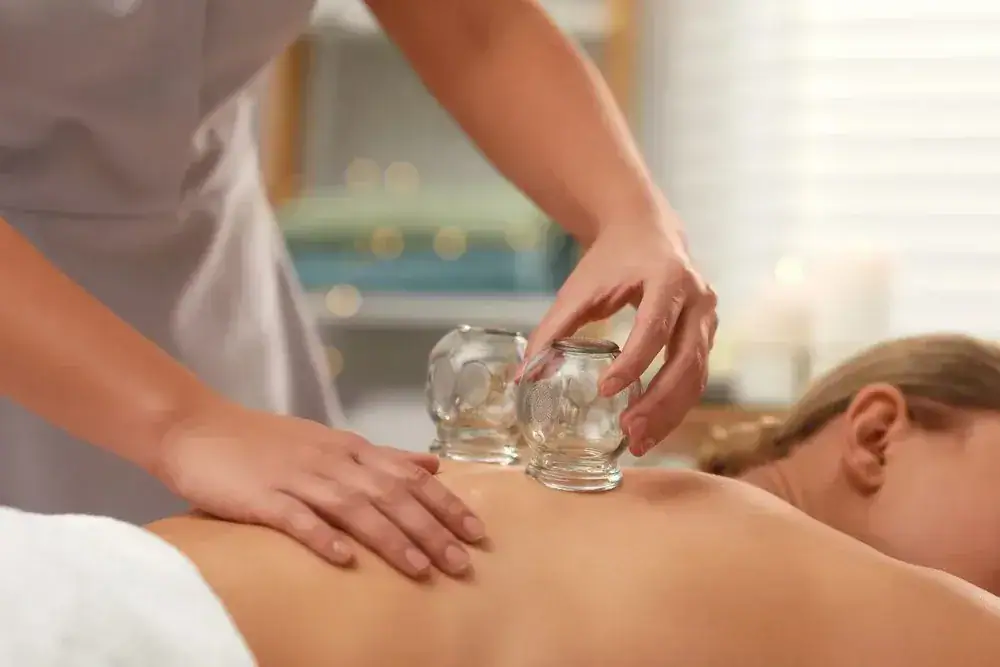
First, your therapist evaluates your pain. Where it starts, where it spreads, what makes it worse. They’re looking for muscle tightness, reduced range of motion, and areas where circulation has been compromised.
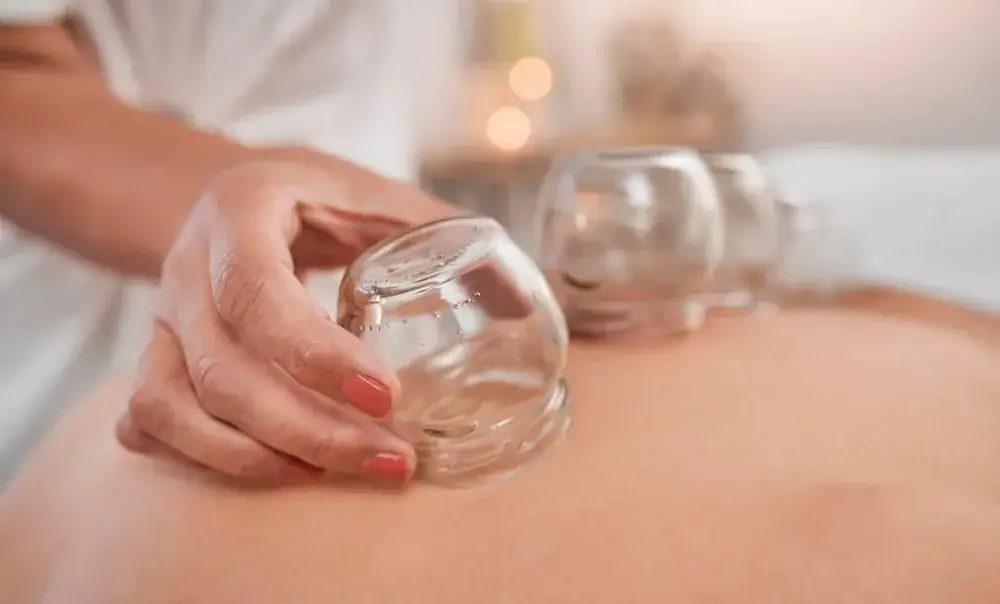
Then comes the cupping. Small cups are placed on your skin, creating suction that pulls tissue upward. You’ll feel pressure, not pain. The cups stay in place for several minutes while they do their work—increasing blood flow, releasing fascial restrictions, and stimulating the small nerves that trigger your body’s natural pain relief response.
Some people see circular marks afterward. They’re not bruises. They’re a sign of stagnant blood being drawn to the surface so fresh circulation can take its place. The marks fade within a few days.
Cupping is rarely used alone. Your therapist will likely combine it with stretching, manual therapy, or targeted exercises. The goal isn’t just to feel better for a day. It’s to retrain your body to move without compensation patterns that caused the problem in the first place.
Ready to get started?
Cupping therapy addresses chronic musculoskeletal pain—the kind that doesn’t go away with rest or over-the-counter medication. Lower back pain. Neck stiffness. Shoulder tension that makes it hard to lift your arm. Knee pain from osteoarthritis.
In Mill Neck, where the median age sits in the mid-40s and many residents lead active lives, these aren’t minor inconveniences. They’re barriers to doing what you want to do.
The treatment works by improving circulation to oxygen-starved tissue. When muscles are tight for long periods, blood flow decreases. Less oxygen means more pain, more inflammation, and slower healing. Cupping reverses that cycle.
You’ll also get reduced muscle tension and improved range of motion. The negative pressure created by the cups lifts tissue away from underlying structures, creating space that’s been compressed for months or years. That space allows nerves to stop firing pain signals and joints to move more freely.
For Mill Neck residents who value evidence-based care, it’s worth knowing that moderate-quality research supports cupping for chronic pain conditions. This isn’t alternative medicine. It’s a technique we use as licensed physical therapists because it produces measurable results.
Yes, but not by itself. Cupping works best when it’s part of a broader physical therapy plan that includes movement, strengthening, and education about how to avoid re-injury.
The research is clear: moderate-quality evidence supports cupping for chronic low back pain and neck pain. What that means in practical terms is that most people experience measurable pain reduction after consistent treatment. Not everyone. Not overnight. But enough people, reliably enough, that it’s considered a valid clinical tool.
The mechanism is straightforward. Cupping increases blood flow to areas that have been tight and inflamed. It also stimulates small nerve fibers in your muscles to release natural pain-relieving chemicals. You’re not masking the pain—you’re addressing the underlying tissue dysfunction that’s causing it.
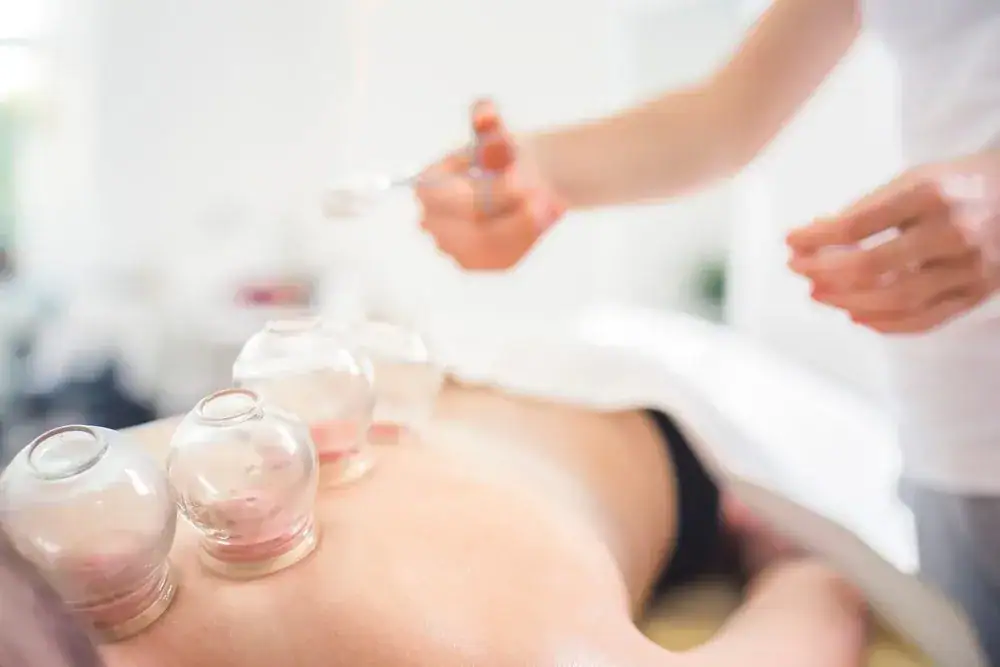
Dry cupping uses suction alone. Wet cupping involves making small incisions in the skin to draw out blood. We use dry cupping. It’s non-invasive, low-risk, and effective for musculoskeletal pain.
The cups create negative pressure that pulls tissue upward, away from underlying muscle and fascia. This decompression improves circulation, reduces nerve irritation, and releases trigger points that manual therapy can’t always reach.
Some practitioners use fire cupping, where a flame briefly heats the inside of the cup to create suction. Others use mechanical or silicone pumps. The method matters less than the skill of the person placing the cups. Your physical therapist knows where to position them based on your specific pain pattern and movement limitations.
You’ll likely see circular marks, but they’re not bruises in the traditional sense. Bruises happen when blood vessels break due to trauma. Cupping marks appear when stagnant blood is drawn to the surface to make room for fresh circulation.
The marks can range from light pink to deep purple, depending on how much stagnation exists in that area. They typically fade within three to seven days. Some people have no marks at all.
If the appearance of temporary marks is a concern, talk to your therapist. They can adjust the suction intensity or placement. But for most people, the marks are a non-issue compared to the pain relief they’re getting.
Most people notice some improvement after the first session, but lasting relief takes consistency. Plan on at least six to eight sessions over several weeks, combined with other physical therapy techniques.
Chronic pain doesn’t develop overnight, and it doesn’t disappear overnight either. Your body needs time to relearn movement patterns, rebuild tissue quality, and restore normal circulation to areas that have been compromised.
Your therapist will reassess your progress regularly. If you’re not improving after a reasonable number of sessions, they’ll adjust the treatment plan. The goal is always measurable progress—less pain, better movement, improved function—not just temporary relief that disappears as soon as treatment stops.
When cupping is performed by a licensed physical therapist as part of a treatment plan, it’s typically covered under your physical therapy benefits. We accept Medicare and nearly all commercial insurance plans.
Coverage depends on your specific plan, but most insurers recognize cupping as a valid manual therapy technique when it’s medically necessary and performed by a qualified provider. That’s different from cupping offered at a spa or wellness center, which is usually not covered.
Before your first session, we verify your benefits and let you know what to expect in terms of co-pays or out-of-pocket costs. No surprises. If you have questions about coverage, call your insurance company and ask about “physical therapy manual techniques” or “myofascial decompression.”
Yes. Neck pain and tension headaches often stem from the same problem: tight muscles in the neck and upper shoulders that restrict blood flow and irritate nerves. Cupping addresses both.
When cups are placed along the neck, upper traps, and shoulder blades, they release fascial restrictions that have been pulling your head forward and compressing cervical nerves. Many people find that their headaches decrease in frequency and intensity once the underlying muscle tension is treated.
Cupping won’t fix headaches caused by other issues—sinus problems, high blood pressure, or neurological conditions. But if your headaches are tension-related and accompanied by neck stiffness, cupping combined with physical therapy exercises can make a significant difference. Your therapist will assess whether cupping is appropriate for your specific situation during the initial evaluation.
Other Services we provide in Mill Neck