


Most people feel immediate relief. The tension that’s been sitting in your back, neck, or shoulders starts to loosen during the session itself.
Cupping therapy works by lifting tissue away from underlying muscle, which increases blood flow to areas that have been tight or inflamed. More circulation means faster healing, less stiffness, and better range of motion. You’re not masking pain—you’re addressing what’s causing it.
If you’ve been dealing with chronic discomfort that limits how you move or what you can do, this approach gives your body what it needs to recover. The suction created during dry cupping mechanically separates fascial layers, releases trapped tension, and reduces inflammation at the source. You’ll notice the difference in how you feel when you stand up, reach overhead, or get through your day without constantly adjusting for pain.
This isn’t about temporary relief that fades by tomorrow. It’s about giving your muscles and fascia the space to function the way they should.
Medcare Therapy Services has been providing home-based physical therapy across Nassau County for over a decade. We work with people in Matinecock who’d rather not deal with the hassle of driving to appointments or sitting in a clinic waiting room.
Our therapists are licensed, trained in cupping therapy techniques, and experienced in treating the kinds of pain that come with age, activity, or injury. We accept Medicare and most commercial insurance, and we handle the paperwork so you don’t have to.
Matinecock residents tend to value convenience and quality—and that’s exactly what we’re set up to deliver. You get professional care in your own space, on your schedule, with the same attention to detail you’d expect from any top-tier therapy center.
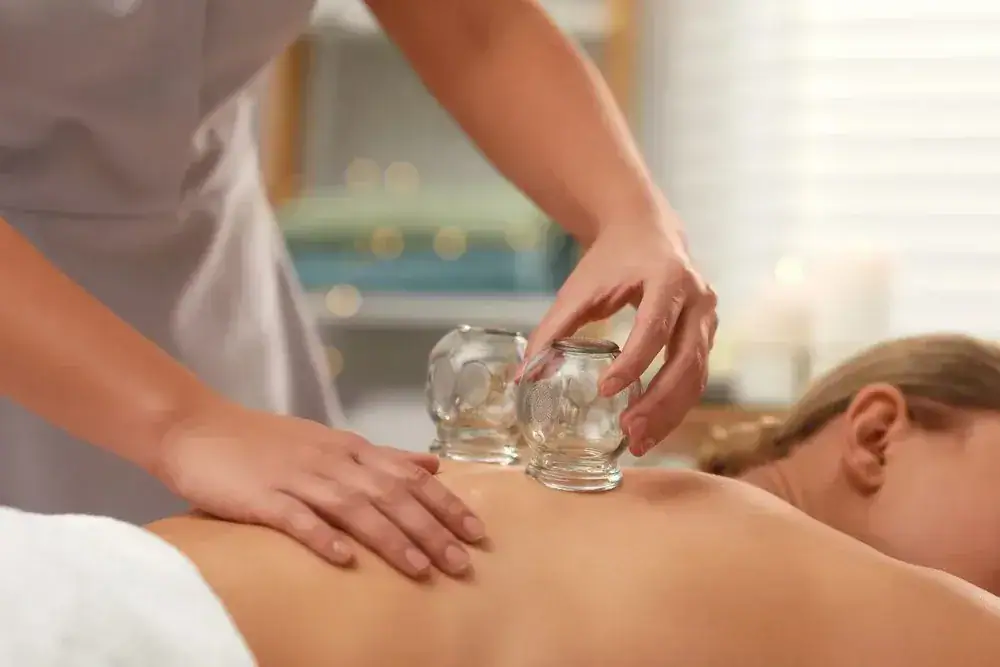
Your therapist arrives at your home with everything needed for the session. You’ll start with a quick assessment—where the pain is, what movements make it worse, and what your goals are.
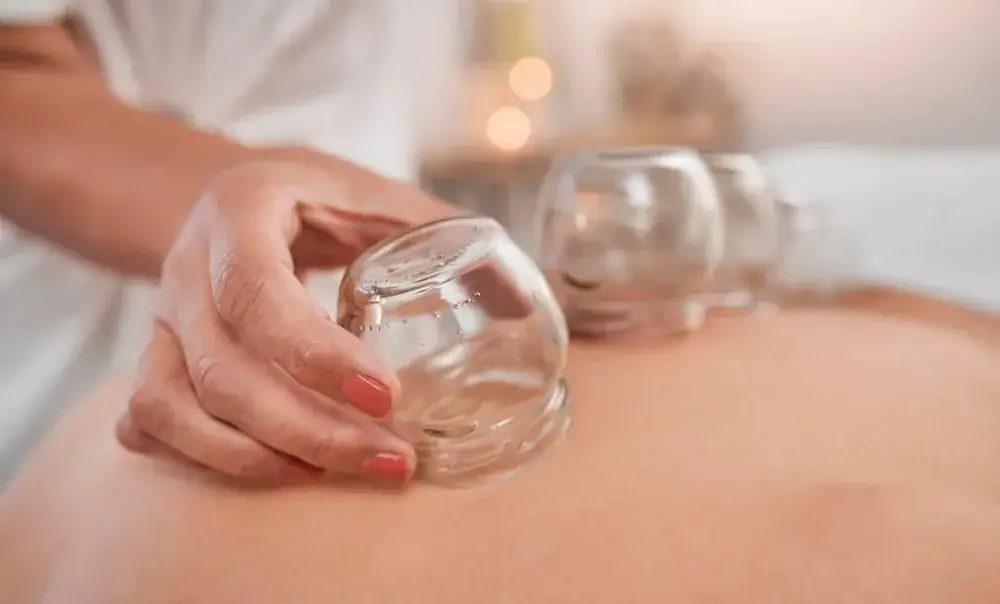
Then comes the cupping itself. Small cups are placed on the skin over the affected area, creating suction that lifts the tissue. This isn’t painful—it feels like a firm pull, and most people find it relaxing. The cups stay in place for several minutes while they do their work: increasing blood flow, releasing muscle tension, and separating fascial layers that have been stuck together.
After the cups are removed, your therapist may incorporate stretching, manual therapy, or movement exercises to reinforce the benefits. The whole session typically lasts 30 to 45 minutes, depending on what you need.
You might see some circular marks on your skin afterward—that’s normal and fades within a few days. What lasts longer is the relief. Many people report feeling looser and less restricted immediately, with continued improvement over the next few sessions.
Ready to get started?
Cupping therapy isn’t a one-size-fits-all service. Your treatment plan is based on what’s actually going on with your body—not a generic protocol.
For Matinecock residents dealing with chronic back pain, neck stiffness, or joint discomfort, dry cupping is often combined with other physical therapy techniques. That might include manual therapy to address scar tissue, targeted exercises to improve mobility, or fascial release work to restore normal movement patterns. The goal is to treat the root cause, not just the symptom.
Sessions are scheduled at times that work for you, and because we come to your home, there’s no need to factor in travel time or parking. You’re treated in a comfortable, familiar environment where you can relax before and after the session.
We also work closely with your physician if needed, especially if cupping therapy is part of a broader recovery plan following surgery or injury. Everything is documented, and your progress is tracked so we can adjust the approach as you improve.
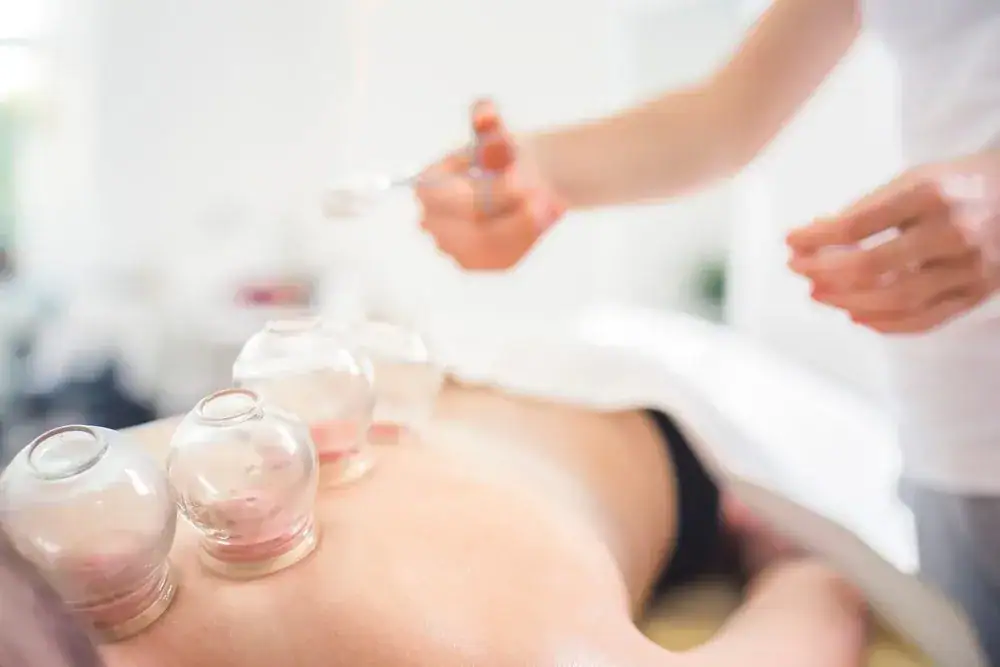
Cupping therapy addresses the underlying causes of pain—not just the sensation of it. When you’re dealing with chronic discomfort, it’s often because muscles are tight, fascia is restricted, or circulation to the area is poor. Cupping mechanically lifts tissue away from the muscle, which increases blood flow and delivers the nutrients and oxygen your body needs to heal.
Studies show that cupping reduces inflammatory markers and increases healing chemicals in the affected area. That’s not a placebo effect—that’s measurable change at the tissue level. Most people feel immediate relief after a session, and with consistent treatment, the improvements build on each other.
The key is that cupping works best when it’s part of a broader plan. If you’re also addressing movement patterns, strengthening weak areas, and managing activity levels, the results last. It’s not a magic fix, but it’s a proven tool that helps your body do what it’s supposed to do.
Dry cupping is considered very safe when performed by a licensed professional. The suction creates circular marks on the skin that look like bruises, but they’re not the same thing. Those marks are caused by increased blood flow to the area—not tissue damage. They typically fade within three to seven days.
Some people don’t get marks at all, depending on their skin type and how much suction is used. Your therapist adjusts the pressure based on what you’re comfortable with and what your body needs. There’s no cutting or puncturing involved in dry cupping, which makes it lower risk than other forms of cupping therapy.
The most common side effects are mild soreness in the treated area, similar to what you’d feel after a deep tissue massage. That usually goes away within a day. Serious complications are rare, especially when the therapy is done by someone trained in proper technique and contraindications.
Most people notice a difference after the first session—less tightness, better range of motion, or reduced pain. But one session isn’t usually enough to resolve chronic issues that have been building for months or years.
A typical treatment plan involves one to two sessions per week for four to six weeks, depending on what you’re dealing with. If you’re recovering from an injury or managing a condition like arthritis, you might need ongoing maintenance sessions after that initial phase. If you’re using cupping to support athletic performance or prevent injury, the frequency might be different.
Your therapist will give you a realistic timeline based on your specific situation. The goal is to get you to a point where you don’t need regular sessions anymore—or where you only need occasional tune-ups to stay on track. Progress is tracked at every visit so you can see what’s working and adjust the plan if needed.
Yes. Cupping therapy is designed to work alongside other treatments, not replace them. If you’re already doing physical therapy, chiropractic care, or taking medication for pain management, cupping can fit into that plan.
In fact, many physical therapists use cupping as part of a broader approach that includes manual therapy, exercise, and movement training. The suction from cupping helps release tight tissue, which makes other treatments more effective. For example, if your range of motion is limited because of fascial restriction, cupping can address that so stretching and strengthening exercises actually work.
If you’re on blood thinners or have certain medical conditions, your therapist will need to know before starting treatment. There are some situations where cupping isn’t recommended, or where the technique needs to be modified. That’s why the initial assessment is important—it ensures cupping is safe and appropriate for your specific situation.
Convenience is the obvious reason. You don’t have to drive, find parking, or sit in a waiting room. Your therapist comes to you, sets up in your home, and provides the same level of care you’d get in a clinic setting.
But there’s more to it than convenience. Some people have mobility issues that make it difficult to leave the house. Others have schedules that don’t allow for mid-day appointments across town. And some just prefer to recover in their own space, where they’re comfortable and can rest immediately after treatment.
Home-based therapy also allows for more personalized care. Your therapist isn’t rushing between rooms or managing multiple patients at once. The session is focused entirely on you, and there’s more flexibility to adjust the treatment based on how you’re responding in real time. For people in Matinecock who value quality and efficiency, that makes a difference.
If cupping therapy is provided as part of a physical therapy treatment plan, it’s often covered by insurance—including Medicare. The key is that it needs to be medically necessary and performed by a licensed therapist, which is exactly how we operate.
We accept Medicare and most commercial insurance plans. When you schedule your first session, we’ll verify your coverage and let you know what to expect in terms of costs. In many cases, cupping is billed as part of your physical therapy visit, so there’s no separate charge.
If you’re paying out of pocket, we’ll give you a clear breakdown of costs upfront. There are no surprise fees or hidden charges. The goal is to make this accessible and straightforward, so you can focus on getting better instead of worrying about billing.
Other Services we provide in Matinecock