
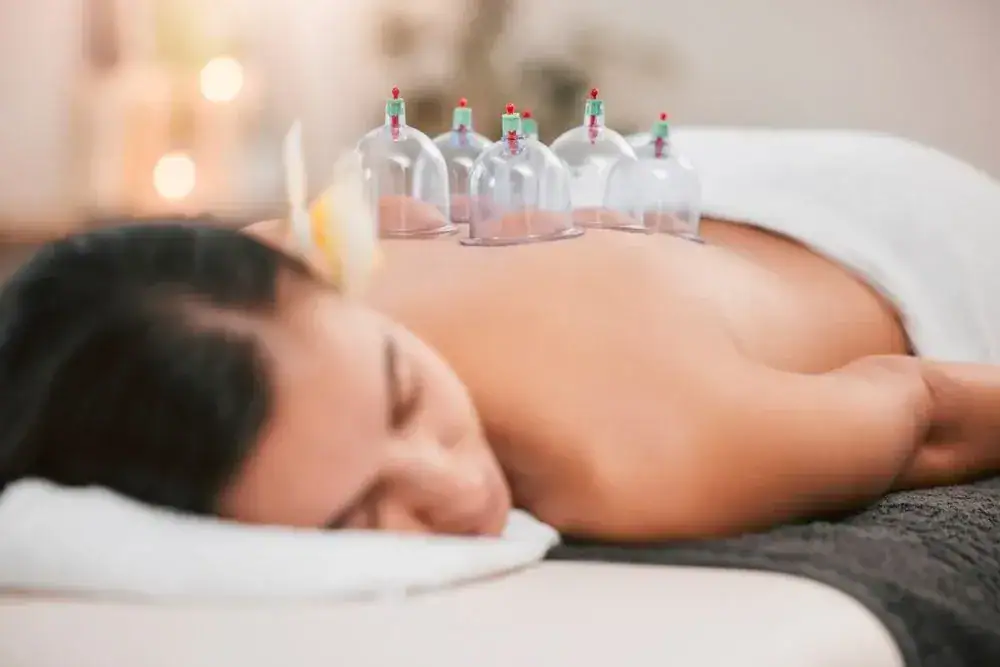

You’re dealing with back pain that won’t quit, shoulders that stay tight no matter what you try, or knees that make every step a reminder of what you used to be able to do. You’ve tried medications, but the idea of staying on them long-term doesn’t sit right. You want something that actually addresses the problem, not just covers it up for a few hours.
Cupping therapy works by lifting tissue away from underlying structures, which increases blood flow to areas that have been tight, restricted, or painful. That improved circulation means your muscles get more oxygen, waste products clear out faster, and inflammation starts to calm down. The result is less pain, better movement, and tissue that’s actually prepared to heal instead of just staying stuck in the same cycle.
This isn’t about temporary relief that fades by the afternoon. When cupping is part of your physical therapy plan, it helps your body respond better to the exercises and stretches that rebuild strength and mobility. You’re not just managing symptoms—you’re creating the conditions for real improvement.
We’ve been serving Suffolk County for years, and our team includes licensed physical therapists trained in cupping therapy as part of a comprehensive treatment approach. We’re not a spa offering relaxation services—we’re a clinical practice focused on measurable outcomes for people dealing with real pain and mobility issues.
Our Mastic Beach, NY location serves residents throughout the area who need more than a quick fix. We take the time to evaluate what’s actually causing your pain, not just where it hurts. That means you get a treatment plan that makes sense for your body and your goals, whether that’s getting back to work without discomfort or staying active as you age.
We manage our operations carefully, from how we verify patient information to how we communicate throughout your care. That attention to detail extends to every appointment, every treatment decision, and every conversation about what’s working and what needs to adjust.
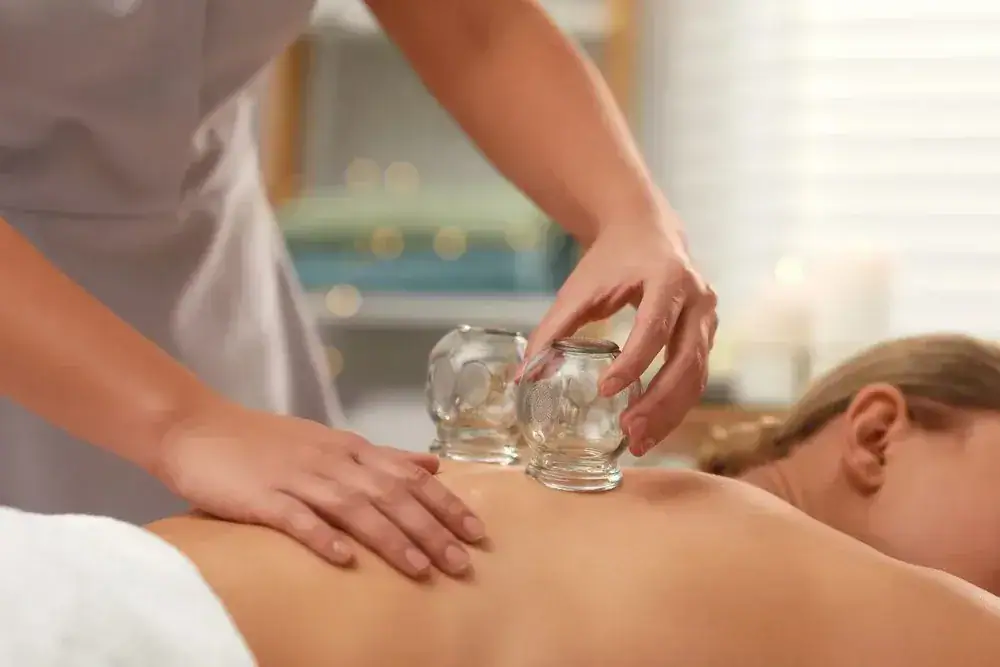
Your first visit starts with an evaluation. Your physical therapist will ask about your pain—where it is, how long you’ve had it, what makes it better or worse. They’ll assess your range of motion, check for areas of tightness or restriction, and determine whether cupping therapy is appropriate for your specific condition.
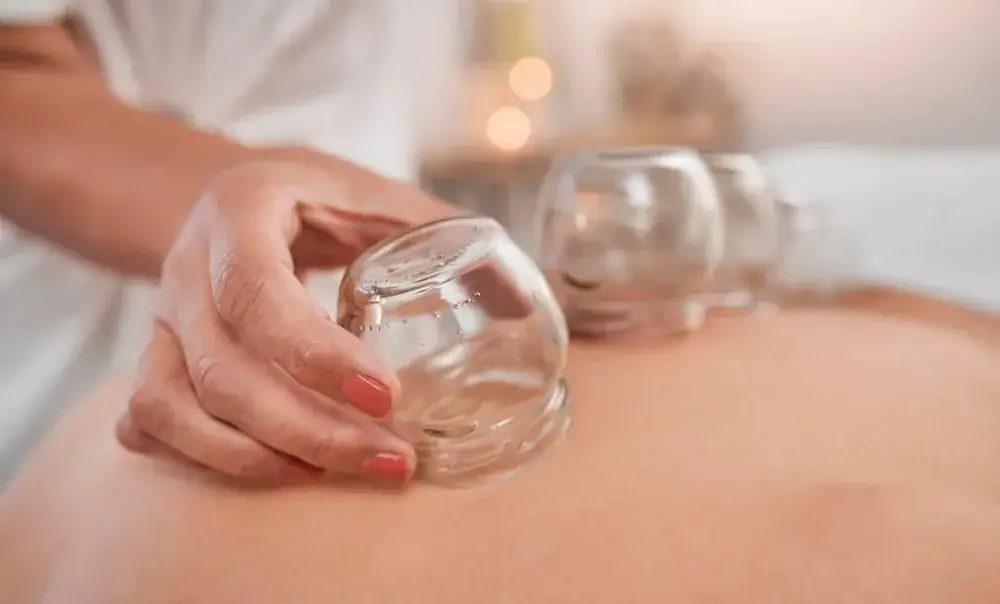
If cupping is a good fit, your therapist will apply cups to the affected areas using suction. This creates negative pressure that lifts the skin and underlying tissue away from the muscle and fascia below. You’ll feel a pulling sensation, but it shouldn’t be painful. The cups typically stay in place for 5 to 15 minutes, depending on what your body needs.
After the cups are removed, many people notice an immediate decrease in tightness and an improvement in how the area moves. Your therapist will then guide you through exercises or stretches designed to take advantage of that improved tissue mobility. This is where the real work happens—cupping prepares your body so that the therapeutic exercise can actually create lasting change.
You might see circular marks where the cups were placed. These aren’t bruises—they’re a result of increased blood flow to the area and typically fade within a few days. Most patients need multiple sessions as part of their overall physical therapy plan, with frequency depending on your condition and how your body responds.
Ready to get started?
Cupping therapy is particularly effective for chronic pain conditions affecting the back, neck, shoulders, and knees. If you’ve been dealing with muscle knots that won’t release, restricted range of motion that limits what you can do, or pain that flares up with certain movements, cupping can help address the underlying tissue restrictions contributing to those problems.
For Suffolk County residents, especially those over 50, maintaining mobility becomes increasingly important. Balance issues, difficulty walking, and stiffness that makes daily activities harder are common concerns in our area. Cupping therapy integrated with physical therapy helps address these issues by improving fascial health, reducing muscle tension, and preparing your body for the strengthening work that builds long-term stability.
We also use cupping for athletic injuries, post-surgical rehabilitation, and chronic conditions like arthritis where inflammation and tissue restriction limit function. The key is that cupping isn’t a standalone treatment—it’s part of a larger plan that includes exercise, manual therapy, and education about how to manage your condition long-term.
Because dry cupping doesn’t involve breaking the skin, it’s a low-risk option with minimal side effects. Your therapist will monitor how your body responds and adjust the treatment as needed. Some people feel immediate relief, while others notice gradual improvement over several sessions as tissue quality changes and movement patterns improve.
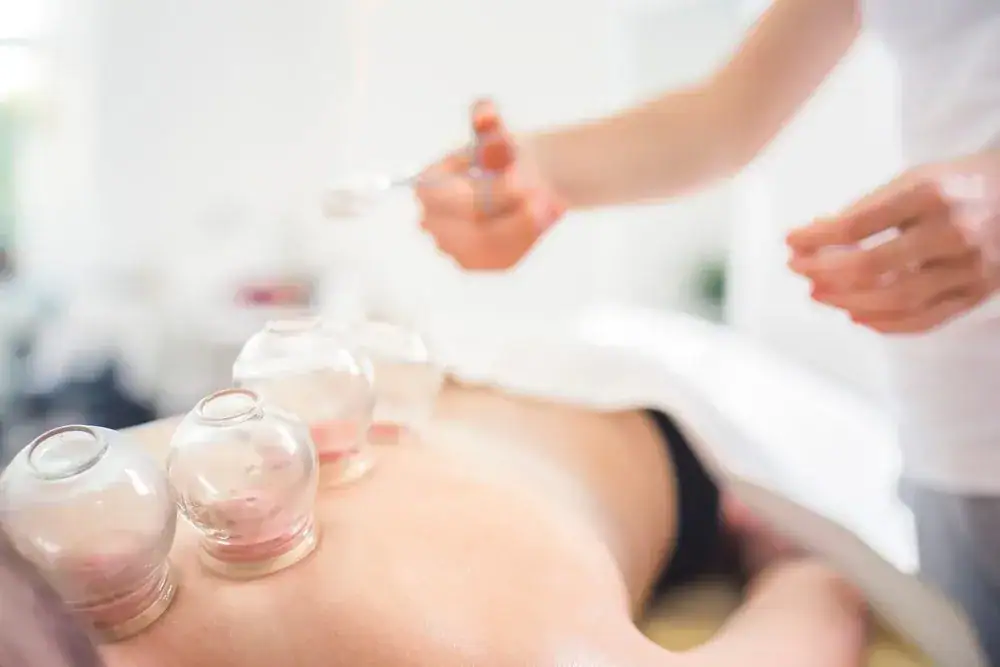
Research shows that cupping therapy can significantly decrease pain levels and improve function for people with chronic back pain. The mechanism is straightforward—cupping increases blood flow to the affected area, helps release fascial restrictions, and reduces muscle tension that contributes to pain.
What matters is how cupping fits into your overall treatment plan. If you come in for cupping alone without addressing the movement patterns, weakness, or postural issues contributing to your back pain, you’ll likely get temporary relief but not lasting change. When cupping is used to prepare your tissues for therapeutic exercise and manual therapy, the results are much more significant.
Your physical therapist will evaluate whether your back pain is appropriate for cupping therapy. Conditions involving disc issues, nerve compression, or certain inflammatory conditions may require a different approach. But for muscular back pain, myofascial restrictions, and chronic tightness, cupping is an evidence-based intervention that can make a real difference in how you feel and move.
Massage applies pressure into tissue, compressing muscles and fascia to release tension. Cupping does the opposite—it uses suction to lift tissue away from underlying structures. This creates space between layers that have become stuck together, which is especially helpful for fascial restrictions that don’t respond well to compression.
Think of it this way: if you have scar tissue or densified fascia limiting your movement, pushing down on it (massage) might provide some relief, but lifting it up (cupping) can create separation between layers that need to glide smoothly over each other. Both techniques have value, and many physical therapists use them together depending on what your tissue needs.
Cupping also creates a different physiological response. The negative pressure increases local blood flow more dramatically than massage in many cases, and research using laser Doppler flowmetry has confirmed this effect. For people who haven’t responded well to traditional massage, cupping offers a different mechanical stimulus that can produce better results.
Yes, cupping typically leaves circular marks where the cups were placed. These marks can range from light pink to dark purple depending on the amount of suction used and how much stagnation or restriction was in that area. They’re not bruises in the traditional sense—they’re a result of increased blood flow and the drawing of fluid into the tissue.
The marks usually fade within three to seven days. Some people barely mark at all, while others develop darker discoloration even with moderate suction. This doesn’t indicate anything wrong—it’s simply how your body responds to the treatment. Your therapist can adjust the suction level if you’re concerned about visible marks, though lighter suction may be less effective for deeper tissue restrictions.
Most patients find that the marks become lighter with subsequent treatments as tissue quality improves and circulation increases. If you have an event where visible marks would be a concern, let your therapist know ahead of time so they can plan accordingly or focus treatment on areas that won’t be visible.
This depends entirely on your condition, how long you’ve had it, and how your body responds to treatment. Acute issues—like a recent muscle strain or post-workout tightness—might improve significantly in one to three sessions. Chronic conditions that have been present for months or years typically require more sessions as part of an ongoing physical therapy plan.
Your therapist will reassess your progress regularly. If you’re not seeing improvement within a reasonable timeframe, they’ll adjust your treatment plan rather than continuing something that isn’t working. The goal is measurable progress—less pain, better range of motion, improved function in daily activities.
Most patients receive cupping as part of their regular physical therapy appointments rather than as isolated sessions. This allows your therapist to combine cupping with other interventions like manual therapy, therapeutic exercise, and movement training. The frequency might be once or twice per week initially, then spacing out as you improve and transition to more independent management of your condition.
When cupping is performed by a licensed physical therapist as part of your physical therapy treatment plan, it’s typically billed as part of your PT session and covered under your physical therapy benefits. Insurance companies don’t usually have a separate code specifically for cupping—it falls under manual therapy or therapeutic procedures.
Your coverage depends on your specific insurance plan, deductible, and whether you’ve met your out-of-pocket maximum. Our team can verify your benefits before you start treatment so you know what to expect. Most plans that cover physical therapy will cover cupping when it’s medically necessary and performed by a licensed provider.
It’s worth noting that cupping performed at spas or by non-licensed practitioners is generally not covered by insurance because it’s considered a wellness service rather than medical treatment. The advantage of receiving cupping therapy at a physical therapy clinic is that it’s part of a comprehensive, evidence-based treatment plan designed to address specific functional limitations—which is what insurance is designed to cover.
Yes, cupping therapy integrates well with most other treatments. If you’re currently seeing a chiropractor, acupuncturist, or massage therapist, cupping can complement those approaches. Your physical therapist will want to know what other treatments you’re receiving to coordinate care and avoid over-treating the same area.
Cupping is often combined with other physical therapy interventions like joint mobilization, therapeutic exercise, and neuromuscular re-education. In fact, it works best when it’s part of a comprehensive approach rather than a standalone treatment. The improved tissue mobility from cupping makes your body more responsive to strengthening exercises and movement training.
If you’re taking medications for pain or inflammation, cupping doesn’t interfere with those. Many patients find that as their pain decreases through physical therapy and cupping, they’re able to reduce their reliance on pain medications—but that’s a conversation to have with the prescribing physician. Our role is to provide effective treatment that addresses the underlying tissue and movement dysfunction contributing to your pain.
Other Services we provide in Mastic Beach