

You’re not looking for temporary relief. You want to move without wincing, sleep without waking up stiff, and get back to the activities that matter without constantly thinking about your back, neck, or joints.
Cupping therapy increases blood flow to areas that have been tight, inflamed, or stuck for months—sometimes years. That improved circulation helps your body finally start healing instead of just coping. Most people notice reduced pain within the first week, and that improvement holds because we’re addressing what’s causing the problem, not just masking symptoms.
This isn’t about feeling slightly better for a few hours. It’s about waking up with less stiffness, moving through your day without constant discomfort, and actually enjoying physical activity again instead of avoiding it.
We operate multiple physical therapy centers across Long Island, including locations in Smithtown and Speonk. Our Massapequa patients come to us because they’re tired of waiting weeks for appointments, sharing their therapist’s attention with three other people, or getting the same generic treatment plan everyone else gets.
We verify your insurance before you walk in. We schedule most appointments within 24 hours. And when you’re here, you get focused, one-on-one attention from therapists who are certified in cupping dynamics, functional release therapy, and orthopaedic manual therapy—not just someone who took a weekend course.
Massapequa has one of the highest concentrations of residents over 55 in Nassau County, and a lot of you are dealing with chronic pain that’s been brushed off or undertreated. We take that seriously.
First visit starts with an evaluation. We need to understand where your pain is, how long you’ve had it, what you’ve already tried, and what your goals are. No assumptions, no cookie-cutter plans.
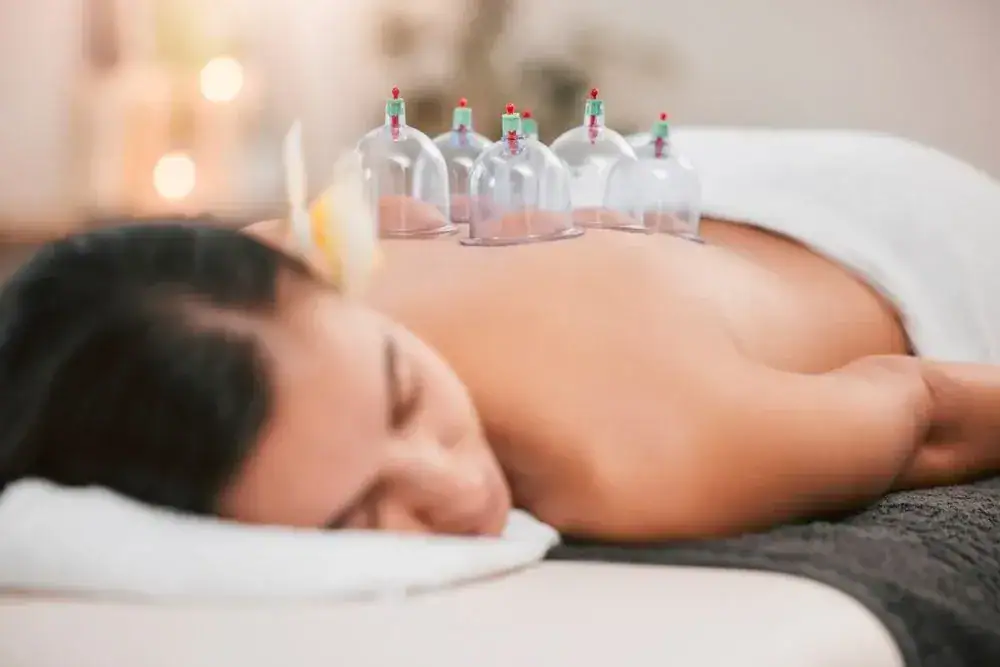
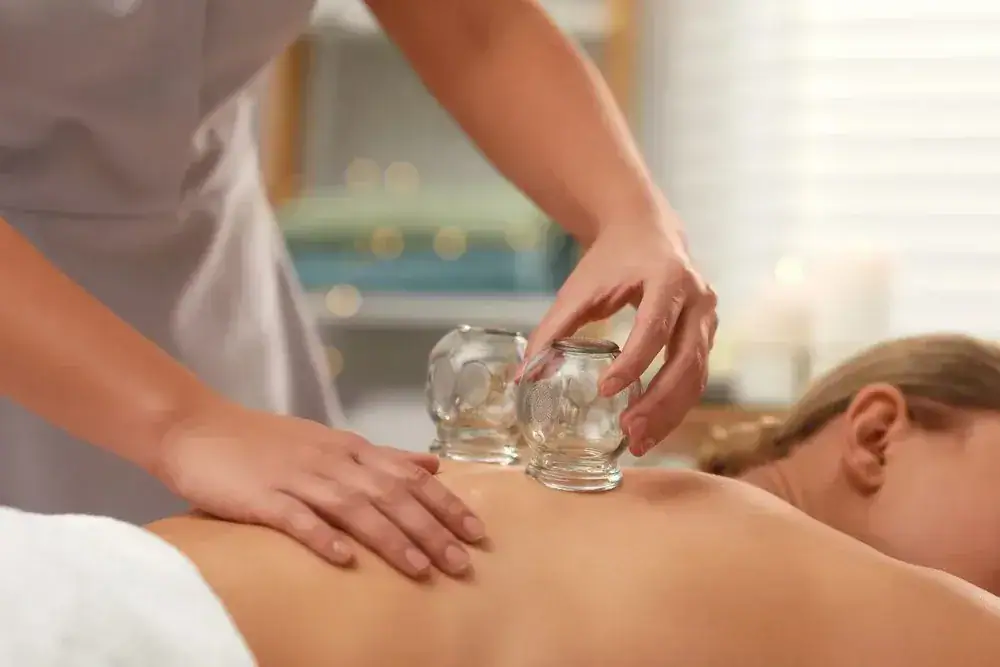
During the cupping session, we place specialized cups on targeted areas of your body. The suction pulls blood to the surface, which increases circulation and helps release tight fascia and muscle tissue. Dry cupping—the type we use most often—is non-invasive. No needles, no incisions. You’ll feel pressure and tightness while the cups are on, but most people find it oddly relieving, not painful.
Sessions typically last 20 to 30 minutes, and we often combine cupping with other physical therapy techniques depending on what your body needs. Some people see immediate improvement. Others need a few sessions before the pain starts to drop. We track your progress and adjust the treatment as you respond.
You might have circular marks on your skin afterward—that’s normal and fades within a few days. What lasts longer is the relief.
Ready to get started?
Cupping therapy at Medcare isn’t a standalone service you book and hope for the best. It’s part of a broader physical therapy approach designed around your specific condition. That means if you’re dealing with chronic low back pain, neck stiffness, knee osteoarthritis, or muscle tension from an old injury, we’re building a plan that makes sense for your body—not just applying cups and calling it a day.
You’ll work with a licensed physical therapist who’s trained in cupping dynamics and has years of hands-on experience treating patients in Massapequa and across Long Island. We combine dry cupping with manual therapy, functional movement training, and targeted exercises that help you maintain the improvements between sessions.
Nassau County has over 300,000 residents age 60 and older, and many of you are managing multiple pain points at once. Cupping works well for that because it’s gentle enough to use frequently but effective enough to create real change. And because we accept most major insurance plans and verify your coverage upfront, you’re not stuck guessing what this will cost or whether it’s even covered.
It works, and there’s research to back it up. A 2023 systematic review of 72 clinical trials involving over 5,700 participants found that cupping significantly reduced pain levels at the 2 to 8 week mark, with effects that lasted longer than medication or standard care alone. Another study showed that a single session of dry cupping provided immediate pain reduction for people with chronic musculoskeletal pain.
The reason it works comes down to blood flow. Chronic pain often develops in areas where circulation has been restricted—whether from injury, inflammation, or repetitive stress. Cupping creates suction that pulls fresh blood to those areas, which helps reduce inflammation and allows your body to start repairing damaged tissue.
This isn’t a miracle cure, and it’s not going to fix structural problems like a herniated disc. But for muscle tension, chronic back and neck pain, and conditions like knee osteoarthritis, cupping has shown measurable, sustained results. Most of our patients notice improvement within the first few sessions, and that improvement builds over time when combined with the right physical therapy plan.
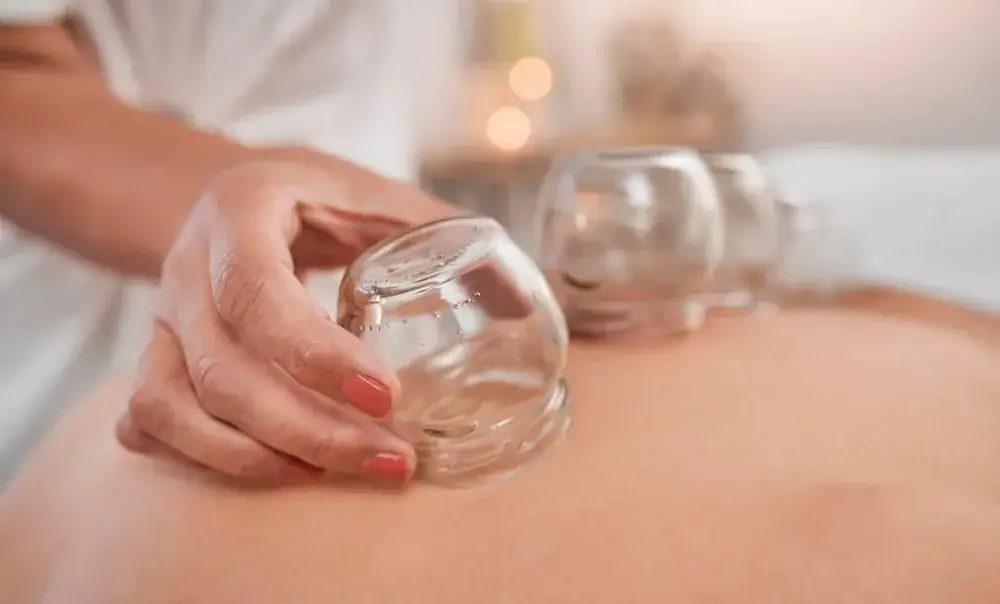
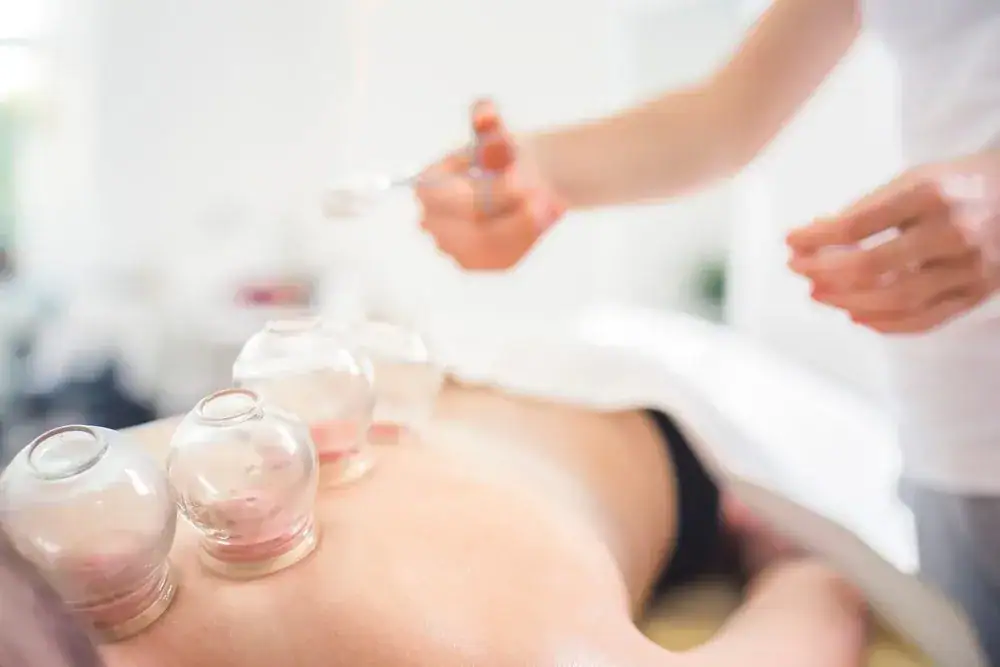
Dry cupping uses suction alone—no incisions, no bloodletting, nothing invasive. We place cups on your skin, create a vacuum using either heat or a pump, and let them sit for several minutes. The suction pulls your skin and underlying tissue upward, which increases blood flow and releases tension in the fascia and muscles.
Wet cupping, by contrast, involves making small cuts in the skin before applying the cups, which draws out a small amount of blood. Some practitioners believe this removes toxins, but most clinical research focuses on dry cupping because it’s non-invasive and carries fewer risks. That’s also why we use it—it’s effective without the added complexity or recovery time.
You’ll see circular marks after a session. Those aren’t bruises in the traditional sense—they’re areas where blood has been drawn to the surface. They fade within a few days and don’t hurt. What you will feel is relief in the areas that were tight or painful before treatment, and that relief tends to last longer with each session.
Most insurance plans cover cupping when it’s provided as part of a physical therapy treatment plan, which is how we deliver it at Medcare. We’re not a spa offering cupping as a standalone wellness service—we’re a licensed physical therapy practice using cupping as a clinical tool to treat diagnosed conditions like chronic pain, muscle tension, and mobility issues.
Before your first visit, we verify your benefits and let you know what’s covered, what your copay will be, and whether you need a referral. About 65% of physical therapy patients have private insurance, 22% have Medicare, and 6% have Medicaid—we work with all of them. If there’s any issue with coverage, we’ll tell you upfront so there are no surprises.
If you’ve been putting off treatment because you’re worried about cost, call us. We’d rather have that conversation now than have you wait another six months while the pain gets worse. Most of our Massapequa patients are surprised by how affordable this is once we run their insurance.
Some people feel noticeably better after one session. Others need three to six before the pain starts to drop significantly. It depends on how long you’ve had the problem, how severe it is, and how your body responds to treatment.
Acute issues—like a muscle strain from overuse or a recent injury—tend to respond faster. Chronic pain that’s been building for months or years usually takes longer because your body has adapted to the dysfunction, and we need time to retrain those patterns. Research shows that cupping has the strongest effect on pain reduction between two and eight weeks of consistent treatment, which typically translates to one or two sessions per week.
We track your progress at every visit. If you’re not improving by the third or fourth session, we adjust the approach. Maybe we need to combine cupping with more manual therapy, or address a different area that’s contributing to the pain. The goal isn’t to keep you coming indefinitely—it’s to get you to a point where you can manage on your own with the right exercises and movement habits.
Cupping is safe when performed by a trained professional, which is why credentials matter. Our therapists are certified in cupping dynamics and have years of experience applying this technique as part of comprehensive physical therapy care. We’re not guessing where to place the cups or how much suction to use—we’re following clinical protocols based on your specific condition.
The most common side effect is the circular marks left on your skin, which look dramatic but aren’t painful and fade within three to seven days. Some people feel lightheaded during or right after treatment, especially if it’s their first session—that’s a normal response to increased circulation and usually passes quickly. You might also feel sore in the treated areas for a day or two, similar to how you’d feel after a deep tissue massage.
Cupping isn’t appropriate for everyone. If you’re on blood thinners, have a bleeding disorder, or have certain skin conditions, we’ll either modify the approach or recommend a different treatment. That’s why we do a full evaluation before starting. We’re not just applying cups and hoping for the best—we’re making sure this is the right tool for your situation.
Yes. While most people come to us for chronic low back pain or neck stiffness, cupping is also effective for knee osteoarthritis, shoulder tension, sports injuries, and even headaches caused by muscle tightness. Research supports its use for a range of musculoskeletal conditions, particularly those involving restricted blood flow and chronic inflammation.
Athletes use cupping to speed up recovery after intense training or competition—Michael Phelps made it famous during the Olympics, but the technique has been used in sports medicine for years. It helps reduce muscle soreness, improve range of motion, and get you back to full activity faster than rest alone.
We’ve also seen good results using cupping for patients dealing with stress-related muscle tension. If you’re someone who carries stress in your shoulders or upper back, cupping can provide relief that lasts longer than stretching or massage alone. The key is combining it with the right physical therapy exercises so your body doesn’t just revert to the same tight patterns a week later.
Other Services we provide in Massapequa