


You’re not looking for temporary relief. You want to get back to your morning run, sit through a workday without your neck screaming, or play with your kids without wincing every time you bend down.
Cupping therapy works by creating suction on your skin that increases blood flow to tight, painful areas. That improved circulation helps break down scar tissue, releases trigger points, and reduces inflammation where it’s been building up for months or years. The result is less pain, better range of motion, and muscles that actually relax instead of staying locked in tension.
Most people notice a difference after their first session. Not a miracle cure, but real, measurable improvement. The kind where you can turn your head to check your blind spot without bracing yourself first. Where you wake up and your lower back doesn’t dictate how the rest of your day will go.
We’ve been treating patients across Long Island for over a decade, with affiliated centers in Smithtown and Speonk. We’re not new to this, and we’re not experimenting with your recovery.
Our licensed practitioners use cupping therapy as part of comprehensive physical therapy treatment plans. Every session is one-on-one, personalized to what your body actually needs, not what a generic protocol says you should get. We accept Medicare and work with most insurance plans, so you’re not choosing between getting better and paying your bills.
Lloyd Harbor residents come to us because they’re done with temporary fixes. They’ve tried the pills, the injections, the “wait and see” approach. They want treatment that actually addresses the problem, delivered by people who know what they’re doing.
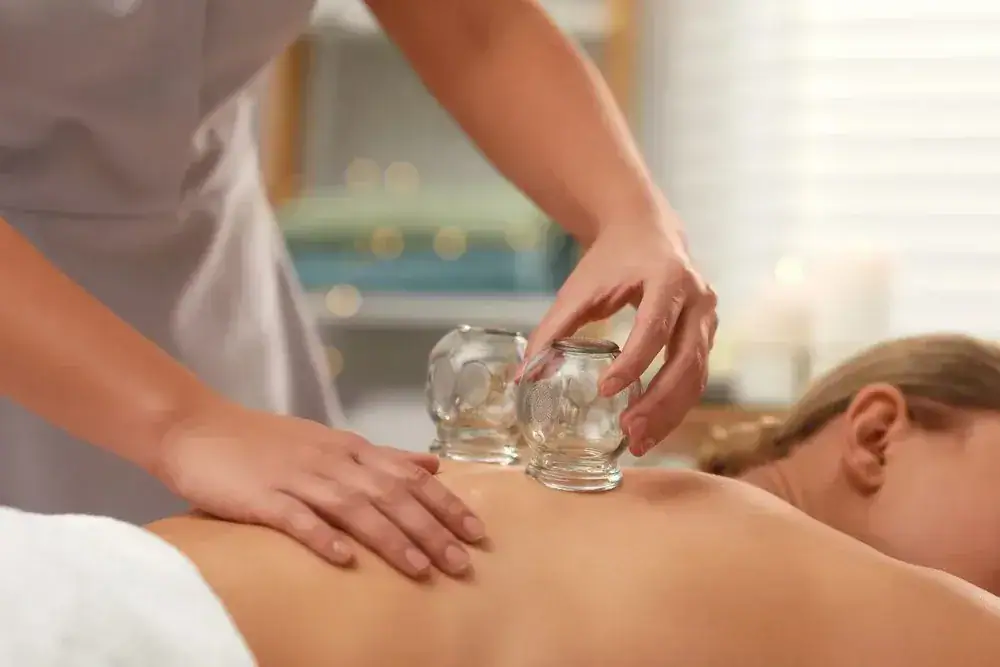
Your first visit starts with an evaluation. We need to understand where your pain is coming from, what makes it worse, and what you’ve already tried. This isn’t a five-minute chat before we rush you onto a table. We’re mapping out a treatment plan that makes sense for your specific situation.
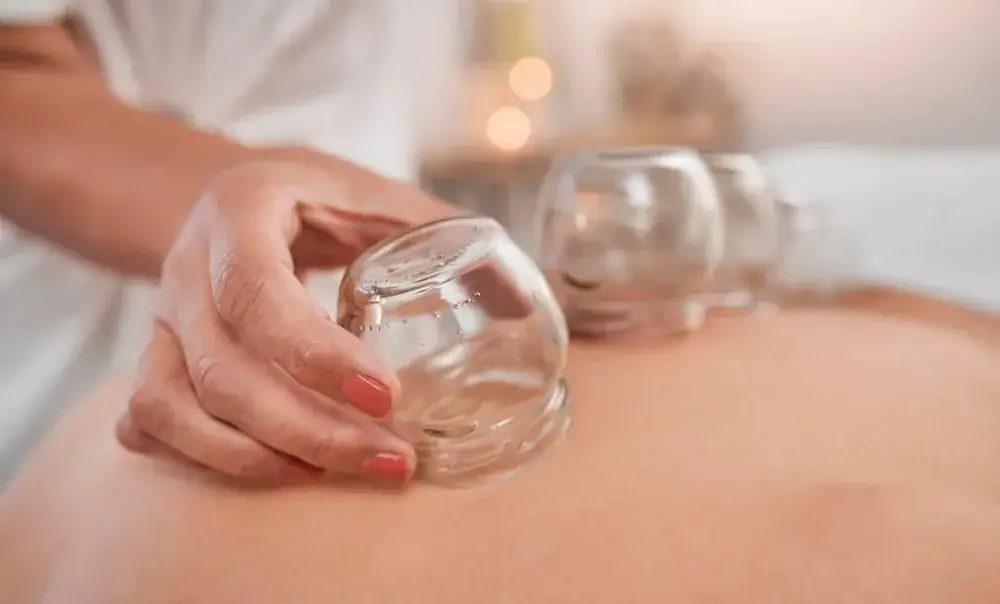
During the cupping session itself, we place specialized cups on targeted areas of your body. The suction pulls tissue upward, increasing blood flow and creating space for healing. Some practitioners use dry cupping, where cups stay in place. Others use movement techniques, gliding the cups across muscle groups to release broader areas of tension. You’ll feel pulling and pressure, but it shouldn’t hurt. Most people describe it as deeply relaxing, similar to a massage but with more focused intensity.
Sessions typically last 30 to 45 minutes. You might see circular marks on your skin afterward—that’s normal and fades within a few days. Those marks show where blood flow increased and stagnant fluids were drawn out. After your session, you should feel looser, with less pain and better mobility. Results build over multiple sessions as your body continues healing between treatments.
Ready to get started?
Cupping therapy at Medcare isn’t a standalone treatment we throw at everyone. It’s part of a broader physical therapy approach that might also include manual therapy, targeted exercises, and movement training. We use it when it makes sense for your condition—not because it’s trendy.
Lloyd Harbor has one of the highest concentrations of professional workers on Long Island. That means a lot of desk jobs, a lot of stress, and a lot of people dealing with chronic neck and shoulder tension. Cupping works especially well for these issues because it targets the deep tissue restrictions that develop from hours of sitting in the same position. It also helps with lower back pain, sports injuries, and recovery from repetitive strain.
You’re getting licensed, experienced practitioners who’ve been doing this for years. You’re getting treatment covered by Medicare and most insurance plans. And you’re getting a team that actually answers the phone, manages your appointments properly, and doesn’t leave you wondering what’s happening with your care. We verify everything, keep your information secure, and make sure there’s no confusion about your treatment or billing.
Yes, when it’s done correctly and as part of a complete treatment plan. Cupping increases blood circulation to areas where muscles have been tight and restricted for a long time. That increased blood flow brings oxygen and nutrients that help tissue heal while flushing out metabolic waste that builds up in chronically tense muscles.
For chronic neck and back pain specifically, cupping helps release myofascial trigger points—those knots you can feel in your muscles that refer pain to other areas. The suction lifts tissue and creates space between muscle layers that have been compressed and stuck together. This is especially helpful if you’ve been dealing with pain that stems from poor posture, repetitive movements, or old injuries that never fully healed.
You won’t see results from one session and never need treatment again. But most people notice improvement within the first few sessions, and continued treatment helps maintain those gains while your body relearns healthier movement patterns.
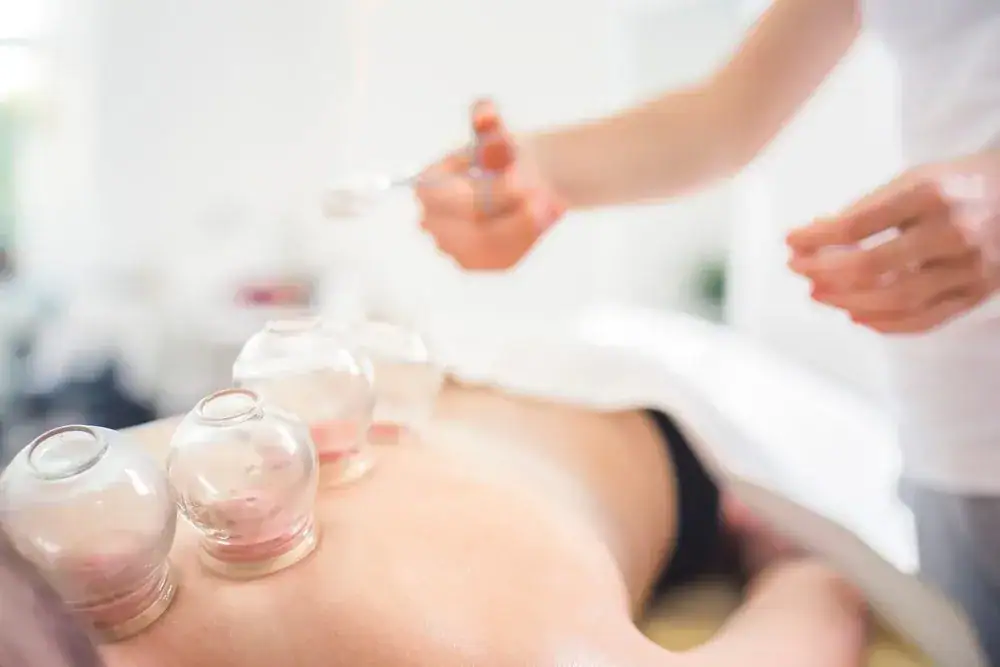
Dry cupping uses suction alone—no needles, no incisions, nothing invasive. The practitioner places cups on your skin and creates a vacuum, either with heat or a mechanical pump. The cups stay in place for several minutes, or the practitioner might move them across your skin in a gliding technique.
Wet cupping, by contrast, involves making small incisions in the skin before applying suction, which draws out small amounts of blood. This method is less common in physical therapy settings and requires different training and licensing. At Medcare, we use dry cupping because it’s effective, non-invasive, and works well alongside other physical therapy techniques.
Some practitioners also use fire cupping, where a flame briefly heats the inside of a glass cup before placing it on skin. The cooling air creates suction. Modern dry cupping typically uses silicone or plastic cups with manual or electronic pumps, which gives more control over suction strength and is easier to adjust during treatment.
Yes, cupping usually leaves circular marks that can range from light pink to deep purple. These aren’t bruises in the traditional sense—they’re the result of blood being drawn to the surface and stagnant fluids being pulled from deep tissue. The darker the mark, the more stagnation was present in that area.
For most people, the marks fade completely within three to seven days. If you have an event coming up where you’ll be wearing something that shows your back or shoulders, mention it before your session. We can adjust cup placement or reduce suction intensity, though this might also reduce treatment effectiveness.
The marks don’t hurt. You might feel some tenderness in treated areas for a day or two after your session, similar to post-workout soreness. That’s your body responding to increased circulation and the release of long-held tension. Drinking plenty of water after treatment helps flush out toxins and reduces any residual soreness.
Most people notice some improvement after their first session—less pain, better range of motion, or muscles that feel looser than they have in months. But one session won’t fix a problem you’ve been dealing with for years.
For chronic conditions like ongoing back pain or persistent muscle tension, you’re typically looking at six to eight sessions before you see significant, lasting improvement. Acute issues—like a recent sports injury or a flare-up from overuse—often respond faster, sometimes within three to four sessions.
Treatment frequency matters too. Starting with twice-weekly sessions gives your body consistent support while it’s healing. As you improve, we space sessions out to once a week, then every other week, then monthly maintenance if needed. The goal isn’t to keep you coming forever. It’s to get you to a point where your body maintains the improvements on its own, and you only come back if something flares up again.
When cupping is provided as part of physical therapy treatment, it’s typically covered under your physical therapy benefits. Medicare covers outpatient physical therapy, and cupping performed by a licensed physical therapist during your session falls under that coverage.
Coverage specifics depend on your individual plan—your deductible, copay structure, and how many physical therapy visits your plan allows per year. We verify benefits before you start treatment so you know what to expect. Most commercial insurance plans also cover physical therapy, though some require prior authorization or a referral from your doctor.
If you’re paying out of pocket, we can discuss that too. But for most Lloyd Harbor residents with insurance or Medicare, cupping therapy as part of your physical therapy treatment is a covered service. We handle the billing and work directly with your insurance company, so you’re not stuck figuring out codes and claim forms on your own.
Absolutely. Desk work creates a specific pattern of muscle tension—tight shoulders, forward head posture, restricted upper back mobility, and often pain that radiates down into the arms or up into the head. Cupping targets exactly these areas by releasing fascial restrictions and increasing blood flow to muscles that have been held in static positions for hours every day.
The treatment also triggers a relaxation response in your nervous system. When cupping releases chronic muscle tension, your body shifts out of the constant low-level stress state that develops from ongoing pain and discomfort. People often describe feeling deeply relaxed during and after sessions, similar to how you feel after a good massage but with longer-lasting effects.
For desk workers in Lloyd Harbor’s professional community, we often combine cupping with postural training and specific exercises that counteract the positions you’re stuck in all day. The cupping provides immediate relief and creates space for movement, while the exercises help prevent the tension from building back up. You’re not just treating the symptoms—you’re addressing why the problem keeps coming back.
Other Services we provide in Lloyd Harbor