


Your neck doesn’t lock up halfway through the workday. Your lower back doesn’t scream at you when you stand up from your desk. You sleep through the night without waking up stiff.
That’s what changes when cupping therapy actually works. Not a temporary fix that wears off in two hours. Real improvement that builds over time because your muscles are getting the blood flow and oxygen they’ve been starved of.
Cupping creates suction that pulls stagnant blood away from inflamed tissue. Fresh blood rushes in. Inflammation drops. Muscle tension releases. You feel the difference during the session, and it keeps getting better as your body continues healing between visits.
This isn’t about masking symptoms. It’s about giving your body what it needs to repair itself—naturally, without medications that come with side effects you don’t want.
Medcare Therapy Services has served Long Island communities like Lindenhurst with physical therapy and specialized treatments that go beyond the standard fifteen-minute appointment. Our team includes licensed therapists trained in cupping therapy, dry needling, and manual techniques that address what’s actually causing your pain.
We’re not a franchise following a corporate script. We’re local, we know the area, and we’ve built our reputation by helping people who were told they’d just have to “live with it.” Many of our patients come from Babylon, West Islip, and North Lindenhurst after trying other options that didn’t deliver.
You’ll work with the same therapist throughout your treatment. No rotating staff. No repeating your story every visit. Just consistent care from someone who knows your case and adjusts your plan as you improve.
Your first visit starts with an evaluation. We need to understand where your pain is, how long you’ve had it, and what makes it worse. That tells us where to place the cups and how aggressive the suction should be.
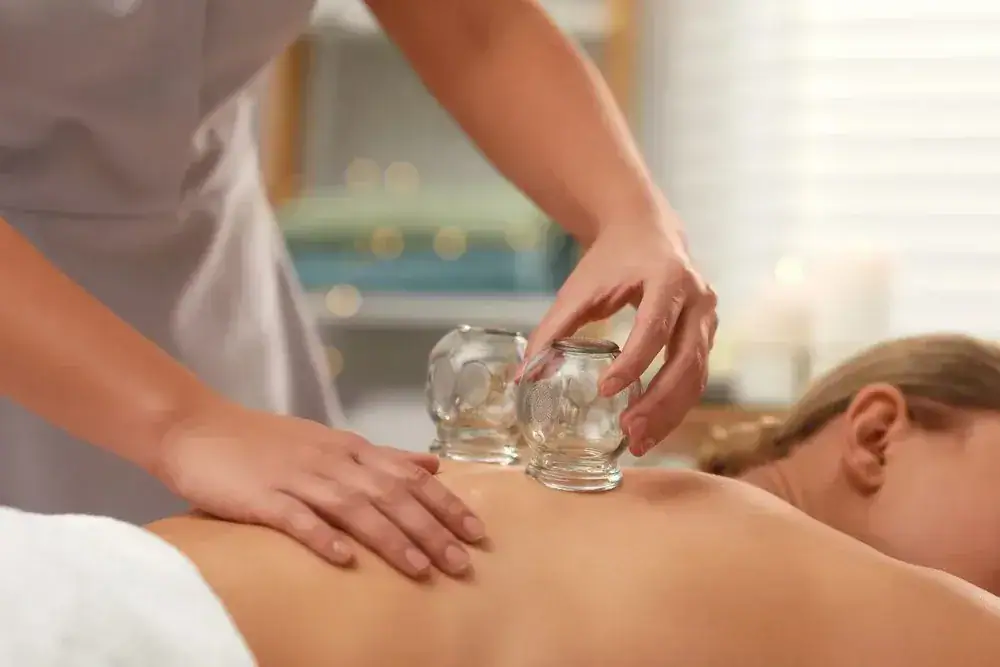
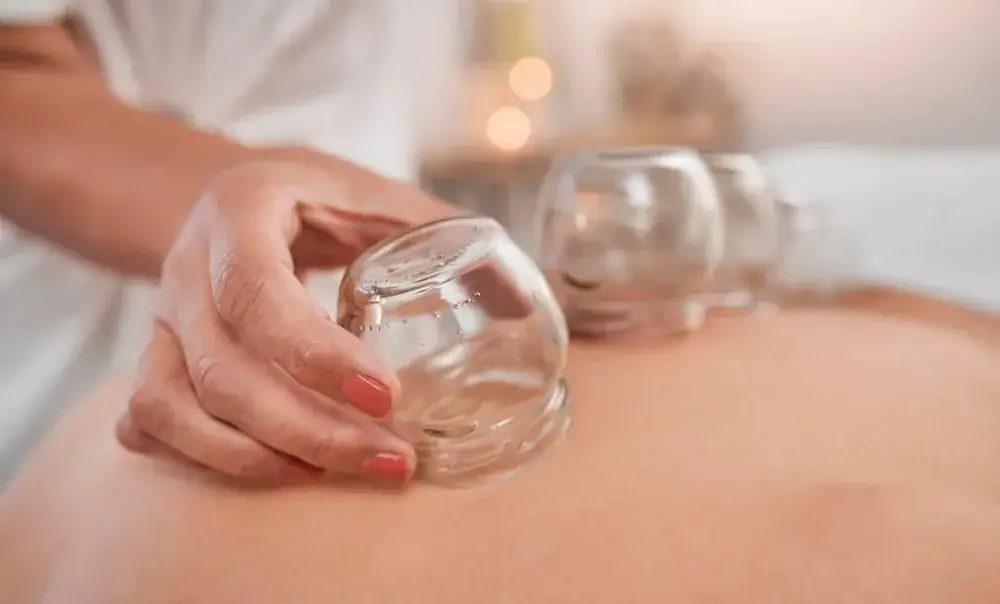
During the treatment, we place specialized cups on targeted areas—your back, shoulders, neck, or wherever you’re dealing with tension and pain. The suction pulls your skin up slightly, increasing blood flow to tissues that have been tight and oxygen-deprived. Most people feel immediate relief as the pressure releases.
Sessions typically last 15 to 20 minutes. You might see circular marks afterward—that’s normal and they fade within a few days. Those marks show where stagnant blood was pulled to the surface so fresh circulation could take over.
We usually recommend starting with two sessions per week, then tapering down as your symptoms improve. Some patients feel significantly better after three visits. Others with chronic conditions need a longer treatment plan. Either way, we adjust based on how your body responds, not some predetermined schedule.
Ready to get started?
Cupping therapy at Medcare isn’t a standalone treatment. It’s part of a complete approach that might also include manual therapy, targeted exercises, and movement training. We use dry cupping—no needles, no incisions—so it’s non-invasive and works for most people dealing with musculoskeletal pain.
This treatment is especially effective for chronic neck pain and lower back pain, two of the most common complaints we see in Lindenhurst. If you’ve been sitting at a desk for years or doing repetitive physical work, your muscles develop adhesions and trigger points that restrict movement and cause persistent discomfort. Cupping breaks up that stagnation.
Athletes use cupping for faster recovery after training. If you’re active—running, lifting, playing recreational sports—cupping helps reduce exercise-induced soreness and keeps your muscles loose. That means less downtime between workouts and fewer injuries from tight, overworked tissue.
You’ll also notice improvements in flexibility and range of motion. Movements that felt restricted or painful start to open up. That’s your fascia releasing and your muscles getting the circulation they need to function properly.
Yes, and there’s research backing it up. A study published in PLoS One found that cupping was effective for treating pain and disability associated with chronic low back pain in the short term. Patients reported measurable improvements in pain levels and daily function.
Here’s why it works: chronic back pain often stems from poor circulation and muscle tension that’s been building for months or years. Cupping increases blood flow to those areas, reduces inflammation, and helps release the tight bands of muscle that cause pain. It’s not a cure-all, but for many people dealing with persistent lower back issues, it provides relief that other treatments haven’t.
Most patients notice some improvement within the first few sessions. The key is consistency—your body needs time to break old patterns and build healthier tissue. If you’ve been dealing with back pain for a long time, expect a treatment plan that spans several weeks, not just one or two visits.
Your first session starts with a conversation, not treatment. We need to know what’s going on—where it hurts, how long it’s been an issue, what you’ve already tried. That information tells us how to approach your treatment and where to focus.
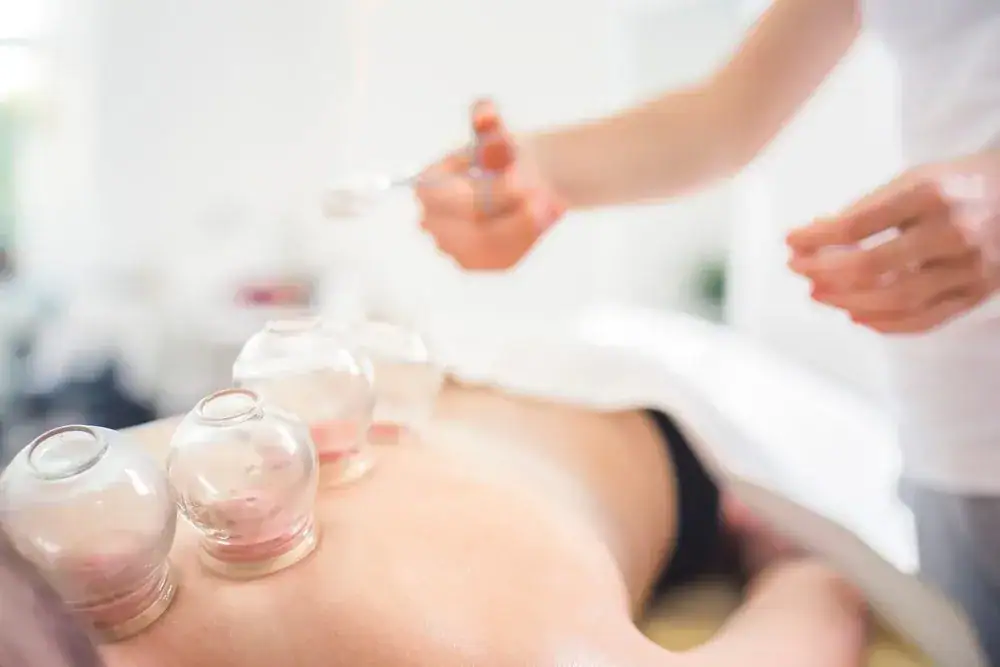
Once we start, you’ll lie down (face down for back treatments, face up for front-of-body work) and we’ll apply the cups to specific areas. You’ll feel a pulling sensation as the suction takes hold, but it shouldn’t be painful. Some people find it uncomfortable at first, others say it feels like a deep tissue massage. We adjust the pressure based on your tolerance.
The cups stay in place for 10 to 20 minutes. Afterward, you’ll likely see circular marks where the cups were—those are not bruises, they’re a sign that stagnant blood was drawn to the surface. They fade within a few days. You might feel sore for a day or two after your first session as your body adjusts, similar to how you’d feel after a tough workout. That soreness is temporary and decreases with subsequent treatments.
Cupping is a specialized technique we use within physical therapy—it’s not a replacement, it’s an addition. Regular physical therapy focuses on exercises, stretches, and manual techniques to improve strength, mobility, and function. Cupping targets circulation and muscle tension in a way that hands-on therapy alone can’t always achieve.
Think of it this way: if your muscles are locked up with adhesions and poor blood flow, doing exercises on top of that dysfunction won’t get you very far. Cupping helps release that tension first, so the exercises and stretches you do afterward are more effective. It’s about setting up the right conditions for your body to heal and respond to treatment.
We often combine cupping with other therapies—manual manipulation, targeted strengthening, movement retraining—to address both the symptoms and the underlying cause. You’re not just getting cupping and being sent home. You’re getting a complete plan designed around what your body actually needs to get better.
In most cases, yes—if it’s performed as part of a physical therapy treatment plan. Insurance companies typically cover cupping when it’s billed under physical therapy services and deemed medically necessary for your condition. That means you need a documented issue like chronic pain, limited mobility, or a musculoskeletal injury that cupping is helping to treat.
We verify your insurance benefits before you start treatment so there are no surprises. Every plan is different, so your copay and coverage limits will depend on your specific policy. Some plans cover cupping fully, others may apply it toward your deductible or require a copay per session.
If you’re paying out of pocket, we’ll discuss costs upfront. Transparency matters. You should know what you’re paying for and why, not find out after the fact. Our front desk team handles insurance questions daily and can walk you through what your plan covers and what your out-of-pocket responsibility will be.
It depends on what you’re dealing with and how long you’ve had it. Acute issues—like a recent sports injury or muscle strain—often respond quickly. You might feel significantly better after three to five sessions. Chronic conditions that have been building for months or years take longer because your body needs time to undo patterns that have been in place for a while.
Most treatment plans start with two sessions per week for the first few weeks, then taper to once a week as you improve. Some patients notice relief during their first session. Others need a few treatments before they feel a meaningful difference. That’s normal—everyone’s body responds at its own pace.
We reassess your progress regularly. If you’re not improving as expected, we adjust the plan. Maybe we need to address other areas contributing to your pain. Maybe we need to combine cupping with different manual techniques or exercises. The goal is always to get you better as efficiently as possible, not to keep you coming indefinitely.
Absolutely. Athletes use cupping to speed up recovery after intense training and to treat injuries that aren’t healing as fast as they should. When you push your body hard—whether you’re running, lifting, or playing competitive sports—your muscles accumulate metabolic waste and develop micro-tears that need fresh blood flow to repair. Cupping accelerates that process.
One case study documented a runner with over a year of iliotibial band pain who experienced instant relief after just three minutes of cupping. That’s not typical for everyone, but it shows how effective cupping can be when applied correctly to the right issue. For most athletes, cupping reduces soreness, loosens tight muscles, and improves range of motion so you can train harder without breaking down.
If you’re dealing with a specific injury—hamstring strain, shoulder impingement, ankle issues—cupping can be part of your rehab plan. It works alongside strengthening exercises and movement correction to get you back to your sport faster and with less risk of re-injury. You’re not just treating the pain, you’re addressing the dysfunction that caused it in the first place.
Other Services we provide in Lindenhurst