
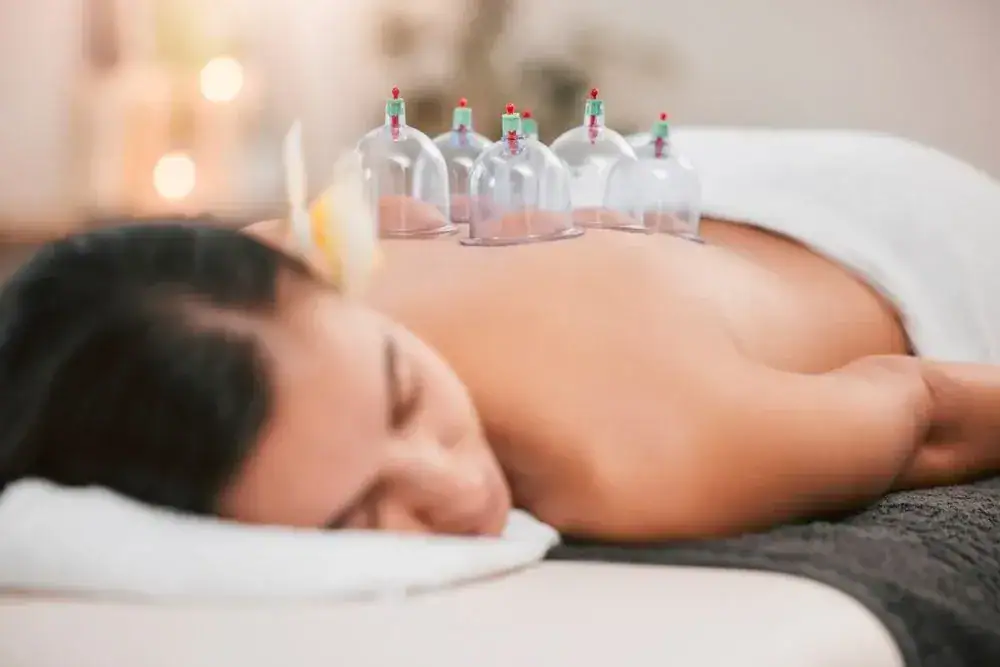

You know that knot in your shoulder that won’t quit? The lower back tension that makes getting out of bed feel like a negotiation? Cupping therapy works by creating suction on your skin that pulls blood flow directly to the problem area. More blood means more oxygen, more nutrients, and faster healing where you need it most.
The cups stay on for 5-10 minutes. During that time, they’re increasing circulation, breaking up adhesions in the tissue, and giving your muscles permission to release. Some people feel relief during the session. Others notice it a few hours later when they realize they’ve been moving their neck without wincing.
This isn’t a magic fix. But it’s a proven way to interrupt the pain cycle without adding another pill to your routine. If you’ve been dealing with chronic neck pain, back pain, or shoulder tightness that physical therapy alone hasn’t fully resolved, cupping gives your therapist another tool to get you there.
We operate multiple locations across Long Island, including our Physical Therapy Associates clinics in Smithtown and Speonk. Our therapists are licensed, trained in cupping techniques, and experienced in integrating this modality into full treatment plans.
We’re not a spa. We’re a physical therapy practice that uses cupping as part of a larger strategy to get you out of pain and back to your life. That means your treatment is personalized, your progress is tracked, and we adjust the approach based on what’s actually working.
Laurel Hollow residents come to us because we’re local, we’re responsive, and we don’t waste your time with treatments that aren’t moving the needle. You’ll know what we’re doing and why we’re doing it.
Your therapist starts with an assessment. They need to know where you’re hurting, how long it’s been going on, and what’s already been tried. This isn’t a one-size-fits-all treatment.
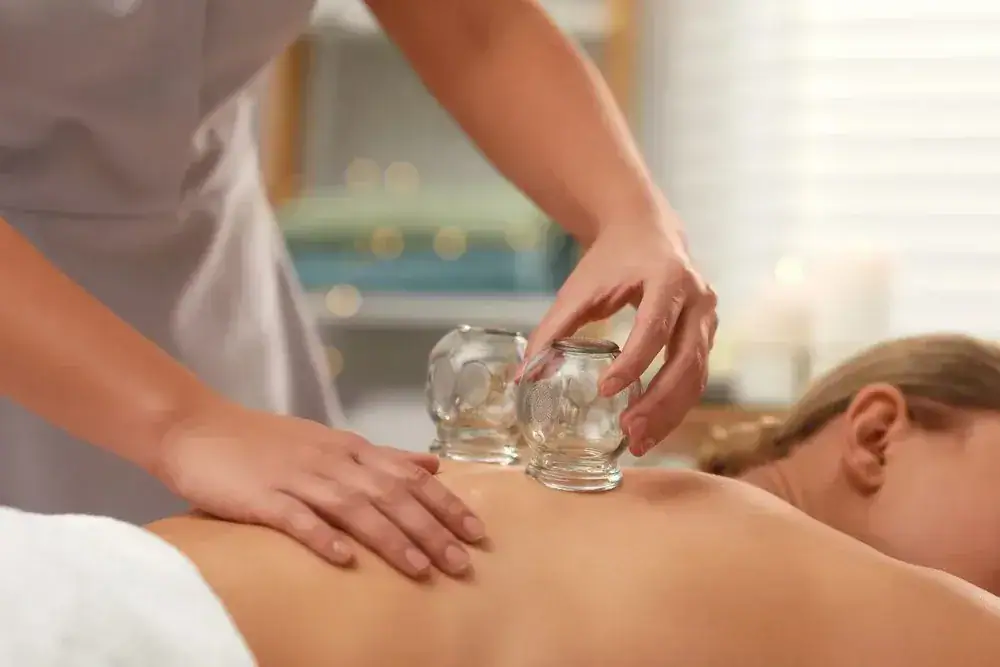
Once they’ve identified the areas to target, they’ll place cups on your skin—usually on your back, shoulders, neck, or legs. The cups create suction, either through heat or a manual pump. You’ll feel a pulling sensation, but it shouldn’t hurt. Most people say it feels like a deep tissue massage in reverse.
The cups stay on for 5-10 minutes while they do their work. After removal, you might see circular marks on your skin. Those aren’t bruises—they’re a sign of increased blood flow to the area. They fade within a week or so.
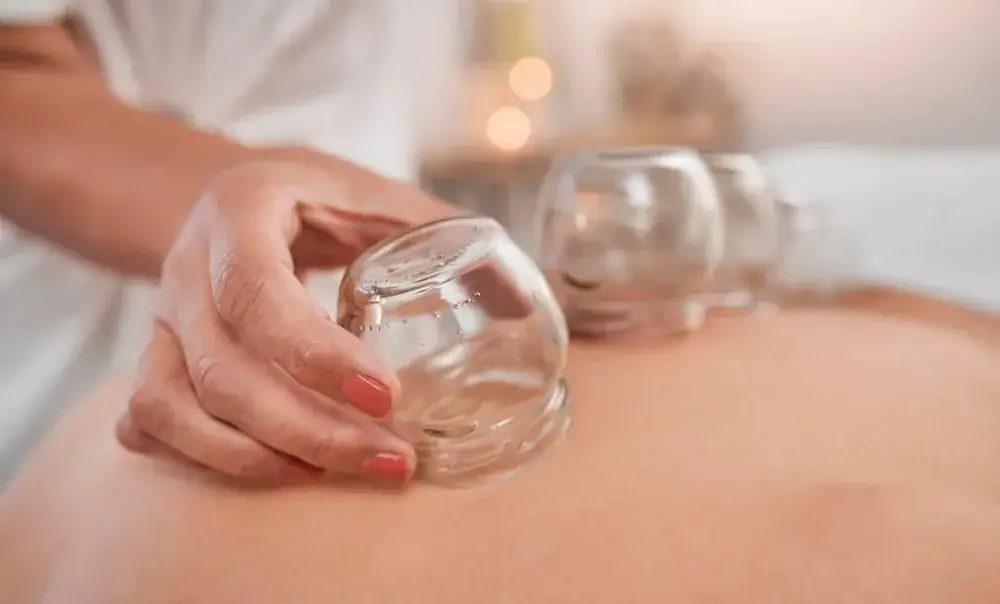
Depending on your condition, your therapist might use dry cupping, where the cups stay stationary, or sliding cupping, where they move the cups across your skin with oil. Both techniques help release tight muscles and improve mobility. Some patients feel immediate relief. Others need a few sessions before they notice a significant change.
Ready to get started?
Cupping works well for people dealing with chronic muscle pain—especially in the back, neck, and shoulders. If you’ve been sitting at a desk in Laurel Hollow or commuting into the city, you’re probably familiar with that kind of tension. It’s also effective for athletes dealing with muscle soreness, stiffness, or delayed recovery after training.
We use cupping to treat myofascial pain, trigger points, and scar tissue adhesions that limit your range of motion. It’s particularly helpful when combined with other physical therapy techniques like manual therapy, stretching, or strengthening exercises. The goal isn’t just to make you feel better for a day—it’s to address the root cause so the pain doesn’t keep coming back.
Cupping isn’t right for everyone. If you have open wounds, active infections, or certain skin conditions, your therapist will recommend a different approach. But for most people dealing with musculoskeletal pain, it’s a low-risk option that can make a real difference. Long Island residents dealing with chronic pain, poor circulation, or limited mobility often see improvement within a few sessions—especially when cupping is part of a broader treatment plan.
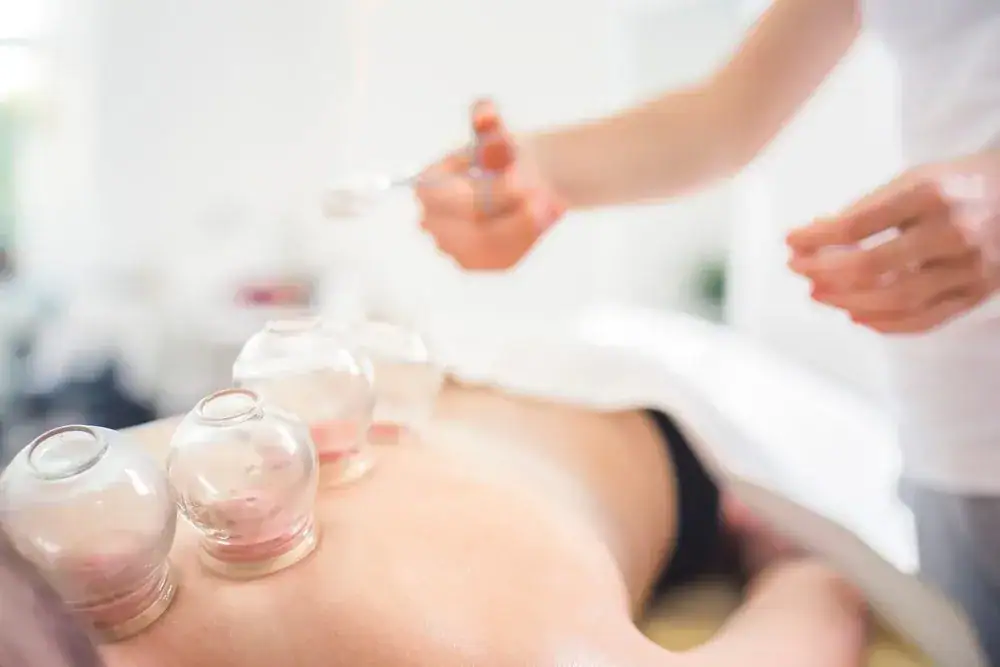
Yes, but it’s not a standalone cure. Cupping increases blood flow to targeted areas, which helps reduce inflammation, release muscle tension, and speed up recovery. Research shows it can be effective for myofascial pain, and some patients report relief after just one session.
That said, cupping works best when it’s part of a complete physical therapy plan. If your pain is caused by poor posture, weak muscles, or repetitive strain, cupping can provide relief—but you’ll also need to address those underlying issues. Your therapist will combine cupping with other treatments like manual therapy, exercise, and education to give you lasting results, not just temporary relief.
Those circular marks are caused by the suction pulling blood to the surface of your skin. They’re not bruises—they’re a sign that circulation increased in that area, which is exactly what we want. The marks are usually painless and fade within a few days to a week.
The color and intensity can vary depending on how much tension or stagnation was in the tissue. Darker marks often indicate areas with poor circulation or more muscle tightness. Lighter marks suggest less congestion. Your therapist can explain what they’re seeing and what it means for your treatment plan.
It depends on your condition. Some people feel significant relief after one or two sessions, especially if they’re dealing with acute muscle tension or soreness. Chronic pain or long-standing issues usually require more—often 4-6 sessions over a few weeks.
Your therapist will assess your progress after each session and adjust the plan as needed. If cupping isn’t delivering results within a reasonable timeframe, we’ll pivot to a different approach. The goal is always to get you better as efficiently as possible, not to keep you coming back indefinitely.
It depends on your plan. Cupping is often covered when it’s performed by a licensed physical therapist as part of a documented treatment plan for a diagnosed condition. Since we’re a physical therapy practice, many insurance plans will cover cupping as part of your PT visits.
We recommend calling your insurance provider to confirm coverage before your first session. Our team can also help verify your benefits and explain what to expect in terms of copays or out-of-pocket costs. If cupping isn’t covered, we’ll let you know upfront so there are no surprises.
Most people don’t find it painful. You’ll feel a pulling or tugging sensation when the cups create suction, and the area might feel tight while they’re on. Some describe it as a deep pressure—similar to a firm massage. If the suction is too strong or uncomfortable, your therapist can adjust it.
After the session, the treated area might feel a little sore, like you just had a workout. That soreness usually fades within a day or two. If you have a low pain tolerance or you’re nervous about trying cupping, let your therapist know. They’ll start gently and make sure you’re comfortable throughout the process.
Absolutely. In fact, that’s how we use it most often. Cupping works well alongside manual therapy, stretching, strengthening exercises, and other modalities like dry needling or electrical stimulation. Your therapist will design a treatment plan that addresses your specific condition, and cupping will be one piece of that plan.
For example, if you’re recovering from a sports injury, your therapist might use cupping to reduce muscle tightness and improve circulation, then follow up with exercises to rebuild strength and prevent re-injury. The combination approach tends to deliver better, longer-lasting results than any single treatment on its own.
Other Services we provide in Laurel Hollow