
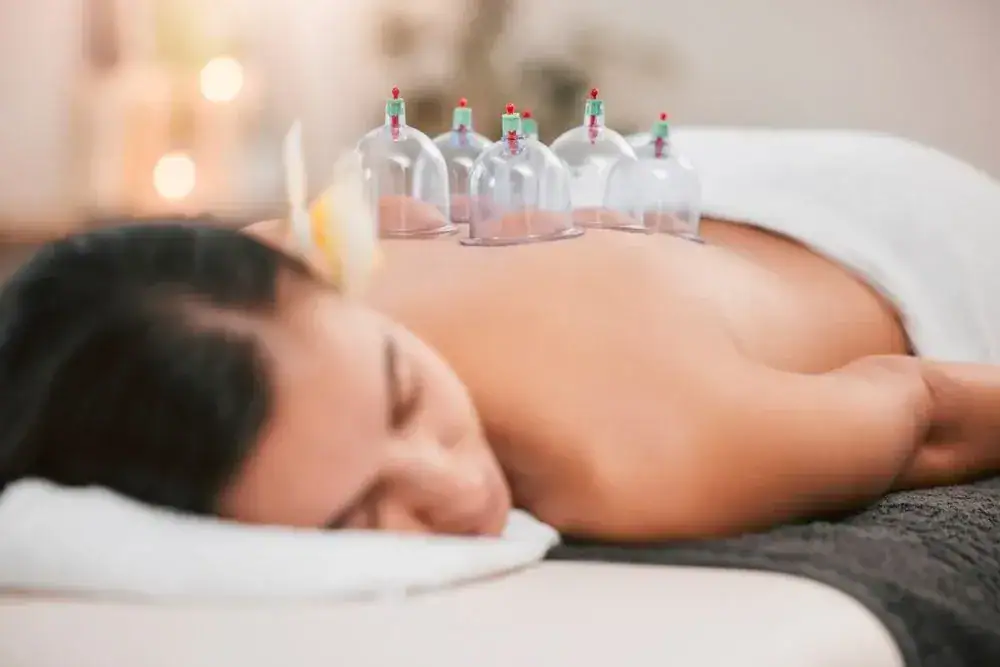

Your back stops locking up when you bend over. Your neck turns without that grinding sensation. You sleep through the night because your muscles aren’t screaming at you.
That’s what happens when cupping therapy addresses the root tension instead of masking it. The suction pulls blood to the surface, encourages tight muscle fibers to let go, and gives your body the circulation boost it needs to actually heal. Not just feel better for an hour.
You’re not looking for temporary relief. You want to move normally again. Cupping therapy combined with physical therapy gives your muscles the release they need and the strength to stay that way. It’s not magic. It’s targeted, it’s evidence-backed, and it works on the chronic tightness that’s been limiting your life.
We’ve been treating Long Island patients since 2010. We’re licensed, we’re local, and we specialize in bringing therapy to your home when getting to a clinic feels impossible.
Kensington families know how hard it is to juggle appointments, traffic, and recovery. That’s why we built our practice around in-home care that doesn’t compromise on quality. You get the same hands-on treatment, the same licensed professionals, and better outcomes because you’re comfortable.
We accept Medicare and most commercial insurance. Our team covers Nassau County and beyond, and every session is built around what your body needs—not what fits a template.
First, we assess where you’re holding tension and what’s limiting your movement. No assumptions. Just a real conversation about what hurts and what you’ve already tried.
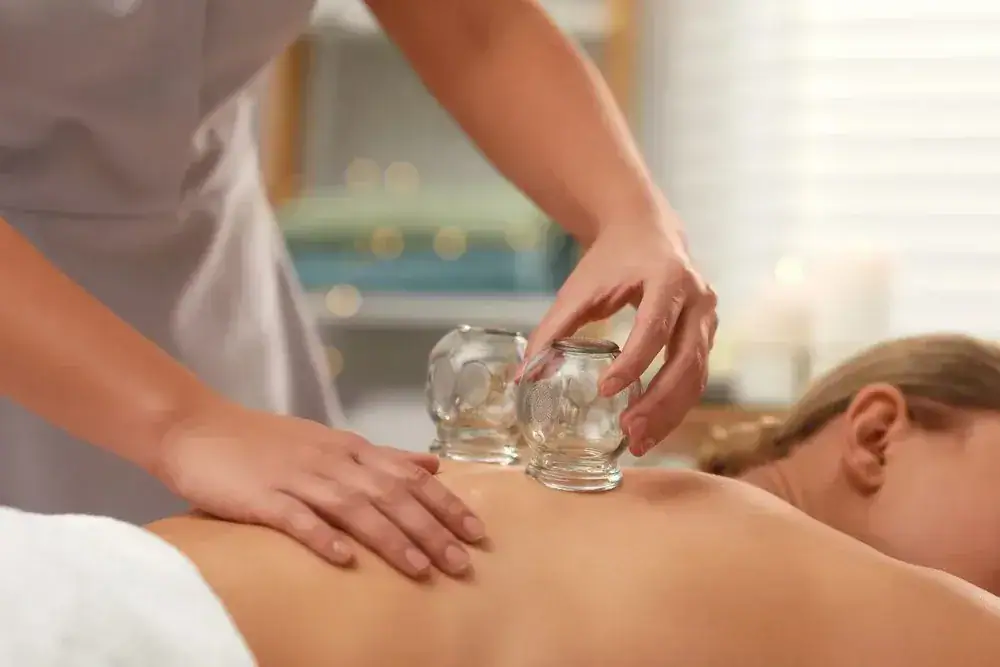
Then we apply the cups to targeted areas—usually your back, shoulders, neck, or legs. The suction creates negative pressure that pulls blood flow to the area and lifts the tissue. You’ll feel the pull, but it shouldn’t hurt. Most people say it’s intense but relieving.
We leave the cups on for 5 to 15 minutes depending on your tolerance and treatment goals. When we remove them, you’ll see circular marks. They’re not bruises—they’re evidence of increased circulation. They fade in a few days.
After cupping, we often integrate other physical therapy techniques to reinforce the work. Stretching, strengthening, manual therapy—whatever keeps you moving better long-term. You’re not getting cupping in isolation. You’re getting a complete plan.
Ready to get started?
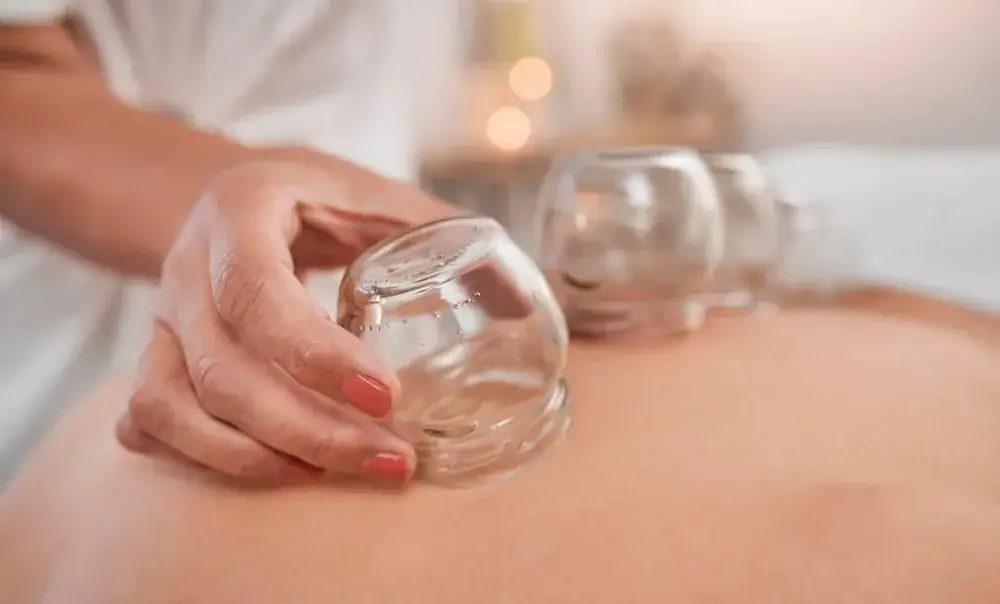
Cupping therapy isn’t one-size-fits-all. We use dry cupping for muscle relaxation and pain relief, adjusting suction intensity based on your comfort and condition. Some patients need light pressure. Others tolerate more and see faster results.
In Kensington and across Long Island, we’re seeing more patients turn to cupping because they’re tired of pills that don’t work or injections that wear off. The research backs it up—cupping significantly reduces chronic pain, improves range of motion, and helps with conditions like low back pain, neck stiffness, and knee osteoarthritis.
You’re also getting the benefit of working with physical therapists who understand how cupping fits into a bigger recovery picture. We’re not just placing cups and walking away. We’re addressing why you’re tight in the first place and building strength so it doesn’t come back.
Every session is customized. If you’re an athlete recovering from a hamstring strain, your treatment looks different than someone managing arthritis pain. That’s the point.
Yes, and there’s research to prove it. Studies show moderate-quality evidence that cupping therapy reduces chronic pain, especially for conditions like low back pain, neck pain, and knee osteoarthritis.
The mechanism is straightforward. Cupping increases blood flow to areas that aren’t getting enough circulation. That helps reduce inflammation, relax tight muscles, and speed up tissue repair. When combined with physical therapy, patients report significant improvements in both pain levels and functional movement.
It’s not a cure-all, but it’s a legitimate tool. If you’ve tried traditional physical therapy alone and hit a plateau, adding cupping often breaks through that sticking point.
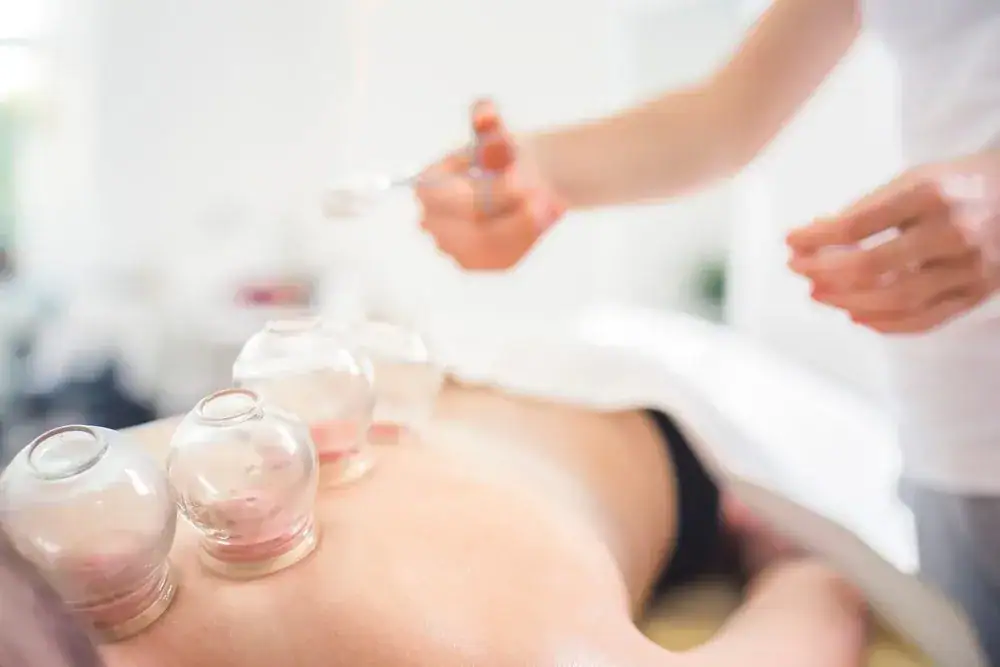
Dry cupping uses suction alone. We place cups on your skin, create a vacuum, and let the negative pressure do the work. It’s non-invasive, effective for muscle tension, and what most people think of when they hear “cupping therapy.”
Wet cupping involves making small incisions before applying the cups, allowing a small amount of blood to be drawn out. It’s used in some traditional medicine practices, but it’s not what we focus on at Medcare. Dry cupping gives you the benefits—pain relief, improved circulation, muscle relaxation—without any cutting.
For most patients dealing with chronic pain or sports injuries, dry cupping is more than enough. It’s safer, simpler, and still delivers real results.
You’ll have circular marks, but they’re not bruises in the traditional sense. Bruises happen when blood vessels break due to trauma. Cupping marks happen because we’re intentionally drawing blood to the surface to increase circulation.
The marks are usually dark red or purple and fade within 3 to 7 days. Some people barely mark at all. Others mark heavily depending on how much stagnation or tension is in the tissue. It’s actually a useful diagnostic tool—it shows us where your body needs the most work.
If you’re worried about appearance, plan your sessions accordingly. But most patients stop caring once they feel how much better they move afterward.
Absolutely. Athletes use cupping to speed up recovery, reduce muscle soreness, and improve range of motion. Research shows that cupping significantly increases hamstring flexibility in high-level athletes and helps reduce pain after intense training.
If you’ve pulled a muscle, strained a tendon, or you’re dealing with lingering tightness that’s affecting performance, cupping gets blood flowing to the area faster than passive rest alone. That means quicker healing and less downtime.
We work with runners, weightlifters, weekend warriors—anyone who’s pushed their body and needs to get back to training without risking re-injury. Cupping isn’t a shortcut, but it’s a smart addition to your recovery plan.
It depends on your plan, but in many cases, yes. When cupping is performed by a licensed physical therapist as part of a broader treatment plan, it’s often covered under your physical therapy benefits.
We accept Medicare and nearly all commercial insurance plans. We’ll verify your coverage before your first session so there are no surprises. If cupping is billed as part of your physical therapy visit, it’s typically covered the same way any other manual therapy technique would be.
If you’re paying out of pocket, we’ll discuss costs upfront. But most of our Kensington and Long Island patients are able to use their insurance without issue.
Most patients notice improvement within 2 to 4 sessions, but the total number depends on your condition, how long you’ve had it, and how your body responds. Acute injuries often resolve faster. Chronic pain takes more time.
We don’t lock you into a rigid schedule. After your first session, we’ll assess how you’re responding and adjust from there. Some people come weekly. Others space sessions out as they improve.
The goal isn’t to keep you coming forever. It’s to get you functional, pain-free, and strong enough to maintain it on your own. Cupping is part of that process, not the entire solution.
Other Services we provide in Kensington