


You’re dealing with pain that’s been around too long. It’s affecting your sleep, your workouts, your ability to pick up your kids or sit through a workday without constantly shifting positions. You’ve tried stretching, heating pads, maybe even medication that barely takes the edge off.
Cupping therapy works by mechanically lifting and separating the layers of fascia that have become dense, restricted, and painful. When one of our licensed physical therapists places cups on specific areas, the suction creates space between tissue layers, increases blood flow to oxygen-starved muscles, and triggers your body’s natural healing response.
The result isn’t just temporary relief. You’re looking at reduced muscle tightness, better range of motion, and the kind of pain reduction that lets you get back to normal activities without constantly managing discomfort. Most people notice improved mobility within the first few sessions, especially when cupping is combined with targeted physical therapy exercises.
This isn’t about masking symptoms. It’s about addressing restricted tissue, improving circulation where it’s needed most, and giving your body the mechanical advantage it needs to actually heal.
We’ve been serving Long Island communities since 2010, including right here in Islip Terrace, NY. The therapists performing cupping therapy at Medcare are licensed physical therapists with specific training in this technique—not spa practitioners, not weekend-certified technicians.
That distinction matters when you’re dealing with chronic pain, sports injuries, or recovering from surgery. You need someone who understands musculoskeletal anatomy, can assess movement patterns, and knows how to integrate cupping into a broader treatment plan that actually works.
Islip Terrace residents have access to the same evidence-based approach we use across all our locations. Your treatment is documented, your progress is measured, and your insurance is accepted at most major providers. No surprises, no upselling, just straightforward care focused on getting you functional again.
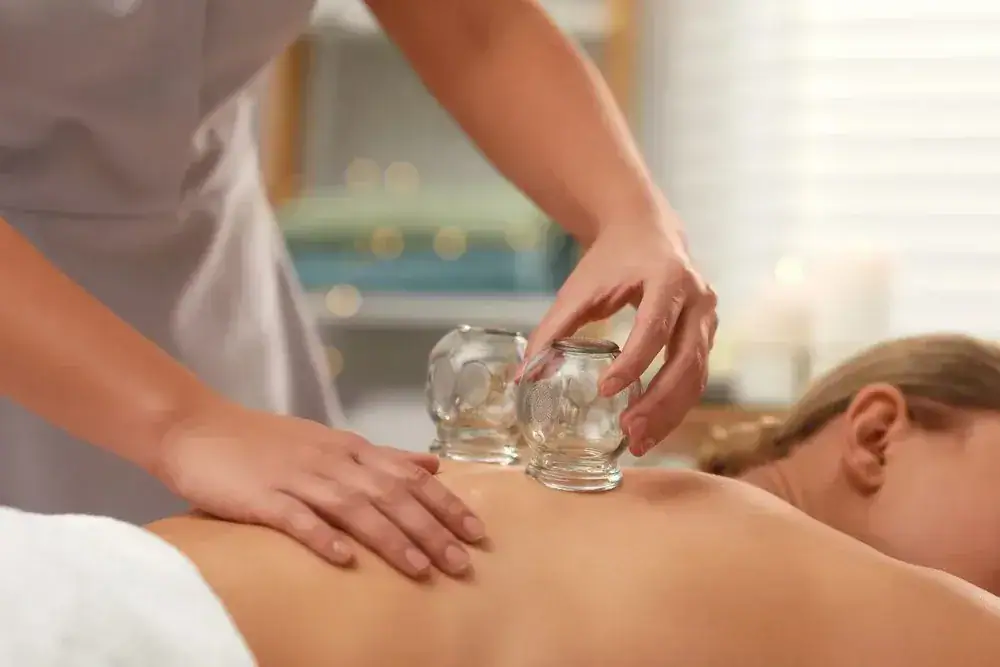
Your first visit starts with an evaluation. Your physical therapist assesses your pain, tests your range of motion, and identifies which areas are restricted or inflamed. This isn’t a one-size-fits-all treatment—the cup placement, suction intensity, and session length depend entirely on what your body needs.
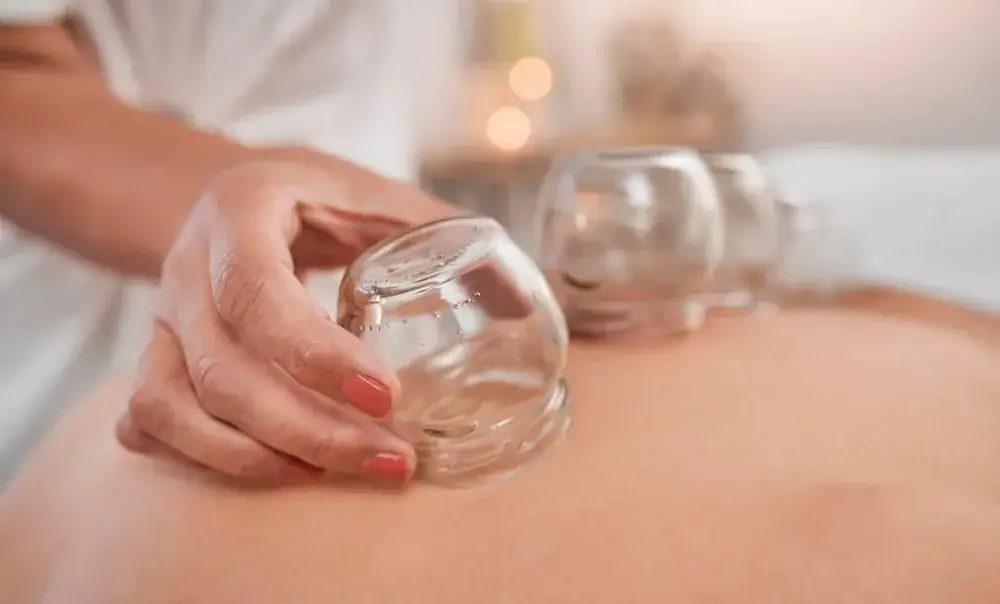
During the session, cups are placed on targeted areas creating suction that lifts the skin and underlying tissue. Most people describe the sensation as a tight pull, not painful but definitely noticeable. The cups stay in place for several minutes while your therapist may perform gentle movement or stretching to enhance the fascial release.
You’ll likely see circular marks afterward—that’s normal and expected. They’re not bruises in the traditional sense but rather a sign of increased blood flow to areas that were previously restricted. These marks fade within a few days to a week.
Between sessions, your therapist will give you specific exercises or stretches to maintain the improvements. Cupping works best when it’s part of a complete physical therapy plan, not as a standalone treatment. Most patients see measurable progress within three to six sessions, though chronic conditions may require ongoing maintenance.
Ready to get started?
We use dry cupping at Medcare, which means no bloodletting or invasive procedures—just controlled suction applied through silicone or glass cups. This method is safe, well-researched, and effective for conditions like chronic back pain, neck tension, shoulder impingement, and post-surgical scar tissue.
For athletes and active individuals in Islip Terrace, cupping accelerates muscle recovery after intense training. Research shows it significantly improves hamstring flexibility and reduces exercise-induced muscle soreness. If you’re training for a race, recovering from a sports injury, or just trying to stay active without constant pain, cupping gives your muscles the circulation boost they need to repair faster.
Cupping also addresses fascial restrictions that develop from repetitive stress, poor posture, or old injuries that never fully healed. Many Islip Terrace residents spend hours commuting or sitting at desks—that creates specific patterns of tension through the neck, shoulders, and lower back. Cupping targets those exact areas where fascia has become dense and restricted.
Your treatment plan is built around your specific goals. Some people need aggressive fascial release combined with strength training. Others need gentle cupping for pain management alongside manual therapy. Your therapist adjusts the approach based on how your body responds, not based on a pre-set protocol.
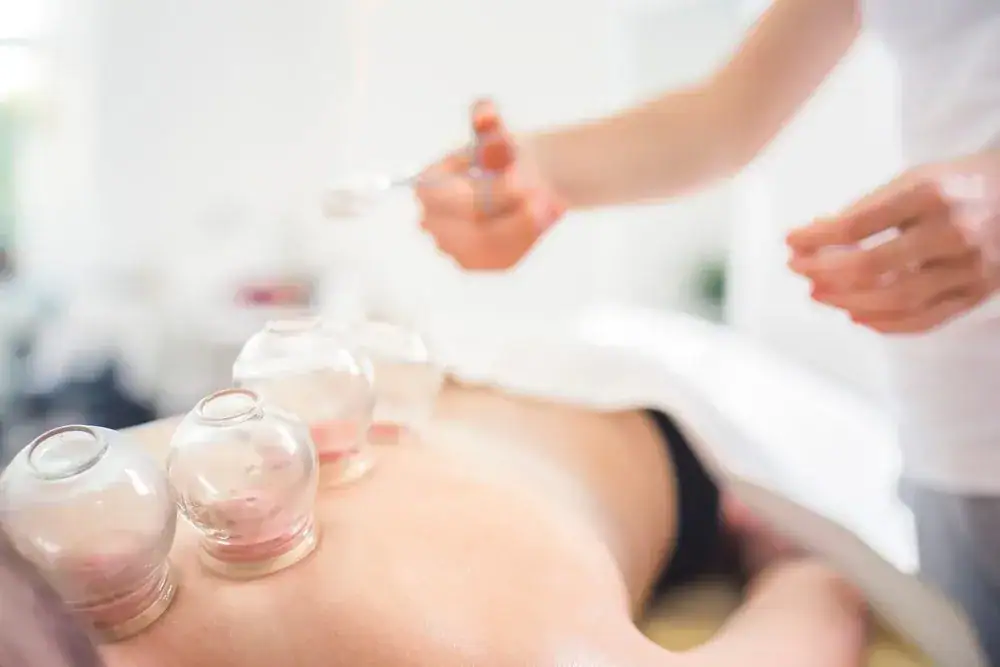
Cupping provides both immediate and cumulative benefits when performed correctly by a licensed physical therapist. The immediate effect comes from increased blood flow and fascial release—you’ll often notice reduced pain and improved mobility right after a session.
The longer-term benefits develop when cupping is combined with corrective exercises and repeated over several sessions. Research shows cupping significantly reduces pain intensity in chronic conditions like lower back pain, neck pain, and fibromyalgia. The key is addressing the underlying tissue restriction, not just treating surface-level symptoms.
If you’re only getting cupping without any follow-up exercises or movement correction, you’re likely looking at temporary relief that fades within days. But when it’s part of a complete physical therapy plan, the improvements build on each other. Your fascia stays more mobile, your muscles maintain better circulation, and your pain decreases in both frequency and intensity over time.
Yes, cupping typically leaves circular marks that look like bruises but aren’t actually bruises in the traditional sense. These marks are caused by increased blood flow and the breaking up of stagnant fluid in restricted tissue. They’re a normal part of the treatment and actually indicate that the therapy is working.
The marks usually fade within three to seven days depending on how restricted the tissue was and how your body processes the increased circulation. Areas with more chronic tension or poor blood flow tend to show darker marks that take longer to fade. As you continue treatment and your tissue becomes healthier, the marks often become lighter and disappear faster.
If you have an event coming up where the marks would be visible and problematic, let your therapist know beforehand. They can adjust cup placement or reduce suction intensity. But understand that lighter treatment may also mean less dramatic results. Most people find the temporary marks are worth the pain relief and improved function they get in return.
Massage pushes tissue down and works through layers by applying pressure. Cupping does the opposite—it lifts tissue up and creates space between fascial layers through suction. This mechanical difference makes cupping particularly effective for conditions where tissue has become densified, adhered, or restricted in ways that manual pressure can’t fully address.
Cupping also increases local blood circulation more dramatically than massage. The suction draws blood to areas that may have been oxygen-deprived for months or years due to chronic tension or injury. This increased circulation brings nutrients needed for healing and helps remove metabolic waste that contributes to pain and inflammation.
When combined with other physical therapy techniques like joint mobilization, therapeutic exercise, and manual therapy, cupping enhances overall treatment effectiveness. Your therapist might use cupping to release a restricted area, then immediately follow with specific movements to retrain proper mechanics. This integrated approach produces better outcomes than any single technique used alone.
In most cases, yes—when cupping is performed by a licensed physical therapist as part of your physical therapy treatment plan, it’s typically covered under your physical therapy benefits. The cupping itself isn’t billed separately; it’s included as a manual therapy technique within your overall PT session.
We accept most major insurance plans for physical therapy services in Islip Terrace, NY. Your coverage depends on your specific plan, deductible, and whether you need a referral from your primary care physician. Some plans cover PT with no referral needed, while others require authorization.
The best approach is to call your insurance company before your first visit and ask about your physical therapy benefits. Ask specifically: What’s my copay per PT visit? Do I need a referral? How many visits are covered per year? This gives you a clear picture of your out-of-pocket costs upfront. Our staff can also verify your benefits and provide cost estimates before you commit to treatment.
Most people notice some improvement after the first session—reduced pain, better range of motion, or less muscle tightness. But sustainable results typically require multiple sessions spread over several weeks, especially for chronic conditions that have been developing for months or years.
For acute issues like a recent muscle strain or post-workout soreness, you might see significant improvement within two to four sessions. For chronic pain, fascial restrictions, or long-standing movement dysfunction, expect six to ten sessions as part of a broader physical therapy plan. Your therapist will reassess your progress regularly and adjust the treatment frequency based on how you’re responding.
The goal isn’t endless treatment. It’s to get you functional, teach you how to maintain the improvements, and discharge you with the tools to manage your condition independently. Some people return periodically for maintenance sessions when old patterns start creeping back, but you shouldn’t need ongoing weekly treatment indefinitely unless you’re dealing with a progressive condition that requires long-term management.
Absolutely. Cupping has become increasingly popular in sports medicine because it accelerates muscle recovery and reduces exercise-induced soreness. Research shows cupping significantly improves range of motion in athletes, particularly for hamstring flexibility and shoulder mobility—two areas that commonly limit performance and increase injury risk.
When you push your muscles hard during training, metabolic waste builds up and micro-damage occurs in muscle fibers. This is normal and necessary for building strength, but it also causes soreness and temporary performance decline. Cupping increases blood flow to these areas, speeding up the removal of waste products and delivery of nutrients needed for repair.
For Islip Terrace athletes dealing with specific injuries—like a strained hip flexor, rotator cuff tendinitis, or IT band syndrome—cupping helps break up scar tissue and adhesions that form during healing. This prevents the injury from becoming chronic and helps restore normal movement patterns faster. Your physical therapist will combine cupping with targeted strengthening exercises to address both the tissue restriction and the movement dysfunction that contributed to the injury in the first place.
Other Services we provide in Islip Terrace