
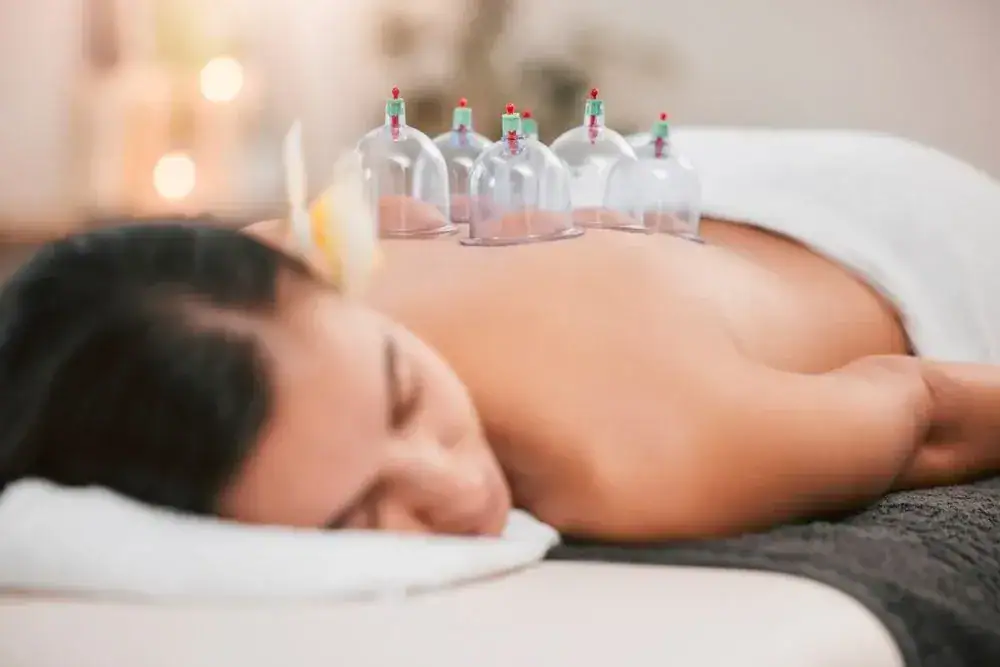

Your back stops screaming every time you bend over. Your neck actually turns when you check your blind spot. That nagging shoulder pain that’s been waking you up at night finally backs off.
Cupping works by creating suction on your skin, pulling fresh blood into areas that have been starved of circulation. More blood means more oxygen. More oxygen means faster healing and less inflammation in the tissues causing your pain.
You’re not masking symptoms with another pill. You’re addressing what’s actually wrong—restricted blood flow, tight fascia, muscle adhesions that won’t release on their own. The marks left behind aren’t bruises in the traditional sense. They don’t hurt. They’re just evidence that stagnant blood and metabolic waste are being pulled to the surface so your body can clear them out.
Most people notice looser muscles and better range of motion right after treatment. Some feel significant pain reduction within a day or two. It’s not a miracle. It’s just what happens when you get blood moving again in places it hasn’t reached in months or years.
We’ve been treating patients across Long Island since 2010. We’re not a spa offering cupping as an add-on. We’re licensed physical therapists who use cupping as part of comprehensive treatment plans.
Inwood residents come to us because we accept Medicare and most commercial insurance, we’re near multiple MTA lines including the C and 1, and we don’t rush you through a 15-minute appointment. You get a full evaluation, a treatment plan based on what’s actually causing your pain, and follow-up that adjusts as you improve.
Our affiliated locations—Physical Therapy Associates of Smithtown and Speonk Physical Therapy—have been serving Long Island communities since 2000 and 2004 respectively. We verify every provider, secure every patient record, and maintain the kind of operational standards that keep people coming back and referring their families.
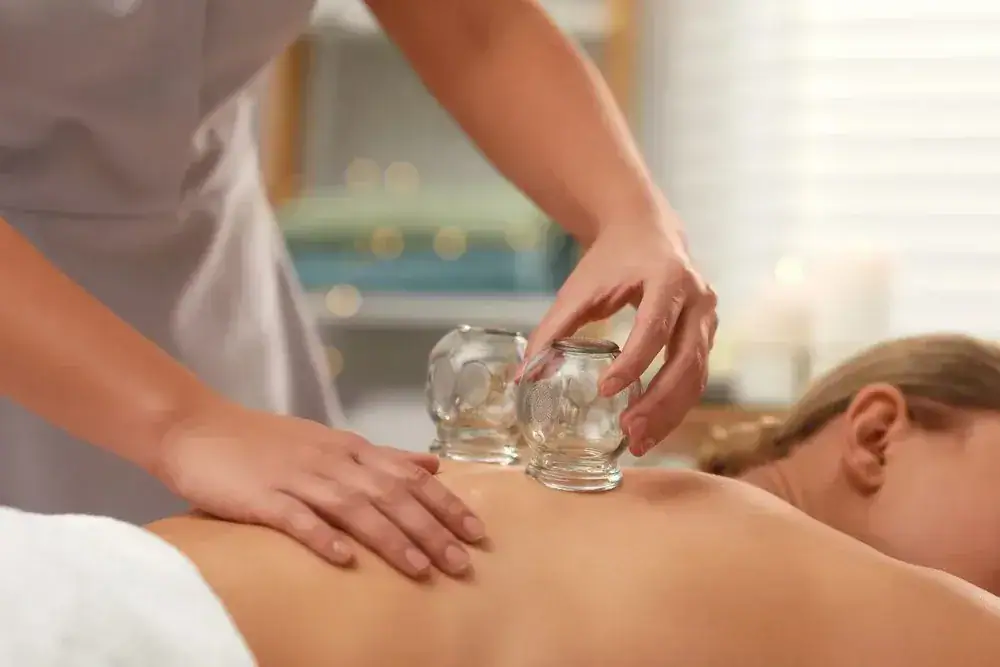
First visit starts with an evaluation. We ask where it hurts, what makes it worse, how long you’ve dealt with it, and what you’ve already tried. Then we assess your range of motion, check for muscle tightness, and figure out whether cupping is appropriate for your specific condition.
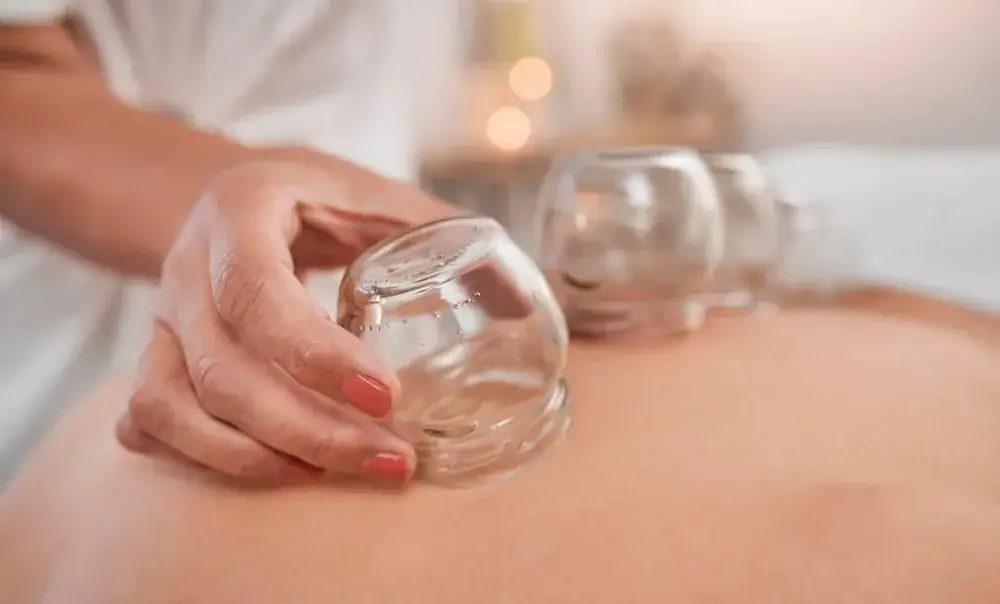
If it’s a good fit, we apply cups to targeted areas. These can be glass, silicone, or plastic cups that create suction either through heat or a manual pump. The suction pulls your skin and underlying tissue up into the cup. We might leave them stationary for several minutes (dry cupping) or move them across your muscles after applying oil to the skin.
You’ll feel a tight pulling sensation, but it shouldn’t hurt. If it does, we adjust the pressure. Most people find it oddly satisfying—like a deep tissue massage that gets into places hands can’t reach.
After we remove the cups, you’ll see circular marks ranging from light pink to deep red depending on how much stagnation was in that area. These marks aren’t painful and typically fade within a few days to a week. We’ll give you specific guidance on what to do next—whether that’s ice, heat, stretches, or a follow-up session.
Ready to get started?
Chronic neck and back pain respond particularly well. If you’ve been dealing with lower back pain that flares up every time you sit too long or lift something, cupping helps release the paraspinal muscles that have locked up. Same with neck pain from desk work or looking down at your phone all day.
Athletes and active Inwood residents use cupping for muscle recovery after training. It speeds up the healing process for strains, reduces soreness, and improves flexibility before competition. We see a lot of runners dealing with IT band issues, tennis players with shoulder impingements, and weekend warriors who overdid it and need to get back to normal quickly.
Fibromyalgia patients often find relief when other treatments haven’t worked. The combination of increased circulation and nervous system calming can reduce widespread pain and help you sleep better. We also treat tension headaches, sciatica, rotator cuff issues, and general muscle tightness that limits what you can do day-to-day.
Living in Inwood means you’re probably walking to the subway, carrying groceries, navigating stairs, and staying active in Inwood Hill Park. When pain limits those activities, cupping can be the reset your body needs to get back to your routine without constantly compensating for what hurts.
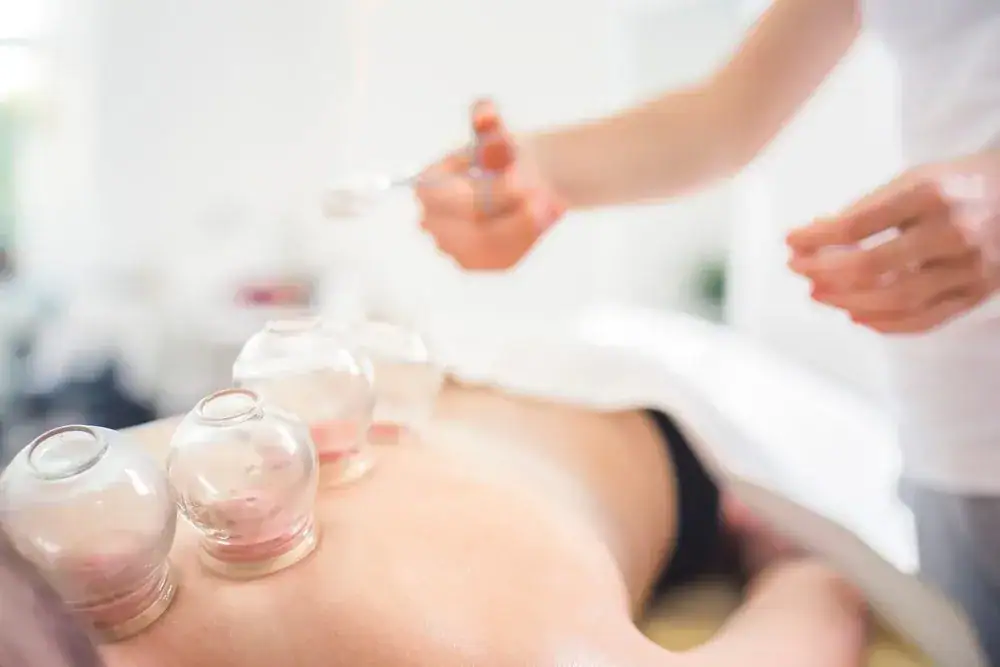
Yes, but not for every type of pain and not as a standalone treatment. Research shows cupping is effective for chronic neck pain, lower back pain, and fibromyalgia when combined with other therapies like stretching, strengthening exercises, and proper body mechanics.
The mechanism is straightforward. Cupping increases blood flow to oxygen-starved tissues, which reduces inflammation and speeds up healing. It also creates space between layers of fascia and muscle that have adhered together from chronic tension or injury. When those layers can move independently again, you move better and hurt less.
What cupping won’t do is fix structural problems like herniated discs, arthritis, or nerve compression from spinal stenosis. It’s not a replacement for surgery when surgery is actually needed. But for muscular pain, myofascial restrictions, and soft tissue dysfunction, it’s one of the most effective tools we have. Most patients notice improvement within two to three sessions, though chronic conditions that have been building for years typically require ongoing treatment.
The marks don’t hurt at all. They look dramatic—circular discolorations that can range from light pink to deep purple—but there’s no tenderness when you touch them. That’s the key difference between cupping marks and actual bruises from trauma.
When you bang your shin on a coffee table, you damage blood vessels and surrounding tissue, which causes pain and swelling. Cupping pulls stagnant blood to the surface without damaging anything. The darker the mark, the more stagnation was present in that area, but it doesn’t correlate with pain or injury.
You can go about your normal day immediately after treatment. Go to work, exercise, carry groceries, whatever you normally do. Some people feel a bit sore in the treated areas for a day or two, similar to post-workout soreness, but it’s mild. The marks typically fade within three to seven days depending on your circulation and how dark they were initially. If you have an event where you’ll be wearing something that shows the marks and that bothers you, just schedule your session accordingly.
Most people feel some improvement after the first session—better range of motion, less tightness, reduced pain when moving. But one session rarely solves a problem that’s been building for months or years.
Acute issues like a muscle strain from overdoing it at the gym might resolve in two to three sessions over a couple weeks. Chronic conditions like ongoing back pain, recurring neck tension, or fibromyalgia typically need consistent treatment over several weeks to see lasting change. We usually recommend starting with twice-weekly sessions for two weeks, then reassessing.
The goal isn’t to keep you coming forever. It’s to get you functional again, teach you how to maintain the improvements, and have you come back only when something flares up. Some patients do maintenance sessions once a month to stay ahead of problems, especially if their job or activities constantly stress the same areas. Others complete a treatment plan and don’t need to come back unless a new issue develops. It depends entirely on what’s causing your pain and how your body responds to treatment.
When cupping is performed by a licensed physical therapist as part of a physical therapy treatment plan, most insurance plans cover it. We accept Medicare and nearly all commercial insurance plans, and cupping falls under the physical therapy services that your plan already covers.
You’ll have the same copay or coinsurance that applies to your regular physical therapy visits. If you haven’t met your deductible yet, you’ll pay toward that. If you have a copay, that’s what you’ll pay per session. We verify your benefits before you start treatment so you know exactly what to expect.
The key difference is that cupping must be medically necessary and part of a documented treatment plan. We’re not doing cupping for general wellness or relaxation—we’re treating specific musculoskeletal conditions that limit your function. That’s what makes it billable to insurance. Spas and massage therapists who offer cupping typically can’t bill insurance because they’re not providing skilled physical therapy services. When you come to us, you’re getting licensed clinical treatment that your insurance recognizes and covers.
Dry cupping means we place cups on your skin, create suction, and leave them in place for several minutes without moving them. This is the most common approach and works well for targeting specific tight spots or trigger points.
Massage cupping (sometimes called gliding cupping) involves applying oil to your skin first, then moving the cups across larger muscle groups while maintaining suction. This technique is better for treating broader areas like your entire back or the length of your IT band. It feels more like a deep tissue massage and helps release fascial restrictions along longer muscle chains.
There’s also wet cupping, which involves making small incisions in the skin to draw out blood, but we don’t perform that. It’s more common in traditional Chinese medicine practices and comes with higher infection risk. Dry cupping and massage cupping give you the same therapeutic benefits—increased circulation, reduced muscle tension, faster recovery—without any breaking of the skin.
We choose the technique based on what we’re treating. Localized pain in your shoulder might get stationary dry cupping. Chronic tightness running down your entire leg might respond better to gliding cups. Sometimes we use both in the same session depending on what your body needs.
Yes, and that’s usually how we get the best results. Cupping prepares your tissues for other work by increasing blood flow and releasing superficial restrictions. Once that’s done, we can do more effective manual therapy, get you moving through exercises with better range of motion, and address deeper dysfunction.
A typical session might include cupping for 10-15 minutes to release your tight upper traps and neck muscles, followed by manual therapy to address joint restrictions in your cervical spine, then specific exercises to strengthen the muscles that should be supporting your neck but have been weak and underactive.
We also combine cupping with other modalities like electrical stimulation for pain relief, ultrasound for deeper tissue heating, or instrument-assisted soft tissue mobilization for stubborn adhesions. The goal is always to use the right tools for your specific problem, not to do cupping just because it’s trendy.
Some patients come in specifically requesting cupping because they’ve heard about it or seen athletes using it. That’s fine, but we’re going to evaluate whether it’s actually the right treatment for what’s wrong. If it is, great. If something else will work better, we’ll tell you that too. You’re here to get better, not to get a specific treatment just because you asked for it.
Other Services we provide in Inwood