
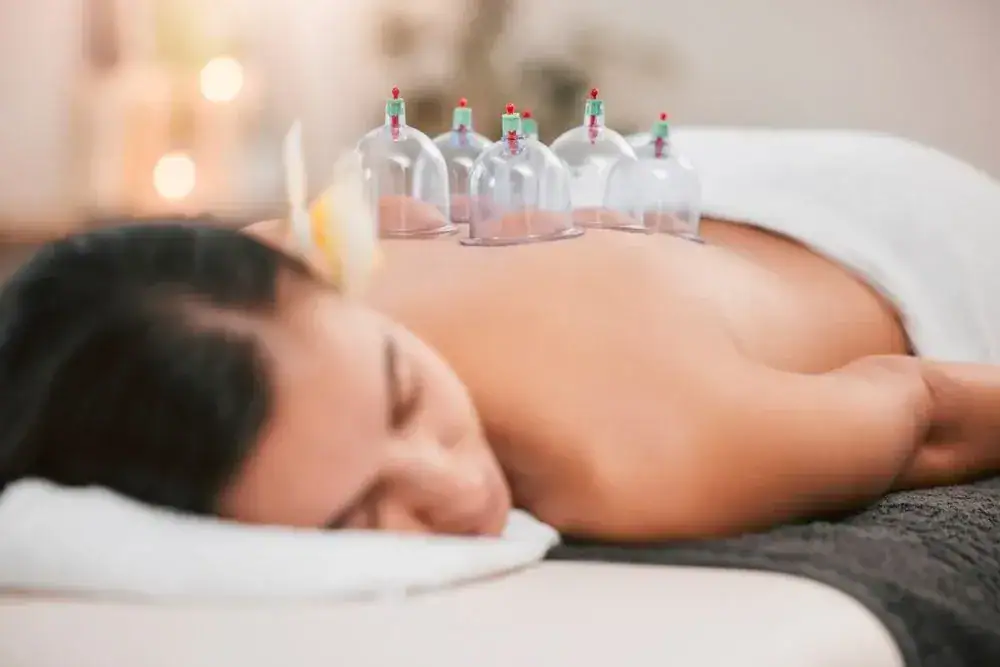

You wake up without that immediate reminder that something’s wrong. Your lower back doesn’t seize when you bend to tie your shoes. Your neck doesn’t punish you for sleeping wrong.
That’s what happens when cupping therapy targets the root issue—not just the symptoms. The suction pulls fresh blood to areas that have been starved of circulation, loosening muscle fibers that have been locked up for months or years. Inflammation drops. Range of motion improves. You start moving like you used to.
This isn’t about masking pain with another pill or waiting months for surgery. Dry cupping works by creating negative pressure on your skin, lifting tissue and encouraging your body to actually heal the area instead of just compensating around it. You’ll see results fast—often after a single session—and those results build as your muscles remember what it feels like to relax.
We’ve been treating patients across Long Island for years, with locations in Huntington Station, Smithtown, and Speonk. We’re not a wellness spa trying to add cupping to the menu. We’re licensed physical therapists who use cupping as part of a larger treatment strategy.
That means when you come in with chronic lower back pain, we’re not just slapping cups on you and calling it a day. We’re assessing how your pain started, what’s keeping it around, and how cupping fits into a plan that might also include manual therapy, targeted exercises, or other modalities.
Huntington Station has plenty of therapy options. What sets us apart is that we don’t oversell and we don’t underdeliver. You’ll know what to expect before we start, and you’ll leave with a clear picture of what’s next.
First, we talk. You tell us where it hurts, how long it’s been hurting, and what you’ve already tried. We assess your range of motion, check for inflammation, and figure out whether cupping is the right move or if something else makes more sense.
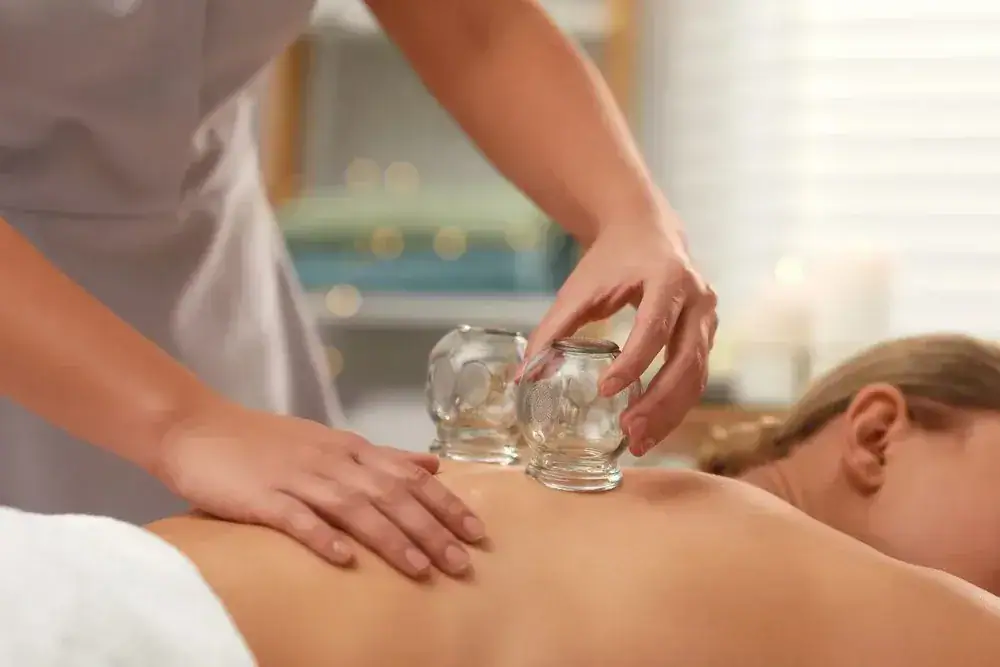
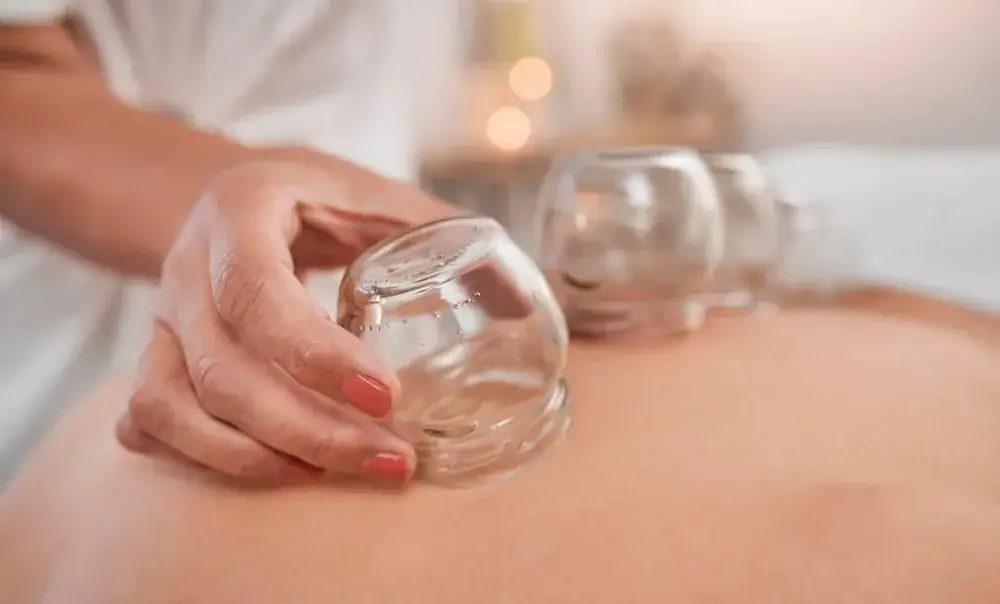
If cupping fits, we apply the cups to targeted areas—usually your back, neck, shoulders, or legs depending on where you’re dealing with pain or tightness. The suction creates negative pressure that lifts your skin and underlying tissue. It’s not painful. Most people say it feels like a deep pressure or a strong massage.
We leave the cups in place for five to fifteen minutes while they do their job: increasing blood flow, releasing muscle tension, breaking up adhesions. When we remove them, you might have circular marks that last a few days. That’s normal. It’s not a bruise—it’s increased circulation doing exactly what it’s supposed to.
After your session, we talk about what you should feel, what to watch for, and when to come back. Some people feel immediate relief. Others notice gradual improvement over the next few days as inflammation continues to drop.
Ready to get started?
Cupping therapy at Medcare isn’t a standalone gimmick. It’s integrated into your physical therapy plan, which means you’re getting a licensed therapist who understands musculoskeletal conditions, not someone who took a weekend course.
We treat chronic lower back pain, neck pain, knee osteoarthritis, sports injuries, post-surgical recovery, and general muscle tension. If you’re an athlete in Huntington Station dealing with tight hamstrings or shoulder pain from overuse, cupping speeds up your recovery by improving circulation to fatigued muscles. If you’re managing arthritis and tired of relying only on medication, cupping reduces inflammation and stiffness in ways that pills can’t.
Here’s what matters for Long Island patients specifically: you’re not driving into Manhattan for this. You’re getting evidence-based care close to home, with transparent pricing and insurance acceptance. We also work around your schedule, because we know you’re busy and already dealing with enough.
You’ll get a personalized treatment plan, not a one-size-fits-all protocol. And if cupping isn’t helping after a few sessions, we’ll tell you and adjust the approach. No one benefits from dragging out treatment that isn’t working.
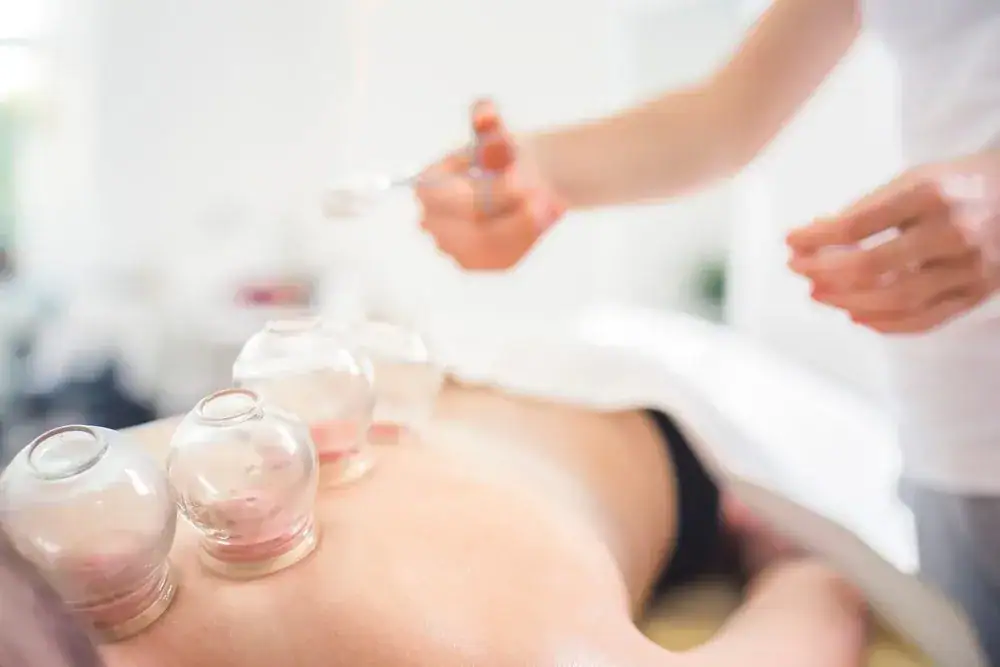
It works, and there’s clinical evidence backing it up. Studies show that cupping significantly reduces pain and improves function in patients with chronic lower back pain, neck pain, and knee osteoarthritis. The mechanism isn’t mysterious—it increases blood flow to areas that aren’t getting enough circulation, which helps reduce inflammation and relax tight muscle tissue.
That said, cupping isn’t magic. It’s not going to fix a herniated disc or reverse severe arthritis. But for muscle-related pain, tension, and inflammation, it’s one of the most effective non-invasive options available. We’ve seen patients who’ve been stuck in pain cycles for years finally get relief after integrating cupping into their physical therapy plan.
The key is using it correctly. Cupping works best when it’s part of a broader treatment strategy that addresses why you’re in pain in the first place, not just where it hurts.
Yes, you’ll likely have circular marks where the cups were placed. They typically last anywhere from three to seven days, depending on how much suction was used and how your body responds. These aren’t bruises in the traditional sense—they’re the result of increased blood flow to the surface of your skin.
Some people get darker marks than others. If your muscles are really tight or inflamed, the marks tend to be more pronounced. As you continue treatment and your circulation improves, the marks usually get lighter.
If you have an event coming up where you don’t want visible marks—like a wedding or a beach day—just let us know ahead of time. We can adjust the placement or intensity, or schedule your session so the marks have time to fade. Most people don’t care once they realize the marks mean the treatment is working.
Massage pushes tissue down. Cupping pulls it up. That difference matters when you’re dealing with deep tension or restricted fascia that manual pressure alone can’t reach.
Cupping creates negative pressure that lifts your skin and the layers underneath, which helps break up adhesions and scar tissue. It also draws blood to areas that have poor circulation—something massage can help with, but not as directly. When you combine the two, you get better results than either one alone.
We often use cupping before or during manual therapy. The suction loosens everything up, which makes subsequent hands-on work more effective. If you’ve ever felt like massage only provides temporary relief, adding cupping into the mix can help those results last longer.
Cupping is very safe when performed by a licensed professional. The most common “side effect” is the temporary marks we already talked about. Some people feel a little sore or tender in the treated area for a day or two afterward, similar to how you might feel after a deep tissue massage.
Rarely, someone might feel lightheaded during or right after treatment, especially if they’re dehydrated or nervous. That’s why we have you lie down during the session and check in frequently. Drinking water before and after your appointment helps.
Cupping isn’t appropriate for everyone. If you’re on blood thinners, have a skin condition in the treatment area, or are pregnant, we’ll talk through whether it makes sense or if we should use a different approach. We’re not going to push cupping if it’s not the right fit for your situation.
Some people feel noticeably better after one session. Others need a few treatments before they see significant improvement. It depends on what we’re treating, how long you’ve been dealing with it, and how your body responds.
For acute pain—like a muscle strain from overdoing it at the gym—you might only need one or two sessions. For chronic conditions like long-term lower back pain or neck stiffness, you’re probably looking at a series of treatments over a few weeks. We’ll give you a realistic timeline during your first visit based on what we find during the assessment.
What we won’t do is string you along with vague promises of “just a few more sessions.” If you’re not improving at the rate we’d expect, we’ll reassess and adjust the plan. The goal is to get you better and keep you better, not to keep you coming back indefinitely.
It depends on your plan. Because we’re a licensed physical therapy practice, many insurance companies will cover cupping when it’s part of your physical therapy treatment. We can’t guarantee coverage, but we’ll verify your benefits before you start and let you know what to expect.
If your insurance doesn’t cover it or you’re paying out of pocket, we’ll give you transparent pricing upfront. No surprises on the bill. We also accept various payment methods and can work with you on scheduling to make treatment manageable.
The bigger question isn’t whether insurance covers it—it’s whether the treatment is worth it. For most people dealing with chronic pain who’ve already spent money on medications, injections, or other therapies that didn’t work, cupping is one of the more affordable and effective options available.
Other Services we provide in Huntington Station