

You wake up without that stiffness in your lower back. You reach for something on a high shelf and your shoulder doesn’t lock up halfway through. You finish a workout and recover in days, not weeks.
That’s what happens when blood flow improves and muscle tension releases. Cupping therapy creates negative pressure that lifts tissue, separates fascial layers, and gets circulation moving to areas that have been tight or restricted for months or years.
The circular marks fade in a few days. The relief lasts longer. You’re not masking pain or waiting it out—you’re addressing what’s causing it. Most people notice improved range of motion after the first session. The chronic stuff takes consistency, but you’ll know pretty quickly if it’s working for you.
This isn’t about trends or celebrity endorsements. It’s about whether you can move through your day without compensating for pain, without cutting your activities short, and without wondering if this is just how your body feels now.
We operate across Long Island with a focus on personalized care that actually fits your schedule and your goals. Our Huntington location serves patients dealing with everything from sports injuries to chronic conditions that haven’t responded well to other treatments.
Our physical therapists are licensed, trained in cupping techniques, and experienced in integrating this therapy into comprehensive treatment plans. We’re not a spa. We’re a clinical practice where cupping is one tool among many—used when it makes sense for your specific condition.
Huntington residents come to us because we don’t oversell and we don’t waste time. You’ll get a real assessment, a clear explanation of what we’re doing and why, and a treatment plan that adapts as you progress. We manage multiple locations, maintain strict protocols for patient data security, and keep our communication direct. You’re not a number here, and you won’t get passed around between providers who don’t know your case.
First visit starts with an evaluation. We need to understand what’s causing your pain, how long you’ve dealt with it, and what you’ve already tried. This isn’t a formality—it determines whether cupping makes sense for you and how we’ll integrate it with other physical therapy techniques.
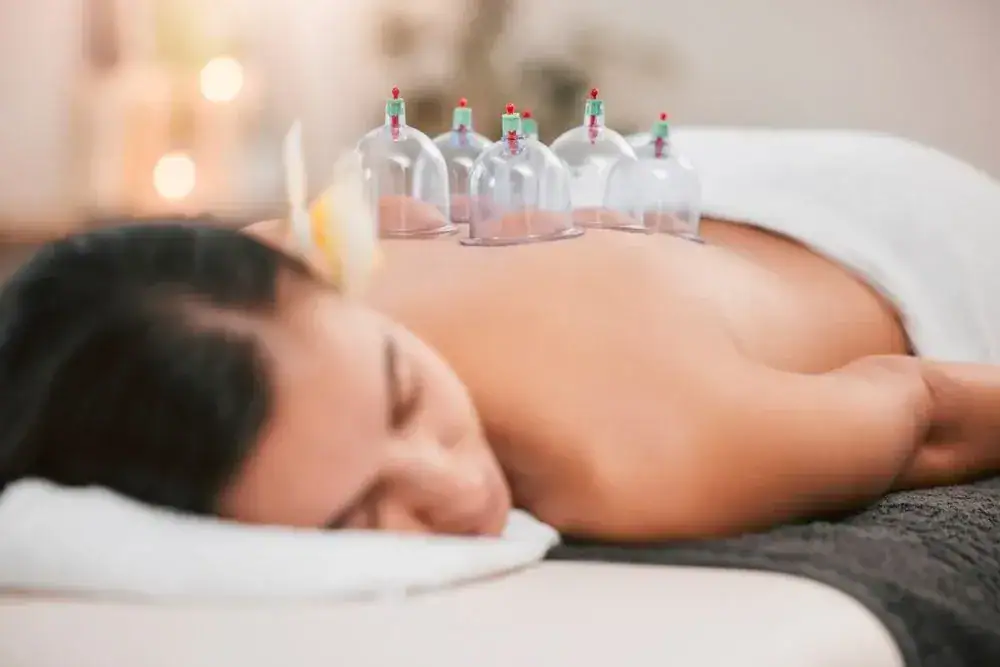
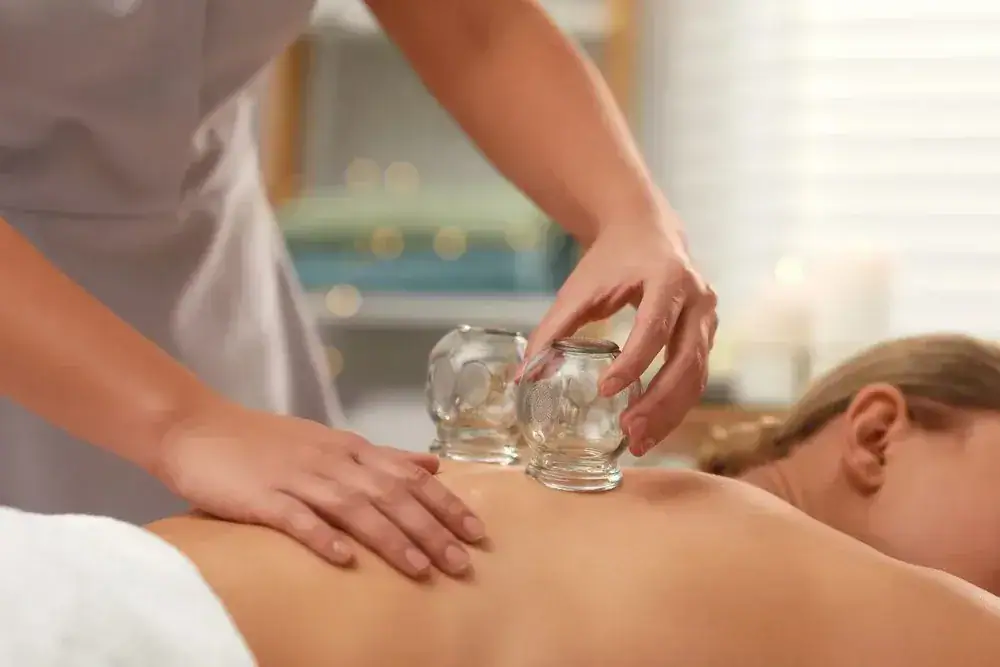
During the actual treatment, we place cups on specific areas of your body. These create suction that pulls tissue upward, increasing blood flow and releasing tension in muscles and fascia. Some people feel immediate relief. Others notice the difference over the next day or two as inflammation decreases and mobility improves.
Dry cupping uses suction alone. We might also use movement-based cupping where you actively move the affected area while cups are in place—this is particularly effective for shoulder and hip restrictions. Sessions typically last 15-30 minutes as part of a longer physical therapy appointment.
You’ll see circular marks where the cups were placed. They’re not bruises—they’re a result of increased blood flow to the area. They fade within a few days and aren’t painful. Most treatment plans involve multiple sessions over several weeks, with progress checks to make sure you’re actually improving, not just going through the motions.
Ready to get started?
Cupping therapy at our Huntington location is performed by licensed physical therapists as part of a complete treatment approach. You’re not just getting cups placed on your back—you’re getting clinical assessment, targeted treatment, and integration with exercises and techniques that support long-term improvement.
We treat chronic lower back pain, neck tension, shoulder restrictions, knee pain, and muscle tightness that limits your movement. Athletes use cupping for faster recovery between training sessions. People with desk jobs use it for tension that builds up from hours of sitting. Older adults use it when arthritis pain flares up and traditional approaches aren’t cutting it.
Long Island residents, particularly in Huntington, deal with a mix of active lifestyles and demanding work schedules. You’re not looking for temporary relief—you need something that works so you can keep doing what matters to you. Cupping helps by improving tissue mobility, reducing inflammation, and supporting your body’s natural healing response.
Each session is tailored to your comfort level. Some people tolerate stronger suction, others prefer a gentler approach. We adjust based on your response and your goals. You’ll leave with clear instructions on what to expect, how to support your recovery between sessions, and when to come back.
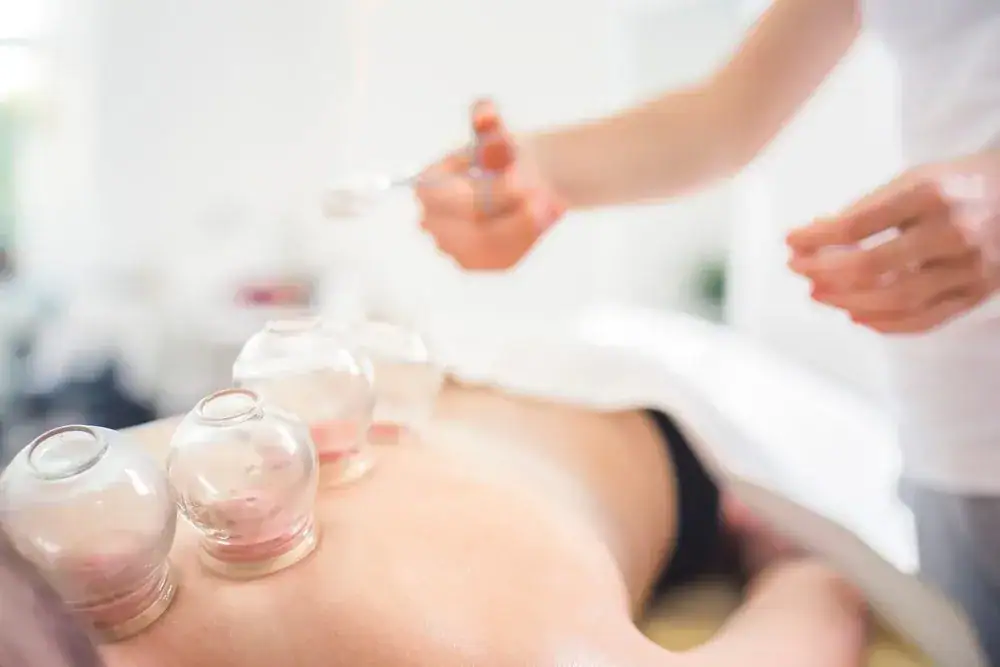
Yes, and there’s clinical evidence supporting it. Multiple studies show that cupping therapy provides relief for chronic lower back pain, often more effectively than standard care alone. The treatment works by increasing blood flow to restricted areas, releasing fascial tension, and reducing inflammation that contributes to ongoing pain.
Here’s what matters: cupping isn’t a one-session miracle. Chronic pain developed over time, and addressing it takes consistency. Most people notice some improvement within the first few sessions—better range of motion, less stiffness in the morning, or reduced pain during specific movements. Real, lasting relief typically requires several weeks of treatment combined with targeted exercises.
The research is clear that cupping works best as part of a comprehensive approach. That’s why we integrate it with other techniques rather than relying on it alone. You’re not just getting temporary relief—you’re retraining your body to move better and reducing the factors that caused the pain in the first place.
Massage pushes tissue down. Cupping pulls it up. That difference matters because many pain and mobility issues stem from fascial layers that are stuck together or compressed. The negative pressure from cupping mechanically lifts and separates these layers in a way that manual pressure can’t replicate.
When fascia gets dense or restricted—from injury, overuse, or chronic tension—it limits how your muscles move and can trap inflammation in the area. Cupping addresses this by creating space between tissue layers, improving fluid movement, and allowing better blood flow to reach areas that have been restricted.
You’ll feel the difference too. Massage typically feels like pressure and kneading. Cupping feels like a strong pull or suction. Some areas might feel tender if there’s significant restriction or inflammation, but it shouldn’t be painful. The sensation is distinct, and most people find it surprisingly comfortable once they get used to it. The marks left behind are also unique to cupping—they indicate increased circulation to the treated area and typically fade within three to seven days.
Cupping is safe when performed by trained professionals. Our physical therapists are licensed and specifically trained in cupping techniques, proper placement, and how to adjust treatment based on your individual response. The most common “side effect” is the circular marks left where cups were placed—these aren’t bruises and they don’t hurt.
Some people experience mild soreness in treated areas for a day or two after their first session, similar to how muscles might feel after a deep tissue massage or a tough workout. This is normal and typically decreases with subsequent treatments as your tissue responds and circulation improves.
Cupping isn’t appropriate for everyone. We don’t use it on people taking blood thinners, those with certain skin conditions, or in areas with open wounds or recent injuries. That’s why the initial evaluation matters—we need to know your full medical history before starting treatment. Serious complications are rare when cupping is performed correctly, which is why you want a licensed physical therapist doing this, not someone who took a weekend certification course.
Most people notice some improvement within two to three sessions, but the total number depends entirely on what we’re treating and how long you’ve had the problem. Acute muscle tension from a recent injury might respond quickly—sometimes in just a few sessions. Chronic conditions that have been building for years take longer.
A typical treatment plan runs six to eight sessions over several weeks. We’ll reassess your progress regularly and adjust the approach if you’re not improving as expected. Some people continue with occasional maintenance sessions after their initial treatment plan, especially athletes or those with physically demanding jobs.
Here’s the reality: if you’re not seeing any improvement after four to five sessions, cupping might not be the right approach for your specific issue, and we’ll tell you that. We’re not interested in stringing you along with treatments that aren’t working. The goal is measurable progress—better range of motion, reduced pain levels, improved function—not just showing up for appointments because that’s what’s scheduled.
Yes, and that’s actually how we prefer to use it. Cupping works best when integrated with other physical therapy techniques like targeted exercises, manual therapy, and movement training. The combination addresses both the immediate symptoms and the underlying movement patterns or weaknesses that contributed to your problem.
For example, if you have shoulder pain from restricted fascia and weak rotator cuff muscles, cupping helps release the fascial restriction while specific exercises strengthen the muscles that stabilize your shoulder. One without the other gives you incomplete results. Together, they create lasting improvement.
We also coordinate with other healthcare providers when needed. If you’re seeing a chiropractor, primary care doctor, or specialist, we’ll communicate about your treatment plan to make sure everything works together. Cupping is a tool, not a standalone solution. The real results come from a complete approach that addresses why you’re in pain, not just where it hurts.
Your first appointment starts with a thorough evaluation—we’ll discuss your pain history, what activities make it worse, what you’ve already tried, and what your goals are. Then we’ll do a physical assessment to identify restrictions, test your range of motion, and determine if cupping is appropriate for your condition.
If we move forward with treatment that day, we’ll explain exactly what we’re doing and why. You’ll feel the suction as cups are applied, and we’ll check in to make sure the pressure is comfortable. The cups typically stay in place for 5-15 minutes, though this varies based on the technique we’re using and your specific needs.
After the cups are removed, we’ll likely incorporate other treatments or exercises into the same session. You’ll leave with clear instructions on what to do at home, what sensations are normal over the next day or two, and when to schedule your next appointment. The entire visit usually takes 45-60 minutes. Bring any relevant medical records or imaging results if you have them—the more information we have, the better we can target your treatment.
Other Services we provide in Huntington