
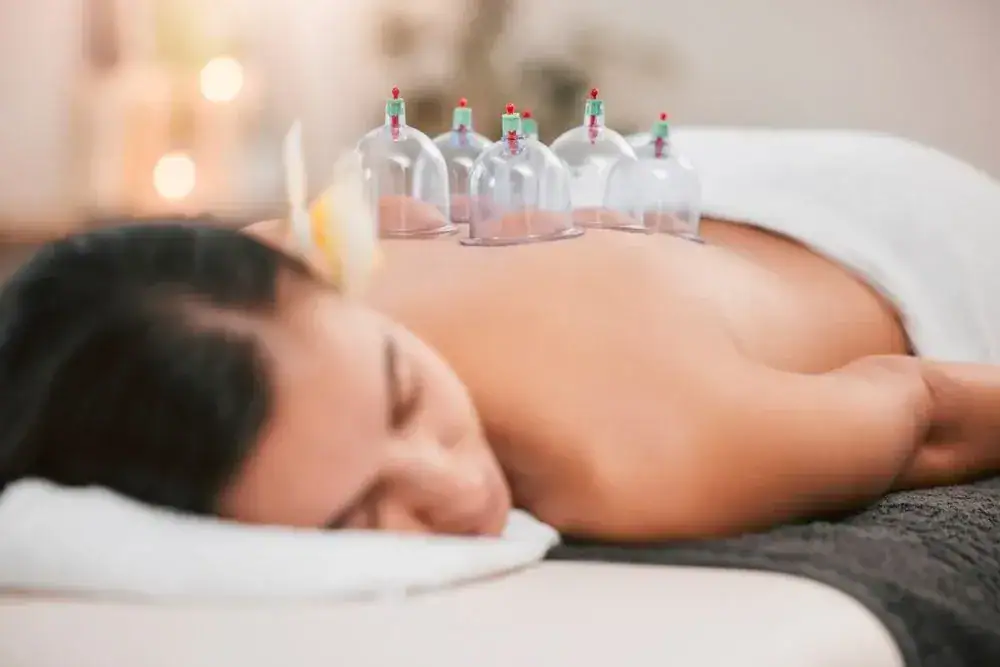

You’ve tried heat packs, stretching, maybe even cortisone shots. The pain keeps coming back because the tension never fully releases. Cupping therapy works differently—it pulls blood to the surface, separates stuck tissue, and gives your muscles room to move again.
Most people feel looser after the first session. That tightness in your lower back, the knot in your shoulder that won’t quit, the neck pain that makes turning your head a chore—cupping addresses the root cause by improving circulation and breaking up fascial restrictions that keep you stuck in the pain cycle.
This isn’t about masking symptoms. It’s about giving your body what it needs to actually heal. When blood flow improves and muscle fibers relax, you move better, sleep better, and stop planning your day around what hurts.
We’ve been treating patients across Long Island for over a decade, with affiliated centers in Smithtown and Speonk. We specialize in home-based physical therapy for people who can’t easily get to a clinic—whether that’s due to mobility issues, recovery limitations, or just the reality of living in a busy place like Hicksville.
Our therapists are certified in cupping dynamics, myofascial release, and functional therapy techniques. We accept Medicare and most commercial insurance plans. Every session is built around what you need, not what fits a template.
You’re not driving to us. We’re coming to you. That’s how we’ve worked since day one.
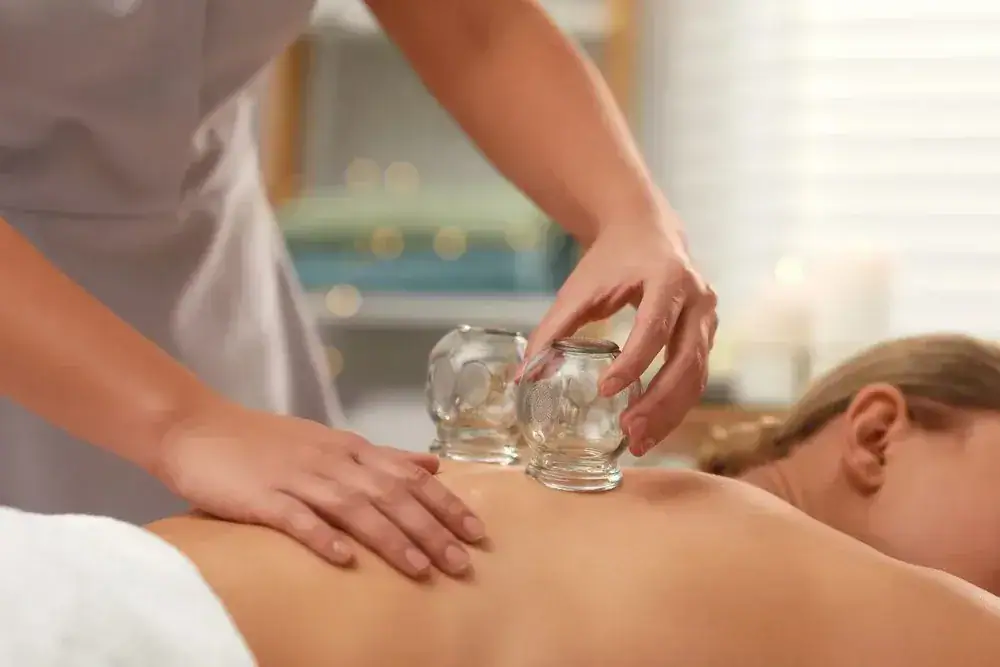
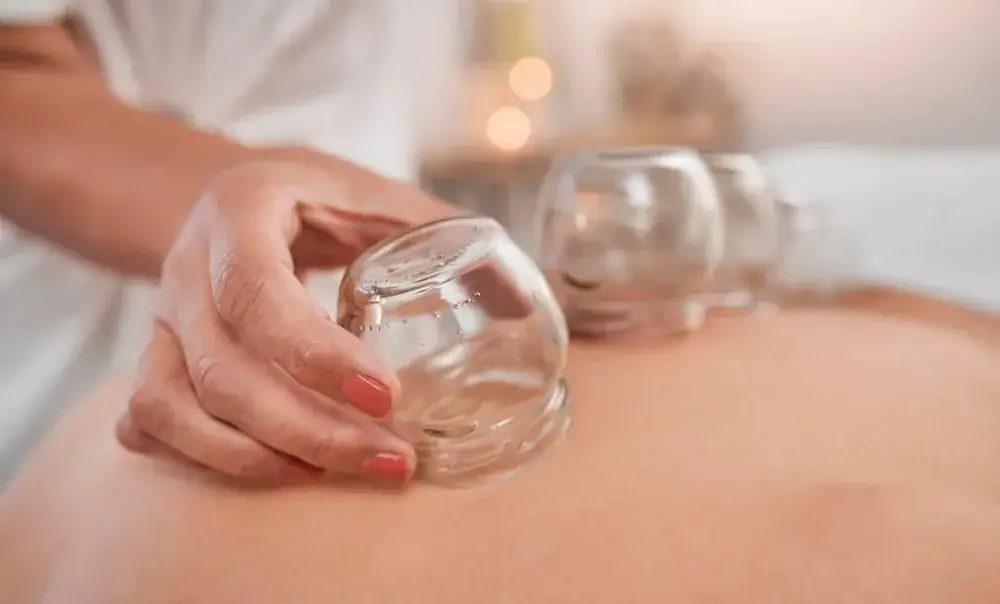
We start with an evaluation—where the pain is, how long it’s been there, what makes it worse. Then we place cups on the affected area using suction to lift the skin and underlying tissue. This creates negative pressure that pulls blood to the surface and separates layers of fascia that have been stuck together.
The cups stay on for several minutes. Some people feel immediate relief. Others notice the difference a day or two later when stiffness fades and range of motion improves. You might see circular marks afterward—that’s normal and they fade within a few days.
Cupping is often combined with other techniques like manual therapy or therapeutic exercise, depending on what your body responds to. Sessions typically last 45 to 60 minutes. Most patients start with twice a week, then taper as symptoms improve.
Ready to get started?
Cupping works well for chronic low back pain, neck pain, shoulder tension, and muscle strains that haven’t responded to rest alone. Research shows it’s particularly effective for myofascial pain and improving functional mobility in people dealing with persistent discomfort.
In Hicksville and across Nassau County, we see a lot of desk workers with upper back tightness, trades professionals with lower back issues, and older adults managing arthritis-related stiffness. Cupping helps all of them by increasing local blood flow and reducing the kind of muscle guarding that keeps pain locked in place.
We also use cupping as part of post-surgical rehab, sports injury recovery, and chronic pain management. It’s not a standalone fix—it works best when combined with movement therapy and strengthening. But for releasing tension and jump-starting the healing process, it’s one of the most effective tools we have.
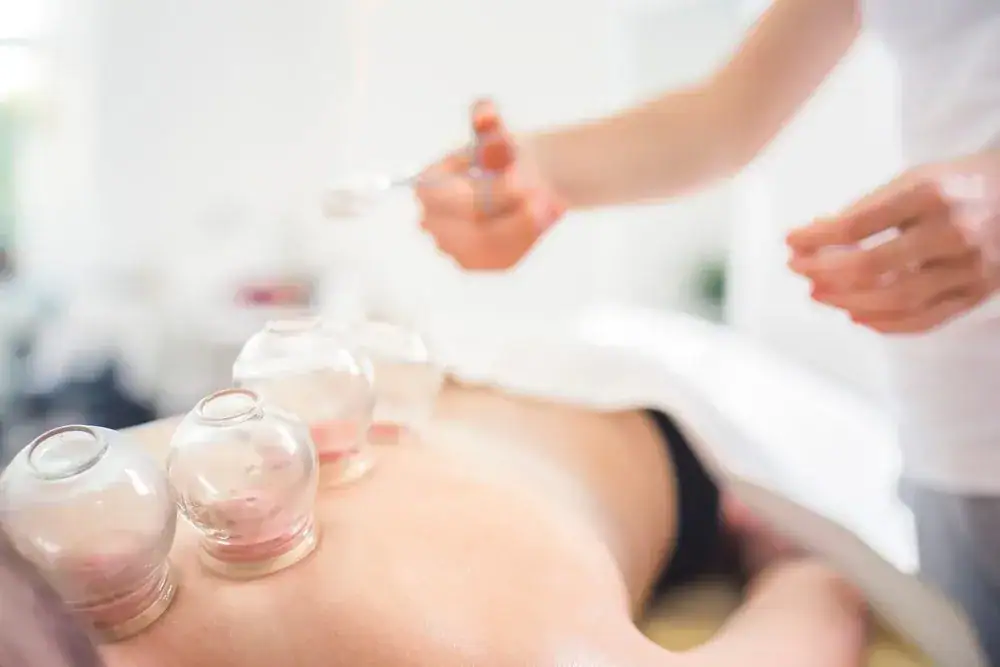
Yes, and the research backs it up. Studies show that cupping significantly improves pain and disability in people with chronic low back pain, especially when combined with physical therapy. It’s not a miracle cure, but it does help break the cycle of muscle tension and restricted blood flow that keeps pain around.
The suction created by the cups pulls nutrient-rich blood to the area and helps separate fascial layers that have become dense or adhered. That means less stiffness, better movement, and often a noticeable drop in pain levels after just a few sessions.
If you’ve been dealing with back pain for months or years and haven’t found relief with medication or rest alone, cupping gives your body a mechanical advantage. It’s a low-risk option with solid clinical support, and most people tolerate it well.
Dry cupping uses suction only—no incisions, no blood removal. That’s what we do at Medcare. The cups create negative pressure that lifts tissue, improves circulation, and releases muscle tension. It’s clean, controlled, and effective for most musculoskeletal issues.
Wet cupping involves making small cuts in the skin before applying the cups, allowing a small amount of blood to be drawn out. It’s more common in traditional Chinese medicine settings and isn’t typically part of a physical therapy treatment plan in the U.S.
For pain relief, muscle relaxation, and improving mobility, dry cupping is what you need. It’s evidence-based, widely accepted in rehab settings, and doesn’t carry the extra risks that come with breaking the skin. We stick with what works and what’s safe.
You’ll likely see circular marks where the cups were placed. They’re not bruises in the traditional sense—they’re caused by blood being pulled to the surface, not by impact or injury. The marks are usually painless and fade within three to seven days.
Some people get darker marks than others depending on how much tension or stagnation is in the tissue. If your muscles are really tight or blood flow has been restricted for a while, the marks might be more pronounced at first. That’s actually a sign the treatment is working.
If the appearance of temporary marks is a concern—say you have an event coming up—just let your therapist know. We can adjust placement or timing. But for most people, the relief outweighs any cosmetic concern, especially once they realize the marks disappear quickly.
Most people notice some improvement after one or two sessions, but lasting relief usually takes four to six treatments. It depends on how long you’ve had the pain, how severe it is, and how your body responds to therapy.
Acute issues—like a muscle strain from lifting something heavy—might resolve faster. Chronic conditions like long-term neck pain or fibromyalgia typically need a longer treatment plan with cupping integrated into a broader physical therapy program.
We’ll reassess after every few sessions to see what’s working. If cupping isn’t giving you the results we expect, we’ll adjust the approach. The goal is always measurable progress, not just going through the motions.
If cupping is part of a physical therapy treatment plan, it’s usually covered under your PT benefits. We accept Medicare and nearly all commercial insurance plans, and cupping is billed as part of the overall session—not as a separate add-on.
Coverage depends on your specific plan, deductible, and whether you need a referral. We handle the billing and verification process, so you’re not left guessing what you’ll owe. Most patients pay a standard copay, the same as they would for any physical therapy visit.
If you’re unsure about your benefits, call us before your first appointment. We’ll confirm what’s covered and let you know if there are any out-of-pocket costs. No surprises, no runaround.
Yes, especially if your headaches are tension-related or stemming from tight neck and shoulder muscles. Cupping increases blood flow to the area, releases trigger points, and reduces the kind of muscle guarding that contributes to both neck pain and tension headaches.
A lot of people in Hicksville spend hours at a desk or looking down at a phone. That forward head posture creates chronic strain on the neck muscles, which can refer pain up into the head. Cupping helps reset that tension and gives those overworked muscles a chance to relax.
We often combine cupping with manual therapy and corrective exercises to address posture and movement patterns. That way, you’re not just getting temporary relief—you’re actually changing the mechanics that caused the problem in the first place.
Other Services we provide in Hicksville