
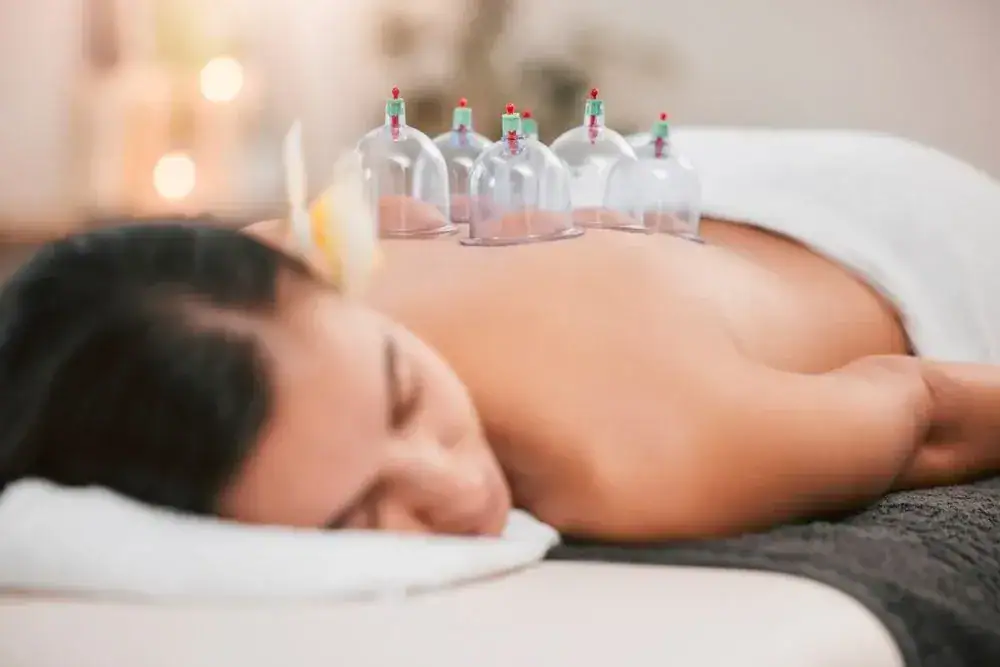

You’re not looking for temporary relief. You want to move without wincing, sleep without waking up stiff, and get through your day without constantly adjusting how you sit or stand.
Cupping therapy works by creating suction on your skin, which pulls blood to the area and helps release the deep muscle tension that’s been building for months or years. It’s not magic—it’s increased circulation, reduced inflammation, and myofascial decompression that gives your muscles room to actually heal.
Most people notice less pain after the first session. Some feel looser immediately. Others need a few treatments before the chronic tightness starts breaking up. Either way, you’re not masking symptoms—you’re addressing what’s causing them.
The goal isn’t just pain relief. It’s getting back to the gym, playing with your kids, or sitting through a work meeting without shifting every five minutes. That’s what actually matters.
Medcare Therapy Services has been treating patients across Long Island for years, and we’ve built our reputation on results, not trends. Cupping isn’t something we added because athletes started posting about it—it’s a clinical tool we integrate into personalized physical therapy plans.
Our team includes licensed physical therapists who understand anatomy, movement patterns, and how to treat the root cause of your pain. We’re not just placing cups and setting a timer. We’re assessing your condition, identifying restrictions, and using cupping alongside manual therapy, exercise, and education to get you better.
Hewlett residents come to us because we’re local, professional, and transparent. You’ll know what we’re doing, why we’re doing it, and what to expect. No upselling, no gimmicks—just care that’s built around what you actually need.
Your first visit starts with an evaluation. We ask about your pain, your history, and what you’ve already tried. Then we assess your movement, identify areas of tension or restriction, and determine if cupping is appropriate for your condition.
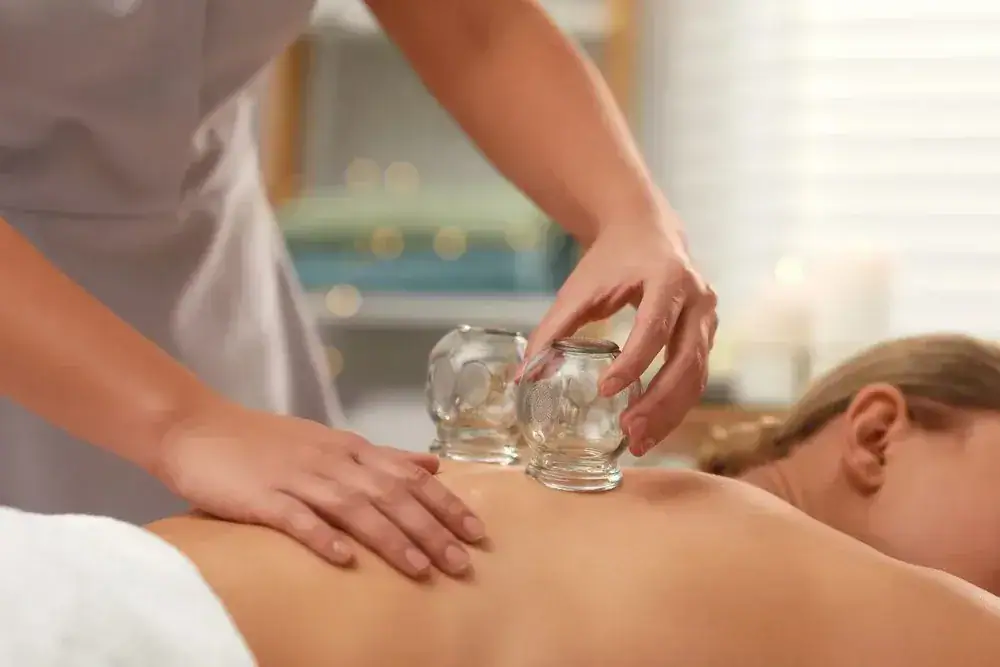
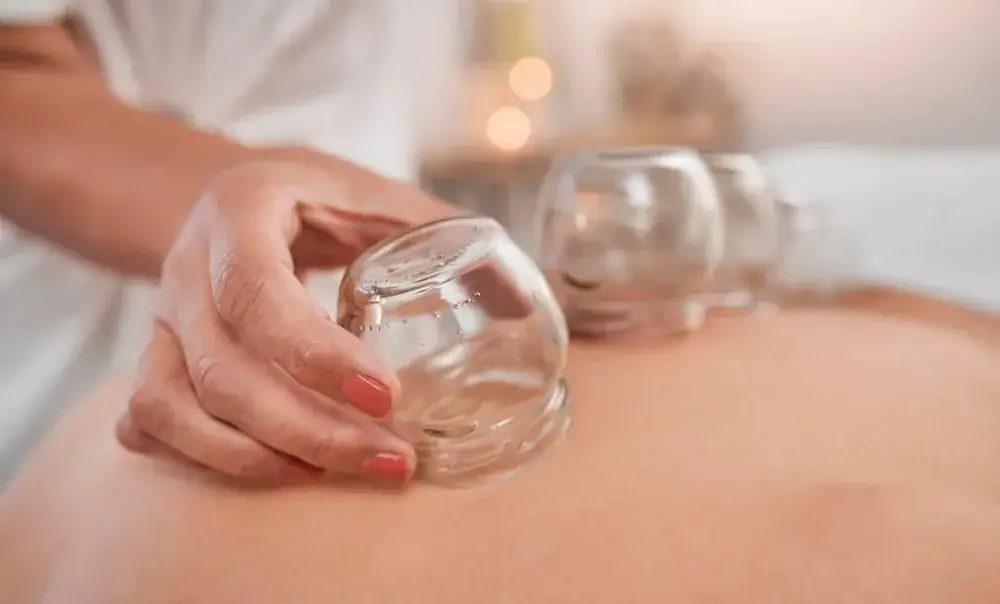
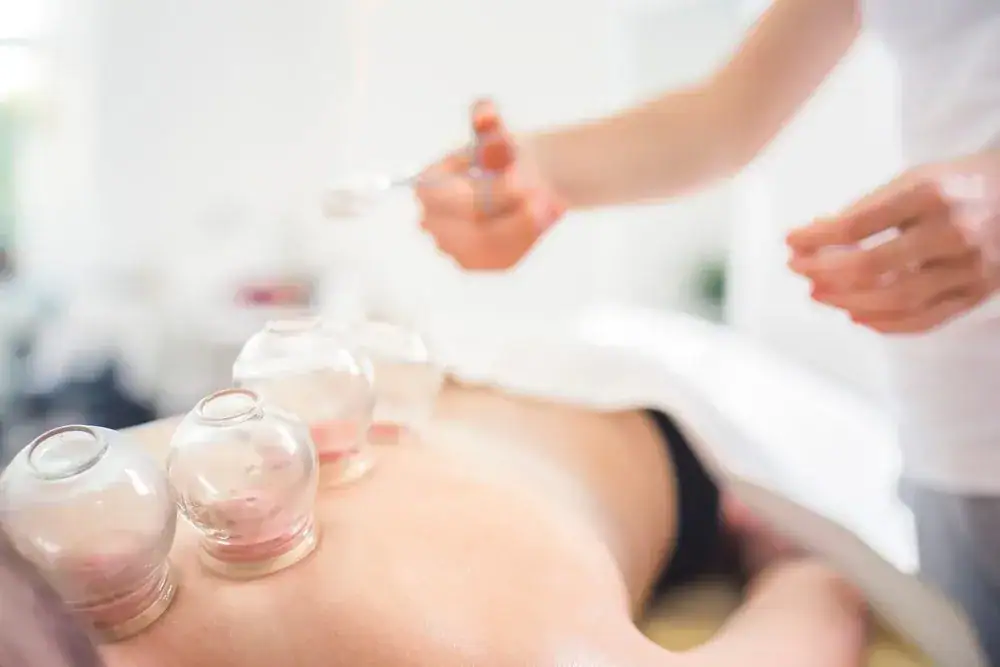
If it is, we’ll explain how it works before we start. We place cups on targeted areas—usually your back, shoulders, neck, or legs—and create suction using a pump or heat. The cups stay on for 5 to 15 minutes depending on your tolerance and treatment goals. You’ll feel pulling and tightness, but it shouldn’t hurt.
After we remove the cups, you might see circular marks on your skin. That’s normal—it’s not bruising, it’s increased blood flow to the area. The marks fade within a few days to a week.
We don’t just do cupping and send you home. It’s part of a broader plan that might include stretching, strengthening, manual therapy, or movement retraining. Frequency depends on your condition—some people come weekly, others every two weeks. We adjust based on how you respond.
Ready to get started?
Cupping therapy at Medcare isn’t a standalone service—it’s integrated into your physical therapy plan. That means you’re getting professional assessment, hands-on treatment, and a strategy for long-term improvement, not just 20 minutes with some cups.
We use dry cupping, which is safer and cleaner than wet cupping. There’s no cutting, no blood exposure, and significantly lower risk. It’s effective for chronic back pain, neck pain, shoulder tension, knee pain, and muscle tightness from overuse or stress.
In Hewlett, where most of our patients work demanding professional jobs in finance, healthcare, or education, we see a lot of stress-related muscle tension. You’re sitting for hours, commuting, managing deadlines—and your body holds that tension in your neck, shoulders, and lower back. Cupping helps release it.
Sessions typically last 10 to 30 minutes depending on the treatment area and your plan. You can expect to pay around $85 per session in the area, though costs vary based on whether it’s part of a physical therapy visit or billed separately. We’ll walk you through pricing and insurance coverage during your evaluation.
Yes, but it’s not a cure-all. Research shows moderate-quality evidence that cupping helps reduce chronic pain, especially for conditions like low back pain, neck pain, and knee osteoarthritis. It’s not going to fix a herniated disc or reverse arthritis, but it can significantly reduce pain and improve your ability to move.
The key is using it correctly. Cupping works best when it’s part of a comprehensive treatment plan that includes strengthening, mobility work, and addressing the underlying cause of your pain. If you’re only doing cupping and nothing else, you’re probably not going to see lasting results.
At Medcare, we integrate cupping into physical therapy because we know it’s most effective when combined with other interventions. You’re not just getting temporary relief—you’re building a foundation for long-term improvement.
You’ll feel a strong pulling sensation where the cups are placed. It’s not painful, but it’s intense—kind of like a deep tissue massage, but stationary. Some people find it relaxing, others find it uncomfortable at first. Most get used to it within the first few minutes.
The suction can feel tight, especially if your muscles are really tense. We adjust the pressure based on your tolerance, so if it’s too much, we can dial it back. After the cups come off, the area might feel sore or tender for a day or two, similar to post-workout soreness.
The circular marks left behind don’t hurt. They look dramatic, but they’re just a sign of increased blood flow to the area. They fade on their own and aren’t a cause for concern. If you have an event or need to wear something that shows your back or shoulders, let us know and we can adjust timing.
It depends on your condition and how long you’ve been dealing with pain. Some people feel better after one session. Others need four to six sessions before they notice significant improvement. Chronic conditions that have been building for months or years typically take longer to resolve.
We’ll give you a realistic timeline during your evaluation based on what we find. If you’re dealing with acute muscle tension from a recent injury or stress, you might only need a few sessions. If you have chronic pain that’s been limiting your life for years, expect a longer treatment plan.
Frequency matters too. Weekly sessions tend to produce faster results than spacing them out too far. But we also don’t want to overdo it—your body needs time to respond and heal between treatments. We’ll find the right balance based on your schedule and how you’re progressing.
Sometimes, but it depends on your plan and how the service is billed. If cupping is part of your physical therapy treatment and coded as manual therapy or myofascial release, many insurance plans will cover it under your PT benefits. If it’s billed separately as a standalone service, coverage is less likely.
We recommend calling your insurance company before your first visit to ask about coverage for physical therapy services and manual therapy techniques. Bring your insurance card to your evaluation and we’ll help you understand what’s covered and what your out-of-pocket cost might be.
Even if insurance doesn’t cover it, the cost is usually around $85 per session in the Hewlett area, which is reasonable compared to other pain management options. Many patients find it’s worth paying out of pocket if it helps them avoid more expensive treatments or medications down the line.
Yes. Athletes use cupping to speed recovery, reduce muscle soreness, and improve range of motion. You’ve probably seen the circular marks on Olympic swimmers and professional athletes—they’re using it because it works for managing the physical demands of training and competition.
Cupping increases blood flow to tired or injured muscles, which helps flush out metabolic waste and bring in fresh oxygen and nutrients. That can speed up recovery between workouts and reduce the stiffness that comes from repetitive strain or overtraining.
At Medcare, we work with recreational athletes, weekend warriors, and people who just want to stay active without pain. Whether you’re training for a race, dealing with a pulled muscle, or trying to get back to the gym after an injury, cupping can be a useful tool in your recovery plan. We’ll combine it with strengthening and mobility work to help you get back to your sport safely.
Cupping is low-risk when performed by a trained professional. The most common side effect is the circular marks left on your skin, which fade within a few days to a week. Some people experience mild soreness or tenderness in the treated area for a day or two after treatment.
Rarely, people may experience dizziness, nausea, or lightheadedness during or after treatment, especially if they’re dehydrated or haven’t eaten. We monitor you throughout the session and adjust if you’re not tolerating it well.
Cupping isn’t appropriate for everyone. If you’re on blood thinners, have a bleeding disorder, or have certain skin conditions, we may recommend a different treatment approach. We’ll review your medical history during your evaluation to make sure cupping is safe and appropriate for you. Our priority is effective treatment that doesn’t put you at unnecessary risk.
Other Services we provide in Hewlett