
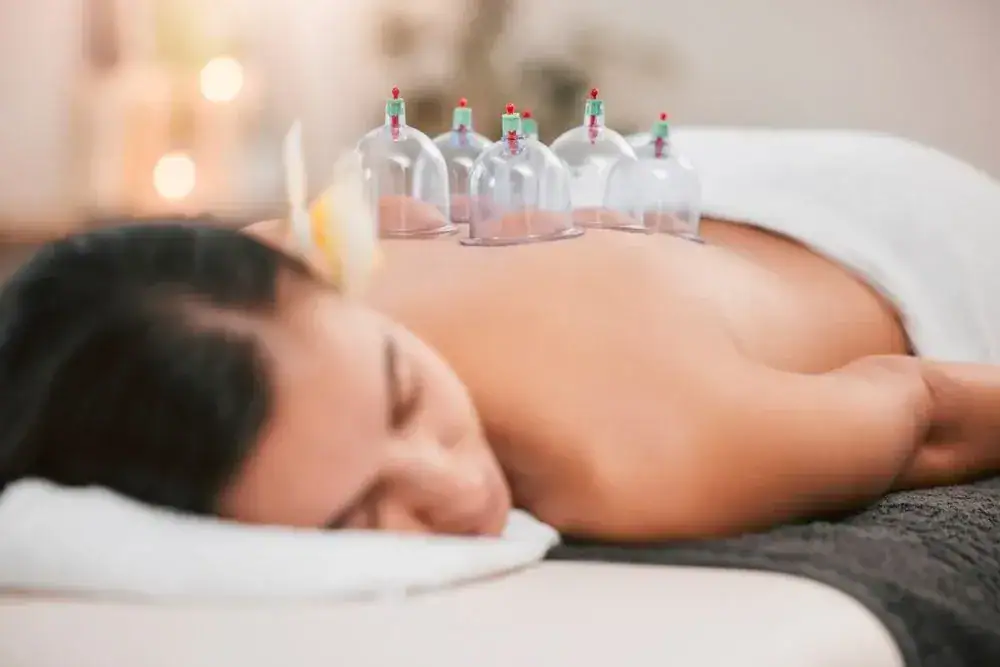

Chronic pain doesn’t just happen. It builds when tissue stays compressed, blood flow gets restricted, and adhesions form between layers that should move independently. Cupping therapy works by creating negative pressure that lifts tissue away from underlying structures, allowing fresh blood to reach areas that have been starved of circulation.
The suction pulls stagnant fluid out while drawing nutrient-rich blood in. This isn’t massage pushing down on muscle. It’s decompression pulling up on fascia, skin, and connective tissue to create space where there was restriction.
Athletes report feeling immediate relief after short sessions because the technique addresses what’s actually causing the problem. When tissue can move freely again and blood flow returns to normal, pain decreases. Some patients with myofascial pain see resolution after a single treatment because the root cause gets addressed, not just managed.
You’re not masking discomfort. You’re removing the mechanical restrictions that created it.
We operate with the kind of operational discipline that matters when you’re trusting someone with your recovery. Every location maintains properly verified profiles, controlled access protocols, and transparent management of patient information. This isn’t about corporate messaging. It’s about making sure nothing gets in the way of your care.
Our team includes trained physical therapists who integrate cupping therapy into comprehensive treatment plans. In Hewlett Bay Park and across Long Island, we focus on personalized care that adapts to your specific condition, not generic protocols applied to everyone.
New York’s direct access laws mean you can start treatment without waiting for referrals. Same-day appointments are available because delayed care often means prolonged pain. Our approach combines evidence-based techniques with the kind of attention that comes from actually listening to what you’re experiencing.
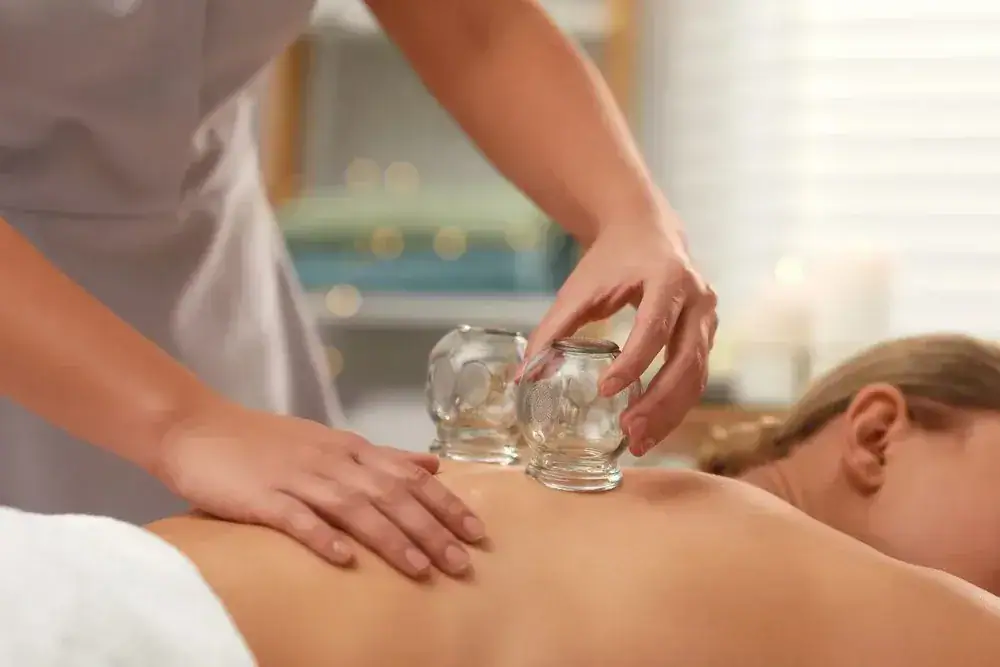
Your first session starts with an assessment of your specific pain points, movement limitations, and treatment goals. We identify which tissue layers need decompression and determine the appropriate cup size and suction level for your condition.
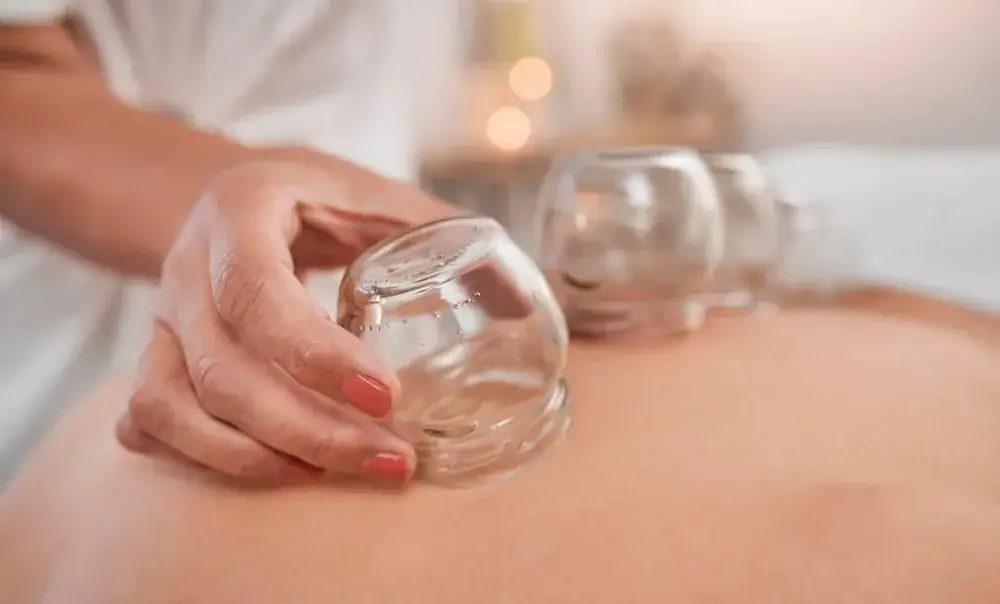
Cups are placed on targeted areas using controlled negative pressure. This can be done statically, where cups remain in place for 5-10 minutes, or dynamically, where cups are moved across the skin to release broader areas of restriction. The suction creates a lifting effect that separates tissue layers, breaks up adhesions, and increases local blood flow.
You’ll likely see circular marks afterward. These aren’t bruises from trauma but rather evidence of stagnant blood being drawn to the surface. They typically fade within a week or two. Most patients describe the sensation as a strong pull rather than pain.
Treatment frequency depends on your condition. Acute issues may respond quickly. Chronic restrictions often require multiple sessions as layers of compensation get addressed. We adjust technique based on how your tissue responds, not a predetermined schedule.
Ready to get started?
We use cupping therapy to address multiple tissue-related issues that cause pain and limit movement. The technique works on myofascial restrictions, trigger points, scar tissue adhesions, and lymphatic congestion. It’s particularly effective for post-surgical recovery, sports injuries, chronic back pain, and conditions like piriformis syndrome where deep tissue compression limits traditional treatment effectiveness.
In Hewlett Bay Park, many patients deal with repetitive strain from commuting, desk work, or athletic training. These patterns create predictable restriction patterns that respond well to decompression techniques. Our treatment integrates with other physical therapy modalities, so you’re not choosing between cupping and traditional rehab. You’re getting both when appropriate.
Sessions typically last 60 minutes, giving us time to address multiple areas and adjust technique based on tissue response. This is significantly more one-on-one time than industry standard, which matters when treatment needs to be modified in real-time based on what your body is telling us.
The goal isn’t just pain reduction. It’s restoring normal tissue mechanics so you can return to running, lifting, working, or whatever activities chronic pain has taken away. We build treatment plans around your specific needs, not standardized protocols that ignore individual differences.
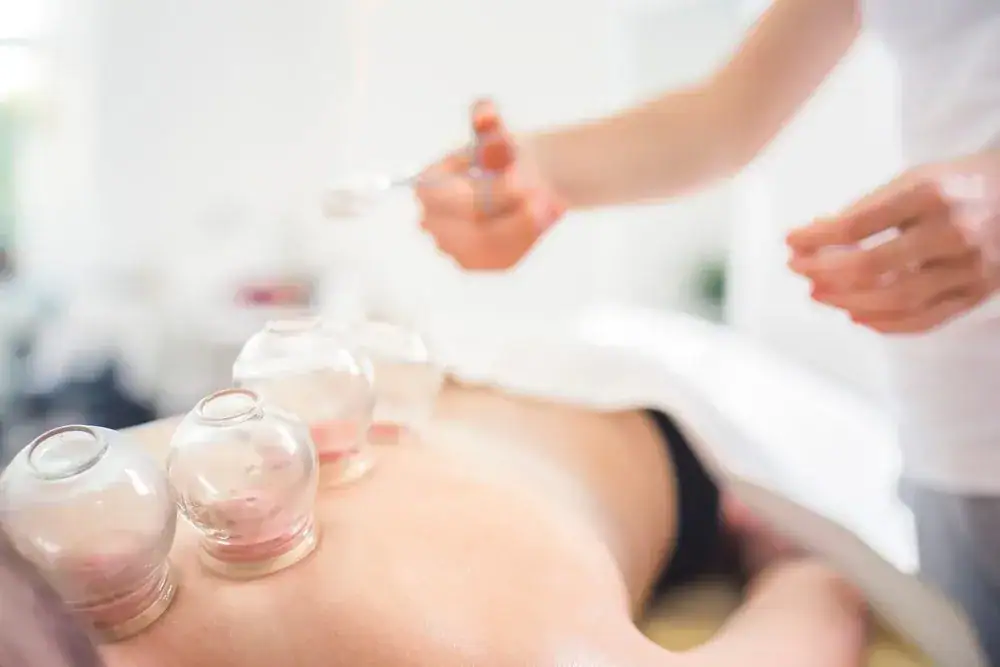
Cupping creates measurable physiological changes in tissue. The negative pressure increases blood flow to targeted areas by up to 400% in some studies. This isn’t subjective. It’s observable through imaging and blood flow measurements.
When tissue has been compressed or restricted, blood flow decreases and waste products accumulate. Cupping reverses this by mechanically lifting tissue and creating space for circulation. Athletes use it because it produces rapid results. Olympic-level competitors don’t rely on placebo effects when performance matters.
The technique has limitations. It won’t fix structural damage like torn ligaments or herniated discs. But for myofascial pain, trigger points, and soft tissue restrictions, the mechanism is straightforward. Decompression allows tissue layers to move independently again, which reduces pain signals and improves function.
Massage applies compression, pushing tissue down into underlying structures. Cupping does the opposite. It uses suction to lift tissue away from what’s beneath it. This creates a fundamentally different mechanical effect.
When fascia is stuck to muscle, or skin is adhered to fascia, compression can’t separate those layers. Negative pressure can. The suction pulls tissue up and apart, breaking adhesions that compression-based techniques can’t reach. This is why cupping often works when massage hasn’t.
The techniques complement each other. Massage is excellent for muscle tension and general relaxation. Cupping targets specific restrictions where tissue layers have lost their ability to glide independently. Many patients receive both during the same treatment session because they address different aspects of soft tissue dysfunction.
Yes, cupping typically leaves circular marks that can last anywhere from a few days to two weeks. These marks aren’t bruises in the traditional sense. They’re caused by stagnant blood and metabolic waste being drawn to the surface from deeper tissue layers.
The color and intensity vary based on how much restriction exists in that area. Darker marks usually indicate more stagnation. As you continue treatment and circulation improves, the marks often become lighter because there’s less stagnant material to draw out.
You can minimize their appearance by staying hydrated and moving gently after treatment. But if you have an event where visible marks would be a problem, let us know beforehand. We can adjust cup placement or modify technique. Most patients stop worrying about the marks once they experience the pain relief, but it’s a valid concern if you’re not prepared for them.
Acute issues often respond within one to three sessions. If you tweaked something recently and it hasn’t become a chronic compensation pattern, you may see significant improvement quickly. Some patients with myofascial pain experience resolution after a single treatment when the restriction is isolated and hasn’t created secondary problems.
Chronic conditions take longer because multiple tissue layers have adapted to dysfunction. Your body has built compensation patterns around the original restriction. Treatment has to address not just the primary problem but also the adaptations. This typically requires six to ten sessions, sometimes more depending on how long the issue has existed.
Frequency matters as much as total number. Sessions spaced too far apart allow tissue to return to restricted patterns. Initially, twice weekly treatment often produces better results than once weekly. As you improve, sessions can be spaced further apart. We adjust the schedule based on how your tissue responds, not arbitrary timelines.
Cupping is particularly effective for post-surgical scar tissue because it addresses adhesions that form during healing. When tissue repairs itself, collagen fibers often lay down in disorganized patterns that create restrictions between layers that should move independently. This limits mobility and can cause pain far from the surgical site.
The negative pressure lifts scar tissue away from underlying structures, gradually breaking down adhesions and improving tissue mobility. This works for both recent surgeries and old scars that have been causing problems for years. Many patients don’t realize their current pain stems from surgical adhesions until treatment releases the restriction and symptoms improve.
Timing matters. You need to wait until incisions are fully healed and your surgeon clears you for manual therapy. Once cleared, we can integrate cupping into your rehab program. It’s especially useful for procedures like knee replacements, shoulder surgeries, and abdominal operations where scar tissue commonly limits recovery. The technique helps restore normal tissue mechanics so you can progress through rehab without compensatory movement patterns.
When we perform cupping as part of a physical therapy treatment plan, it’s typically covered under your PT benefits. The treatment is billed as manual therapy or myofascial release, not as a separate cupping charge. This means your coverage depends on your physical therapy benefits, not whether your plan specifically lists cupping.
New York allows direct access to physical therapy, so you don’t need a physician referral for most insurance plans. You can schedule an evaluation and start treatment without waiting for approval. We’ll verify your specific coverage during scheduling.
Out-of-pocket costs vary based on your deductible, copay, and whether you’ve met your annual limits. Most plans cover 20-60 visits per year for physical therapy. If you’re paying cash, session rates are typically comparable to standard physical therapy visits since we integrate cupping into comprehensive treatment, not offer it as a standalone service.
Other Services we provide in Hewlett Bay Park