
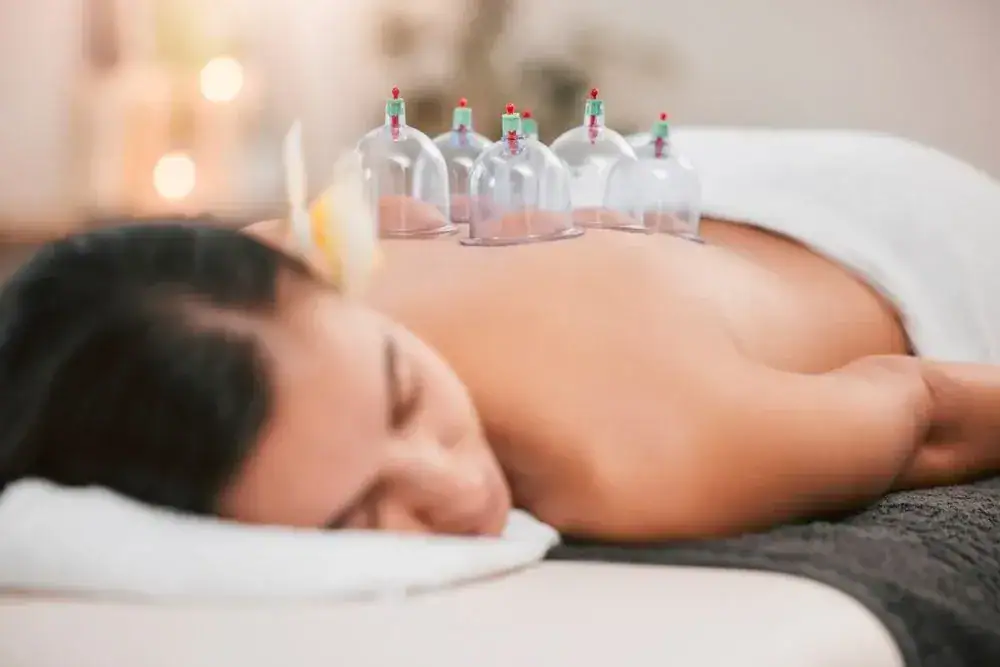

You’re not looking for temporary relief that wears off by dinner. You want to sleep through the night without waking up stiff. You want to pick up your grandkid without wincing. You want to get back to the gym, the garden, or just walking around the block without that constant ache reminding you it’s there.
Cupping therapy works by drawing blood flow directly to the areas that hurt. The suction pulls circulation into tight, painful muscles and encourages your body to send fresh blood and oxygen where it’s needed most. That means faster healing at a cellular level, not just surface-level relief.
Most people notice looser muscles right after the first session. The tightness in your lower back eases up. Your neck doesn’t feel like it’s made of concrete. Over time, as your body continues to heal, that relief starts to stick around longer. You’re not just managing pain anymore—you’re actually addressing what’s causing it.
We’ve been serving Long Island since 2010, and we’ve spent that time figuring out what actually works for people who are tired of driving to appointments, sitting in waiting rooms, and rushing through 15-minute sessions. Our licensed physical therapists bring cupping therapy and full rehab care directly to your home in Hempstead.
We accept Medicare and most major insurance plans, so you’re not paying out of pocket for care that should be covered. Every session is one-on-one. No rotating therapists, no assistants taking over halfway through. Just consistent, personalized treatment from someone who knows your case.
Hempstead residents deal with a lot—long commutes, physical jobs, aging infrastructure that makes getting around harder than it should be. We built our service around that reality. If getting to a clinic is part of the problem, we take that obstacle off the table.
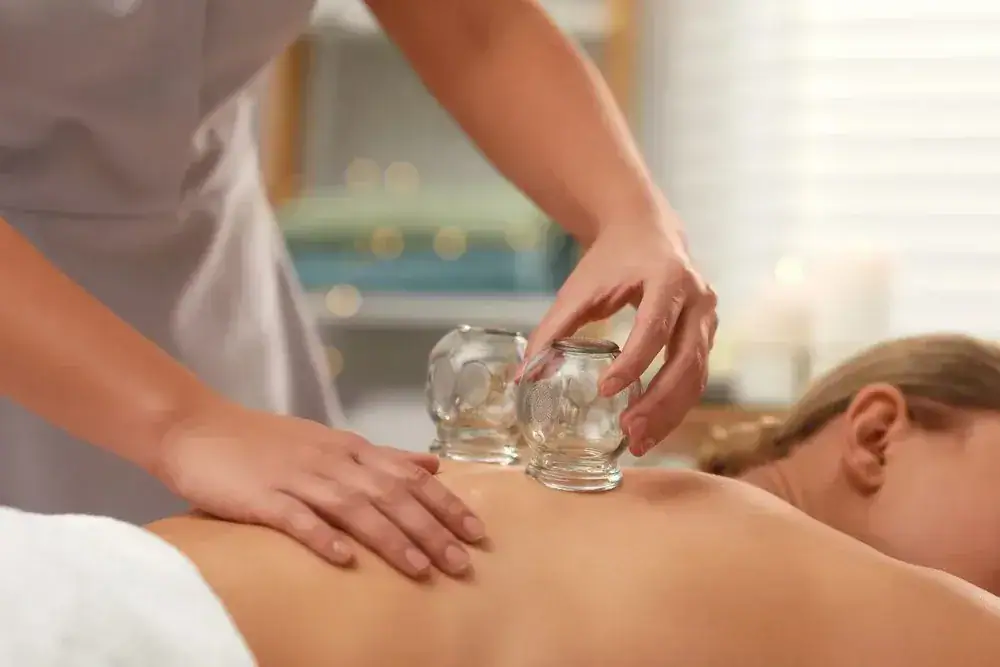
First, your therapist evaluates where you’re feeling pain, how long it’s been going on, and what movements make it worse. This isn’t a cookie-cutter protocol. The treatment plan is based on your body and your goals.
During the session, small cups are placed on your skin over the problem areas—usually your back, neck, shoulders, or legs. The suction pulls your skin up slightly, which increases blood flow and releases tension trapped deep in the muscle tissue. Most people say it feels like a deep pressure, not pain. Some find it relaxing enough to fall asleep.
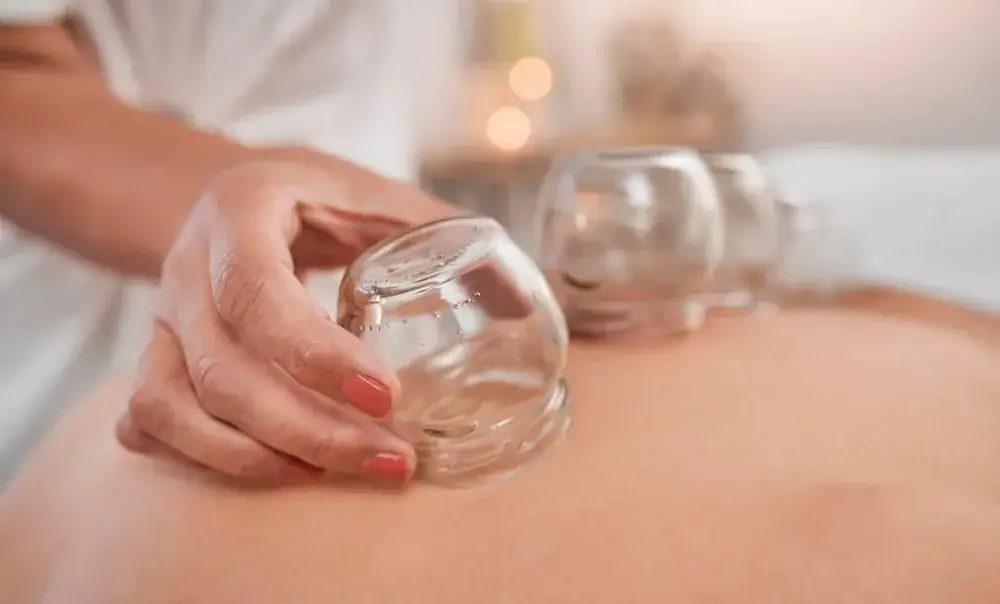
We typically use dry cupping, which means no needles, no incisions, and no mess. The cups stay in place for several minutes while your muscles start to release. Afterward, you might see circular marks where the cups were—that’s normal and fades within a few days. Those marks show where blood flow was increased and healing was triggered.
Your therapist will also walk you through any exercises or stretches that support the work we’re doing. Cupping is effective on its own, but it works even better when combined with movement that keeps your muscles strong and flexible between sessions.
Ready to get started?
Every session includes a full physical therapy evaluation, not just cupping and a handshake. Your therapist assesses your range of motion, strength, posture, and pain triggers so the treatment actually addresses what’s wrong. Cupping is part of a broader plan that might also include manual therapy, therapeutic exercises, and education on how to prevent the pain from coming back.
In Hempstead, we see a lot of chronic lower back pain, neck stiffness from desk work or driving, and shoulder issues from repetitive strain. We also work with athletes recovering from sports injuries and older adults managing arthritis or mobility challenges. Cupping therapy fits into all of those scenarios because it’s adaptable—gentle enough for sensitive areas, strong enough to break up serious muscle tension.
You’re not locked into a rigid schedule. We work around your availability and come to your home at a time that actually makes sense for your life. Sessions typically last 45 to 60 minutes, and most people start with two sessions per week, then taper down as they improve.
Because we accept Medicare and insurance, the cost is often comparable to what you’d pay at a clinic—but without the travel time, the wait, or the hassle of coordinating transportation. You get professional care in a setting where you’re comfortable and can actually relax.
Yes, and the research backs it up. Cupping has been shown to reduce chronic lower back pain in multiple clinical studies, particularly when combined with physical therapy. The suction increases blood flow to the affected area, which helps reduce inflammation and encourages your body’s natural healing process.
Here’s what that looks like in practice: if your lower back has been tight and painful for months, the muscles are likely stuck in a protective spasm. They’re not getting enough oxygen or nutrients because blood flow is restricted. Cupping breaks that cycle by pulling circulation into the tissue and signaling your body to send fresh blood and healing cells to the area.
Most people feel some relief after the first session—not because cupping is magic, but because it’s giving your body what it needs to start repairing itself. Over several sessions, as blood flow improves and muscle tension decreases, the pain becomes less frequent and less intense. It’s not an overnight fix, but it’s a real, measurable change that builds over time.
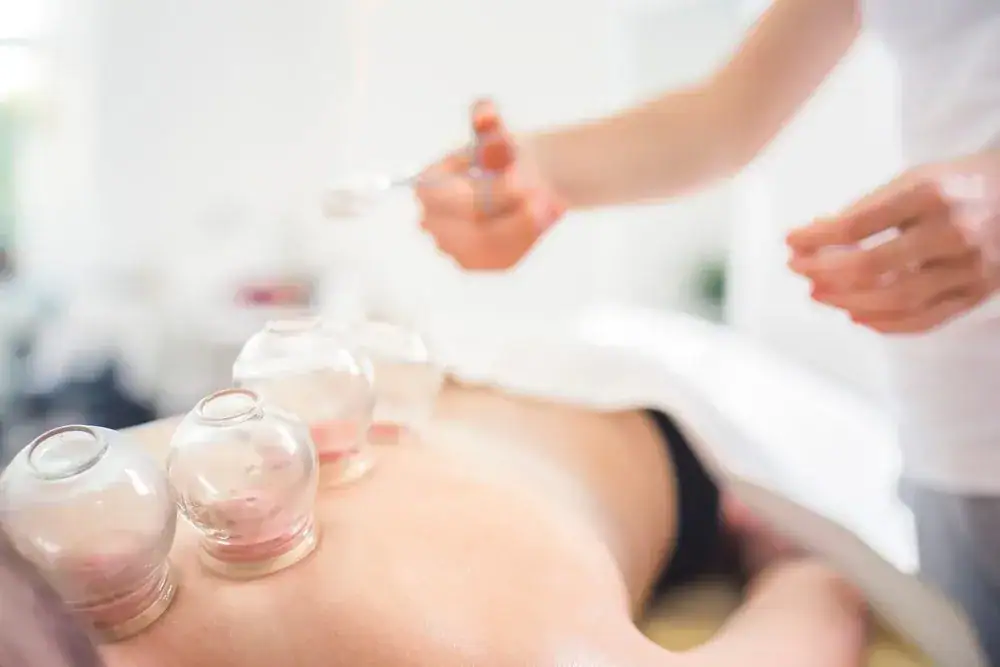
You’ll likely see circular marks where the cups were placed, but they’re not bruises in the traditional sense. Bruises happen when blood vessels break due to trauma. Cupping marks appear because the suction draws blood to the surface, which shows increased circulation in that area. They’re usually painless and fade within three to seven days.
The color and intensity of the marks vary from person to person. If your muscles are really tight or you have poor circulation in that area, the marks might be darker. If your tissue is healthier and less restricted, they’ll be lighter. Some people see barely any marks at all.
If you’re concerned about visible marks—say, you have an event coming up or you work in a job where appearance matters—let your therapist know. We can adjust the suction strength or place cups in areas that are easier to cover with clothing. The treatment is still effective at lower intensities; it just might take a bit longer to see the same results.
Massage works by applying pressure to push into the muscle tissue. Cupping does the opposite—it uses suction to pull the tissue up and away from the body. That difference matters because some types of pain and tension respond better to decompression than compression.
If you’ve ever had a massage that felt too intense or left you sore afterward, cupping might be a better fit. The suction is strong enough to release deep muscle tension, but it doesn’t involve the same kind of forceful pressure. A lot of people find it more comfortable, especially if they’re dealing with sensitive or inflamed areas.
Cupping also integrates naturally into physical therapy because it prepares your muscles for movement. When your tissue is tight and restricted, it’s hard to do exercises correctly or without pain. Cupping loosens things up first, so the stretches and strengthening work we do afterward are more effective. You’re not just treating the symptom—you’re addressing the underlying muscle dysfunction that’s causing the pain in the first place.
Absolutely. Muscle tension from stress or prolonged sitting is one of the most common reasons people seek out cupping therapy. When you’re stressed, your body holds tension in predictable places—usually the neck, shoulders, and upper back. When you sit for hours at a desk or in a car, your hip flexors tighten, your lower back compensates, and everything starts to ache.
Cupping addresses both the physical and the physiological side of that tension. The suction releases the muscle fibers that have been locked in a contracted state, which gives you immediate physical relief. But it also triggers a relaxation response in your nervous system. Many people report feeling calmer and less anxious after a session, not just because the pain is gone, but because their body finally got the signal that it’s safe to let go.
For people in Hempstead who are commuting into the city, working physical jobs, or juggling caregiving responsibilities, that kind of relief isn’t a luxury—it’s necessary. Chronic muscle tension doesn’t just hurt. It affects your sleep, your mood, and your ability to function. Cupping gives your body a chance to reset so you’re not constantly operating in fight-or-flight mode.
In most cases, yes—when it’s provided as part of a physical therapy treatment plan. Medicare and many private insurance plans cover physical therapy services, and cupping is considered a manual therapy technique within that scope of practice. That means if your therapist determines that cupping is medically necessary to treat your condition, it’s typically covered under your existing benefits.
We handle the billing and verification process for you. Before your first session, we confirm your coverage and let you know what your out-of-pocket cost will be, if any. Most Medicare patients pay little to nothing for home-based physical therapy, especially if they meet the homebound criteria or have difficulty accessing outpatient clinics.
What matters most is that the treatment is being provided by a licensed physical therapist and is part of a documented care plan. We’re not a spa offering wellness cupping—we’re a licensed therapy provider delivering medical treatment. That distinction is what makes it reimbursable. If you’re unsure about your specific plan, we can walk you through it during your initial consultation.
It depends on what you’re dealing with and how long you’ve been dealing with it. Acute pain—like a recent muscle strain or post-workout soreness—might improve in two to four sessions. Chronic pain that’s been building for months or years usually takes longer, often six to twelve sessions, because we’re not just relieving symptoms, we’re retraining your body to move and heal differently.
Your therapist will give you a clearer timeline after the initial evaluation. We look at your pain level, your mobility, your goals, and how your body responds to the first session. Some people feel significantly better right away. Others need a few sessions before they notice a lasting change.
The good news is that cupping works well alongside other treatments. If you’re already doing physical therapy exercises, taking medication, or seeing a chiropractor, cupping can complement that care and often speeds up your progress. You’re not starting from scratch—you’re adding a tool that helps everything else work better.
Other Services we provide in Hempstead