


Your neck doesn’t lock up when you check your blind spot. Your lower back lets you get through a full day without that constant ache reminding you it’s there. You sleep through the night because your shoulders aren’t throbbing.
That’s what happens when muscle tension and inflammation actually get addressed at the source. Cupping therapy works by creating suction that lifts tissue away from underlying structures, increasing blood flow to areas that have been tight and restricted for months or years. More blood means more oxygen, faster healing, and less pain.
It’s not a temporary fix that wears off in two hours. The mechanical lift separates fascial layers that have been stuck together, which means your muscles can move the way they’re supposed to. You get better range of motion, less stiffness, and the kind of relief that actually lasts. Most people notice a difference after the first session—not because it’s magic, but because the technique directly targets what’s causing the problem.
We’ve been treating patients across Long Island for years, with locations in Smithtown, Speonk, and throughout Suffolk County. We’re not a wellness spa trying to add cupping to the menu—we’re licensed physical therapists who use it as part of real treatment plans.
Head of the Harbor residents come to us because they’re done trying things that don’t work. They’ve already been through the cortisone shots, the muscle relaxers, the “wait and see” approach. What they need is someone who knows how to assess movement patterns, identify restrictions, and apply techniques that actually change outcomes.
We manage every detail—from verifying insurance coverage to coordinating care with your doctor. You’re not getting shuffled between departments or waiting three weeks for a callback. You’re working with professionals who show up, do the work, and make sure you’re getting better.
Your first visit starts with an evaluation. We look at your range of motion, ask about your pain patterns, and figure out what’s actually going on. If cupping makes sense for your situation, we’ll explain why and what to expect.
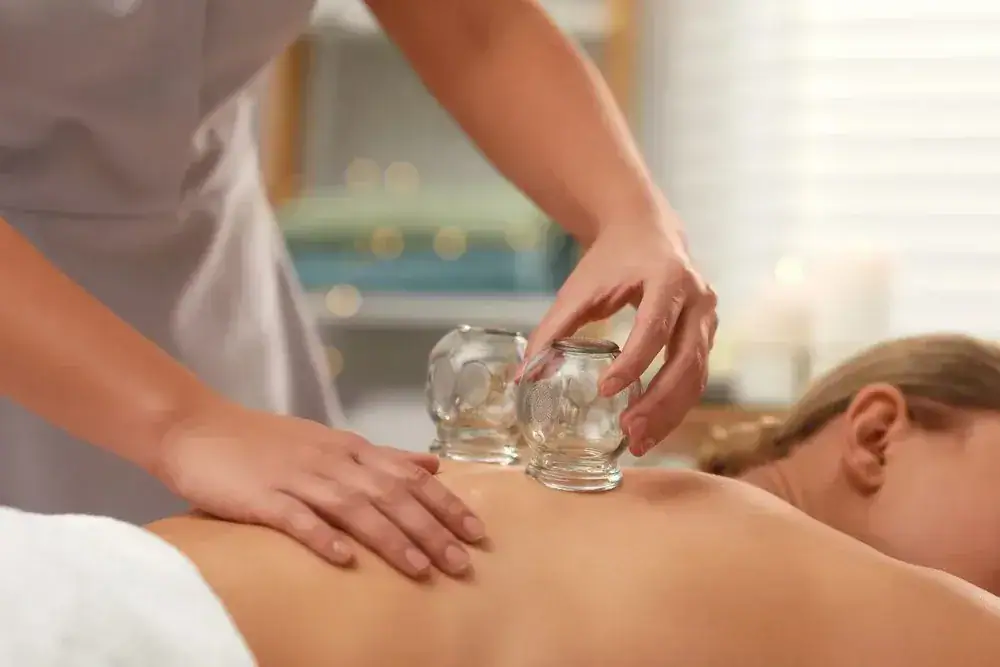
During the treatment, we place cups on specific areas where tissue is restricted or inflamed. The suction pulls skin and fascia up and away from the muscle, which increases circulation and creates space between layers that have been compressed. You’ll feel the pull, but it shouldn’t hurt. Most people say it’s more of a tight, stretching sensation.
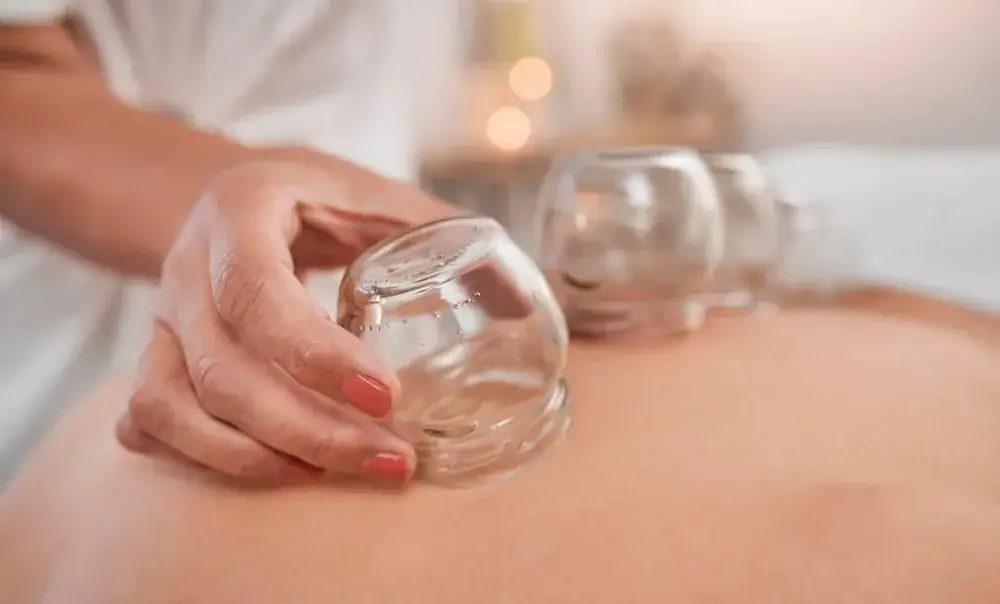
We might leave cups in place for several minutes (dry cupping) or move them across the skin to release larger areas. The cups come off, and yeah, you’ll probably have some circular marks that last a few days. Those aren’t bruises—they’re a sign that blood flow increased to areas that needed it.
After your session, you should feel looser. Some people notice immediate pain relief. Others feel sore for a day or two as tissue adjusts, then feel significantly better. We’ll give you specific guidance on what to do next—whether that’s stretching, icing, or coming back for another session.
Ready to get started?
Cupping therapy at our practice isn’t a standalone treatment you book once and hope for the best. It’s integrated into a physical therapy plan that’s built around your specific condition. If you’re dealing with chronic neck pain from years of desk work, we’re addressing posture, muscle imbalances, and fascial restrictions—not just putting cups on your back and calling it done.
Head of the Harbor has one of the highest concentrations of professionals working high-stress management jobs on Long Island. That means a lot of people sitting in the same position for hours, dealing with tension headaches, and ignoring pain until it becomes unbearable. Cupping works well for that population because it directly targets the muscle tightness and poor circulation that come from sedentary, high-pressure lifestyles.
You’re also getting a team that understands insurance, communicates clearly, and doesn’t waste your time. We coordinate with your healthcare provider if needed, keep your records secure, and make sure every session moves you closer to being pain-free. This isn’t about selling you a package of ten sessions—it’s about getting you better and keeping you that way.
Yes, but it works best when it’s part of a broader treatment plan. Cupping increases blood flow to tight, inflamed tissue and mechanically separates fascial layers that have been stuck together. That means less stiffness, better mobility, and reduced pain.
Research shows moderate-quality evidence supporting cupping for lower back pain, neck pain, and other musculoskeletal conditions. It’s not a cure-all, but it’s also not placebo. The suction creates measurable changes in tissue—more circulation, less compression, improved range of motion.
If your back pain is from a herniated disc or structural issue, cupping alone won’t fix it. But if it’s from muscle tension, poor posture, or fascial restriction—which is most chronic back pain—it can make a real difference. We assess your specific situation and tell you honestly whether cupping is likely to help.
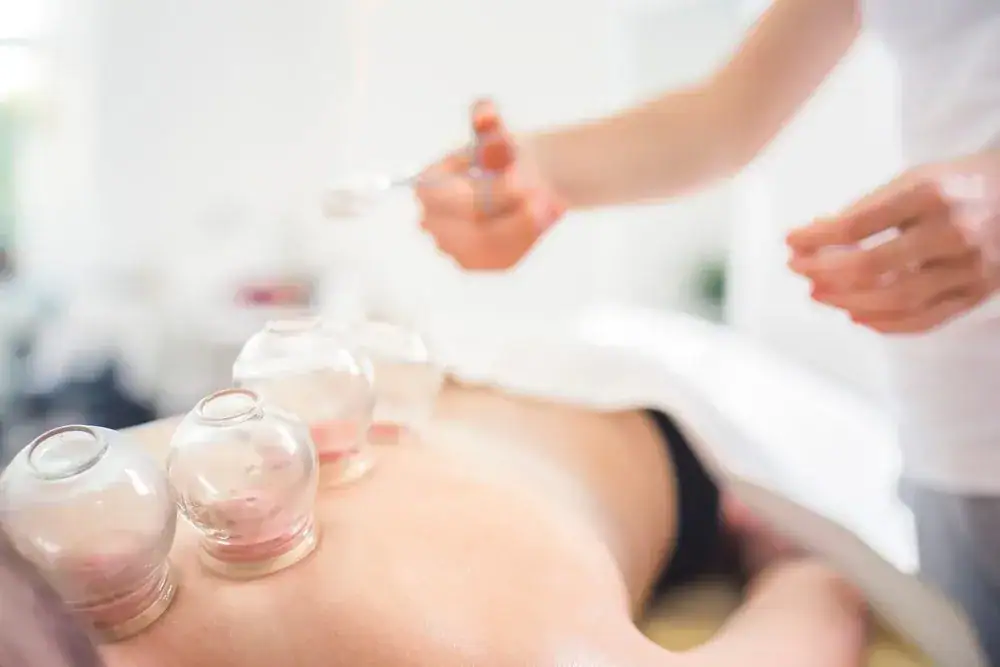
Dry cupping uses suction only—no needles, no incisions, nothing invasive. Cups are placed on your skin, air is removed to create a vacuum, and tissue gets pulled upward. That’s it.
Wet cupping involves making small cuts in the skin to draw out blood, which some traditional practices use but isn’t common in physical therapy settings. We use dry cupping because it’s effective, low-risk, and doesn’t require any breaking of the skin.
There’s also something called myofascial decompression, which is essentially dry cupping with movement—we place cups and then have you move through ranges of motion to release tissue in multiple positions. It’s particularly useful for athletes or anyone dealing with movement restrictions. The core principle is the same: create negative pressure, lift tissue, improve circulation, reduce pain.
It depends entirely on what we’re treating and how long you’ve had the problem. Some people feel significantly better after one or two sessions. Others with chronic conditions need four to six sessions spread over a few weeks.
If you’ve had neck pain for six months, it’s not going away in one appointment. Tissue that’s been tight and restricted for that long needs time to change. But you should notice some improvement early—better range of motion, less pain during certain movements, easier mornings.
We don’t sell packages or lock you into a set number of visits. After your evaluation, we’ll give you an honest estimate based on what we’re seeing. If you’re not improving by session three, we reassess and adjust the plan. The goal is to get you better and teach you how to stay that way—not keep you coming back indefinitely.
Yes, usually. The suction brings blood to the surface, which leaves circular marks that can last anywhere from a few days to a week. They look like bruises but aren’t—there’s no tissue damage, just increased circulation in areas that needed it.
The darker the mark, the more stagnant the area was before treatment. People with a lot of muscle tension or poor circulation tend to get darker marks initially. As you continue treatment and circulation improves, the marks typically get lighter.
If you have an event coming up where you don’t want visible marks—wedding, beach trip, something where your back or shoulders will be exposed—just let us know. We can adjust placement or timing. But for most people, the marks aren’t painful and they’re a fair trade for actually feeling better.
Often, yes—but it depends on your plan and how the treatment is billed. When cupping is part of a physical therapy session, it’s typically covered under your PT benefits. We bill it as part of your overall treatment, not as a separate alternative therapy.
Most Head of the Harbor residents have employee-based health plans with solid PT coverage. We verify your benefits before you come in so there are no surprises. If your plan requires a referral or prior authorization, we handle that coordination.
If you’re on Medicare or a plan with limited PT visits, we’ll be upfront about how many sessions your coverage allows and what your out-of-pocket cost will be. We’re not interested in running up bills—we want you to get the treatment you need without financial stress. Call us with your insurance information and we’ll tell you exactly what’s covered.
Absolutely. Cupping has become standard practice in sports medicine because it speeds recovery and improves range of motion. Professional athletes use it to reduce muscle soreness, release tight fascia, and get back to training faster.
If you’ve strained a muscle, cupping increases blood flow to the injured area, which brings in oxygen and nutrients needed for healing. It also reduces inflammation and helps clear out metabolic waste that builds up after intense activity. You recover faster and with less stiffness.
For chronic sports-related issues—like a shoulder that never quite feels right or a hamstring that keeps tightening up—cupping addresses the fascial restrictions and scar tissue that limit mobility. We combine it with targeted exercises and movement training so you’re not just feeling better temporarily, you’re actually fixing the underlying problem. Whether you’re a weekend runner or playing in a competitive league, cupping can be a useful tool in keeping you on the field.
Other Services we provide in Head Of The Harbor