

You’re dealing with low back pain that flares up when you garden. Or neck tension that makes driving uncomfortable. Maybe it’s knee pain that’s kept you from your morning walks around Hauppauge’s trails.
Cupping therapy works by lifting tissue away from underlying structures, increasing blood flow to areas that have been tight or inflamed for months. That improved circulation brings oxygen and nutrients that your muscles need to actually heal, not just mask symptoms.
Most people notice reduced muscle tension within the first few sessions. Range of motion improves. You start doing things you’ve been avoiding—bending down to pick something up, turning your head to check your blind spot, walking without that nagging ache.
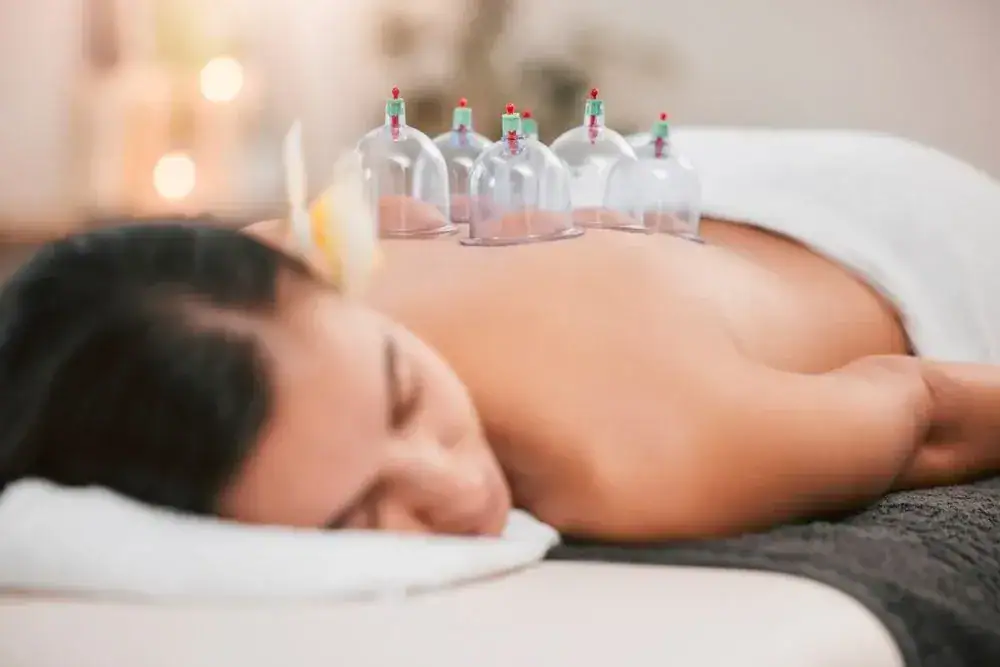
The treatment itself involves placing cups on your skin to create suction. It’s not painful. You’ll feel a pulling sensation, and yes, you might have circular marks for a few days, but they fade. What doesn’t fade as quickly is the relief—especially when cupping is part of a broader physical therapy plan that addresses why the pain started in the first place.
We’ve been treating patients across Long Island for over a decade, with affiliated centers in Smithtown and Speonk. We accept Medicare and nearly all commercial insurance plans, which matters when you’re already dealing with medical bills.
Our physical therapists are licensed to perform cupping therapy as part of comprehensive treatment plans. That means you’re not just getting cupping—you’re getting it from someone who understands musculoskeletal conditions, movement patterns, and how to integrate multiple therapies for better outcomes.
Hauppauge has a mature population with real needs for effective pain management. You’re not interested in gimmicks. You want something that works, delivered by professionals who’ve done this thousands of times. That’s what we do—evidence-based care without the overselling.
Your first visit starts with an evaluation. We need to understand what’s causing your pain—not just where it hurts, but what movements make it worse, how long you’ve had it, and what you’ve already tried.
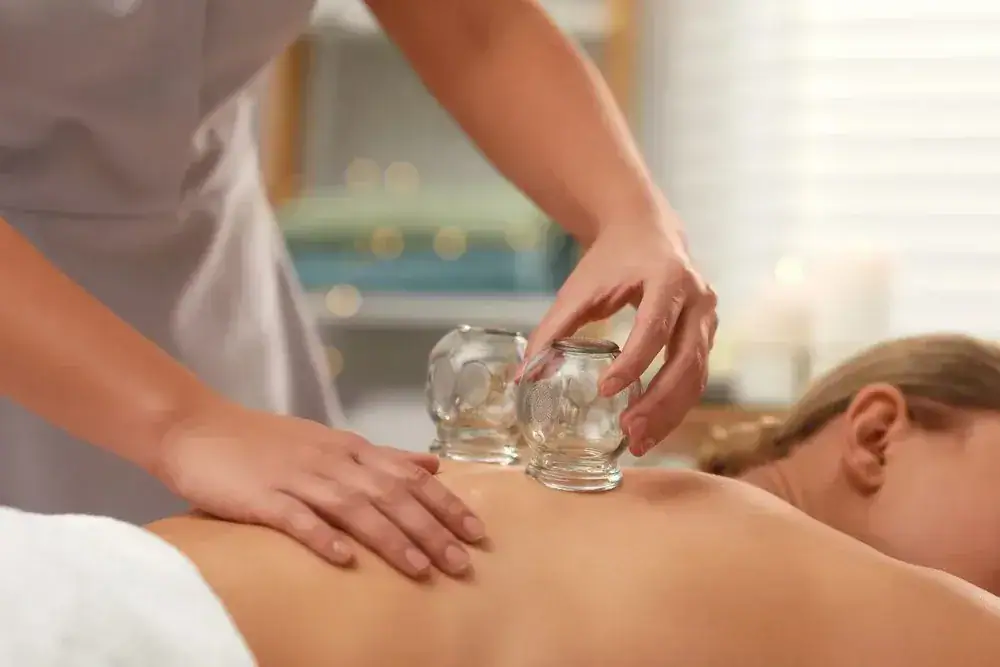
If cupping makes sense for your condition, we’ll explain exactly what to expect. We place cups on the affected area—your back, neck, shoulders, or wherever you’re experiencing tension. The cups create suction that lifts the skin and underlying tissue. This mechanical lift separates fascial layers, improves circulation, and triggers your body’s natural healing response.
Sessions typically last 15 to 20 minutes, though cupping is often combined with other physical therapy techniques like manual therapy or therapeutic exercise. The cups stay in place while you relax. Some people feel immediate relief. For others, it takes a few sessions to notice significant change.
After treatment, you might see circular marks where the cups were placed. They’re not bruises—they’re a result of increased blood flow to the area. They’ll fade within a few days to a week. What you should also notice is less pain, easier movement, and the ability to do things that have been difficult lately.
Ready to get started?
Cupping therapy at Medcare isn’t a standalone spa treatment. It’s integrated into physical therapy plans designed to address chronic pain, muscle tension, limited mobility, and inflammation.
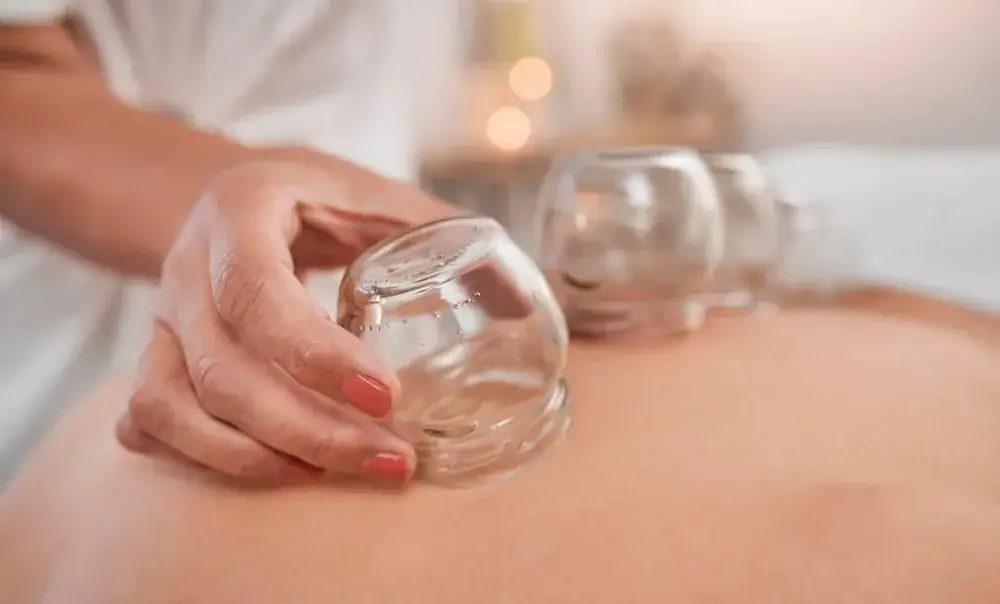
We use dry cupping, which means no incisions or bloodletting—just suction. It’s effective for conditions like chronic low back pain, neck pain, knee osteoarthritis, and general muscle stiffness. Research supports its use for these conditions, and we’ve seen it work for patients who’ve tried other treatments without success.
In Hauppauge, where the median age is over 43 and many residents deal with age-related pain or injuries from staying active, cupping offers a non-invasive option that doesn’t require medication. You’re not adding another prescription to your routine. You’re giving your body a mechanical boost to heal itself.
Every treatment plan is different. Some patients come in once a week. Others need more frequent sessions initially, then taper off as symptoms improve. We adjust based on how you respond, not based on a one-size-fits-all protocol. And because we accept Medicare and most insurance plans, cost doesn’t have to be a barrier to getting the care you need.
Yes, but let’s be specific about what the research shows. Moderate-quality evidence supports cupping for chronic low back pain, neck pain, and knee osteoarthritis. That means multiple studies have found it effective, though more research is always helpful.
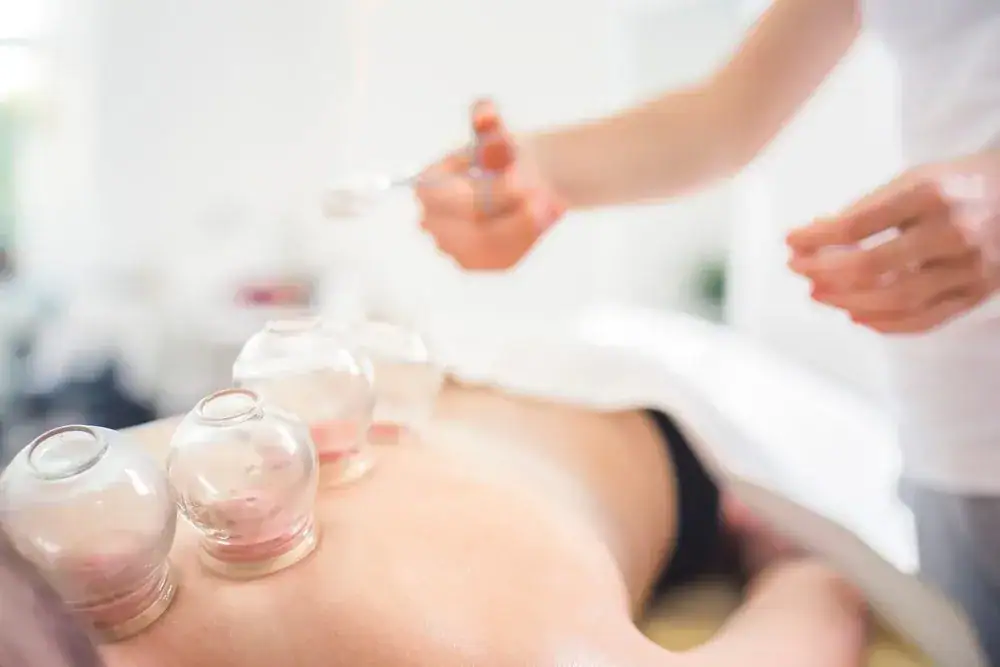
Cupping works by increasing blood flow to painful areas and mechanically lifting tissue to reduce tension. When blood flow improves, so does oxygen delivery and waste removal—both critical for healing. The suction also stimulates sensory nerves, which can reduce pain signals and trigger endorphin release.
It’s not a miracle cure. If you have severe structural damage or a condition that requires surgery, cupping won’t fix that. But for muscle-related pain, fascial restrictions, and chronic tension that hasn’t responded well to other treatments, it’s worth trying. Most patients notice some improvement within three to five sessions, especially when combined with other physical therapy techniques.
Cupping is most effective for musculoskeletal pain—things like chronic back pain, neck and shoulder tension, muscle stiffness, and joint pain from conditions like osteoarthritis. It’s also used for sports injuries, repetitive strain issues, and limited range of motion caused by tight fascia.
We see a lot of patients in Hauppauge dealing with pain from gardening, household projects, or just the wear and tear of staying active as they age. Cupping helps with hamstring tightness, hip restrictions, and upper back pain from poor posture or computer work.
It’s not appropriate for everyone. If you have certain skin conditions, are on blood thinners, or have active infections, we’ll discuss alternatives. That’s why the initial evaluation matters—we need to make sure cupping is safe and likely to help your specific situation before we start treatment.
Yes, usually. The suction from the cups draws blood to the surface, which creates circular discolorations that can range from light pink to deep purple depending on how much tension or stagnation was in that area.
These marks aren’t bruises in the traditional sense. They’re a sign of increased circulation and typically don’t hurt. They’ll fade over three to seven days for most people. If you have an event coming up where you’ll be showing your back or shoulders, let us know—we can adjust timing or placement.
Some patients see the marks as proof the treatment is working. Others prefer to schedule sessions when they won’t be wearing anything that shows the area. Either way, the marks are temporary. The pain relief, when cupping works well for your condition, lasts much longer.
Massage pushes tissue down. Cupping lifts it up. That difference matters when you’re dealing with fascial adhesions, scar tissue, or areas where muscles have been compressed for a long time.
The suction creates negative pressure that separates layers of tissue, improves fluid movement, and reduces restrictions that manual pressure alone might not reach. It’s particularly effective for stubborn knots or areas that feel “stuck” when you try to stretch them.
That said, cupping works best as part of a broader plan. We often combine it with manual therapy, therapeutic exercise, and movement education. You’re not just getting temporary relief—you’re learning how to move better, strengthen weak areas, and prevent the pain from coming back. That’s the advantage of getting cupping from a physical therapist rather than a spa—we’re treating the underlying problem, not just the symptoms.
When cupping is performed by a licensed physical therapist as part of a treatment plan, it’s typically covered under your physical therapy benefits. We accept Medicare and nearly all commercial insurance plans, which means most patients pay whatever their normal PT copay or coinsurance is.
Coverage depends on your specific plan and whether you’ve met your deductible. We recommend calling your insurance company before your first visit to confirm your physical therapy benefits. Our staff can also verify coverage and give you an estimate of your out-of-pocket costs.
What’s important is that you’re not paying spa prices for a medical treatment. You’re getting cupping from licensed professionals who can bill it correctly through your health insurance. That makes it accessible for people who need ongoing pain management but can’t afford to pay cash for every session.
Most people notice some improvement within three to five sessions, but the total number depends on your condition, how long you’ve had it, and how your body responds to treatment.
Acute muscle tension might resolve in just a few sessions. Chronic pain that’s been present for months or years usually requires more—sometimes eight to twelve sessions combined with other physical therapy interventions. We reassess regularly and adjust your plan based on what’s working.
You won’t be locked into an endless treatment schedule. If cupping isn’t helping after a reasonable trial, we’ll try something else. The goal is to get you better and keep you better, not to keep you coming in indefinitely. Once your pain is manageable and your mobility is restored, we’ll give you exercises and strategies to maintain those results on your own.
Other Services we provide in Hauppauge