
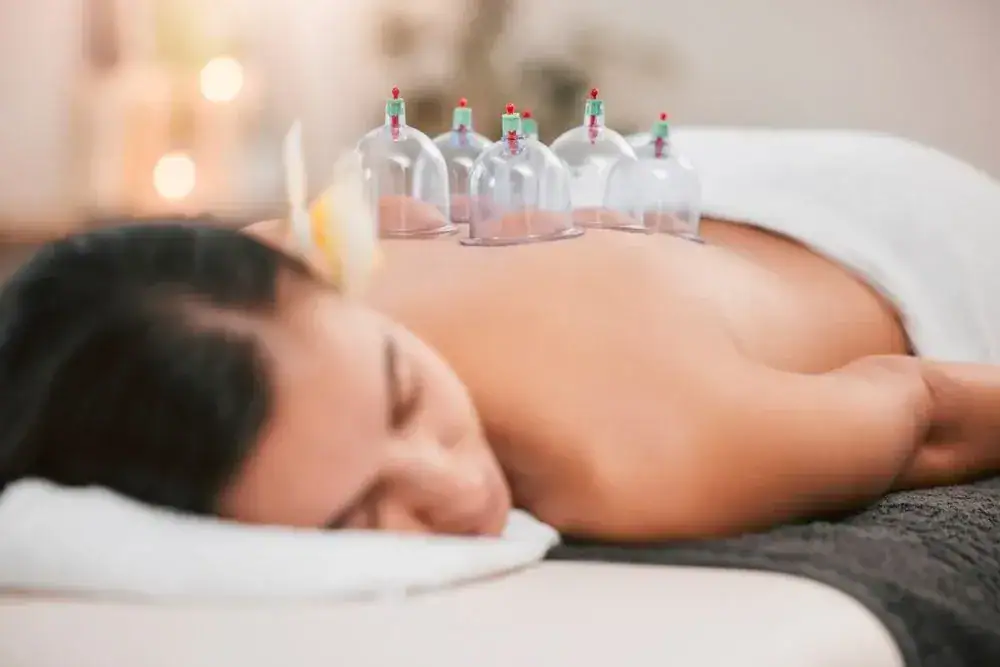

Chronic pain changes how you live. You skip activities you used to love because your back won’t cooperate. You wake up stiff and spend the first hour just trying to loosen up. You’ve tried medications that either don’t work or come with side effects you can’t tolerate.
Cupping therapy addresses pain differently. By creating controlled suction on your skin, it increases blood flow to tight, painful areas and helps release muscle tension that’s been building for months or years. You’re not masking symptoms—you’re giving your body what it needs to actually heal.
Most people notice reduced pain after their first session. That doesn’t mean one treatment fixes everything, but it does mean you’ll know quickly whether this approach works for your body. The goal isn’t just less pain—it’s getting back to the things that matter. Playing with your grandkids. Gardening without paying for it the next day. Sleeping through the night.
Physical therapy with cupping gives you a path forward that doesn’t involve more pills or invasive procedures. It’s about restoring function, not just managing discomfort.
We’ve been treating Long Island residents since 2010. We’re not a spa offering cupping as a trendy add-on—we’re licensed physical therapists who use dry cupping as part of comprehensive pain management and rehabilitation.
Harbor Isle residents face the same challenges as the rest of Nassau County: an aging population dealing with chronic pain, limited mobility, and a healthcare system that too often defaults to medication. We bring professional therapy directly to your home, which matters when getting to appointments becomes part of the problem.
Our therapists complete years of doctoral-level training and maintain New York state licensure. We accept Medicare and most commercial insurance, so cost doesn’t have to be a barrier. Every treatment plan is built around your specific condition, your goals, and what actually works for your body—not a one-size-fits-all protocol.
Your first session starts with an evaluation. We need to understand what’s causing your pain, how long you’ve dealt with it, and what you’ve already tried. This isn’t a formality—it determines whether cupping is right for you and how we’ll incorporate it into your treatment.
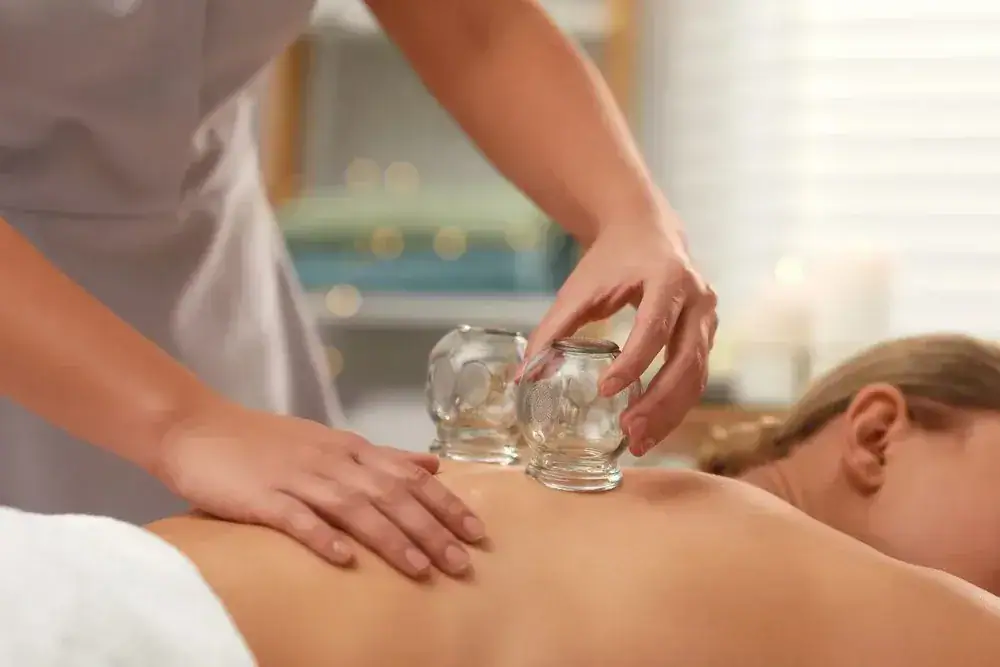
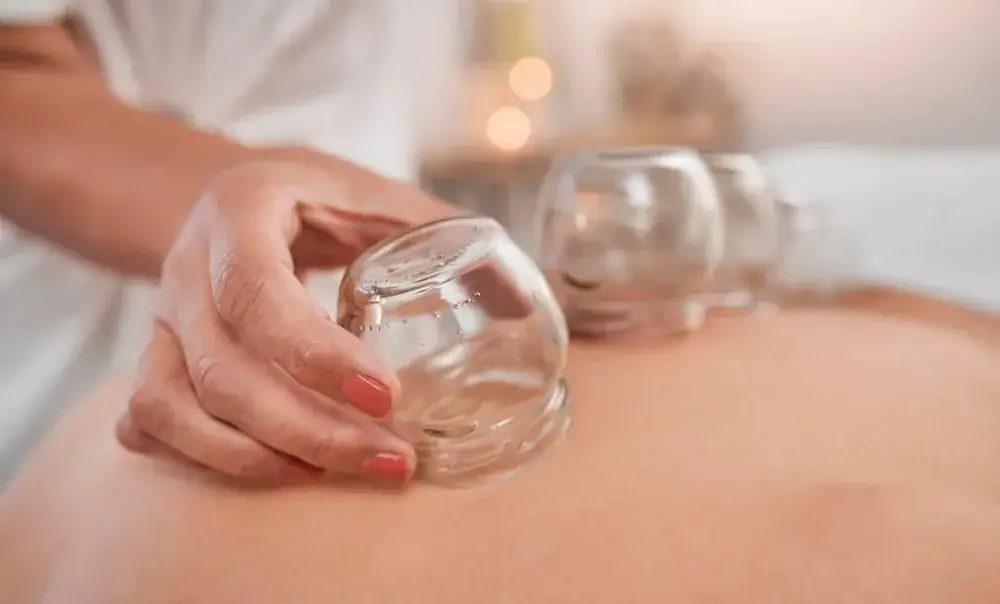
During dry cupping, we place specialized cups on your skin over the affected area. The cups create suction that draws blood to the surface and helps separate tissue layers that have become stuck together. You’ll feel pulling and pressure, but it shouldn’t hurt. The cups stay in place for several minutes while they do their work.
Some people see circular marks afterward—that’s normal and they fade within a few days. What matters more is how you feel. Many patients report immediate relief in range of motion and reduced tightness. Others need a few sessions before they notice significant change.
We combine cupping with other physical therapy techniques based on what your body responds to. Stretching, strengthening exercises, manual therapy—everything works together. Between sessions, we’ll give you specific movements to practice at home. Recovery happens in the work you do between appointments, not just during them.
Ready to get started?
Cupping therapy works particularly well for muscle-related pain and mobility issues. Lower back pain, neck tension, shoulder tightness, knee pain—these respond well because cupping targets the soft tissue restrictions that cause them.
If you’re an active adult dealing with sports injuries or trying to maintain your fitness routine despite nagging pain, cupping can speed recovery and improve your range of motion. Research shows it helps athletes reduce muscle soreness and get back to training faster. You don’t have to be a professional athlete to benefit from those same mechanisms.
For Harbor Isle residents managing chronic conditions like arthritis or diabetes-related complications, cupping offers a non-pharmaceutical option that works alongside your existing care. We’re not replacing your doctor—we’re giving you another tool that addresses pain and inflammation without adding more medication to your routine.
The opioid crisis has made many people rightfully cautious about pain pills. Physical therapy, including cupping, reduces your risk of opioid dependency by 18% compared to other treatment approaches. That’s not a small number when you’re making decisions about long-term pain management.
Every session happens in your home, which eliminates the transportation barrier that keeps many people from getting consistent care. You don’t lose time traveling to appointments or sitting in waiting rooms. We come to you, treat you, and give you a clear plan for what comes next.
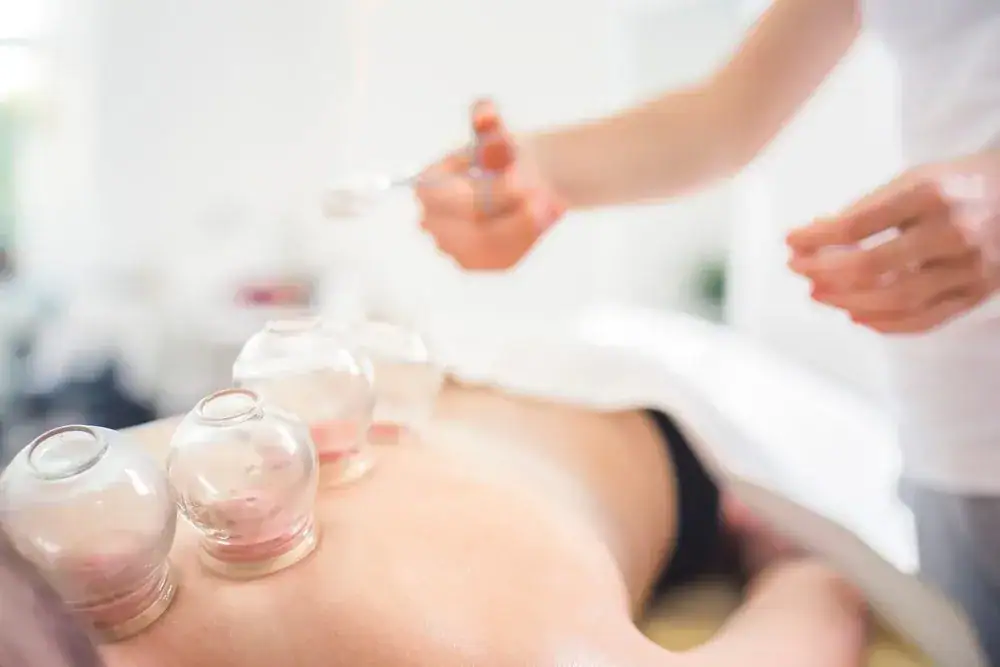
Cupping therapy provides both immediate and cumulative benefits, but you need to understand what’s happening to set realistic expectations. During a session, the suction increases blood flow to restricted areas and helps release fascial adhesions—places where tissue layers have essentially stuck together. Many people feel looser and experience less pain right away because you’re addressing a mechanical problem.
The temporary relief becomes lasting improvement when cupping is part of a broader physical therapy plan. We’re not just putting cups on your back and calling it done. We’re identifying why that area got tight in the first place, addressing muscle imbalances, teaching you corrective exercises, and using cupping to accelerate the process.
Research shows cupping significantly reduces pain and improves function compared to medication alone, particularly for conditions like lower back pain and neck tension. The key is consistency. One session might give you a preview of what’s possible. A treatment plan gives you actual recovery.
Cupping often leaves circular marks that look like bruises but aren’t quite the same thing. Bruises happen when blood vessels break due to impact. Cupping marks appear because we’re deliberately drawing blood to the surface to increase circulation. The discoloration you see is your body’s healing response, not damage.
The marks typically fade within three to seven days, depending on how much suction was used and how your body responds. Some people barely mark at all. Others have more visible circles that take a bit longer to disappear. Neither response indicates whether the treatment is working—it’s just individual variation.
If you have an event coming up where visible marks would be a problem, let us know before your session. We can adjust the intensity or focus on areas that won’t be visible. The therapeutic benefit doesn’t require maximum suction or dramatic marking. What matters is appropriate pressure for your tissue condition and pain level.
When cupping is performed by a licensed physical therapist as part of your treatment plan, it’s typically covered under your physical therapy benefits. We accept Medicare and nearly all commercial insurance plans, which means cupping therapy is usually covered the same way your other PT services are.
Coverage depends on your specific plan, deductible status, and whether you’ve met any therapy visit limits for the year. We verify your benefits before starting treatment so you know what to expect. There’s no point in starting care if the cost doesn’t work for your situation.
The distinction matters because cupping at a spa or wellness center is almost never covered by insurance. Those are out-of-pocket expenses. When you receive cupping from a physical therapist treating a diagnosed condition, you’re receiving medical treatment, not a cosmetic service. That’s why insurance covers it. We handle the billing and documentation to make sure everything is submitted correctly.
Most people notice some improvement within one to three sessions, but meaningful, lasting results typically require six to eight weeks of consistent treatment. That doesn’t necessarily mean cupping every session—it means a structured physical therapy plan where cupping is one of several techniques we use.
The timeline depends entirely on what we’re treating. Acute muscle strain from overdoing yard work might respond quickly. Chronic lower back pain you’ve dealt with for five years will take longer because we’re unwinding patterns your body has reinforced over time. Your age, overall health, and how well you follow through with home exercises all affect your progress.
We reassess every few sessions to make sure you’re actually improving. If cupping isn’t giving you the results we expect, we adjust the approach. Physical therapy isn’t about doing the same thing indefinitely and hoping it works. It’s about measuring progress and making changes based on what your body tells us. You’ll know within the first month whether this path makes sense for you.
Dry cupping uses suction alone—no needles, no fire, no oils. We place cups on your skin, create a vacuum using either a pump or heat, and let them sit for several minutes. This is what we use as physical therapists because it’s safe, controlled, and effective for treating musculoskeletal pain.
Wet cupping involves making small incisions in the skin to draw out blood, and fire cupping uses flame to create suction. These techniques come from traditional medicine practices and aren’t part of standard physical therapy protocols in New York. They carry higher risks and aren’t necessary to get therapeutic benefits.
Massage therapists sometimes offer cupping as part of relaxation services, which is fine for general wellness but different from medical treatment. When we perform cupping as physical therapists, we’re targeting specific tissue restrictions based on a clinical evaluation. We’re treating a diagnosed condition with measurable goals. The cups might look the same, but the intent, application, and expected outcomes are different. You’re receiving skilled therapy, not a spa service.
Yes. Cupping therapy works alongside your current pain management approach—it doesn’t require you to stop taking medication. Many of our patients come to us specifically because they want to reduce their reliance on pain pills, but that’s a gradual process done in coordination with your doctor.
Physical therapy with cupping gives you a non-pharmaceutical option that addresses the underlying cause of your pain rather than just masking symptoms. As your function improves and pain decreases, you and your physician can discuss whether it makes sense to adjust your medication. That’s not a decision we make for you, but we can provide documentation of your progress to support those conversations.
If you’re on blood thinners or have a clotting disorder, we need to know before starting cupping therapy. The suction can affect how your skin responds, and we may need clearance from your doctor or choose alternative techniques. Being on medication isn’t automatically a problem—we just need complete information to treat you safely. Bring your medication list to your first appointment so we can make informed decisions about your care plan.
Other Services we provide in Harbor Isle