

You’re not looking for temporary relief. You want to move without wincing, sleep without waking up stiff, and get back to the activities that matter without planning your day around pain levels.
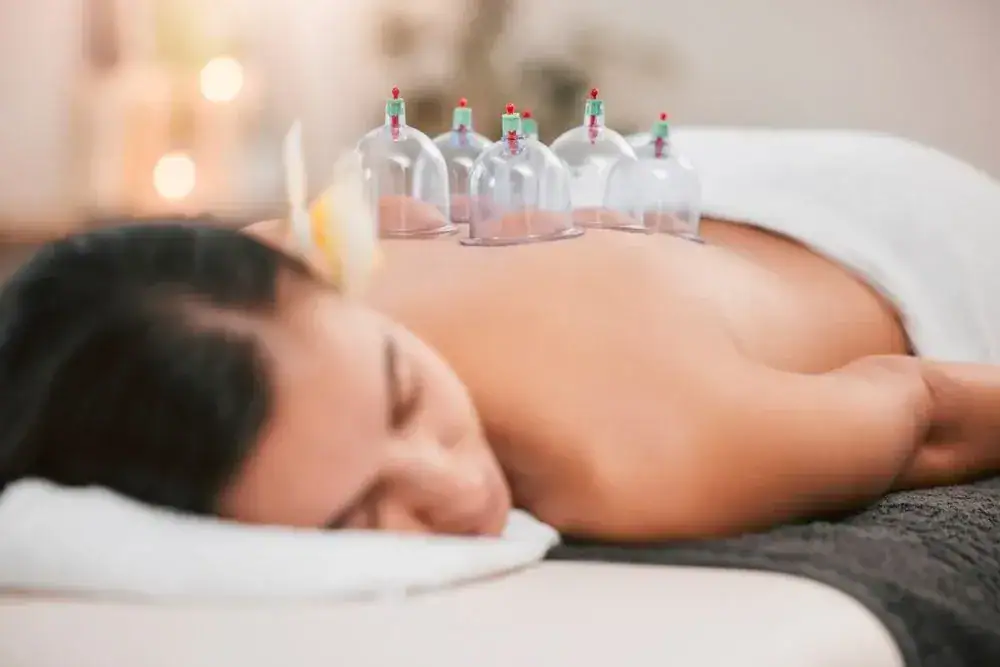
Cupping therapy works by creating negative pressure on your muscles and connective tissue. That suction increases blood circulation to injured areas, reduces inflammation, and helps your body clear out the metabolic waste that builds up in tight, painful tissue. For Harbor Hills residents dealing with chronic neck pain, low back issues, or stubborn muscle tension, this approach addresses what’s actually causing the problem instead of just masking symptoms.
The results show up fast for most people. Patients with iliotibial band pain that lasted over a year have reported immediate relief after just three minutes of treatment. Others dealing with fibromyalgia or post-workout soreness find that cupping speeds recovery and improves their range of motion within a few sessions. You’re not committing to months of treatment before seeing if it works.
We’ve been serving Long Island residents since 2010, bringing licensed physical therapists directly to your home. That matters in Harbor Hills, where getting to appointments can mean dealing with traffic, parking, and time you don’t have.
Our therapists are trained in cupping therapy as part of a comprehensive physical therapy approach. We don’t just show up and apply cups. We evaluate your specific condition, review your medical history, and determine whether cupping fits into your treatment plan or if another approach makes more sense for your goals.
You get the same quality care you’d receive in a clinic, but in an environment where you’re comfortable and don’t have to rush. Every treatment plan is built around your schedule, your pain points, and what you’re trying to get back to doing.
Your first session starts with an evaluation. Your therapist will ask about your pain history, what movements make it worse, and what you’ve already tried. This isn’t a formality—it determines whether cupping is the right tool for your situation and how we’ll integrate it with other physical therapy techniques.
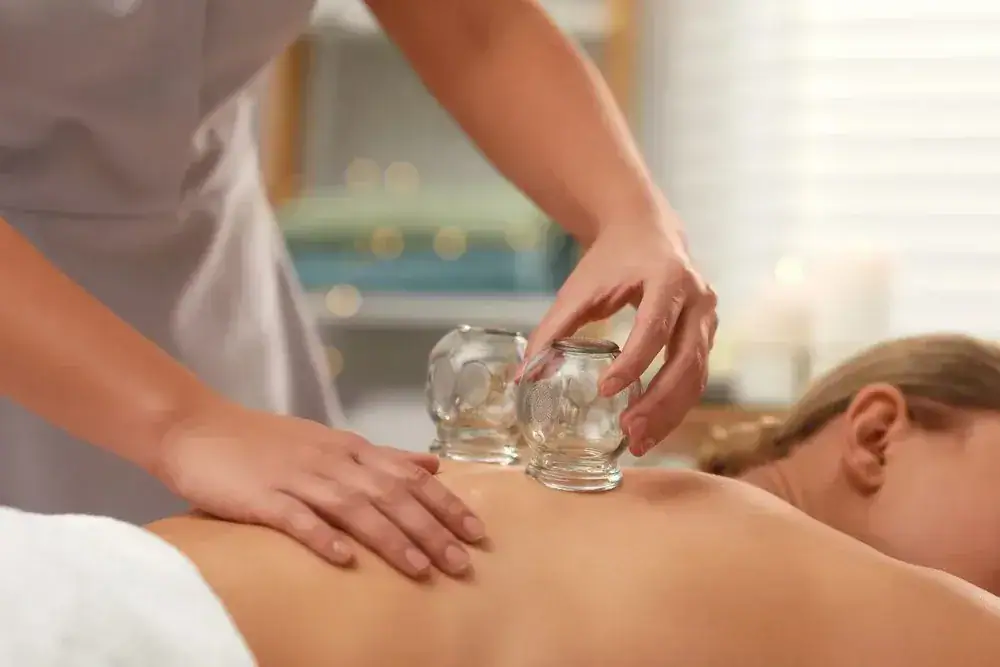
During treatment, we use a variable pressure pump to create suction through plastic cups placed on your skin. No flames, no glass. The pressure is adjustable, so if something feels too intense, we dial it back immediately. Most people describe the sensation as a deep tissue massage in reverse—pulling instead of pushing.
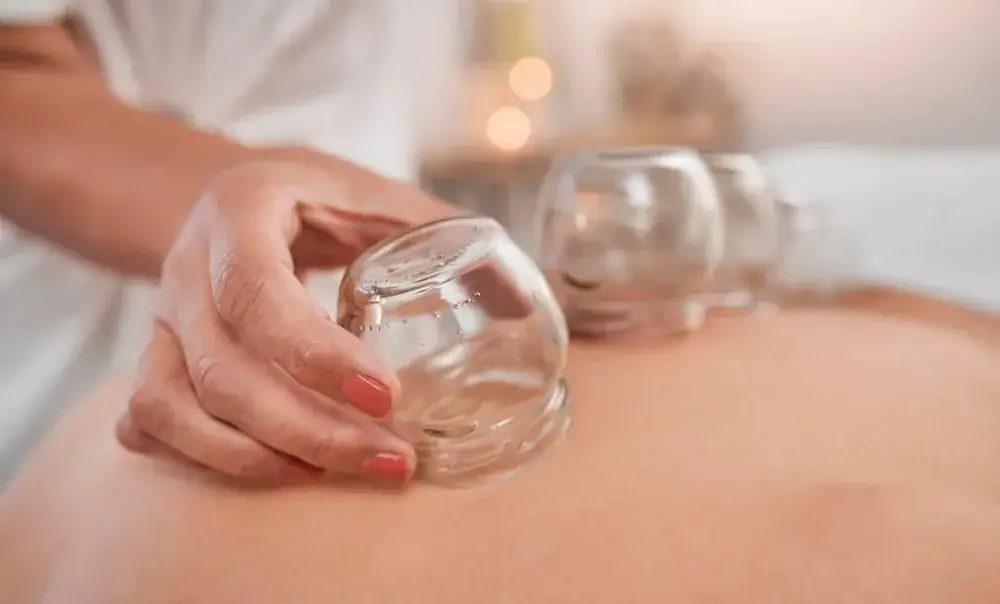
The cups stay in place for anywhere from a few minutes to fifteen minutes, depending on what we’re treating. You might see circular marks afterward. Those aren’t bruises—they’re a sign of increased blood flow and metabolic waste being drawn to the surface. The marks fade within a few days to a week.
Sessions typically run 15 minutes to an hour based on your personalized plan. Some people feel relief right away. Others need two or three sessions before they notice significant changes. Your therapist will track your progress and adjust the approach as you improve.
Ready to get started?
Cupping therapy works especially well for chronic musculoskeletal conditions. If you’ve been dealing with neck pain, low back pain, or fibromyalgia that hasn’t responded to other treatments, this approach has strong evidence supporting its effectiveness. It’s also proven helpful for athletes managing sports injuries or anyone recovering from intense physical activity.
Harbor Hills residents often come to us after trying medication, injections, or months of standard physical therapy without lasting results. Cupping offers a non-invasive alternative that doesn’t add more pharmaceuticals to your routine. It works by addressing the root cause—restricted blood flow, built-up toxins, and tight fascia—rather than just covering up symptoms.
We also use cupping for post-surgical recovery and improving range of motion in stiff joints. The negative pressure lifts fascia and allows lymphatic drainage, which speeds healing and reduces swelling. For older adults or anyone with limited mobility, this can mean the difference between staying active and losing independence.
Treatment integrates with your broader physical therapy plan. If you’re already working on strength, balance, or mobility exercises, cupping enhances those efforts by keeping your muscles loose and your circulation strong. You’re not choosing between approaches—you’re stacking them for better outcomes.
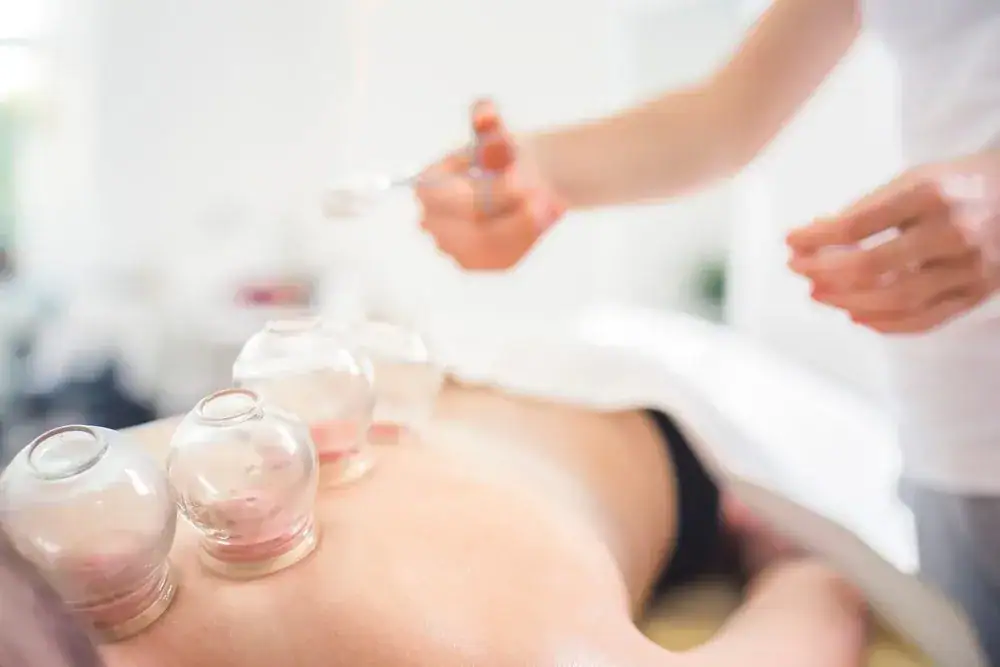
Yes, and the evidence backs it up. Studies show cupping is effective for chronic neck pain, low back pain, and fibromyalgia—conditions that often don’t respond well to standard treatments. The mechanism is straightforward: suction increases blood flow to injured tissue, reduces inflammation, and helps clear metabolic waste that accumulates in tight muscles.
One case study tracked a runner with iliotibial band pain that lasted over a year. After a single three-minute cupping session, he reported instant relief. Two sessions later, he was symptom-free and back to his normal running routine. That’s not typical for everyone, but it shows how quickly cupping can work when it’s the right fit for your condition.
The key is proper evaluation. Cupping isn’t a cure-all, and it won’t fix structural problems like herniated discs or torn ligaments. But for muscle tension, restricted fascia, and circulation issues, it’s one of the most effective tools we have. Your therapist will assess whether your pain is coming from something cupping can address or if you need a different approach.
The circular marks left by cupping aren’t bruises—they’re a sign that blood and lymph are being drawn to the surface. When suction pulls tissue upward, it brings stagnant blood, toxins, and cellular waste out of deeper layers. The color and intensity of the marks actually tell us something about what’s happening in that area.
Dark purple marks usually indicate significant stagnation or toxin buildup. Lighter pink marks suggest less congestion. If an area barely marks at all, that’s often a sign of good circulation. Your therapist can read these patterns to adjust treatment and track your progress over multiple sessions.
Most marks fade within three to seven days. Some people see them disappear in two or three days, especially if their circulation is already good. Athletes who get cupping regularly often notice their marks get lighter over time as their tissue health improves. You can still exercise, shower, and go about your normal routine with the marks visible—they don’t hurt and they’re not a sign of injury.
Massage pushes tissue down. Cupping pulls it up. That difference matters because some types of pain and restriction respond better to decompression than compression. If you’ve ever had a massage that felt good in the moment but didn’t create lasting change, cupping might address what massage can’t reach.
The negative pressure from cupping lifts fascia away from muscle, creating space and allowing fresh blood to flow into areas that have been starved of circulation. This is especially useful for old injuries, scar tissue, or chronic tightness that’s built up over months or years. Massage can work the surface and mid-layers, but cupping affects deeper tissue without the discomfort of deep tissue work.
In physical therapy, we use cupping as one tool among many. You might get cupping to release tight hip flexors, then do strengthening exercises while those muscles are loose and receptive. Or we’ll use it before stretching to improve your range of motion. It’s not cupping instead of physical therapy—it’s cupping integrated into a complete treatment plan that addresses your specific goals.
Cupping is safe when performed by a licensed therapist who knows how to assess your condition and adjust pressure appropriately. We use modern equipment with variable pressure pumps, not the traditional glass-and-flame method. That gives us precise control and lets us tailor the suction to your comfort level in real time.
Most people describe the sensation as a strong pull or deep stretch. It shouldn’t be painful. If you feel sharp pain or excessive discomfort, we reduce the pressure immediately. Some areas are more sensitive than others—spots with significant tension or inflammation might feel more intense, but that usually eases as circulation improves.
The main risk is temporary marking, which we’ve already covered. Rarely, someone might feel lightheaded during treatment, especially if they’re dehydrated or haven’t eaten. We monitor you throughout the session and adjust as needed. Cupping isn’t appropriate for everyone—people with certain skin conditions, blood disorders, or who are on blood thinners need to avoid it. That’s why the evaluation matters. We don’t apply cups until we’re confident it’s safe and effective for your specific situation.
Some people feel immediate relief after one session. Others need three to five sessions before they notice significant improvement. It depends on what we’re treating, how long you’ve had the problem, and how your body responds to increased circulation.
Acute injuries or muscle soreness from a recent workout often respond quickly. Chronic conditions that have been building for months or years typically take longer because we’re addressing layers of restriction and poor circulation that didn’t develop overnight. Your therapist will give you a realistic timeline based on your evaluation, but we’ll also track your progress and adjust the plan if you’re not improving as expected.
Most treatment plans in Harbor Hills involve sessions once or twice a week initially, then spacing them out as you improve. Athletes maintaining performance might come in every few weeks. People managing chronic pain might need ongoing sessions as part of their long-term strategy. The goal isn’t to keep you in treatment forever—it’s to get you functional, then give you the tools and maintenance plan to stay that way.
Yes, and in most cases, combining treatments improves your outcomes. Cupping works well alongside physical therapy exercises, chiropractic care, acupuncture, and even medication management. The increased circulation from cupping can actually make other treatments more effective by ensuring nutrients and oxygen reach the areas you’re trying to heal.
If you’re already seeing another provider, let us know during your evaluation. We’ll coordinate with them if needed and make sure our approach complements what they’re doing. For example, if you’re doing strength training with another therapist, we might use cupping to keep your muscles loose between sessions so you can train harder without setbacks.
The one thing to watch is timing. If you’re getting deep tissue massage or another intensive treatment, you might want to space it a day or two away from cupping so your body has time to process both. Your therapist will help you figure out the right schedule. The bottom line is that cupping isn’t an either-or decision—it’s an addition to your toolkit that makes everything else work better.
Other Services we provide in Harbor Hills