

You’re dealing with pain that limits what you can do. Maybe it’s your lower back when you stand too long, or your neck after a full day, or that persistent shoulder tension that never quite goes away.
Cupping therapy works by creating suction on your skin that draws blood flow to specific areas. This increased circulation helps loosen tight muscle fibers, reduces inflammation, and can significantly improve your range of motion. It’s not magic—it’s increased blood flow doing what it’s supposed to do.
What you’ll notice first is the muscle relaxation. That constant tension you’ve been carrying starts to release. Then comes better movement—reaching, bending, turning your head without that sharp reminder that something’s wrong.
The goal isn’t just temporary relief. When cupping therapy is part of your physical therapy plan, you’re addressing the underlying muscle tightness and restricted movement patterns that keep pain coming back.
Medcare Therapy Services has been providing in-home physical therapy across Long Island for over 14 years. We’re licensed professionals who accept Medicare and most commercial insurance, which matters when you’re trying to manage healthcare costs.
Greenport’s aging population faces a specific challenge—getting to therapy appointments when you’re already dealing with pain or mobility issues. That’s why we come to you. Your home, your schedule, your comfort level.
We treat each patient like family, but that doesn’t mean we’re casual about your care. It means we show up on time, we listen to what’s actually bothering you, and we adjust your treatment based on how you’re responding—not based on what a template says you should be doing.
Your therapist starts by evaluating your pain points and mobility limitations. We’re looking at where you hurt, how you move, and what’s actually preventing you from doing what you need to do each day.
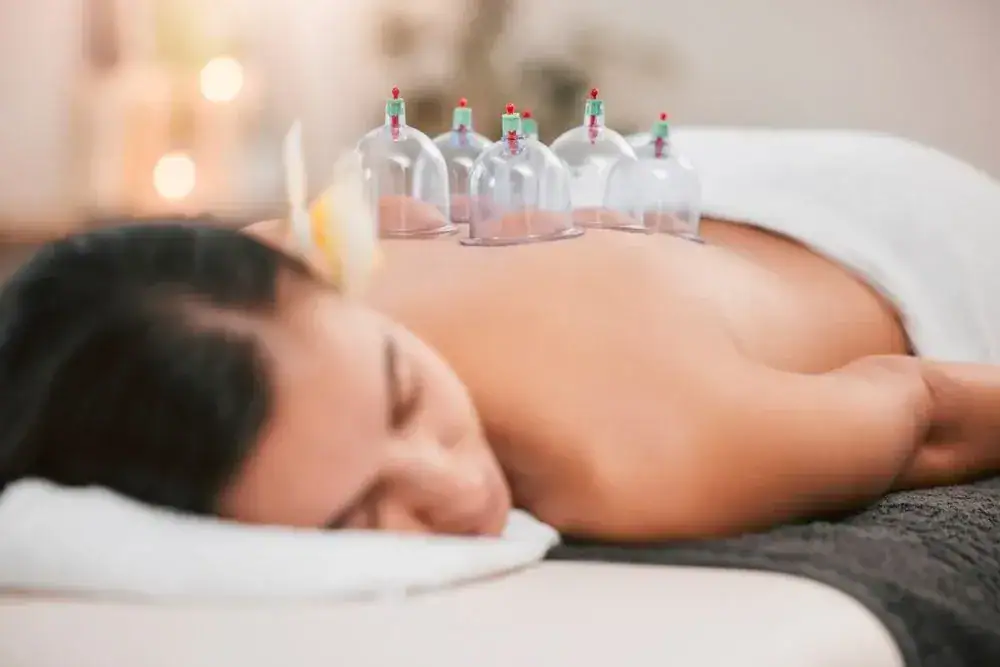
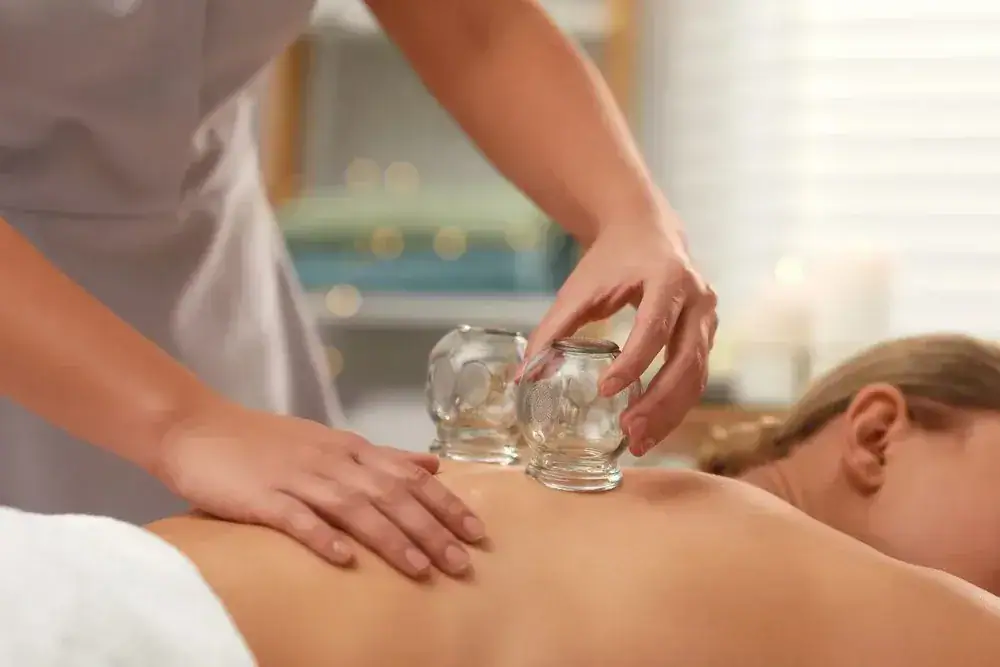
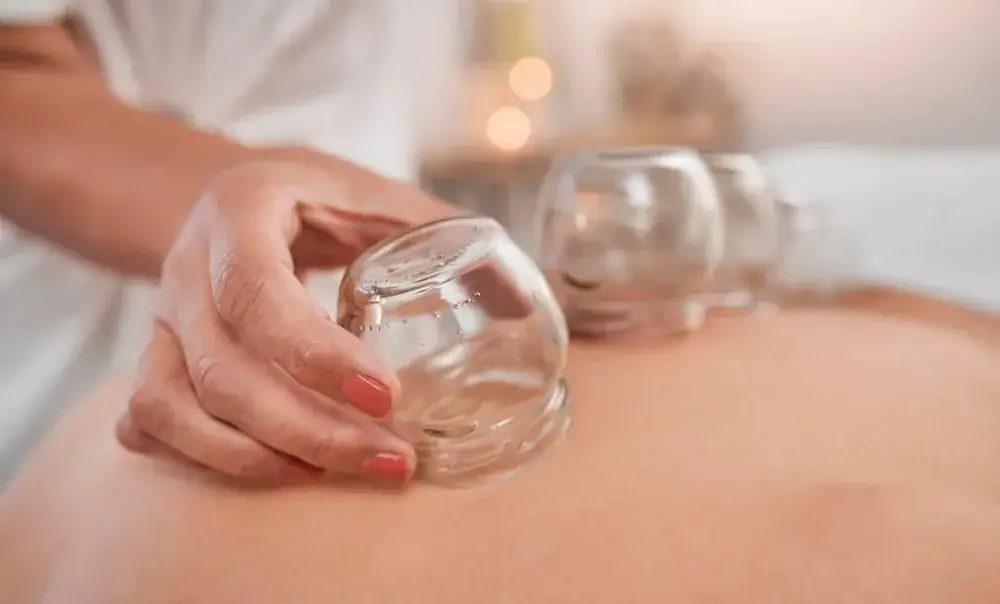
During dry cupping, we place specialized cups on your skin that create suction. This isn’t painful—most people describe it as a tight pulling sensation that actually feels good on sore muscles. The cups stay in place for several minutes while they draw blood flow to the area and encourage those tight muscle fibers to release.
You’ll see circular marks afterward. They’re not bruises—they’re a sign of increased blood circulation in areas that needed it. The marks fade within a few days to a week.
Cupping works best as part of a broader physical therapy plan. We’re not just putting cups on your back and calling it done. We’re combining this with targeted exercises, manual therapy, and movement training that addresses why you’re in pain in the first place.
Most patients start with twice-weekly sessions, then adjust based on how you’re responding. Some people feel relief after the first session. Others need a few weeks to notice significant changes. Your body dictates the timeline, not our schedule.
Ready to get started?
You get a licensed physical therapist who comes to your home in Greenport, NY with all the equipment needed for your session. No driving, no waiting rooms, no trying to figure out transportation when you’re already uncomfortable.
Each session includes a full evaluation of how you’re progressing. We’re checking your range of motion, asking about your pain levels, and adjusting your treatment plan based on what’s working and what isn’t. Cupping therapy is one tool—we also incorporate manual therapy techniques, therapeutic exercises, and mobility training specific to your limitations.
Medicare covers our outpatient physical therapy services when medically necessary. We also accept nearly all commercial insurance plans. That means you’re getting professional, licensed care without the out-of-pocket costs that make people put off treatment they actually need.
For Greenport, NY residents, especially those in the North Fork area, in-home therapy eliminates a real barrier. You’re not asking family members to drive you to appointments. You’re not canceling because the weather’s bad or you’re having a rough pain day. Your therapist shows up regardless.
This matters more than people realize. Consistent therapy is what creates results. When every appointment requires coordination, transportation, and physical effort before you even start treatment, people skip sessions. Then they wonder why they’re not getting better.
Cupping therapy has moderate-quality evidence supporting its effectiveness for chronic low back pain and neck pain. That’s research-speak for “yes, it works for many people, but it’s not a guaranteed fix for everyone.”
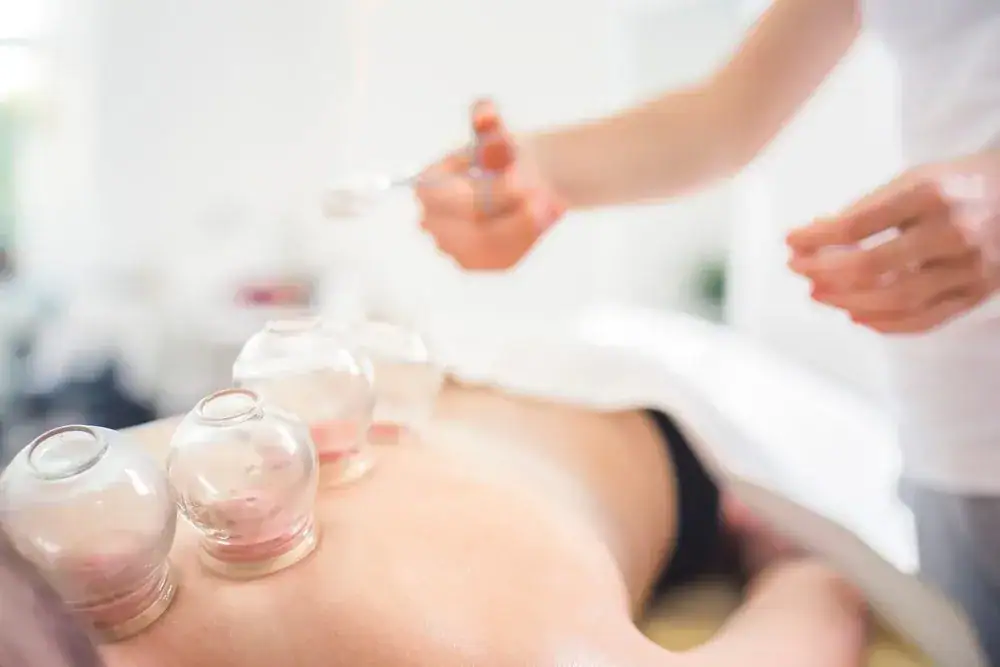
Here’s what happens mechanically: the suction increases blood flow to areas where muscles are tight and circulation is restricted. Better blood flow means more oxygen and nutrients reaching damaged tissue, which helps with healing and pain reduction. The suction also creates space between muscle layers that have been compressed, which is why people often feel immediate relief in range of motion.
For chronic back pain specifically, cupping works best when it’s part of a complete physical therapy program. You’re not just getting temporary relief from the cups—you’re also addressing the movement patterns and muscle imbalances that caused the pain in the first place. That combination is what creates lasting results, not just a few days of feeling better.
You’ll have circular marks, but they’re not technically bruises. Bruises happen when blood vessels break and leak into surrounding tissue. Cupping marks are caused by blood being drawn to the surface, which is the entire point of the treatment.
The marks look like dark circles where the cups were placed. They can range from light pink to deep purple depending on how much stagnation was in that area and how tight your muscles were. Areas with more tension and restricted blood flow typically show darker marks.
These marks fade on their own within three to seven days for most people. They don’t hurt—you’ll feel the area where we worked, similar to muscle soreness after a good workout, but the marks themselves aren’t painful to touch. If you’re concerned about visible marks, let your therapist know. We can adjust cup placement to avoid areas that would be visible in your normal clothing.
Medicare covers outpatient physical therapy services when they’re medically necessary, and cupping therapy can be included as part of your physical therapy treatment plan. The key is that it needs to be provided by a licensed physical therapist and documented as part of your overall therapy goals.
We handle the Medicare paperwork and billing directly. You won’t need to file claims yourself or figure out coverage codes. When your doctor refers you for physical therapy and cupping is appropriate for your condition, we include it in your treatment plan and bill it through your Medicare coverage.
Most commercial insurance plans follow similar guidelines—they cover physical therapy services that are medically necessary and provided by licensed professionals. We accept nearly all commercial insurances in addition to Medicare. Before your first session, we verify your coverage and let you know exactly what your costs will be, so there are no surprises when you get a bill.
Dry cupping uses suction only—no needles, no blood, no fire inside the cups. We place cups on your skin and create a vacuum that pulls tissue upward. That’s it.
Wet cupping involves making small cuts in the skin and using suction to draw out small amounts of blood. Fire cupping uses a flame to create the vacuum inside glass cups. Both of those techniques have their place in traditional medicine, but they’re not what we do in a physical therapy setting.
Dry cupping is what works best alongside physical therapy because it’s non-invasive, low-risk, and focuses specifically on increasing blood circulation and releasing muscle tension. We can use it on multiple areas in one session without any recovery time needed. You can go right back to your normal activities afterward—no wound care, no restrictions, no complications to manage.
Some people feel relief during their first session. Others need three to four weeks of consistent treatment before they notice significant changes. It depends entirely on what we’re treating and how long you’ve been dealing with the problem.
Acute pain—something that just started bothering you in the last few weeks—typically responds faster. Chronic pain that you’ve been managing for months or years takes longer because we’re not just addressing surface-level muscle tightness. We’re retraining movement patterns and rebuilding strength in areas that have been compensating for a long time.
Most patients start with twice-weekly sessions for the first few weeks. As you improve, we space sessions further apart. The goal is to get you to a point where you’re managing your pain through exercises and movement strategies we’ve taught you, not through ongoing therapy sessions. Cupping therapy accelerates that process by giving your muscles the relief they need to actually do the therapeutic exercises correctly, but it’s not a forever treatment. You should be getting better, not just feeling better temporarily.
Yes, especially when shoulder pain is caused by muscle tightness, rotator cuff issues, or restricted mobility from compensation patterns. Cupping increases blood flow to the shoulder muscles and creates space in areas where tissue has become compressed and restricted.
Shoulder pain is tricky because your shoulder has the greatest range of motion of any joint in your body. That means there are multiple muscle groups, tendons, and movement patterns that could be causing your problem. Cupping therapy addresses the muscle tension component, but we also need to work on strengthening weak stabilizers and correcting movement patterns that are stressing your shoulder.
What you’ll typically notice first is that raising your arm doesn’t feel as tight or restricted. That pulling sensation when you reach overhead starts to ease. Then we build on that improved mobility with targeted exercises that strengthen the muscles supporting your shoulder. The combination of releasing tension through cupping and rebuilding strength through exercise is what creates lasting improvement, not just temporary relief that disappears as soon as you use your shoulder normally again.
Other Services we provide in Greenport