
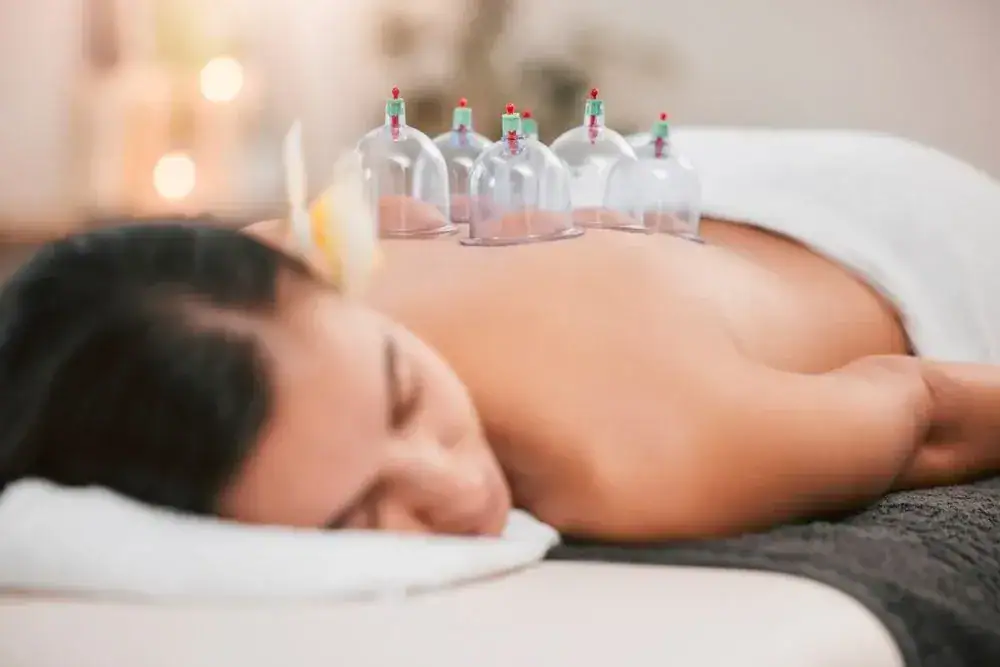

You wake up without that familiar stiffness. You move through your day without constantly adjusting your posture or avoiding certain movements. That’s what happens when blood flow improves and muscle tension releases at the source.
Cupping therapy creates suction that pulls fresh blood to areas that have been tight or inflamed for weeks, months, or longer. The increased circulation helps your body clear out what’s been causing the problem while bringing in what it needs to heal.
Most people notice the difference within the first few sessions. Not because cupping is magic, but because your body responds when you give it the right conditions to recover. You’re not masking symptoms or waiting for something to wear off. You’re addressing why the pain showed up in the first place.
We’ve been treating patients across Long Island for years, with a location serving Greenlawn and the surrounding communities. Our team includes licensed physical therapists who integrate cupping into comprehensive treatment plans, not as a standalone gimmick.
Every session is supervised by professionals who understand musculoskeletal conditions, pain patterns, and how different therapies work together. You’re not getting cupping from someone who took a weekend course. You’re working with clinicians who’ve built their careers on helping people move better and hurt less.
Greenlawn residents deal with the same issues we see across Suffolk County: desk jobs that wreck your neck and shoulders, weekend warrior injuries that never fully heal, aging bodies that need more support than they used to. Our approach accounts for that reality.
Your first visit starts with an assessment. We need to understand what’s going on, where it hurts, how long you’ve been dealing with it, and what you’ve already tried. This isn’t a formality. It determines how cupping fits into your treatment and whether it’s even the right move for your situation.
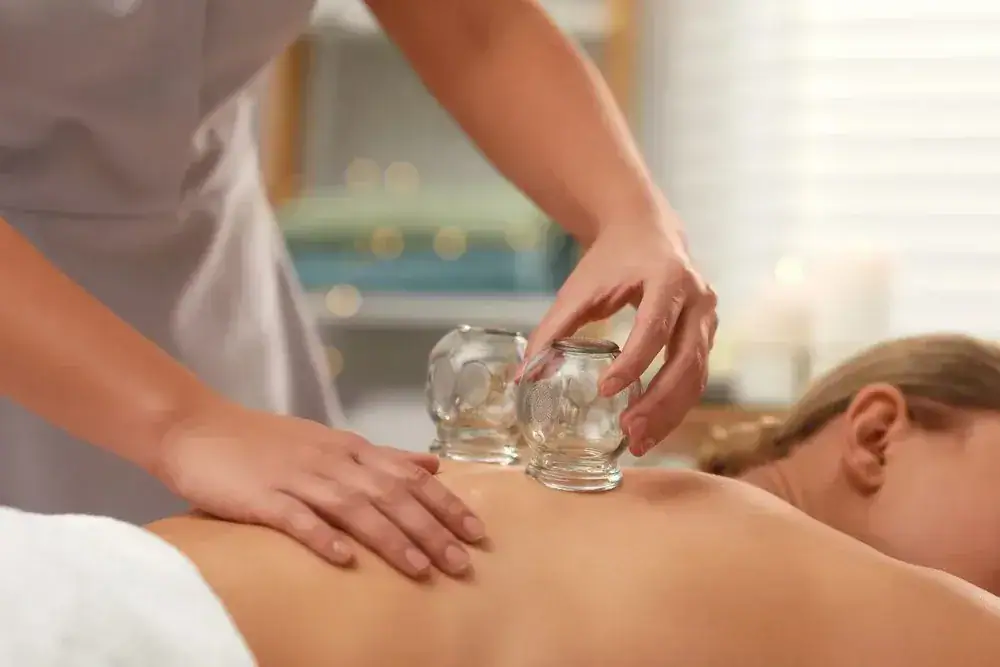
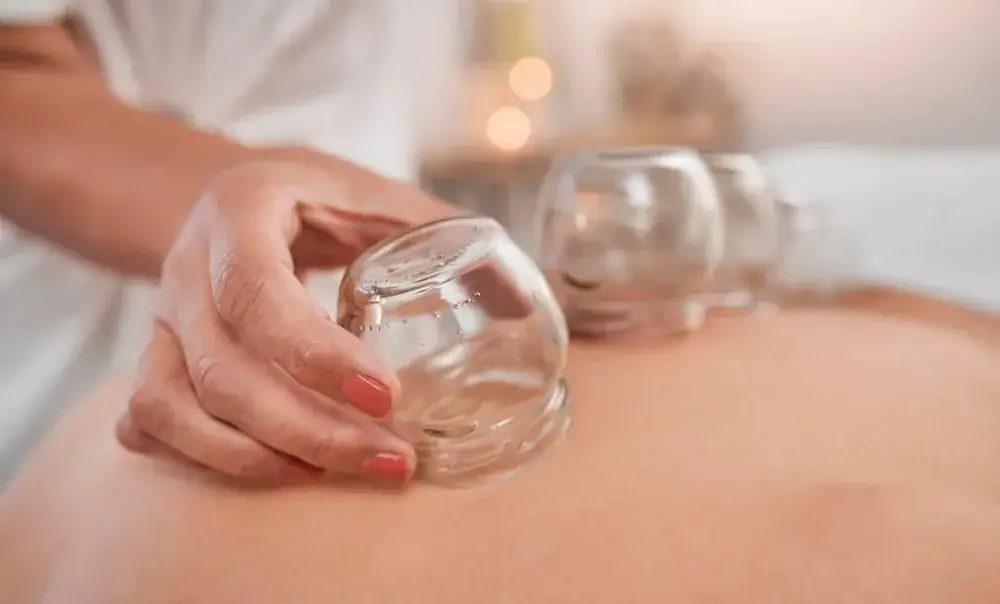
During the actual session, cups are placed on specific areas of your skin. Dry cupping uses suction alone, no needles or incisions. The vacuum effect pulls tissue upward, increasing blood flow to that spot. You’ll feel pressure and tightness, but it shouldn’t be painful. Sessions typically last 15 to 30 minutes depending on the treatment area.
After the cups come off, you might see circular marks where they were placed. Those aren’t bruises in the traditional sense, they’re a result of the suction bringing blood to the surface. They fade within a few days to a week. Most people feel looser immediately after treatment, though some soreness can show up the next day as your body adjusts.
Follow-up sessions are scheduled based on how you respond. Some conditions improve quickly. Others need consistent treatment over several weeks. We track your progress and adjust the approach as needed.
Ready to get started?
Cupping works particularly well for chronic back pain, neck tension, and shoulder tightness. These are the complaints that bring most people through our door in Greenlawn. If you’ve been sitting at a desk for years or your job involves repetitive motion, you know exactly what this feels like.
Athletes use cupping for muscle recovery and injury prevention. It’s become common in sports medicine because it helps reduce inflammation and speeds up healing between training sessions. You don’t have to be a professional athlete to benefit from this. If you’re active and dealing with recurring strains or soreness that limits your performance, cupping can be part of the solution.
The therapy also helps with tension headaches and migraines that stem from muscle tightness in the neck and upper back. When those muscles relax and circulation improves, the frequency and intensity of headaches often decrease. It’s not a cure-all, but for people whose headaches are tied to musculoskeletal issues, it makes a measurable difference.
Long Island’s aging population increasingly turns to cupping as a non-pharmaceutical option for managing arthritis pain and general stiffness. When you’re trying to avoid adding another medication to your routine, therapies like this become more appealing. The key is working with someone who understands how to integrate it with other treatments for the best outcome.
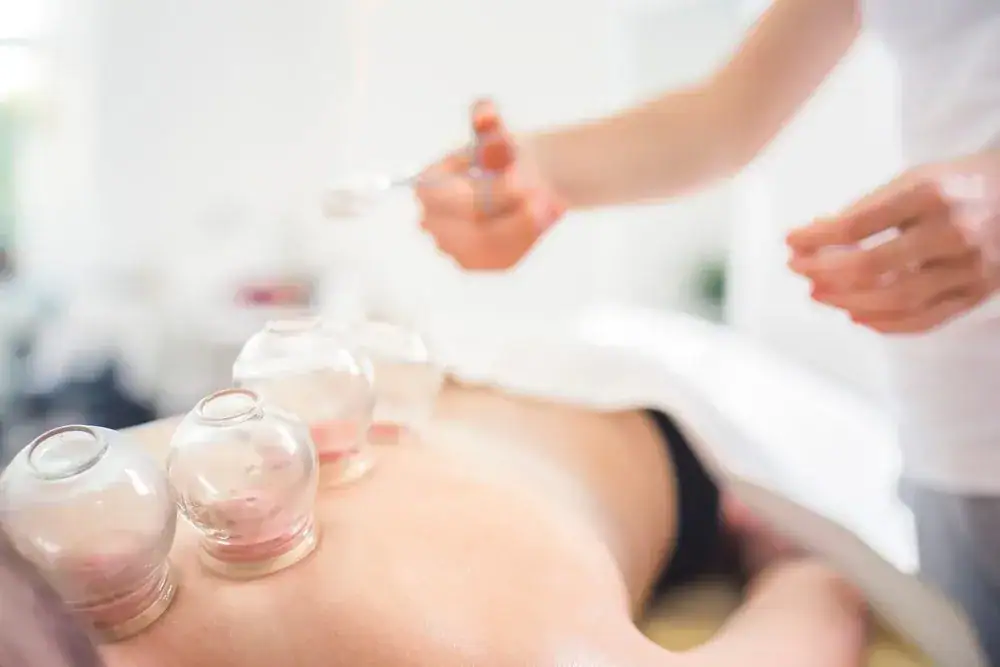
Research shows cupping improves blood circulation and reduces muscle tension, which are often at the root of chronic pain conditions. The National Institutes of Health has funded studies on cupping and other alternative therapies, with results indicating real benefits for conditions like back pain, neck pain, and migraines.
What makes it effective isn’t mysterious. When you increase blood flow to an area that’s been tight or inflamed, you’re helping your body clear out metabolic waste and deliver oxygen and nutrients. That’s basic physiology. The suction from cupping does this more directly than massage alone.
That said, cupping isn’t a standalone cure for every pain condition. It works best as part of a broader treatment plan that might include physical therapy exercises, posture correction, and lifestyle adjustments. If someone promises cupping will fix everything by itself, you should be skeptical. But when it’s used correctly by a licensed therapist who understands your specific condition, the results are consistent enough that it’s become standard practice in many physical therapy and sports medicine settings.
The home cupping market is growing fast, with kits available online for under fifty dollars. The problem isn’t the equipment itself, it’s knowing where to place the cups, how much suction to use, how long to leave them on, and which conditions actually respond to cupping versus which ones need different treatment.
A licensed physical therapist has spent years studying musculoskeletal anatomy and pain patterns. They know the difference between muscle tension that will respond to cupping and nerve issues that won’t. They can identify when inflammation is acute versus chronic, which changes the treatment approach entirely.
Professional treatment also means you’re in a clinical environment with proper assessment before and after each session. We track your progress, adjust the technique based on how you respond, and integrate cupping with other therapies when needed. You’re not guessing. You’re working with someone who’s seen hundreds of cases similar to yours and knows what actually works. The circular marks left by cupping can look alarming if you don’t know what you’re doing, and improper technique can cause actual bruising or skin irritation. That risk drops significantly when someone trained is doing the work.
Your first appointment will be longer than follow-up sessions because it includes an evaluation. We’ll ask about your pain history, what makes it better or worse, what treatments you’ve tried, and what your daily routine looks like. We’ll also do a physical assessment to see how you move and where the restrictions are.
Once we determine cupping is appropriate for your condition, we’ll explain what’s about to happen. You’ll either lie face down or sit, depending on the treatment area. We place cups on your skin and create suction, either with a pump or by heating the air inside the cup. You’ll feel a pulling sensation and tightness, but it shouldn’t hurt. If it does, speak up immediately.
The cups stay in place for 10 to 20 minutes typically. Some therapists use a technique where they move the cups around while maintaining suction, which feels like a deep tissue massage. Others leave them stationary. After removal, you’ll see circular marks that look like bruises but fade within a week. Most people feel looser right away, though some experience mild soreness the next day as the body adjusts. We’ll give you specific guidance on what to do after treatment, including whether to ice, heat, stretch, or rest the area.
This depends entirely on what you’re treating and how long you’ve had the problem. Acute muscle tension from a recent injury might respond in two or three sessions. Chronic pain that’s been building for years will take longer, often six to eight sessions before you see significant improvement.
We’ll give you a realistic timeline after your initial assessment. We’re basing this on your specific condition, not a generic protocol. Some people notice a difference immediately after the first session. Others need a few treatments before the cumulative effect kicks in.
Frequency matters too. Sessions are typically scheduled once or twice a week at the start, then spaced out as you improve. If you’re only coming in once every few weeks, it’s harder to build momentum. Your body needs consistent input to change patterns that have been in place for a long time. The goal isn’t to keep you coming forever. It’s to get you to a point where the pain is manageable or gone, and you can maintain that with occasional maintenance sessions or none at all. We’ll tell you when you’re done, not string you along indefinitely.
The most common side effect is the circular marks left where the cups were placed. They look dramatic but they’re not painful and they fade on their own. Some people experience mild soreness or tightness in the treated area for a day or two after the session, similar to how you might feel after a deep tissue massage.
Serious side effects are rare when cupping is performed by a licensed professional. Improper technique can cause skin irritation, burns if heat is used incorrectly, or actual bruising if too much suction is applied for too long. That’s why working with a trained therapist matters.
Cupping isn’t appropriate for everyone. If you’re on blood thinners, have a bleeding disorder, or have certain skin conditions, we’ll either avoid cupping or modify the approach. Pregnant women should check with their doctor before starting treatment. People with active infections or open wounds in the treatment area need to wait until those heal. A thorough intake process catches these issues before treatment starts, which is another reason professional care is worth the investment over trying this yourself at home.
Coverage depends on your specific insurance plan and whether cupping is being provided as part of physical therapy treatment. Many plans cover physical therapy services, and if cupping is integrated into your treatment plan by a licensed therapist, it may fall under that coverage.
You’ll need to check with your insurance provider directly about your benefits. Ask specifically whether alternative or complementary therapies are covered when provided by a licensed physical therapist. Some plans require a referral from your primary care doctor. Others have restrictions on the number of physical therapy visits allowed per year.
We can verify your benefits before you start treatment so you know what to expect. We’ll tell you upfront what your copay or out-of-pocket cost will be. If insurance doesn’t cover it or you haven’t met your deductible yet, we can discuss cash pay options. The key is getting this information before your first session so there are no surprises. Don’t assume it’s not covered just because it’s called alternative therapy. The way it’s billed and who’s providing it makes a significant difference in how insurance companies handle the claim.
Other Services we provide in Greenlawn