
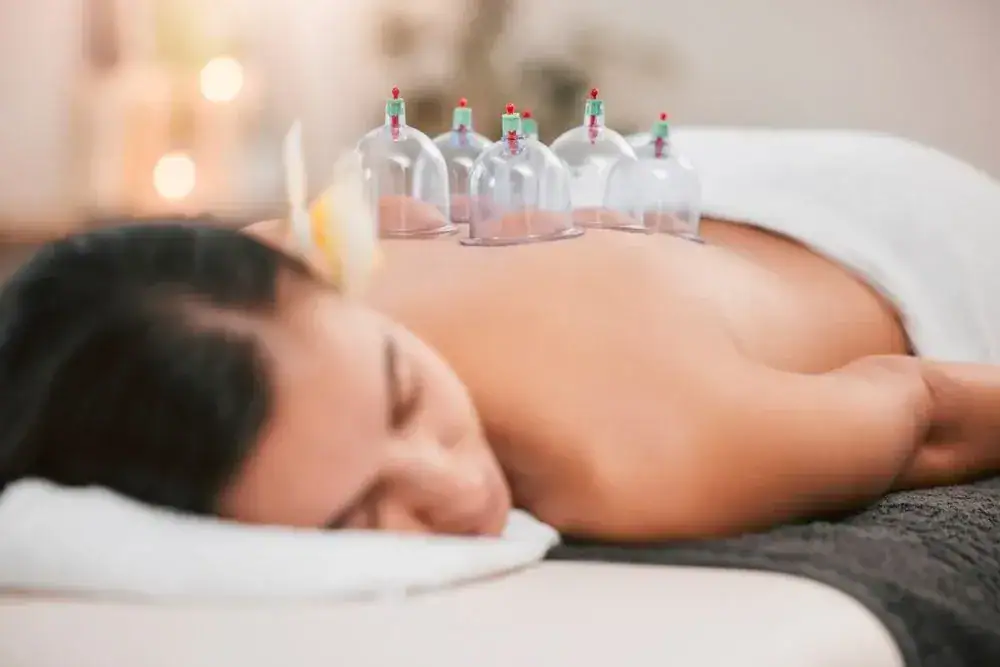

You’re dealing with pain that won’t quit. Maybe it’s your lower back after a long day. Maybe it’s shoulder tension that makes reaching overhead feel impossible. Or neck stiffness that turns every head turn into a reminder that something’s wrong.
Cupping therapy works by improving blood flow to the areas that hurt most. When a physical therapist applies those cups to your skin, they create suction that pulls fresh blood into tight, overworked muscles. That increased circulation helps reduce inflammation, eases muscle tension, and gives your body what it needs to actually heal—not just mask the problem.
Most people notice a difference within the first few sessions. Your range of motion improves. That nagging tightness starts to let go. You’re not constantly adjusting how you sit, stand, or sleep just to avoid triggering another flare-up.
Dry cupping fits naturally into a broader physical therapy plan. It’s not a magic fix, but it’s a proven tool that helps your muscles relax, your joints move more freely, and your recovery stay on track. And when it’s done at home by a licensed therapist, you’re getting professional care without the hassle of driving across town twice a week.
We’ve been providing in-home physical therapy across Long Island for over 14 years. That includes cupping therapy, manual therapy, and personalized treatment plans designed around what you actually need—not a one-size-fits-all protocol.
Every therapist on our team is licensed, experienced, and trained in modern techniques like myofascial decompression and dry cupping. We show up on time, treat you with respect, and work with your schedule because we understand that getting to a clinic isn’t always realistic when you’re in pain or managing mobility challenges.
Great Neck Plaza has a large population of older adults and active professionals who need care that actually fits their lives. We meet that need by bringing therapy to your home, accepting Medicare and most insurance plans, and keeping communication clear from the first call to your last session.
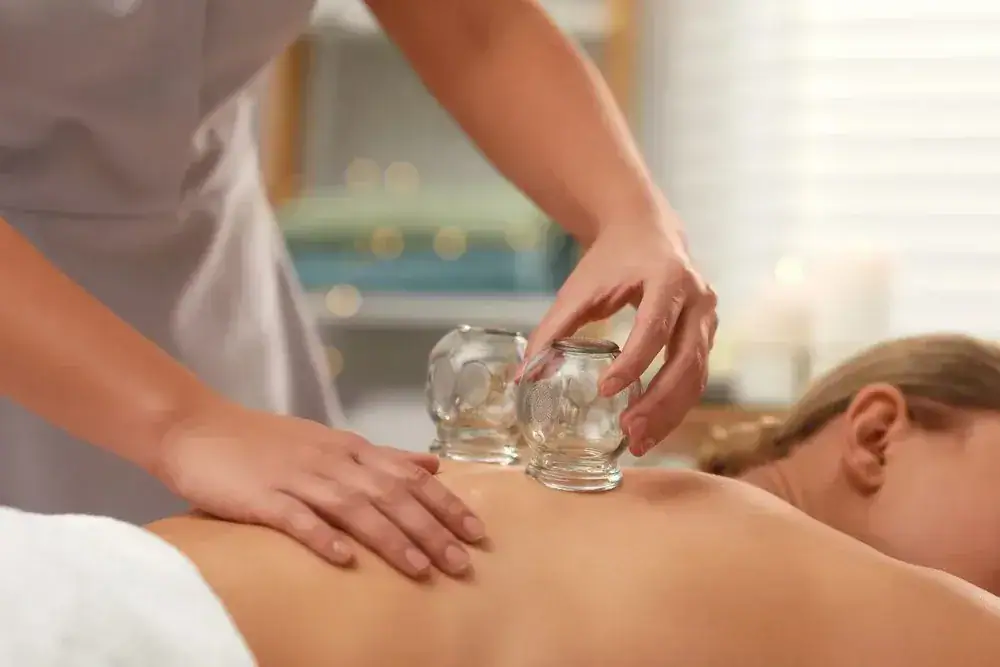
Your first session starts with an evaluation. Your therapist asks about your pain—where it is, how long you’ve had it, what makes it worse. They’ll assess your range of motion, check for muscle tightness, and build a treatment plan that makes sense for your specific situation.
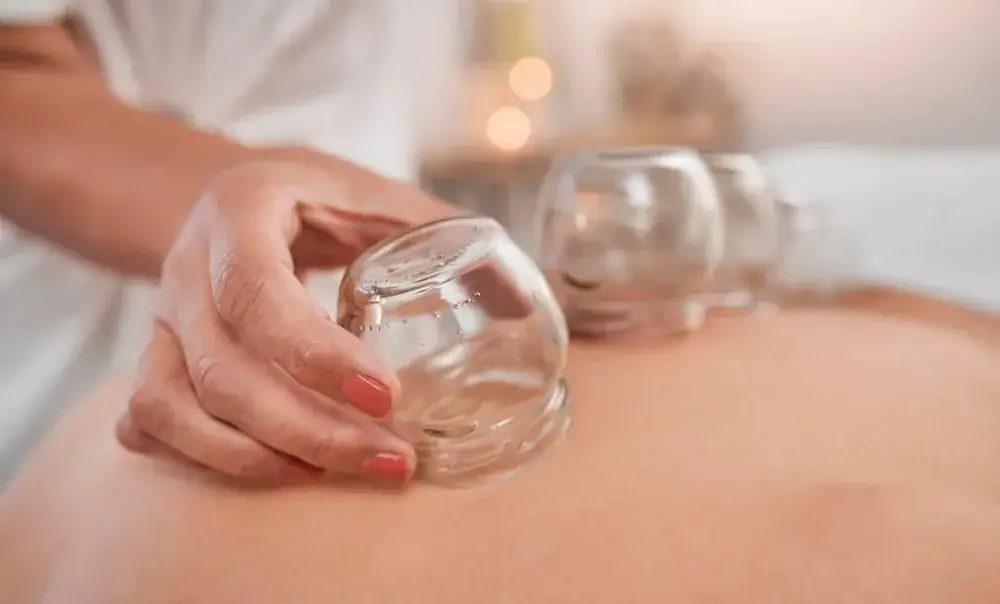
During the cupping session itself, your therapist places cups on targeted areas of your body. These aren’t the fire-and-glass cups you might’ve seen in videos. We use modern suction cups that create controlled pressure to lift the skin and underlying tissue. It’s not painful—most people say it feels like a deep tissue massage, but without the constant pressure.
The cups stay on for a few minutes while you relax. You might feel a pulling sensation, but it shouldn’t hurt. Afterward, your therapist may combine cupping with stretching, manual therapy, or strengthening exercises depending on what your body needs that day.
You’ll likely see some circular marks where the cups were placed. That’s normal. They’re not bruises—they’re a sign of increased blood flow to the area. They fade within a few days and don’t hurt.
Most patients come in for sessions once or twice a week. On average, people see significant pain reduction within six visits or less, though your timeline depends on the severity of your condition and how your body responds.
Ready to get started?
Cupping therapy is especially effective for chronic pain conditions that don’t respond well to rest or over-the-counter medication. That includes lower back pain, neck stiffness, shoulder tension, and muscle soreness from overuse or injury.
If you’re recovering from a fall—and falls are the seventh leading cause of death among older adults in the U.S.—cupping can help restore mobility and reduce pain during your rehabilitation. It’s also helpful for people managing arthritis, dealing with limited range of motion, or trying to avoid surgery by exploring non-invasive options first.
In Great Neck Plaza, nearly 72% of adults over 60 have hypertension, a condition that can affect circulation and slow down recovery from musculoskeletal injuries. Cupping therapy improves blood flow, which supports healing and helps manage pain without adding more medications to your routine.
The treatment works well alongside other physical therapy techniques. Your therapist might combine cupping with joint mobilization, therapeutic exercises, or posture training depending on what your body needs. It’s not a standalone cure, but it’s a low-risk, evidence-backed tool that helps many people feel better faster.
Because we bring therapy to your home, you’re not dealing with the stress of commuting, waiting rooms, or trying to find parking when you’re already in pain. You get professional care in a setting where you’re comfortable, and that makes a real difference in how well you recover.
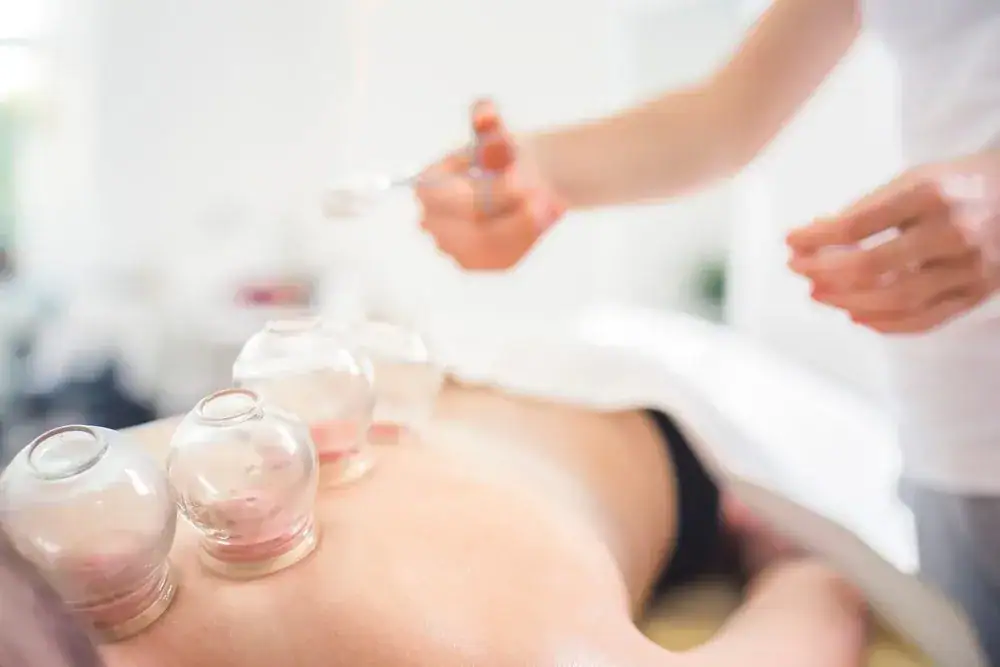
Cupping therapy has been used for centuries, but modern research supports its effectiveness for certain types of pain. A 2012 review of studies found that cupping’s benefits go beyond placebo, particularly for musculoskeletal pain like back pain, neck pain, and muscle tension.
Physical therapists use dry cupping because it increases blood flow to tight or injured areas, which helps reduce inflammation and promote healing. It’s not a miracle cure, but it’s a legitimate tool that works well when combined with other physical therapy techniques like stretching, strengthening, and manual therapy.
Most people notice improvement within a few sessions. You’ll feel less tightness, move more easily, and experience less pain during daily activities. If you’ve tried rest, ice, and over-the-counter pain relievers without much relief, cupping therapy offers a non-invasive option that’s worth exploring with a licensed physical therapist.
Cupping does leave circular marks on your skin, but they’re not bruises in the traditional sense. The marks are caused by increased blood flow to the area, which is actually the goal of the treatment. They’re usually painless and fade within three to seven days depending on how your body responds.
The treatment itself shouldn’t hurt. Most people describe the sensation as a firm pulling or tugging on the skin—similar to a deep tissue massage. If the suction feels too strong, your therapist can adjust the pressure immediately. Communication during the session is key, and a good therapist will check in with you to make sure you’re comfortable.
Some people feel a little sore the day after their first session, similar to how you might feel after a workout. That soreness is temporary and usually goes away within 24 hours. If you’re concerned about how the marks will look, plan your first session when you won’t need to wear clothing that exposes the treated areas.
Most patients see noticeable improvement within six sessions or less, though your timeline depends on the severity of your pain and how long you’ve been dealing with it. Acute injuries—like a pulled muscle or recent strain—often respond faster than chronic conditions that have been building for months or years.
Your physical therapist will evaluate your progress after each session and adjust the treatment plan as needed. Some people feel relief after just one or two sessions, while others need a few weeks of consistent treatment to see lasting results. The key is sticking with the plan and combining cupping with the exercises and stretches your therapist recommends.
If you’re dealing with chronic pain, cupping therapy works best as part of a broader physical therapy program. That might include strengthening exercises, posture correction, and manual therapy techniques that address the root cause of your pain—not just the symptoms. Your therapist will map out a realistic timeline during your first visit so you know what to expect.
Cupping therapy is often covered when it’s performed by a licensed physical therapist as part of a physical therapy treatment plan. We accept Medicare and most major insurance plans, which means cupping may be covered under your outpatient physical therapy benefits.
Coverage depends on your specific plan and whether your doctor has referred you for physical therapy. It’s always a good idea to check with your insurance provider before your first session to confirm what’s covered and whether you’ll have a copay or deductible.
Our team can help you navigate the insurance process and verify your benefits before you start treatment. We’ll work directly with your insurance company to make sure you understand your coverage and aren’t surprised by unexpected costs. If you’re paying out of pocket, we’ll discuss pricing upfront so you can make an informed decision about your care.
You can buy cupping kits online and try it yourself, but working with a licensed physical therapist is safer and more effective. A trained therapist knows exactly where to place the cups, how much suction to use, and how to combine cupping with other treatments that address the root cause of your pain.
Cupping isn’t just about sticking cups on sore spots. It requires an understanding of anatomy, muscle function, and how your body compensates for pain or injury. A physical therapist evaluates your movement patterns, identifies problem areas, and uses cupping as part of a comprehensive treatment plan that includes stretching, strengthening, and manual therapy.
If you try cupping at home without guidance, you risk using too much suction, placing cups incorrectly, or missing the underlying issue that’s causing your pain in the first place. Our therapists bring professional expertise to your home, so you get the benefits of cupping without the guesswork or risk of doing it wrong.
Dry cupping uses suction alone to increase blood flow and relieve muscle tension. The therapist places cups on your skin, creates a vacuum, and leaves them in place for several minutes. There’s no cutting or bloodletting involved, which makes it the preferred method in Western physical therapy settings.
Wet cupping involves making small incisions in the skin before applying the cups, allowing a small amount of blood to be drawn out. This technique is more common in traditional medicine practices and is generally not used by physical therapists in the U.S. due to higher risk of infection and the need for additional training and licensing.
We use dry cupping because it’s effective, low-risk, and works well alongside other physical therapy techniques. You get the benefits of improved circulation and muscle relaxation without any invasive procedures. If you’ve heard about cupping and weren’t sure which type to expect, dry cupping is what you’ll receive during a physical therapy session.
Other Services we provide in Great Neck Plaza