
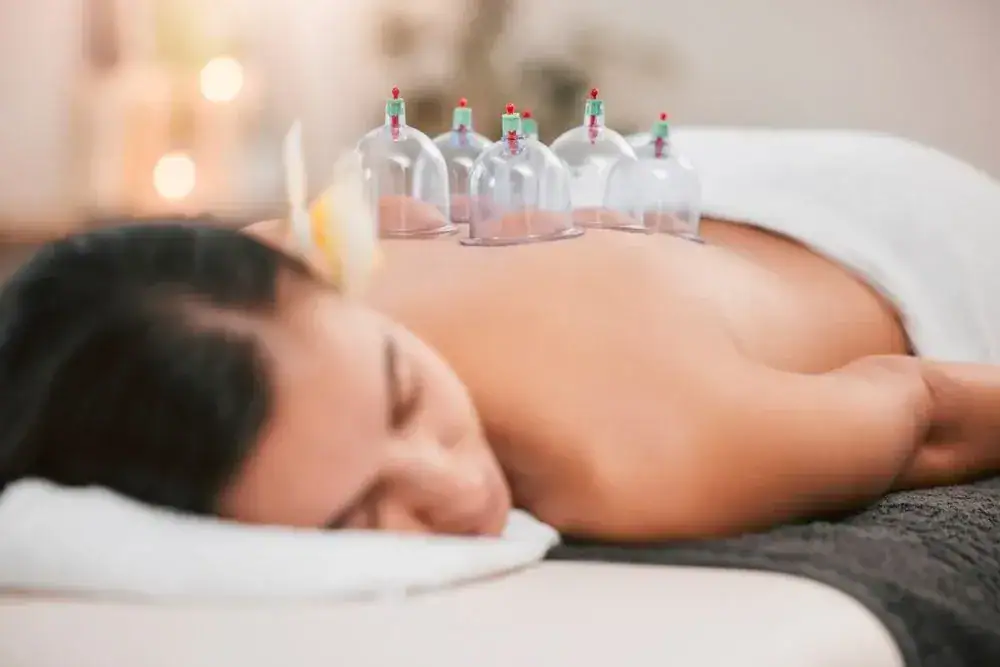

You know that knot in your shoulder that won’t quit? The lower back tightness that makes getting out of bed feel like a negotiation? Cupping therapy addresses those issues by creating suction that lifts tissue away from underlying structures, increasing blood flow and releasing fascial restrictions that keep you locked up.
Most people feel lighter after their first session. Not “a little better”—actually lighter, like someone removed a weight you didn’t realize you were carrying. That’s because cupping doesn’t just mask pain. It changes what’s happening in the tissue itself.
When blood flow increases to an area, you get more oxygen and nutrients delivered right where inflammation and tension have been sitting. Your body can finally start the repair process it’s been trying to complete. Range of motion improves because the fascia—the connective tissue wrapping your muscles—gets mobilized and stops restricting movement.
For chronic neck pain, lower back issues, or post-workout soreness that lingers too long, cupping gives your body the mechanical advantage it needs to heal. You’re not just managing symptoms. You’re addressing the source.
We’ve been treating patients across Long Island for years, with a focus on evidence-based care that actually works. Our physical therapists are trained in modern cupping techniques and integrate them into comprehensive treatment plans designed around your specific condition.
Great Neck has a higher-than-average population dealing with chronic pain—partly due to an aging demographic, partly because of sedentary work habits that plague this area. We see it every day. Neck pain from desk work. Lower back issues from long commutes. Shoulder tension that’s been building for months.
We accept Medicare and most commercial insurance plans, and we treat every patient like they’re part of our own family. Not in a greeting-card way—in a “we’re going to figure this out together” way. You’ll get straight answers, realistic timelines, and a plan that fits your life in Great Neck, NY.
Your first visit starts with an evaluation. We need to understand where your pain is coming from, what makes it worse, and what you’ve already tried. This isn’t a formality—it’s how we build a treatment plan that makes sense for your body.
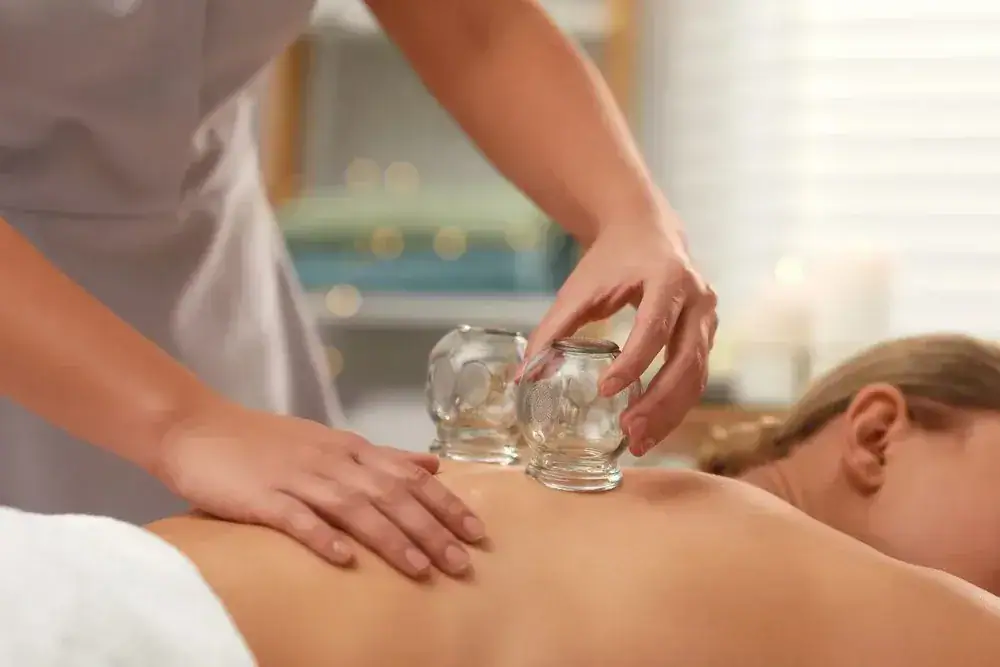
During the cupping session itself, we place specialized cups on targeted areas of your skin. The suction pulls tissue upward, creating space between muscle layers and fascia. You’ll feel the pull, but it shouldn’t hurt. Most people describe it as a deep pressure that feels oddly satisfying.
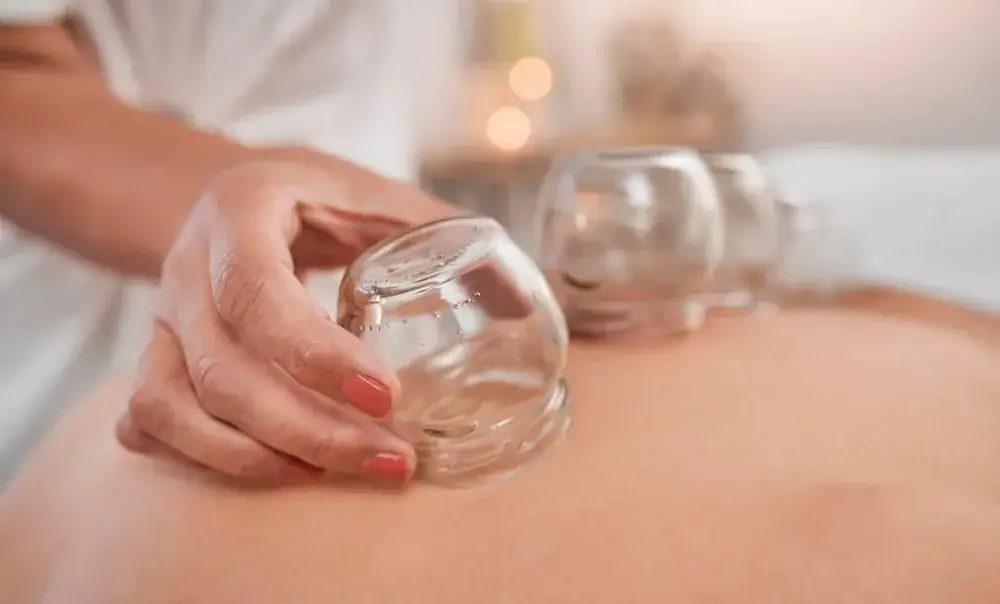
We might use stationary cupping, where cups stay in one place for several minutes, or gliding cupping, where we move the cups across your skin to release larger areas of tension. Sometimes we combine cupping with other physical therapy techniques—manual therapy, stretching, or strengthening exercises—to give you better results faster.
Sessions typically last 30 to 45 minutes. You might see some circular marks afterward—that’s normal and they fade within a few days. What matters more is how you feel when you stand up. Less tight. More mobile. Closer to how your body is supposed to move.
Most patients notice significant improvement within six visits, though your timeline depends on how long you’ve been dealing with pain and how your body responds to treatment.
Ready to get started?
Cupping therapy at Medcare isn’t a standalone spa treatment. It’s part of a clinical approach to pain management and physical therapy. You’re working with licensed professionals who understand anatomy, biomechanics, and how to integrate cupping into a broader recovery plan.
We treat conditions like chronic neck and back pain, knee osteoarthritis, muscle tension, post-exercise soreness, and mobility restrictions. Great Neck has a significant population over 45—the age when neck pain and degenerative conditions start becoming daily realities. If you’re in that group, you’re not alone, and cupping can help.
The treatment works by improving local circulation, reducing inflammation, and mechanically separating tissue layers that have become stuck together. Think of it as creating space where there wasn’t any before. That space allows for better movement, less pain, and faster recovery.
You’ll also get education on what’s causing your pain and what you can do between sessions to support your progress. Stretches, posture adjustments, activity modifications—practical stuff that keeps you moving forward instead of sliding backward. This isn’t about dependence on treatment. It’s about giving you tools to take control of your own recovery in Great Neck, NY.
There’s moderate-to-high-quality research showing that cupping significantly reduces pain and improves function for conditions like chronic neck pain, lower back pain, and knee osteoarthritis. It’s not a miracle cure, but it’s also not hype.
The mechanism makes sense. Cupping increases blood flow to targeted areas, which helps reduce inflammation and deliver nutrients needed for tissue repair. It also creates a mechanical lift that separates fascial layers, reducing the restrictions that limit your movement and contribute to pain.
Most patients feel a noticeable difference after the first few sessions—less stiffness, better range of motion, and a reduction in that constant background ache. When combined with other physical therapy treatments, the results tend to be even better. You’re not just treating symptoms. You’re addressing the underlying tissue dysfunction that’s keeping you stuck.
Cupping feels like deep pressure or a strong pull on your skin. It’s not painful, but you’ll definitely feel it working. Some people find it relaxing. Others describe it as an intense release, especially if you’ve been holding tension in that area for a while.
The suction can leave circular marks that look like bruises, but they’re not actually bruises. They’re caused by increased blood flow to the surface and usually fade within three to seven days. The marks don’t hurt and most people don’t mind them once they understand what’s happening.
If you’re concerned about visible marks for an event or something coming up, let us know. We can adjust the intensity or focus on areas that won’t be visible. The goal is effective treatment, not discomfort or embarrassment.
Most patients see significant improvement within six sessions, but your timeline depends on how long you’ve been dealing with pain and how your body responds. Acute issues—like post-workout soreness or a recent strain—often improve faster. Chronic conditions that have been building for months or years take more time.
We’ll give you a realistic assessment after your first visit. If cupping is helping, you’ll know pretty quickly. You’ll feel less tight, move better, and notice the pain dialing down. If it’s not the right fit, we’ll tell you that too and adjust your treatment plan.
The goal isn’t to keep you coming in forever. It’s to get you functional, pain-free, and equipped with the knowledge to maintain your progress. Some people continue periodic sessions for maintenance, especially athletes or people with physically demanding jobs. Others complete their treatment plan and move on.
Cupping therapy is often covered when it’s part of a physical therapy treatment plan, and we accept Medicare along with most commercial insurance plans. Coverage depends on your specific plan and whether cupping is deemed medically necessary for your condition.
We’ll verify your benefits before you start treatment so there are no surprises. If cupping is covered as part of your physical therapy sessions, you’ll typically pay whatever your normal copay or coinsurance is. If it’s not covered, we’ll let you know upfront what the cost will be.
Insurance can be confusing, especially when it comes to alternative therapies integrated into traditional physical therapy. Our team handles this stuff every day and will walk you through what your plan covers, what your out-of-pocket responsibility is, and how many sessions are authorized. You shouldn’t have to guess what this will cost.
Yes. Athletes use cupping to speed up recovery, reduce muscle soreness, and improve tissue mobility after intense training. The suction increases blood flow and lymphatic drainage, which helps clear metabolic waste that builds up in muscles after hard workouts.
If you’ve ever felt that deep, lingering heaviness in your legs or shoulders a day or two after training, that’s partly due to fluid accumulation and micro-damage in the tissue. Cupping helps move that fluid out and brings fresh blood in, which accelerates the repair process.
It’s also useful for addressing specific problem areas—tight hip flexors, knotted calves, restricted shoulders. We can target those spots with precision and give you better range of motion before your next training session. A lot of athletes in Great Neck use cupping as part of their regular recovery routine, not just when something hurts.
Dry cupping uses suction alone—no needles, no incisions, no bloodletting. It’s the most common type used in physical therapy and the safest option for most people. The cups create negative pressure that lifts tissue away from underlying structures, which is where the therapeutic benefit comes from.
Wet cupping involves making small cuts in the skin and using suction to draw out blood. It’s used in some traditional medicine practices, but it’s not what we do here. Dry cupping gives you the same tissue mobilization and circulation benefits without any breaking of the skin.
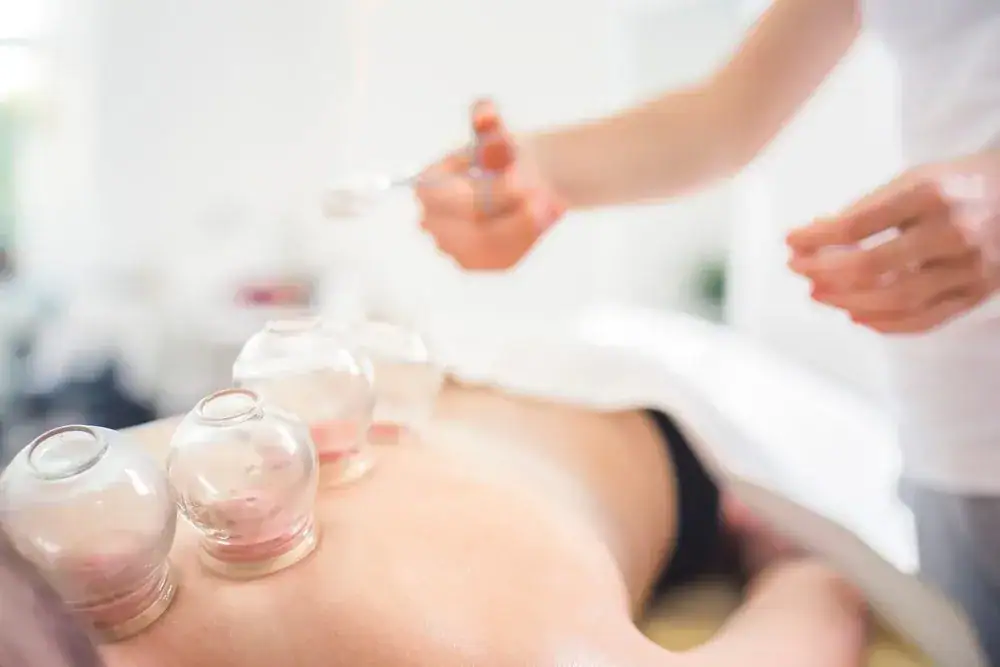
Fire cupping is a method of creating suction by briefly heating the inside of the cup with a flame before placing it on your skin. We use modern suction pumps instead, which give us more control over pressure and are easier to adjust during treatment. The effect is the same—lifting tissue and increasing blood flow—but the process is more precise and comfortable.
Other Services we provide in Great Neck