
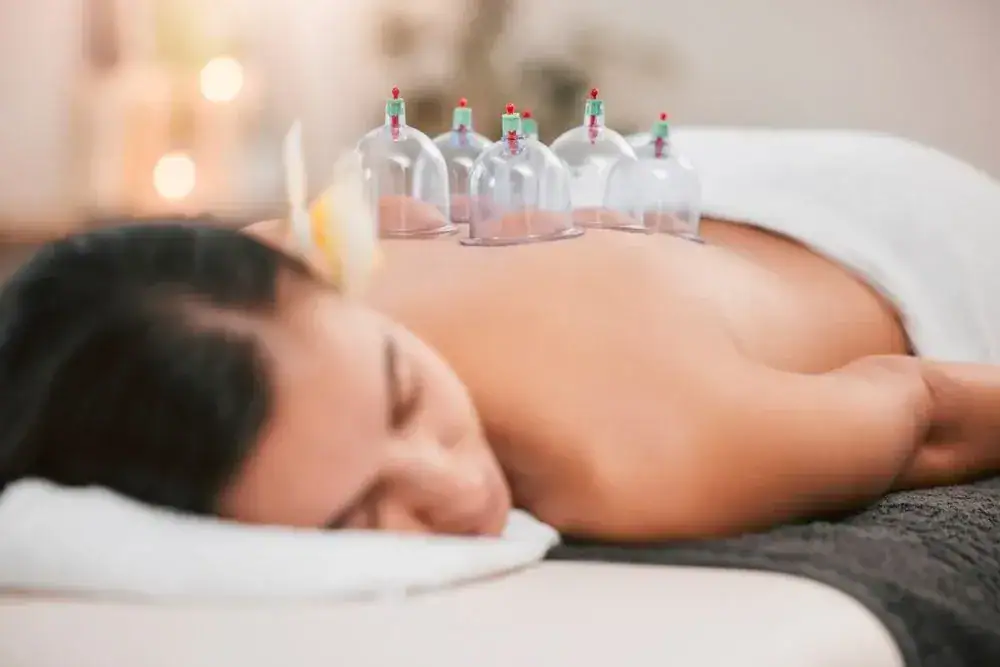

You stop compensating. That’s what most people notice first after cupping therapy—they can move without bracing for pain.
Dry cupping uses controlled suction to pull blood into areas that have been tight or inflamed for months. More blood means more oxygen, faster healing, and less of that deep, nagging ache that follows you through your day. It’s not a temporary fix—it’s your body getting what it needs to repair itself.
This works especially well for chronic back pain, neck stiffness, shoulder tension, and post-workout soreness that won’t quit. If you’ve been stuck in the same pain cycle and traditional treatments haven’t moved the needle, cupping gives your tissue a chance to reset. You’ll feel looser after the first session, and with consistent treatment, that relief builds.
The goal isn’t just less pain. It’s getting back to the gym, playing with your kids, or sleeping through the night without waking up stiff.
We operate multiple locations across Long Island, including our Physical Therapy Associates clinics in Smithtown and Speonk. We’ve built a reputation around one thing: helping people get out of pain and stay out of pain.
Our team doesn’t just add cupping as an afterthought. We integrate it into your full physical therapy plan because that’s where it works best—when it’s part of a bigger strategy. You’re not getting a standalone spa treatment. You’re getting a clinical approach designed around your specific injury or condition.
Gordon Heights residents come to us because we’re local, we’re responsive, and we don’t waste time on treatments that don’t work. Every session is personalized. Every plan is built around what your body actually needs, not what sounds good on paper.
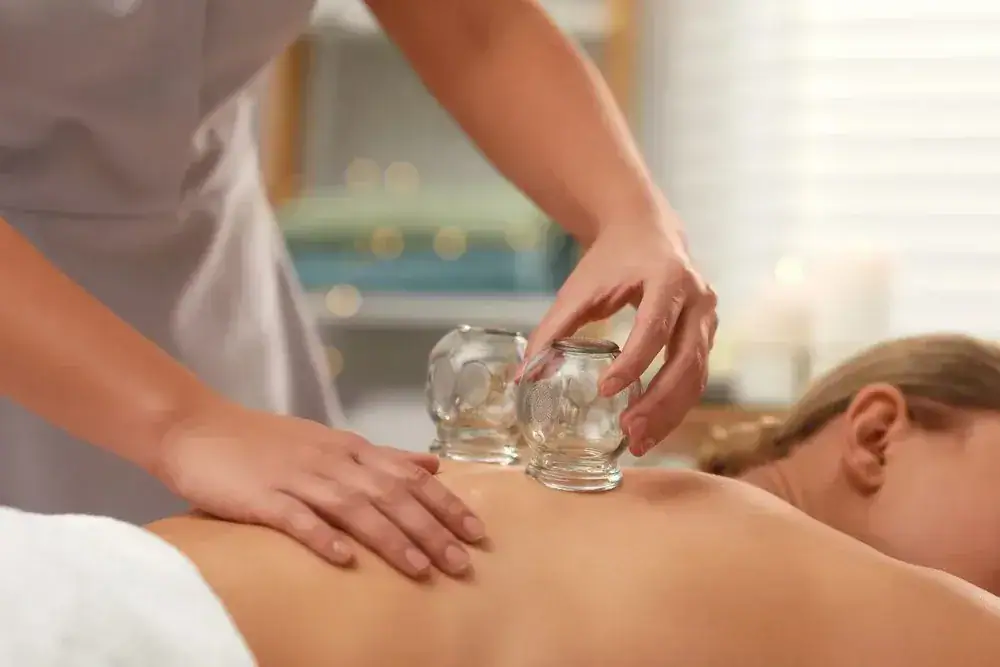
First, we assess where you’re holding tension and what’s limiting your movement. Cupping isn’t a one-size-fits-all treatment—it works best when it’s placed strategically on the areas causing your pain or restricting your function.
We apply cups to your skin using suction. This pulls tissue upward, which increases blood flow and helps release the fascia—the connective tissue that gets tight and restricts how your muscles move. You’ll feel the suction, but it shouldn’t hurt. Most people say it feels like a deep tissue massage, just in reverse.
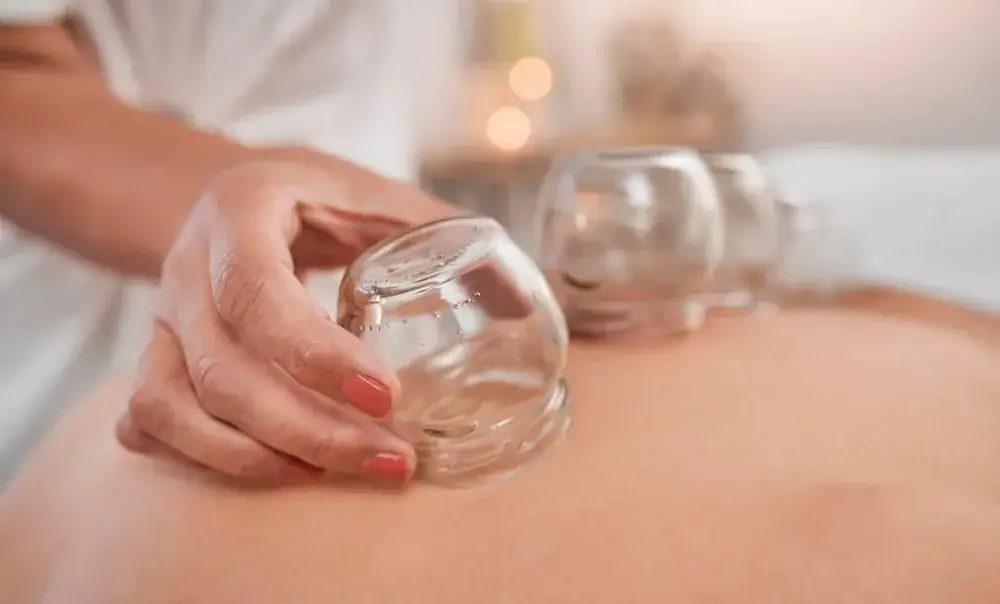
We leave the cups on for several minutes, sometimes moving them across your skin depending on the technique. Dry cupping is stationary. Myofascial decompression involves gliding the cups, which helps release larger areas of tension.
After we remove the cups, you might see circular marks on your skin. That’s normal—it’s not a bruise, it’s increased blood flow to the surface. Those marks fade within a few days. What lasts longer is the relief. Your muscles feel less restricted. Your range of motion improves. And when we combine cupping with your other physical therapy exercises, your progress accelerates because your tissue is finally loose enough to move correctly.
Ready to get started?
Cupping therapy at Medcare isn’t isolated. It’s part of a full treatment plan that includes manual therapy, corrective exercises, and education on how to prevent the pain from coming back.
Gordon Heights and the surrounding Long Island area have a strong demand for non-invasive pain management. People here are active—they’re dealing with sports injuries, chronic pain from desk jobs, and musculoskeletal issues that haven’t responded to traditional care. Cupping fits into that need because it’s low-risk, evidence-backed, and works fast when combined with the right support.
You’ll work with licensed physical therapists who understand how to layer treatments. Cupping loosens the tissue. Stretching and strengthening exercises retrain it. That combination is what keeps you from ending up back where you started three months from now.
We also manage your care across visits. If something isn’t working, we adjust. If you’re progressing faster than expected, we push forward. You’re not locked into a rigid protocol—you’re getting a flexible plan that responds to how your body heals.
Yes, and the research supports it. Cupping increases circulation to areas that aren’t getting enough blood flow, which is common in chronic pain conditions. When your muscles stay tight for months, they’re not getting the oxygen and nutrients they need to heal. Cupping forces that blood back into the area.
For back pain specifically, cupping helps release the fascia around your spine and hips. That’s often where people get stuck—they stretch, they strengthen, but the tissue stays locked up. Cupping gives that tissue room to move again.
It’s not a miracle cure. You’ll still need to address the root cause—whether that’s posture, weak stabilizers, or movement patterns that keep loading your back incorrectly. But cupping speeds up the process by giving your body the circulation it needs to respond to treatment.
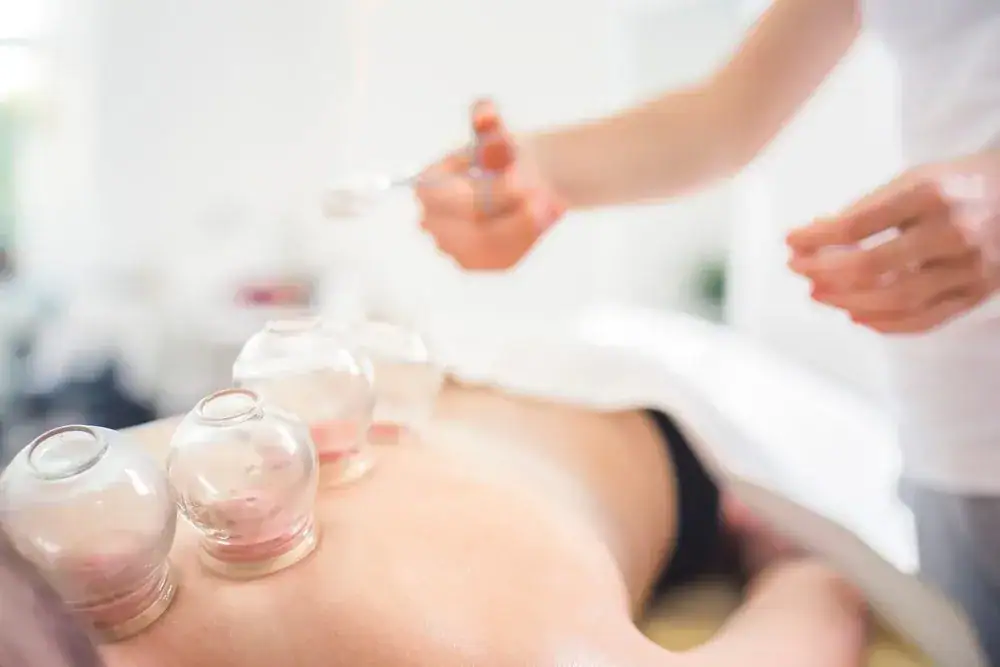
Dry cupping uses suction only—no needles, no incisions, nothing invasive. The cups create negative pressure that pulls your skin and tissue upward. It’s the most common type used in physical therapy settings because it’s safe, effective, and doesn’t require any recovery time.
Wet cupping involves small incisions to draw out blood, but that’s not what we do here. Dry cupping and myofascial decompression (which is just dry cupping with movement) are what you’ll experience at Medcare.
Some people confuse cupping with other modalities like scraping or dry needling. They’re all different. Cupping is about decompression—creating space in your tissue so it can move and heal. Scraping works on the surface. Dry needling targets trigger points. Cupping works on the fascia and circulation, which makes it especially useful for widespread tightness or areas that don’t respond well to direct pressure.
Most people feel a difference after the first session—less tightness, better range of motion, or a reduction in that constant ache. But one session won’t fix a problem you’ve had for months.
Plan on several sessions over a few weeks, combined with your other physical therapy work. Acute issues—like post-workout soreness or a recent strain—might only need two or three treatments. Chronic pain usually takes longer because your body has adapted to moving in a restricted way. We need time to retrain that.
The goal isn’t to keep you coming in forever. It’s to get you functional, then teach you how to maintain it. Some people come back periodically for tune-ups, especially athletes or people with physically demanding jobs. Others finish their plan and they’re done. It depends on your condition and how well you respond.
Yes, usually. The suction brings blood to the surface, which leaves circular marks that look like bruises. They’re not painful and they fade within three to seven days depending on how much tension was in the area.
The marks are actually a sign that the treatment is working. Darker marks often show up in areas with more stagnation or tightness. Lighter marks appear where circulation was already decent. Some people don’t mark at all, and that’s fine too—it doesn’t mean the treatment didn’t work.
If you have an event coming up where you’ll be showing your shoulders or back, just let us know. We can adjust timing or placement. But for most people, the marks aren’t a big deal. You’re trading a few days of visible circles for weeks of pain relief.
Absolutely. Cupping has become popular in sports medicine because it reduces muscle soreness and speeds up recovery when applied right after training. Research shows it decreases markers of muscle damage and helps athletes get back to full intensity faster.
It works by improving circulation to fatigued muscles, which clears out metabolic waste and brings in fresh nutrients. That’s critical during heavy training cycles when your muscles are constantly breaking down and rebuilding.
We see a lot of local athletes—runners, lifters, weekend warriors—who use cupping as part of their regular recovery routine. It’s especially helpful for areas that take a beating, like your quads, hamstrings, shoulders, and lower back. Combine it with proper rest and mobility work, and you’ll notice you’re not as stiff between sessions. Your performance stays more consistent because your body isn’t fighting through tightness every time you train.
It depends on your plan and how the treatment is billed. When cupping is part of your physical therapy treatment—which is how we use it at Medcare—it’s often covered under your PT benefits. We don’t bill it as a standalone alternative therapy. It’s integrated into your session as a manual therapy technique.
You’ll want to check with your insurance provider to confirm your specific coverage. Most plans cover physical therapy visits, and cupping falls under that umbrella when it’s medically necessary and performed by a licensed therapist.
We handle verification and billing on our end, so you’re not stuck figuring it out alone. If you have questions about your coverage before your first visit, just call us. We’ll walk you through what to expect and what your out-of-pocket costs might look like.
Other Services we provide in Gordon Heights