
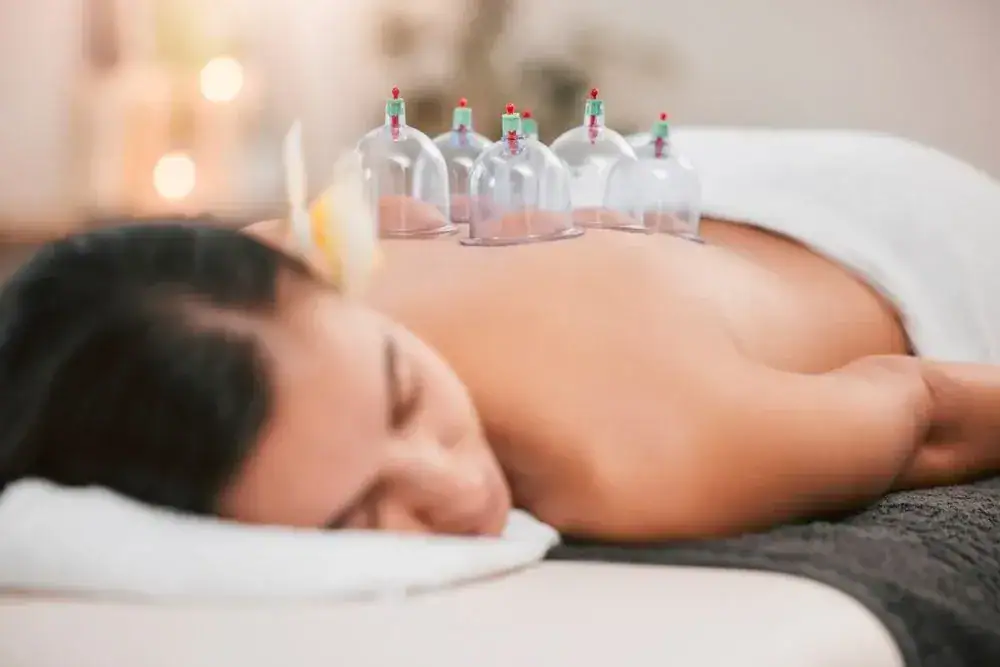

You’re dealing with tension that won’t quit. Lower back stiffness that makes mornings harder than they should be. Neck pain that’s been there so long you’ve stopped mentioning it. Shoulders that feel locked up after a long day at your desk.
Cupping therapy works by increasing blood flow to the areas that need it most. The suction pulls fresh oxygen and nutrients into tight, restricted tissue while helping your body clear out the inflammation that’s been sitting there. Most people notice their range of motion improves right away—not because we’re masking anything, but because the muscle tissue finally has room to move.
It’s not a magic fix. But it is a low-risk, non-pharmaceutical option that actually addresses the root cause instead of just covering symptoms. For chronic pain, muscle recovery after activity, or joint stiffness that physical therapy alone hasn’t fully resolved, cupping gives your body the boost it needs to heal faster and function better.
We’ve been treating patients across Long Island since 2010. Our Glen Cove location serves a community where 46.8% of residents rely on employer-based health plans and 18.4% use Medicaid—so we’ve built our practice around accepting Medicare and nearly all commercial insurance. That means fewer barriers between you and the care you actually need.
Our physical therapists are licensed, trained in therapeutic cupping techniques, and experienced in integrating dry cupping into broader treatment plans. We’re not a spa. We’re a clinical practice that uses cupping as one tool among many to help you move better, recover faster, and manage pain without adding more pills to your routine.
You’re not walking into a sales pitch. You’re walking into a conversation about what’s not working, what’s realistic, and what we can do to get you back to normal.
Your first visit starts with an evaluation. We ask where it hurts, how long it’s been going on, and what you’ve already tried. Then we look at your movement—how you bend, reach, and rotate—to figure out where the restrictions are.
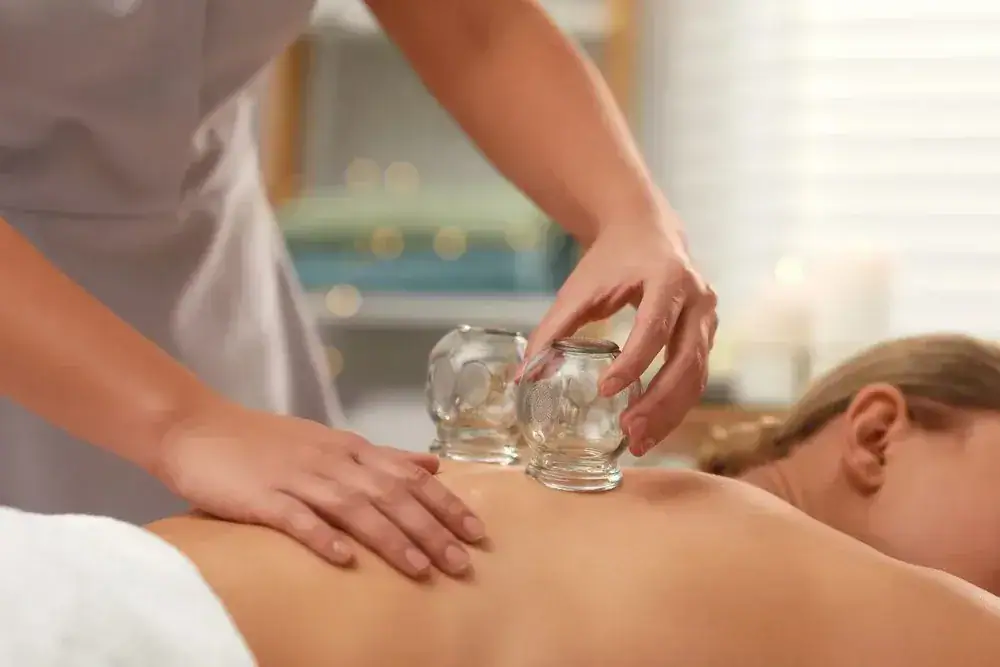
During the session, we place cups on specific areas of tight or painful tissue. The suction creates negative pressure that lifts the skin and underlying fascia, which increases circulation and helps release adhesions in the muscle. You’ll feel the pull, but it shouldn’t hurt. Most people say it’s more of a deep, relieving pressure than discomfort.
Sessions typically last 15 to 30 minutes depending on the treatment area. Some people see immediate improvement in flexibility and pain levels. Others need a few sessions before the changes stick. We usually combine cupping with manual therapy, stretching, or strengthening exercises to make sure the results last beyond the appointment.
You might have circular marks afterward—that’s normal and they fade within a few days. It’s not bruising. It’s increased blood flow doing what it’s supposed to do.
Ready to get started?
Cupping works well for people dealing with chronic lower back pain, neck stiffness, shoulder tension, or muscle tightness that limits how you move. It’s also effective for athletes recovering from training or dealing with repetitive strain. If you’ve been in physical therapy and hit a plateau, adding cupping can help break through that sticking point.
In Glen Cove, we see a lot of patients from healthcare and education sectors—people who spend long hours on their feet or sitting in awkward positions. Cupping helps reset that built-up tension before it turns into something worse. We also treat older adults managing arthritis pain or joint stiffness, especially in the knees and hips.
Because Nassau County has a median age of 43 and a high percentage of residents with health coverage, we’re seeing more people choose cupping as a preventive measure, not just a last resort. It fits into a broader wellness routine alongside physical therapy, stretching, and strength work. You’re not choosing between options—you’re stacking them to get better results faster.
Most of the time, yes—if it’s part of a physical therapy treatment plan. We accept Medicare and nearly all commercial insurance plans, which means cupping is often covered when it’s used to treat a diagnosed condition like chronic pain, muscle strain, or limited mobility.
Coverage depends on your specific plan and whether your therapist documents cupping as medically necessary. We handle that documentation as part of your care. You’re not paying out of pocket for something experimental—you’re using a covered therapy that’s been shown to reduce pain and improve function.
If you’re unsure about your benefits, call your insurance provider and ask if physical therapy services that include cupping are covered. Most employer plans in Glen Cove do cover it. Medicaid and Medicare typically do as well when it’s part of a prescribed treatment plan.
Some people feel relief right after the first session. Increased range of motion, less stiffness, reduced pain—it can happen that fast. But that doesn’t mean the problem is solved.
For chronic issues like ongoing back pain or recurring muscle tightness, you’ll usually need a few sessions before the improvements hold. Think of it like this: one session can loosen things up, but it takes repeated treatment to retrain the tissue and keep it from tightening back up.
Most treatment plans involve cupping once or twice a week for a few weeks, combined with stretching and strengthening exercises you do at home. The goal isn’t to keep you coming back forever—it’s to get you stable enough that you don’t need us anymore.
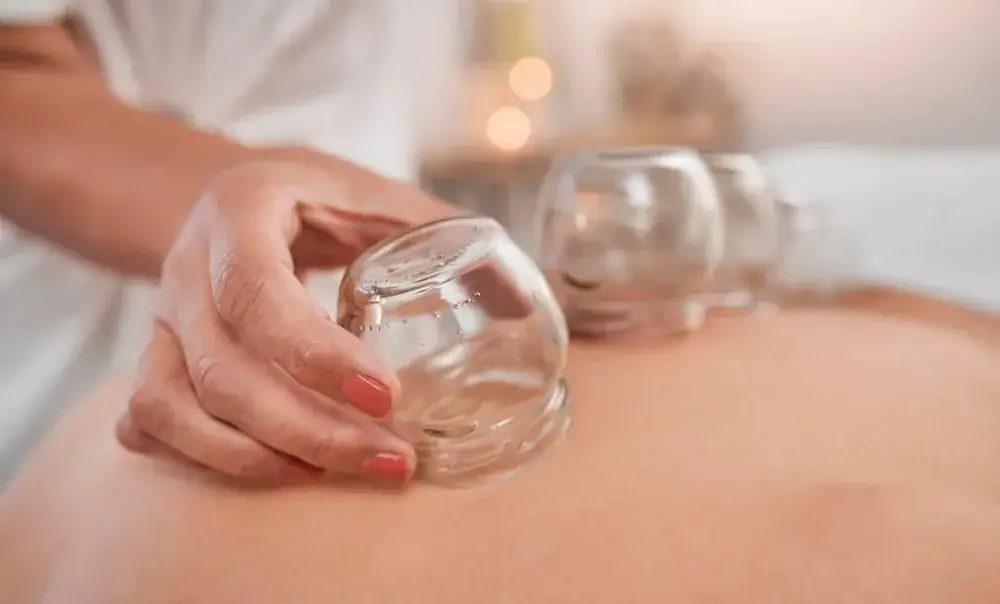
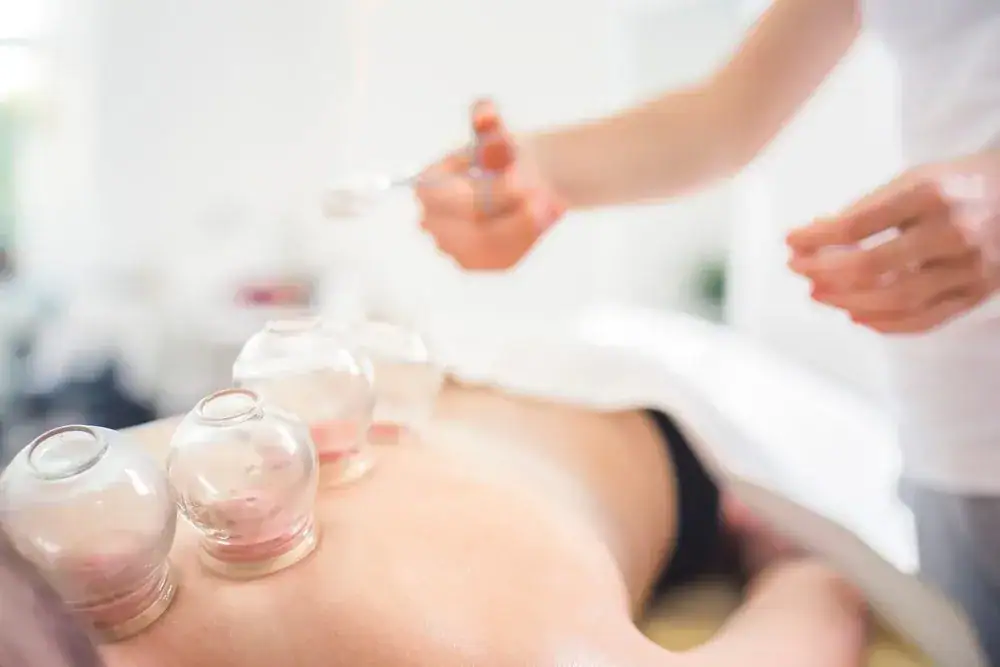
Dry cupping uses suction alone—no needles, no incisions, no heat. Cups are placed on your skin, air is removed to create a vacuum, and the negative pressure pulls tissue upward. That’s it.
Wet cupping involves making small cuts in the skin to draw out blood, which some practitioners believe removes toxins. We don’t do that here. It’s not necessary for pain relief or muscle recovery, and it adds risk without adding benefit for the conditions we treat.
Fire cupping uses a flame to create suction, which works the same way as the pump-based cups we use. The method doesn’t matter as much as the placement and duration. Our therapists use modern suction cups because they’re more controlled, more comfortable, and just as effective.
Yes, cupping usually leaves circular marks where the cups were placed. They look like bruises, but they’re not. They’re caused by increased blood flow to the area, which is exactly what we’re trying to achieve.
The marks typically fade within three to seven days depending on how much suction was used and how your body responds. Some people barely get any discoloration. Others get darker marks that last closer to a week. Neither is bad—it just means your tissue responded differently.
If you have an event coming up where you don’t want visible marks on your back or shoulders, let your therapist know ahead of time. We can adjust the intensity or focus on areas that won’t be visible. The marks don’t hurt and they don’t mean anything went wrong.
Absolutely. Cupping improves circulation, reduces muscle tightness, and speeds up recovery time—all of which matter if you’re training hard or dealing with a strain. A lot of athletes use cupping between workouts to keep their muscles loose and prevent injuries before they happen.
If you’ve already got an injury—pulled hamstring, tight hip flexors, shoulder strain—cupping can help break up scar tissue and improve mobility faster than rest alone. We combine it with targeted stretching and strengthening so you’re not just feeling better temporarily, but actually rebuilding stability in the injured area.
Cupping isn’t a replacement for proper rehab, but it’s a solid addition. It helps you recover faster, train more effectively, and avoid the kind of chronic tightness that leads to bigger problems down the road.
Yes, with the right precautions. Cupping is a low-risk therapy, but it’s not appropriate for everyone. If you’re on blood thinners, have a bleeding disorder, or have very fragile skin, we’ll either skip cupping or adjust the approach to keep you safe.
For older adults dealing with arthritis, joint pain, or muscle stiffness, cupping can provide significant relief without the side effects that come with long-term medication use. It’s gentle enough for sensitive areas but effective enough to make a real difference in how you move and feel.
We evaluate every patient individually. If cupping isn’t the right fit, we’ll tell you. If it is, we’ll use it in a way that’s safe, effective, and appropriate for your specific condition and health history.
Other Services we provide in Glen Cove