


You wake up without that familiar ache in your lower back. You turn your neck to check your blind spot without wincing. You get through your workday without counting down the hours until you can rest.
That’s what cupping therapy can do when it’s done right. It improves blood flow to areas that have been tight or inflamed for months—sometimes years. It releases trigger points that physical therapy alone might take weeks to address. And it does this without adding another prescription to your routine.
Most people notice relief during their first session. The suction pulls stagnant blood and metabolic waste away from sore tissue, which reduces inflammation fast. Over time, regular treatments help retrain your muscles to relax instead of staying locked in that protective, painful position they’ve been stuck in.
If you’ve tried heat, ice, stretching, and rest with no real improvement, cupping gives your body a different kind of input. One that actually interrupts the pain cycle instead of just masking it.
We’ve been treating patients across Long Island for over a decade. We’re licensed, we accept Medicare and most commercial insurance, and we don’t rush you through a session just to hit a quota.
Franklin Square has one of the highest rates of health coverage on Long Island—over 95% of residents are insured. That means you likely have access to this kind of care already. We just make it easier to use.
Our team includes professionals trained in multiple modalities, from traditional physical therapy to complementary treatments like cupping. We also offer home therapy services if getting to a clinic is difficult for you. You’re not a number here. You’re someone dealing with real pain, and we treat you that way.
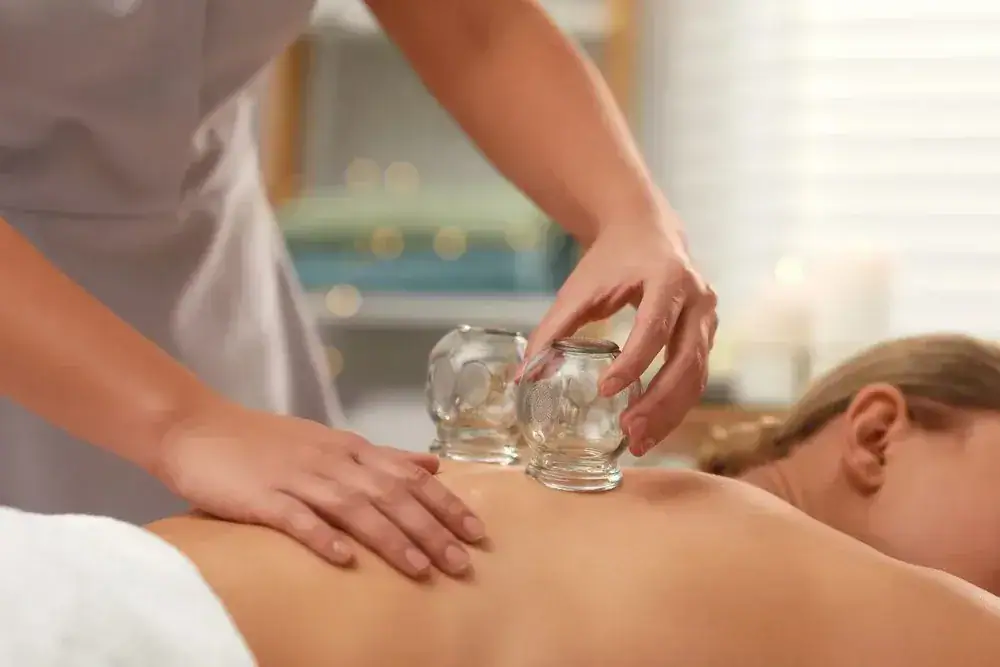
First, we talk. You tell us where it hurts, how long it’s been going on, and what you’ve already tried. We don’t assume anything.
Then we assess the area. We’re looking for tightness, restricted movement, and spots that are more sensitive than they should be. That tells us where to place the cups and how much suction to use.
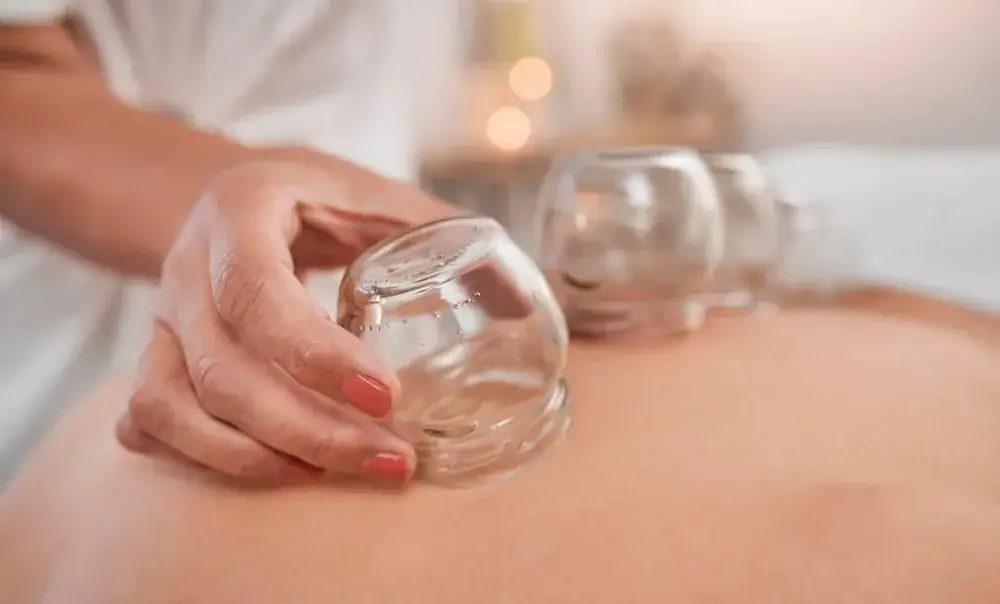
During the treatment, small cups are applied to your skin using either heat or a pump to create suction. This isn’t painful—most people say it feels like a deep tissue massage. The cups stay in place for 5 to 15 minutes depending on what we’re treating. Some techniques involve sliding the cups across your skin, which is called gliding cupping.
The suction increases blood flow, loosens fascia, and helps your muscles release tension they’ve been holding. You might see circular marks afterward—that’s normal and they fade within a few days. Those marks aren’t bruises. They’re a sign that old, stagnant blood is moving out so fresh blood can come in.
After your session, we’ll talk about what to expect and whether you’d benefit from combining cupping with other physical therapy techniques. Most people feel looser right away. The pain relief builds with each session.
Ready to get started?
You’re getting a licensed physical therapist who knows how to use cupping as part of a broader pain management plan. Not someone who took a weekend course. Not someone who’s just following a YouTube tutorial.
Cupping works best when it’s combined with movement therapy, stretching, and education about how your body compensates for pain. We do all of that. You’ll leave with a clearer understanding of why you hurt and what you can do at home to keep improving.
Franklin Square’s population skews older—nearly 19% of residents are 65 or older, and another 38% are between 35 and 64. That means a lot of people here are dealing with age-related pain, arthritis, or injuries that never fully healed. Cupping is especially effective for chronic conditions like lower back pain, neck stiffness, and shoulder tension. It’s also helpful for athletes dealing with muscle soreness or limited range of motion.
We accept Medicare and most commercial insurance plans, which matters in a community where 59% of people get coverage through an employer and 14% are on Medicare. You shouldn’t have to pay out of pocket for care that’s already covered.
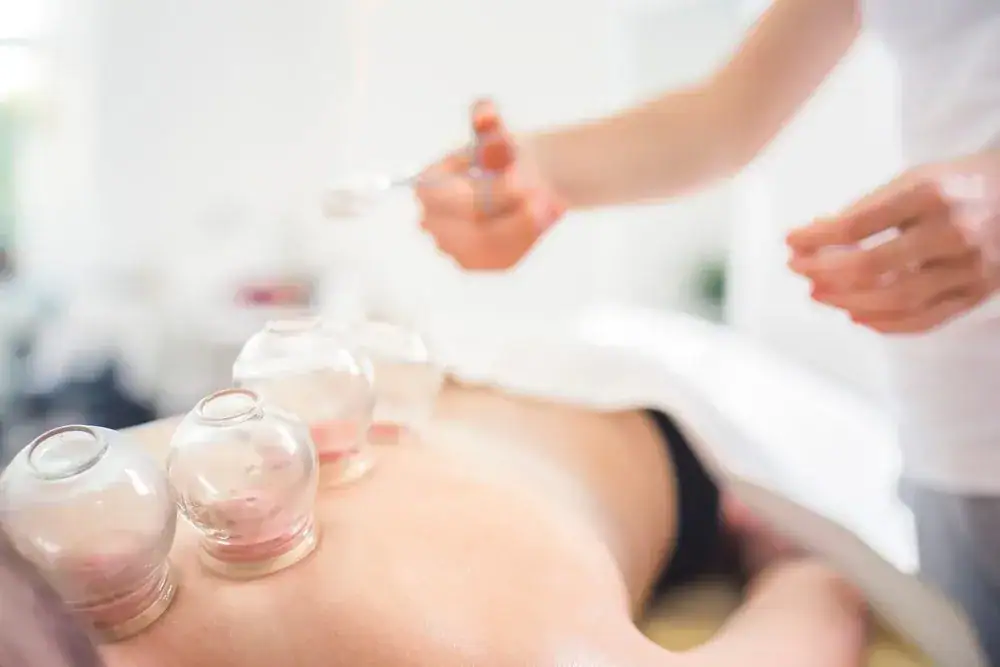
Yes, and the research backs it up. Studies show that cupping significantly improves pain and disability in people with chronic lower back pain. It works by increasing blood flow to the affected area and reducing muscle tension that’s been building up over time.
Back pain is the most common reason people seek physical therapy—it accounts for about 34% of all cases. A lot of that pain comes from muscles that stay contracted because of poor posture, repetitive movement, or compensation from an old injury. Cupping helps break that cycle by pulling fresh blood into the tissue and encouraging those muscles to release.
Most people feel some relief after the first session. But if your back pain has been going on for months or years, you’ll get better results with a series of treatments combined with targeted exercises. We don’t just cup you and send you home. We give you a plan.
Usually, yes. The suction pulls blood to the surface, which can leave circular marks that look like bruises. They’re not painful and they typically fade within 3 to 7 days.
These marks aren’t a bad thing. They’re actually a sign that the treatment is working—stagnant blood and metabolic waste are being drawn out so your body can replace it with fresh, oxygenated blood. The darker the mark, the more congestion was in that area.
If you have an event coming up or you’re concerned about how the marks look, let us know before we start. We can adjust the suction or focus on areas that won’t be visible. But most people stop worrying about the marks once they feel how much better they move afterward.
It depends on your plan, but in many cases, yes. If cupping is performed by a licensed physical therapist as part of a treatment plan, it’s often covered under your physical therapy benefits. We accept Medicare and nearly all commercial insurance plans.
Franklin Square has one of the highest rates of insurance coverage on Long Island—over 95% of residents have some form of health coverage. If you’re on an employer plan, Medicare, or Medicaid, there’s a good chance your cupping therapy is at least partially covered.
We recommend calling your insurance provider before your first visit to confirm your benefits. We can also help you understand what’s covered during your initial consultation. You shouldn’t have to guess whether you can afford the care you need.
Massage uses pressure to push into your muscles. Cupping uses suction to pull them up. That difference matters because some types of pain respond better to decompression than compression.
When your muscles are tight, inflamed, or full of trigger points, pressing into them can sometimes make things worse—or at least not help as much as you’d hope. Cupping lifts the tissue, which creates space for blood flow and allows the fascia to release without adding more pressure.
We often combine the two. Cupping prepares the tissue, then we follow up with manual therapy or movement exercises. It’s not one or the other. It’s about using the right tool at the right time to get you out of pain faster.
That depends on what we’re treating and how long you’ve been dealing with it. Acute pain—like a pulled muscle or recent injury—might improve in 2 to 4 sessions. Chronic pain that’s been going on for months or years usually takes longer.
Most people start with once or twice a week for the first few weeks, then taper down as they improve. We’re not trying to keep you coming forever. We’re trying to get you functional again so you can manage your pain on your own.
During your first visit, we’ll give you a realistic timeline based on your specific situation. If we don’t think cupping is the right fit for you, we’ll tell you that too. There’s no point in wasting your time or money on something that won’t work.
Absolutely. In fact, that’s usually how we use it. Cupping works well alongside manual therapy, therapeutic exercise, dry needling, and other modalities. It’s not a standalone treatment—it’s one tool in a bigger plan.
For example, if you’re dealing with chronic neck pain, we might start with cupping to reduce muscle tension and improve circulation. Then we’ll work on strengthening the muscles that support your neck and correcting the movement patterns that caused the problem in the first place.
Research shows that combining cupping with other therapies often leads to better outcomes than using any single treatment alone. We build your plan based on what your body needs, not what’s trendy or easy to bill for.
Other Services we provide in Franklin Square