
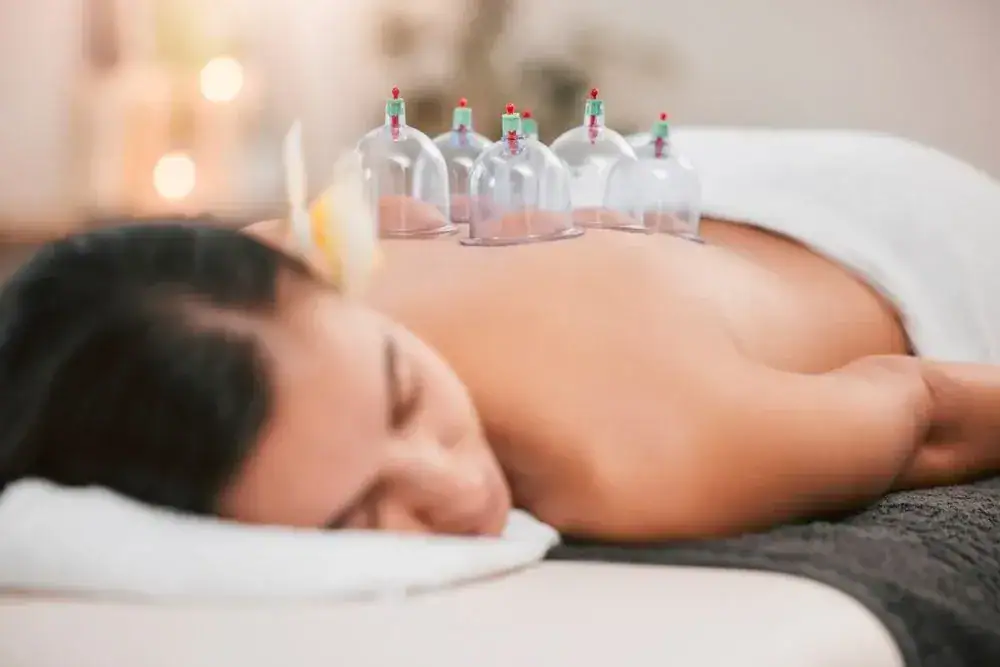

Chronic back pain doesn’t just hurt. It keeps you from doing what you need to do—whether that’s working, exercising, or just getting through the day without wincing every time you bend over.
Cupping therapy works by creating suction on your skin that pulls blood to the surface. That increased circulation helps loosen tight muscle fibers, reduce inflammation, and speed up your body’s natural healing process. You’re not masking the pain—you’re addressing what’s causing it.
Most people notice improved range of motion after just a few sessions. That stiffness in your neck or lower back starts to ease. You move better. You sleep better. And you’re not reaching for pain relievers just to get through your afternoon.
This isn’t a temporary fix. When combined with physical therapy, cupping helps retrain your muscles and joints to function the way they should. That’s how you get lasting relief instead of just another short-term solution.
We’ve been providing physical therapy and rehabilitation to Long Island residents for over a decade. We accept Medicare and most commercial insurance plans, which means you’re not stuck paying out of pocket for care that should be covered.
Fort Salonga has over 1,000 doctors treating lower back pain alone. That tells you how common chronic pain is in this area—and how many people are still searching for relief that works. We treat each patient based on what’s actually wrong, not what’s easiest to bill for.
Our therapists are trained in cupping therapy as part of a broader treatment plan. We don’t just apply cups and send you home. We integrate cupping with manual therapy, stretching, and strengthening exercises so your body can heal correctly and stay healthy long-term.
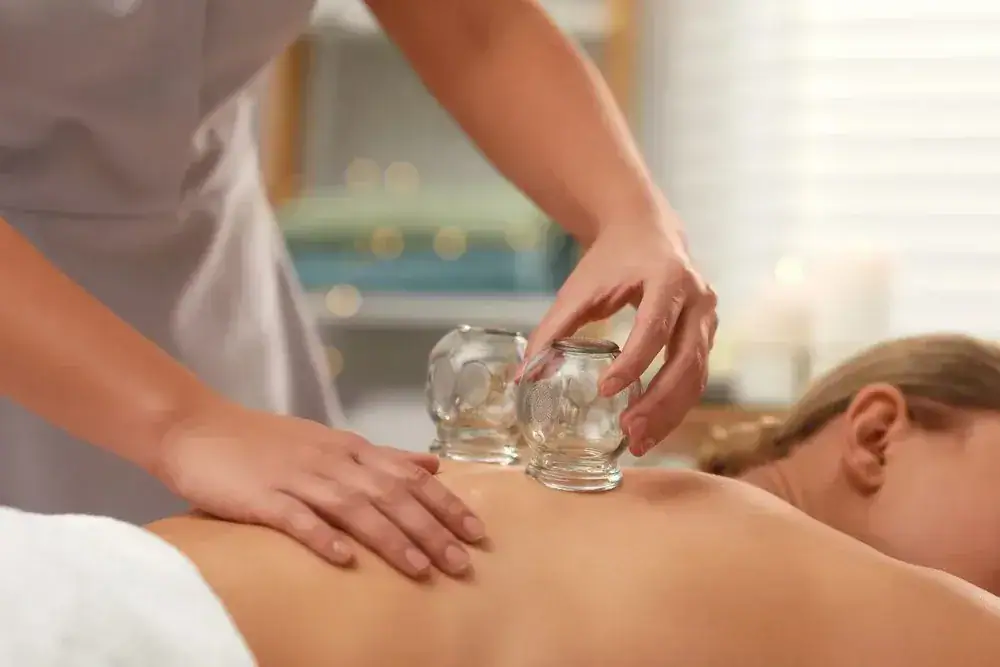
Your first visit starts with an evaluation. We need to know where your pain is, how long you’ve had it, and what you’ve already tried. That helps us figure out if cupping is right for you or if another approach makes more sense.
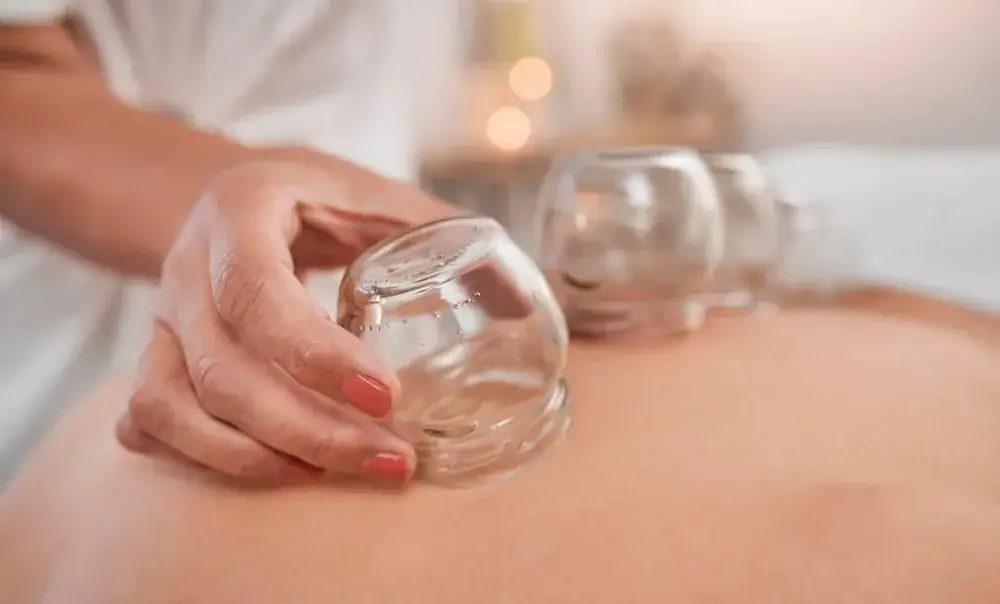
During the session, we place cups on the affected area—usually your back, neck, shoulders, or legs. The suction pulls your skin up slightly, which draws blood into the tissue and creates space for tight muscles to release. Most people describe it as a pulling sensation, not pain. The cups stay on for 5 to 15 minutes depending on the treatment area.
Dry cupping is the most common method we use. It’s non-invasive, doesn’t break the skin, and works well for muscle tension and inflammation. After we remove the cups, you might see circular marks where they were placed. Those fade within a few days and aren’t painful—they’re just a sign that blood flow increased in that area.
You’ll likely feel some immediate relief, but the real benefit builds over multiple sessions. We usually recommend starting with two sessions per week, then tapering off as your symptoms improve. Every treatment plan is different because every patient is different.
Ready to get started?
Cupping works well for low back pain, neck pain, knee pain, and muscle tightness. It’s especially effective when your pain is tied to poor circulation, inflammation, or overworked muscles that won’t relax on their own.
In Fort Salonga and across Long Island, we see a lot of patients dealing with chronic pain from repetitive strain, old injuries that never fully healed, or conditions like osteoarthritis. One out of four Americans has experienced back pain in the past three months. You’re not alone in this, and you’re not overreacting by wanting it fixed.
Cupping also helps with tension headaches, migraines, and even some respiratory issues when used correctly. The key is pairing it with the right physical therapy exercises so your body doesn’t just feel better temporarily—it actually functions better long-term.
We don’t use cupping as a standalone treatment. It’s part of a complete plan that might also include manual therapy, joint mobilization, and corrective exercises. That’s how you get real results instead of just temporary relief that wears off in a few days.
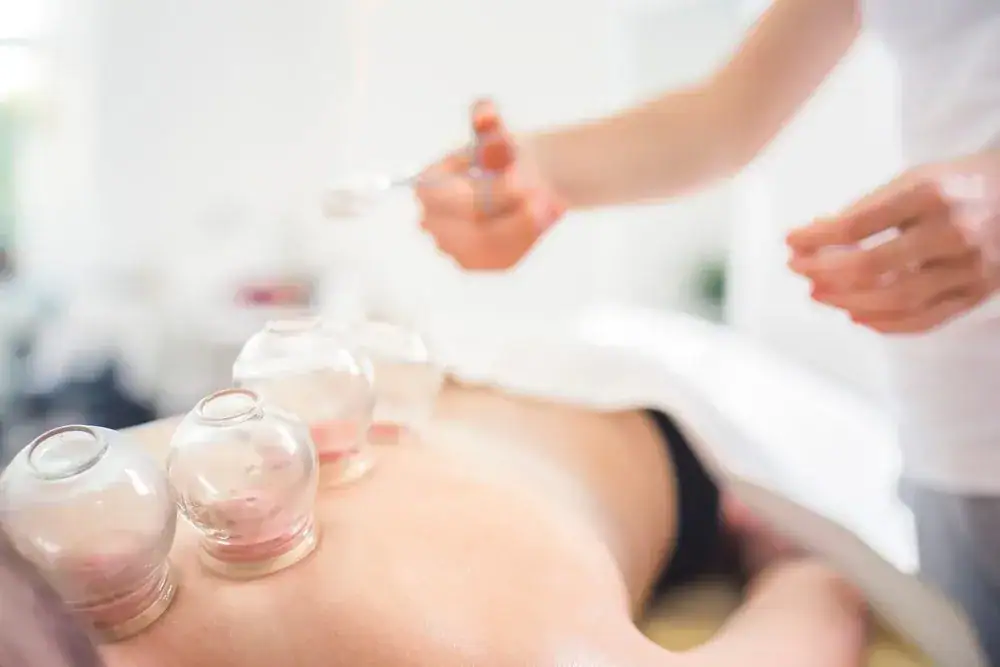
Yes, but it works best when combined with physical therapy. Cupping increases blood flow to the affected area, which helps reduce inflammation and relax tight muscles. That’s important because a lot of chronic back pain comes from muscles that are stuck in a contracted state and won’t release on their own.
Research shows moderate-quality evidence that cupping helps with chronic low back pain and neck pain. It’s not a miracle cure, but it’s also not placebo. The suction created by the cups physically changes what’s happening in your tissue—it brings fresh blood in, helps remove waste products, and gives your muscles room to relax.
The reason we combine it with physical therapy is simple: cupping addresses the symptoms, but PT addresses the cause. If your back pain is from poor posture, weak core muscles, or a movement pattern that’s putting stress on your spine, cupping alone won’t fix that. But when you use both together, you get faster relief and longer-lasting results.
You’ll likely see circular marks where the cups were placed, but they’re not bruises in the traditional sense. Bruises happen when blood vessels break due to trauma. Cupping marks happen because the suction pulls blood to the surface, which can cause temporary discoloration.
These marks usually fade within three to seven days. They don’t hurt, and they’re not a sign of damage—they’re actually a sign that the treatment is working. The darker the mark, the more stagnant blood and tension was in that area. Over time, as your circulation improves and your muscles release, the marks tend to be lighter.
If you’re concerned about visible marks, let us know. We can adjust the suction level or place cups in areas that are easier to cover with clothing. But most patients don’t mind them once they understand what’s happening and feel the relief that comes with it.
That depends on what we’re treating and how long you’ve had the problem. Acute pain from a recent injury might improve in three to five sessions. Chronic pain that’s been building for months or years usually takes longer—often eight to twelve sessions before you see significant, lasting improvement.
We typically start with two sessions per week, then reduce frequency as your symptoms improve. Some patients continue with maintenance sessions once a month to keep pain from coming back. Others complete their treatment plan and don’t need cupping again unless a new issue comes up.
The goal isn’t to keep you coming back forever. It’s to get you functional again and teach you how to maintain that progress on your own. If cupping isn’t helping after a few sessions, we’ll adjust the plan or try a different approach. We’re not interested in billing you for treatments that aren’t working.
It depends on your plan, but many insurance companies will cover cupping when it’s part of a physical therapy treatment plan. We accept Medicare and most commercial insurance, and we’ll verify your benefits before you start treatment so there are no surprises.
The key is that cupping needs to be medically necessary and performed by a licensed provider—which it is when we use it to treat diagnosed conditions like chronic pain, muscle strain, or limited range of motion. We document everything and submit claims the right way so you get the coverage you’re entitled to.
If your insurance doesn’t cover cupping specifically, it may still cover the physical therapy visit during which cupping is performed. We’ll walk you through what your plan covers and what your out-of-pocket cost will be before we move forward. No one should have to guess what they’re going to pay for healthcare.
No, it shouldn’t hurt. You’ll feel a pulling or tugging sensation as the suction draws your skin up into the cup, and the area might feel tight while the cups are on. But if it’s painful, that’s a sign the suction is too strong, and we’ll adjust it immediately.
Most people find cupping relaxing once they get used to the sensation. Some even fall asleep during treatment. After we remove the cups, the area might feel a little tender or sore—similar to how your muscles feel after a deep tissue massage. That soreness usually goes away within a day or two.
If you have a low pain tolerance or you’re nervous about trying cupping, let us know. We can start with lighter suction and shorter sessions to help you ease into it. The goal is relief, not discomfort. If something doesn’t feel right, speak up, and we’ll make changes.
Yes, and in most cases, that’s exactly what we recommend. Cupping works well alongside physical therapy, massage, acupuncture, and chiropractic care. It’s not an either-or situation—it’s about using the right combination of treatments to get you better faster.
If you’re already seeing another provider, let us know so we can coordinate your care. We want to make sure we’re not duplicating efforts or working against each other. For example, if your chiropractor is addressing joint alignment and we’re using cupping to release muscle tension, those treatments complement each other and speed up your recovery.
The one thing to watch out for is timing. If you’re doing multiple treatments in the same week, make sure you’re giving your body time to respond. Overdoing it can actually slow your progress. We’ll help you figure out the right schedule so everything works together without overwhelming your system.
Other Services we provide in Fort Salonga