
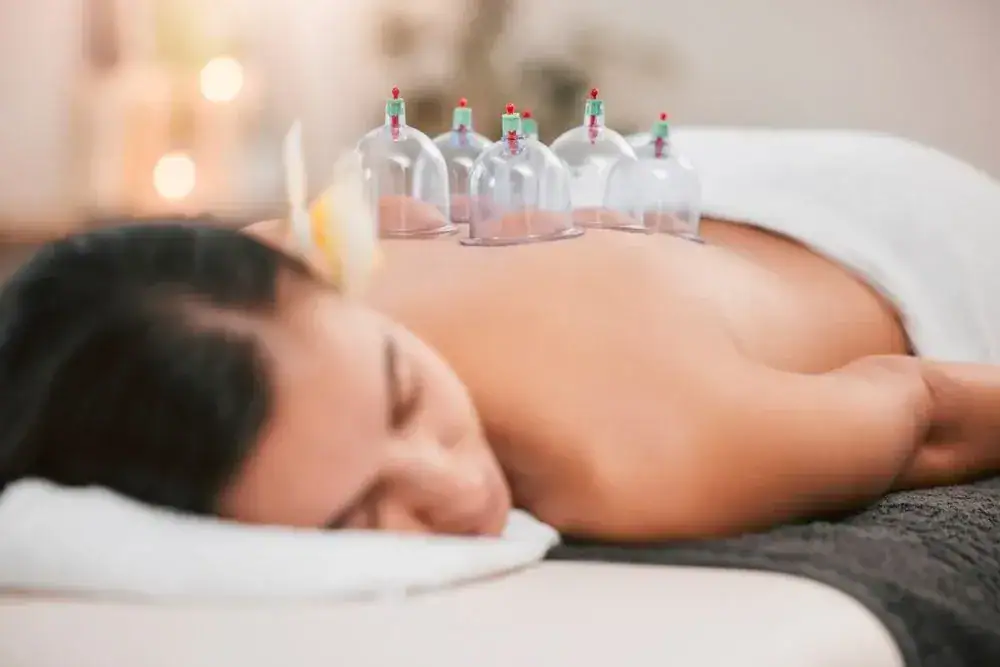

You’ve tried stretching. You’ve tried rest. The knots in your back, shoulders, or legs keep coming back, limiting how you move and what you can do.
Cupping therapy works by creating suction on your skin, pulling blood to the area and loosening the tissue underneath. That tightness you feel—the kind that makes turning your head or bending over uncomfortable—starts to release. Movement gets easier. Pain drops.
Most people notice a difference after the first session. Not a miracle, just measurable relief. The kind that lets you sleep better, work longer, or get back to the gym without that nagging ache following you around. It’s not about erasing every symptom overnight. It’s about giving your body what it needs to actually recover instead of just managing the same problem week after week.
We’ve been treating patients across Long Island for years, with locations in Smithtown, Speonk, and right here in Farmingville. Every therapist on our staff is licensed, trained in manual techniques like cupping, and experienced in treating chronic pain and musculoskeletal issues.
We don’t offer cupping in isolation. It’s part of a bigger treatment plan that includes movement, strengthening, and hands-on therapy. That’s the difference between a quick fix and actual progress.
Farmingville residents deal with the same issues we see across Suffolk County: desk jobs that wreck posture, weekend warriors who overdo it, and older adults managing arthritis or joint pain. Cupping fits into that picture because it works fast and pairs well with everything else physical therapy does.
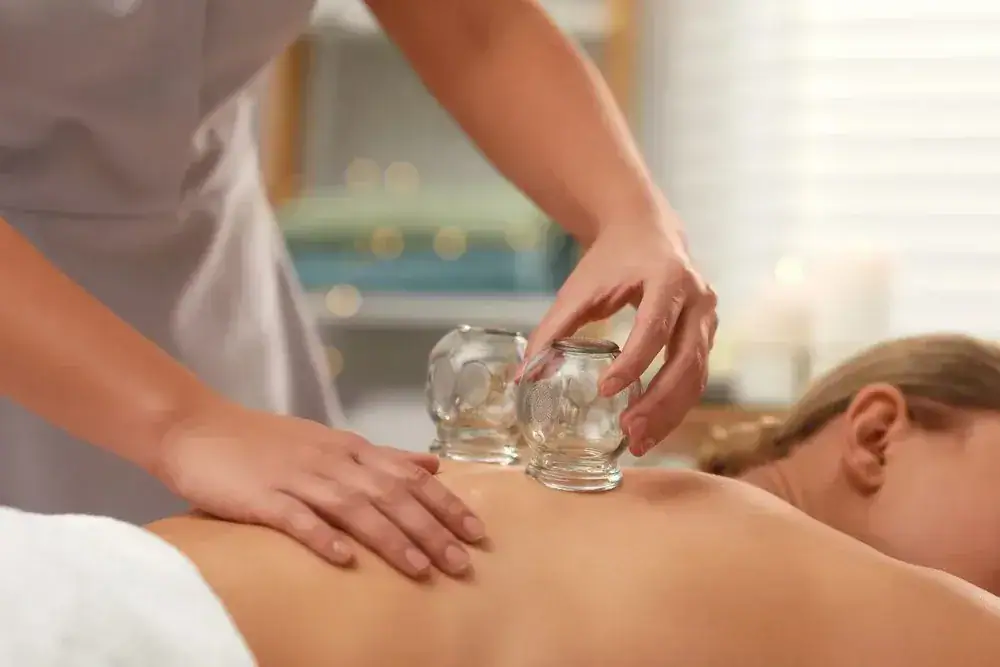
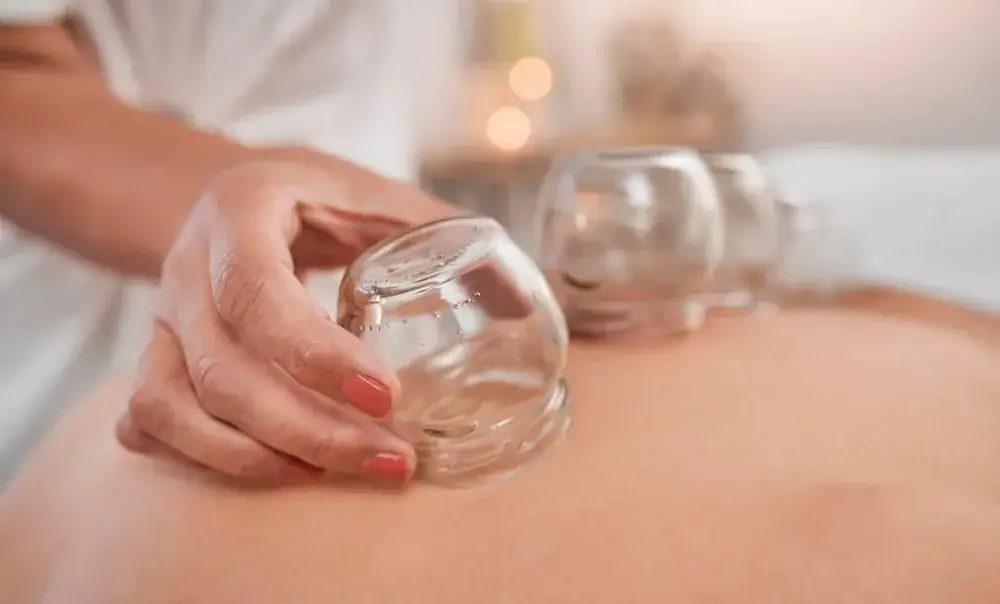
Your therapist places small cups on your skin—usually your back, shoulders, neck, or legs. The cups create suction, either through heat or a manual pump. You’ll feel a pulling sensation, but it shouldn’t hurt. Most people say it feels like a deep tissue massage.
The cups stay on for five to fifteen minutes, depending on what you need. While they’re working, blood rushes to the area. That increased circulation helps break up adhesions, flush out waste, and reduce inflammation. When the cups come off, you’ll see circular marks. They’re not bruises—they’re a sign of increased blood flow. They fade in a few days.
After the session, your muscles feel looser. Range of motion improves. If you’ve been dealing with stiffness or limited mobility, you’ll notice it right away. Your therapist will likely follow up with stretching or strengthening exercises to keep the progress going. Cupping preps the tissue. Exercise rebuilds it. That’s how you get lasting results instead of temporary relief.
Ready to get started?
Cupping at our clinic isn’t a standalone service. It’s integrated into your physical therapy plan, which means it’s combined with manual therapy, therapeutic exercise, and mobility work. You’re not just getting cups slapped on your back—you’re getting a full evaluation and a treatment strategy that addresses why the pain showed up in the first place.
Sessions typically run 30 to 60 minutes. Cupping might take up 10 to 15 minutes of that time, with the rest spent on hands-on work, corrective movement, or strength training. We adjust the plan based on how you respond. Some people need cupping every session. Others use it as needed when tightness flares up.
In Farmingville, we see a lot of patients dealing with lower back pain, neck tension from commuting or desk work, and shoulder issues from repetitive strain. Cupping helps with all of it, especially when traditional stretching or massage isn’t cutting through the deeper layers of tension. It’s also popular with local athletes—runners, lifters, soccer players—who use it for faster recovery between training sessions. The goal is simple: reduce pain, improve movement, and get you back to doing what you need to do without constantly thinking about how much something hurts.
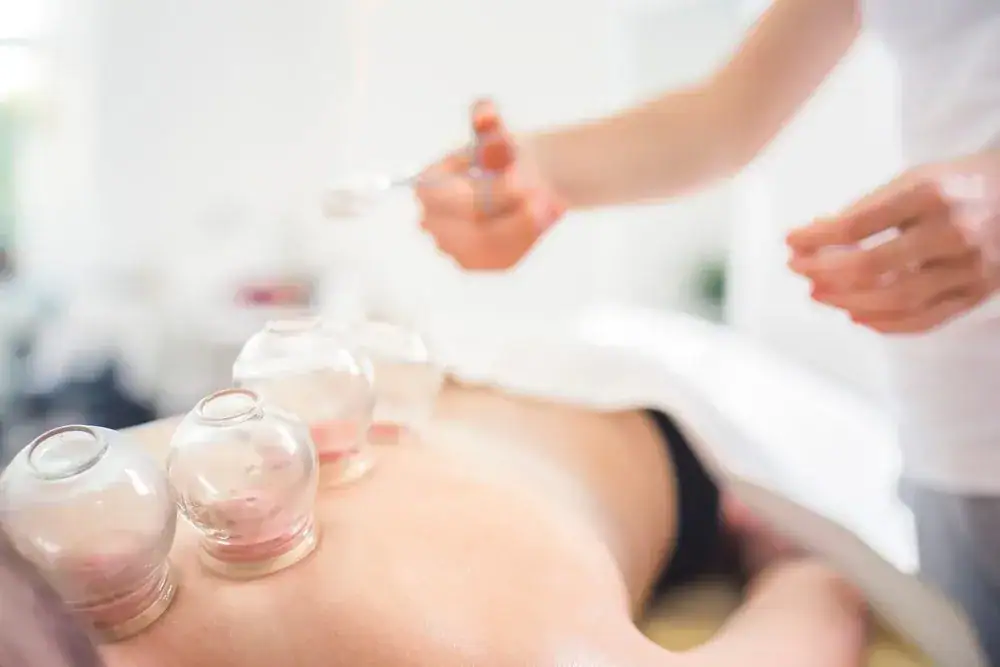
Yes, but it works best when it’s part of a bigger plan. Research shows cupping can reduce pain and improve mobility, especially for conditions like chronic back pain, neck pain, and muscle tension. It’s not a cure-all, but it’s effective at breaking up tight tissue and increasing blood flow to areas that aren’t healing on their own.
The key is consistency and combination. Cupping alone might give you temporary relief, but when you pair it with physical therapy—stretching, strengthening, posture correction—you’re addressing the root cause, not just the symptoms. That’s why we use it as a tool within a full treatment plan, not as a one-off solution.
If you’ve been stuck in the same pain cycle for months, cupping can be the thing that finally gets the tissue to respond. Just don’t expect it to replace the work you need to do outside of treatment. Movement matters. Cupping just makes that movement easier and less painful.
The circular marks left by cupping aren’t bruises. They’re caused by increased blood flow to the area, which is exactly what you want. When the cups create suction, they pull blood and fluid toward the skin’s surface. That rush of circulation is what helps reduce inflammation and loosen tight tissue.
The marks usually fade within three to seven days, depending on how tight the area was and how much suction was used. Darker marks don’t mean something went wrong—they often show up in areas with more tension or restricted blood flow. As your tissue responds to treatment and circulation improves, the marks tend to get lighter with each session.
Some people worry about the appearance, especially if they have an event coming up. If that’s a concern, let your therapist know. They can adjust the intensity or place the cups in areas that are easier to cover. But for most people, the marks are a non-issue compared to the relief they get from the treatment.
It depends on what you’re dealing with and how long it’s been going on. Acute issues—like a pulled muscle or post-workout soreness—might only need one or two sessions. Chronic pain or long-term tightness usually takes more, often six to eight sessions spread over a few weeks.
Your therapist will assess your condition during the first visit and give you a realistic timeline. If you’re seeing progress after a few sessions, that’s a good sign. If nothing’s changing, we’ll adjust the approach or dig deeper into what else might be contributing to the problem.
Most people don’t need cupping forever. Once the tissue loosens up and your movement improves, you shift focus to strengthening and maintenance. Some patients come back for occasional tune-ups when tightness flares up, but the goal is always to get you to a point where you’re managing things on your own without needing constant intervention.
Cupping is generally safe when performed by a licensed professional. The most common side effect is the circular marks, which fade on their own. Some people feel mild soreness or tenderness in the treated area for a day or two, similar to how you’d feel after a deep massage.
There are situations where cupping isn’t recommended. If you’re on blood thinners, have a skin condition, or are pregnant, your therapist will either skip cupping or modify the approach. It’s also not used over open wounds, fractures, or areas with active inflammation like a fresh injury.
Dry cupping—the type we use in physical therapy—is non-invasive. There are no cuts or needles involved, which keeps the risk low. Your therapist will walk you through what to expect before the first session and check in throughout to make sure you’re comfortable. If something doesn’t feel right, speak up. Adjustments can be made on the spot.
Absolutely. In fact, cupping works better when it’s combined with other treatments. At our clinic, it’s typically used alongside manual therapy, stretching, and therapeutic exercise. Cupping loosens the tissue, and the other techniques reinforce that progress by improving strength, stability, and movement patterns.
Some patients also use cupping in combination with chiropractic care, massage therapy, or acupuncture. As long as your providers are communicating and the treatments complement each other, there’s no issue. Just make sure everyone involved knows what’s being done so they can coordinate effectively.
The biggest mistake people make is relying on one modality and expecting it to solve everything. Pain and dysfunction are usually multi-layered. Cupping addresses tissue tightness and circulation. Exercise addresses strength and mobility. Manual therapy addresses joint restrictions. When you put them together, you get better results faster than if you only did one thing.
Cupping is typically included as part of your physical therapy session, so you’re not paying separately for it. The cost depends on your insurance coverage and whether you’ve met your deductible. Most sessions run between $30 and $100 out of pocket, but that varies by plan.
We accept most major insurance providers, and our team can verify your benefits before you start treatment. If you’re paying out of pocket, we’ll give you a clear breakdown of costs upfront so there are no surprises.
Some clinics charge extra for cupping as an add-on service, but we build it into your treatment plan. That means your therapist uses it when it makes sense, not because it’s a revenue generator. The focus is on what gets you better, not what adds line items to your bill. If cost is a concern, bring it up during your first visit. There are usually options.
Other Services we provide in Farmingville