
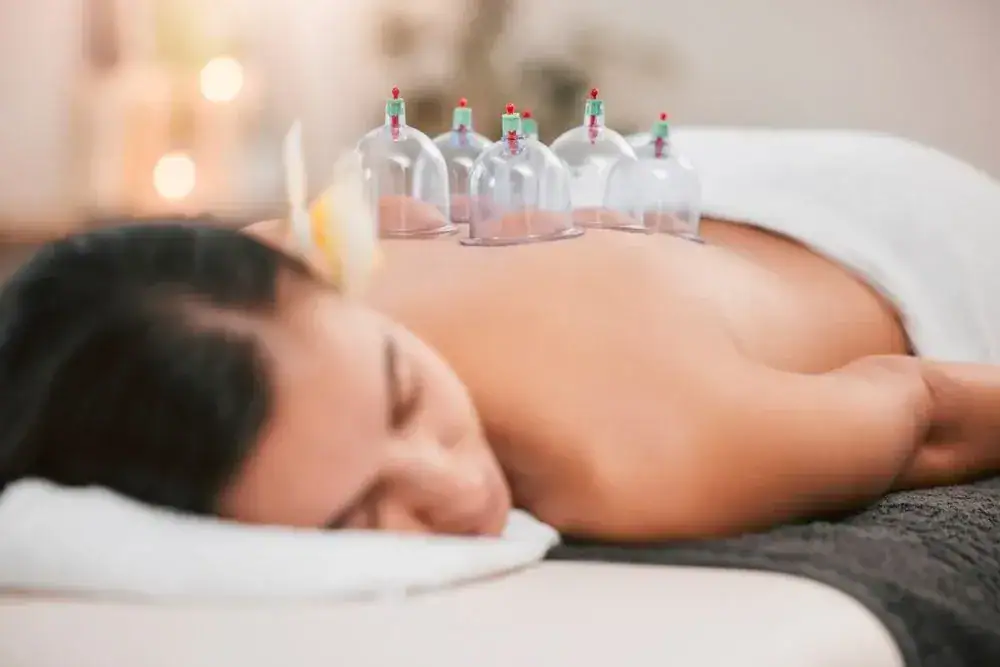

You’re dealing with pain that’s been around too long. Back pain that makes mornings brutal. Neck tension that turns into headaches by noon. Muscle tightness that limits what you can do at work or home.
Cupping therapy—also called myofascial decompression—creates suction on your skin to pull blood flow into tight, painful areas. That increased circulation helps reduce inflammation, loosen fascia, and give your muscles room to move again. Most people notice less pain and better mobility after just one session.
This isn’t a cure-all. But if you’ve tried rest, ice, and over-the-counter meds without much luck, cupping might be the missing piece. It works especially well for chronic lower back pain, neck stiffness, shoulder tension, and sports-related muscle strains. You get targeted relief in the areas that hurt most, without relying on prescriptions or invasive procedures.
We’ve been serving Suffolk County and parts of Nassau County since 2010. We specialize in outpatient physical and occupational therapy, including in-home care for patients who can’t easily travel.
Our therapists are trained in modern cupping techniques using vacuum pumps and silicone cups—not the traditional fire method. That means controlled suction, consistent pressure, and a safer experience overall. We don’t just slap cups on and call it done. Cupping is part of a broader treatment plan that might also include manual therapy, targeted exercises, and movement training.
Farmingdale patients come to us because they want real answers, not just temporary relief. You’ll work with licensed therapists who understand how pain affects your daily life and who take the time to explain what’s happening and why.
Your first visit starts with an evaluation. We’ll ask about your pain—where it is, how long you’ve had it, what makes it worse. Then we’ll assess your range of motion, muscle tightness, and any areas of inflammation or restriction.
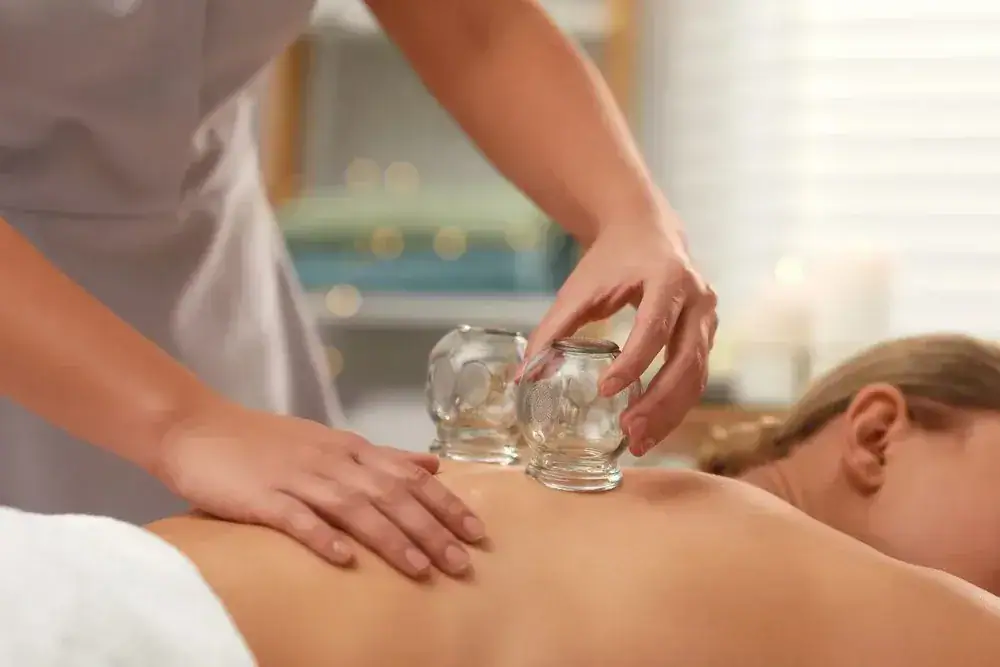
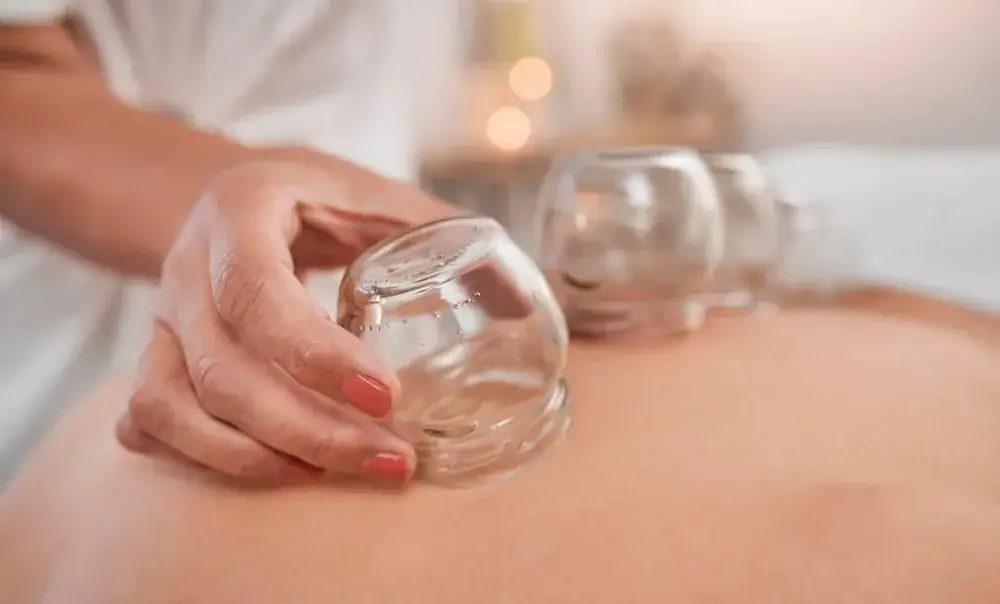
If cupping makes sense for your condition, we’ll apply silicone or plastic cups to the affected area using a vacuum pump. The suction pulls your skin up slightly, which increases blood flow and helps release tension in the muscle and fascia underneath. You’ll feel a tight pulling sensation, but it shouldn’t hurt. We might leave the cups in place for a few minutes, or we might move them around while you do specific stretches or exercises—that’s called dynamic cupping.
After the cups come off, you might see circular marks on your skin. Those aren’t bruises. They’re caused by the suction bringing blood to the surface, and they usually fade within a few days. Most patients feel looser and less sore right away. Depending on your condition, we might recommend cupping once or twice a week alongside other therapies like manual stretching, strengthening exercises, or joint mobilization.
Ready to get started?
Cupping therapy isn’t a standalone treatment. It’s one tool in a complete physical therapy plan designed around your specific condition. When you come in for cupping, you’re also getting a full evaluation, hands-on manual therapy, and a customized exercise program to keep the progress going between sessions.
In Farmingdale and the surrounding Long Island area, we see a lot of patients dealing with chronic lower back pain, neck stiffness from desk work, and shoulder tension from repetitive motion. Cupping works well for these conditions because it targets the fascia—the connective tissue that wraps around your muscles. When fascia gets tight or adhered, it restricts movement and causes pain. Cupping helps lift and separate those layers so your muscles can glide properly again.
You’ll also get education on posture, body mechanics, and at-home care. We’re not interested in seeing you twice a week forever. The goal is to reduce your pain, restore your function, and give you the tools to manage your condition long-term. Most patients start feeling better within a few sessions, and many see significant improvement within four to six weeks.
Yes, and there’s research backing it up. A 2021 study found moderate-quality evidence supporting cupping therapy for chronic pain conditions, including lower back pain, neck pain, and knee osteoarthritis. The suction increases blood flow to the painful area, which helps reduce inflammation and muscle tightness.
That said, cupping works best when it’s part of a complete treatment plan. If your back pain is caused by weak core muscles or poor posture, cupping alone won’t fix the root problem. But when combined with strengthening exercises and manual therapy, it can speed up your recovery and give you noticeable relief faster.
Most patients with chronic back pain feel some improvement after the first session. You might notice less stiffness, better range of motion, or a reduction in that deep, achy pain. Results build over time, especially if you’re consistent with your sessions and follow through with the exercises we give you.
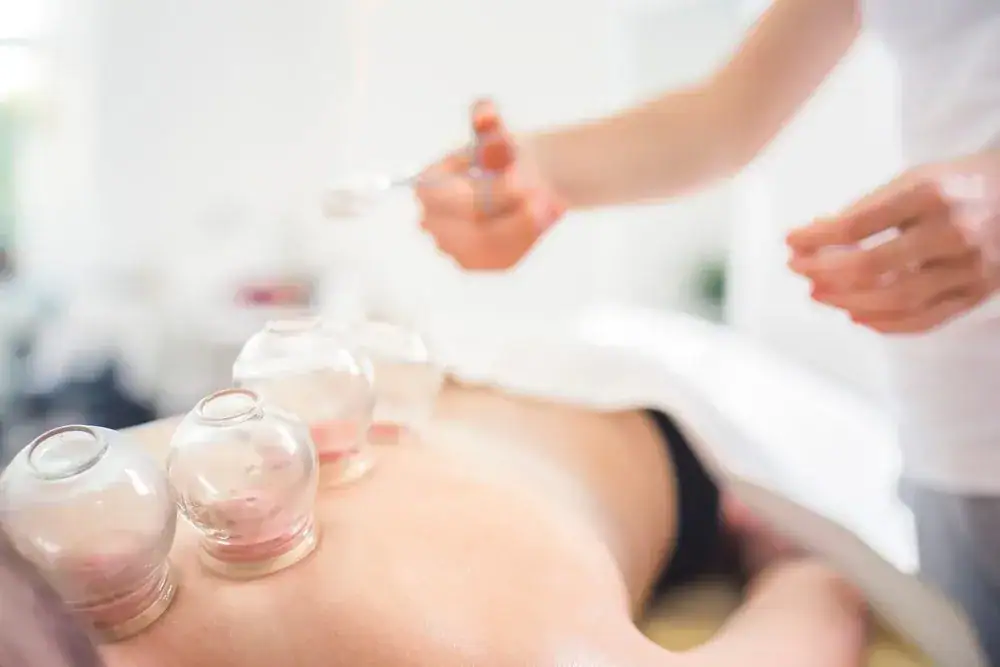
Dry cupping is what we use in physical therapy. It involves placing cups on your skin and creating suction with a vacuum pump or silicone squeeze cup. There’s no cutting, no blood, and no fire involved. The suction pulls your skin and fascia upward, which increases circulation and helps release tight muscles.
Wet cupping, which you might see in traditional Chinese medicine, involves making small cuts in the skin and using suction to draw out a small amount of blood. We don’t do that. It’s not necessary for musculoskeletal pain, and it carries a higher risk of infection or scarring.
Fire cupping uses a flame to create suction inside a glass cup before placing it on the skin. Some practitioners still use this method, but we use vacuum pumps instead. It’s safer, more controlled, and just as effective. You get the same therapeutic benefits without the risk of burns or uneven pressure.
Many people feel relief after one session. You might notice less pain, improved flexibility, or reduced muscle tightness right away. But lasting results take time, especially if you’re dealing with chronic pain or long-term muscle tension.
Most treatment plans involve cupping once or twice a week for four to six weeks. That gives your body time to heal, adapt, and build on the progress from each session. If your condition is more acute—like a recent muscle strain—you might see faster improvement. Chronic issues like ongoing neck pain or lower back stiffness usually take longer.
The key is consistency. Cupping works best when it’s combined with other therapies and when you’re doing the exercises and stretches we recommend between visits. If you only come in once and don’t follow through, you’re not giving your body the support it needs to heal.
Yes, and that’s normal. The suction pulls blood to the surface, which can leave circular marks that look like bruises. They’re not painful, and they’re not actually bruises—they’re just a sign that blood flow increased in that area.
The marks usually fade within three to seven days, depending on how much suction was used and how your body responds. Some people’s marks disappear in two days. Others take a full week. If you have an event coming up where you don’t want visible marks, let us know ahead of time and we can adjust the treatment or focus on areas that won’t be visible.
The marks don’t mean the treatment worked better or worse. They’re just a side effect of the suction. What matters is how you feel afterward—less pain, better movement, and improved function.
It depends on your plan. Cupping is usually billed as part of your physical therapy session, not as a separate service. If your insurance covers physical therapy, there’s a good chance cupping is included under that benefit.
Most of our patients in Farmingdale have private insurance, Medicare, or Medicaid. About 65% of physical therapy patients nationwide use private insurance, and most plans cover outpatient therapy with a referral or after meeting a deductible. Medicare also covers physical therapy, including cupping, as long as it’s medically necessary and part of a documented treatment plan.
We recommend calling your insurance company before your first visit to confirm your coverage and understand your copay or coinsurance. Our team can also help verify your benefits and answer questions about what’s covered. We want you focused on getting better, not worrying about surprise bills.
You can buy silicone cupping sets online, but that doesn’t mean you should use them without guidance. Cupping looks simple, but placement, suction strength, and duration all matter. If you put the cups in the wrong spot or use too much pressure, you could irritate your skin or make your pain worse.
The bigger issue is that cupping works best when it’s part of a complete treatment plan. We don’t just apply cups and walk away. We assess your movement, identify the root cause of your pain, and combine cupping with manual therapy, stretching, and strengthening exercises. That’s what leads to real, lasting improvement.
If you want to try cupping at home after working with us, we can show you how to do it safely and effectively. But starting on your own without professional guidance usually leads to frustration and wasted money on equipment you don’t know how to use.
Other Services we provide in Farmingdale