
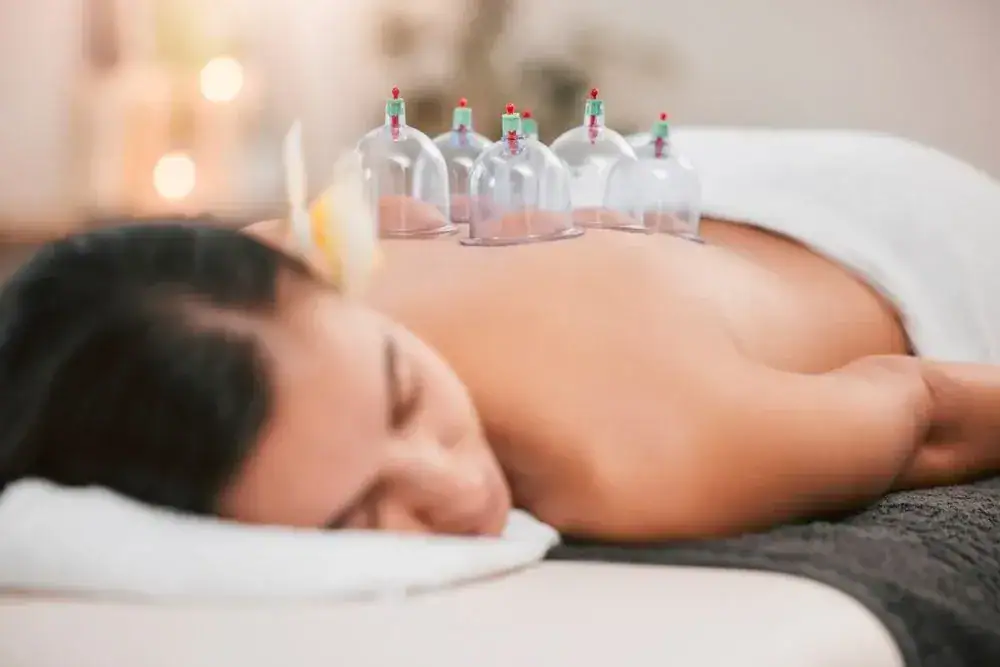

You know that tightness in your back that won’t quit? The shoulder tension that makes turning your head a chore? Cupping therapy addresses those problems by lifting tissue away from the muscle, creating space for blood flow and releasing the grip that’s been holding you hostage.
It’s not a magic fix. But when combined with physical therapy, it helps break up fascial restrictions that keep pulling you back into the same pain patterns. You get better range of motion. Less stiffness in the morning. The kind of relief that actually lets you sleep through the night or get through a workday without constantly shifting positions.
Most people notice the difference within the first few sessions. Not because cupping does all the work, but because it gives your body the room it needs to start healing the right way.
We’ve been treating patients across Long Island for years, with locations in Smithtown and Speonk alongside our Elwood practice. Every therapist on our team is licensed, trained in evidence-based techniques, and experienced in integrating cupping therapy with broader physical therapy treatment plans.
We’re not trying to replace what works. We’re adding a tool that makes everything else more effective. And because we manage our practice with the same attention to detail we bring to patient care, you can count on consistent, professional treatment every time you walk in.
Elwood residents deal with the same issues we see across Suffolk County: desk jobs that wreck posture, weekend warrior injuries, chronic pain from old accidents that never fully healed. We get it because we’ve been treating it for years.
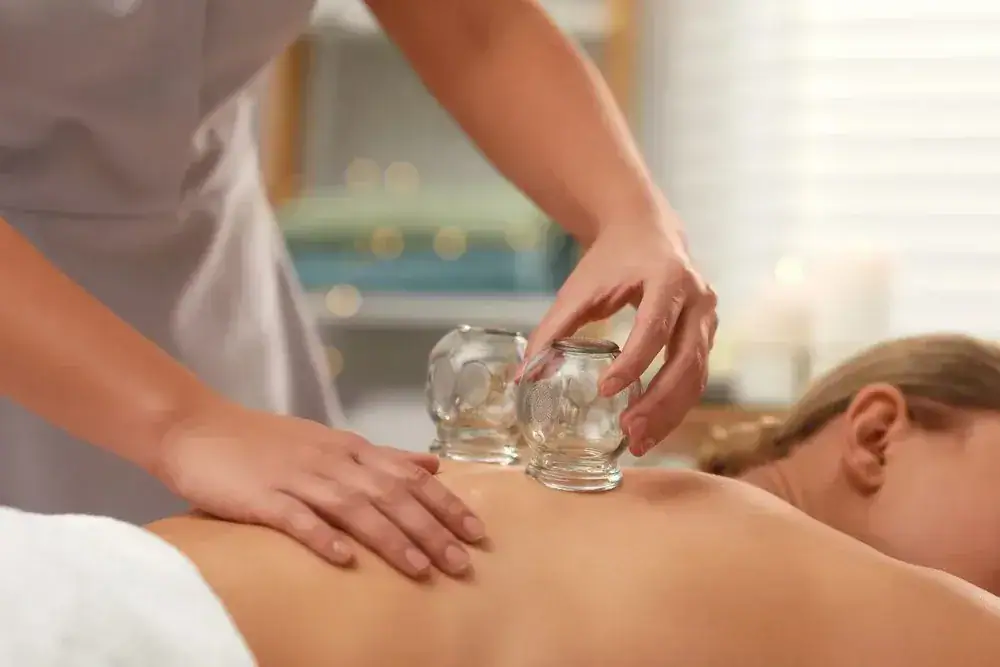
First, we assess where you’re holding tension and what’s limiting your movement. Cupping isn’t a one-size-fits-all treatment. We place cups on specific areas based on your pain patterns, muscle tightness, and what your body needs to start moving better.
The cups create suction that lifts your skin and the tissue underneath away from the muscle. This isn’t painful. Most people say it feels like a deep tissue massage, but without the pressure. The suction increases blood flow to the area, helps break up scar tissue, and gives tight fascia room to release.
We typically use dry cupping, which means no incisions or bloodletting like you might see in some traditional practices. Sessions last between 10 and 20 minutes, depending on the area we’re treating. You might see circular marks afterward. They’re not bruises, they’re a sign of increased circulation, and they fade within a few days.
Cupping works best when it’s part of a broader plan. We combine it with stretching, strengthening exercises, and other physical therapy techniques that address the root cause of your pain, not just the symptoms.
Ready to get started?
When you come in for cupping therapy at our Elwood location, you’re not just getting cups slapped on your back. You’re getting a full evaluation from a licensed physical therapist who understands how cupping fits into your overall recovery.
We treat chronic back pain, neck tension, shoulder tightness, and sports-related injuries. A lot of our Elwood patients come in dealing with repetitive strain from work or lingering pain from old injuries that never got properly addressed. Cupping helps with all of it by improving circulation, releasing muscle tension, and reducing inflammation without adding another medication to your routine.
Long Island has a high rate of musculoskeletal issues. Between the commutes, the physical jobs, and the active lifestyles people try to maintain, bodies take a beating. Cupping gives your system a chance to reset. It’s particularly effective for conditions like knee osteoarthritis, lower back pain, and post-surgical recovery where scar tissue limits your movement.
You’ll leave each session with a clear understanding of what we did, why we did it, and what to expect as your body responds. No guessing. No vague promises. Just straightforward care that gets you closer to feeling like yourself again.
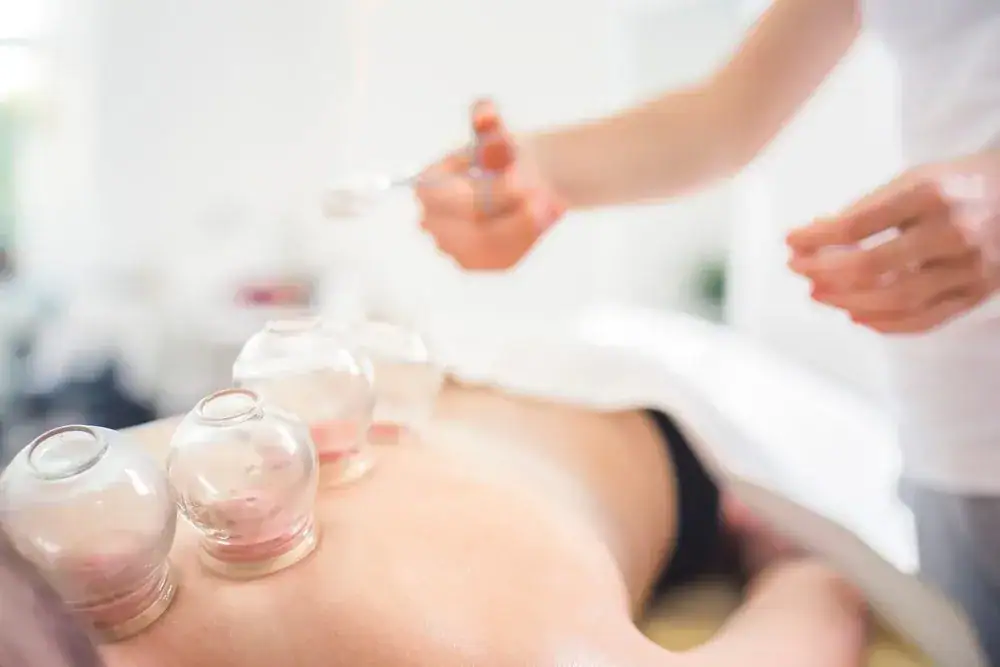
Cupping has solid research backing it up, especially for chronic pain conditions. Studies show it’s effective for lower back pain, neck pain, and knee osteoarthritis when used alongside physical therapy. The suction increases blood flow, reduces muscle tension, and helps break up fascial restrictions that keep you stuck in pain cycles.
That said, it’s not a standalone cure. If you’re dealing with chronic pain, cupping works best as part of a complete treatment plan that includes strengthening, mobility work, and addressing whatever caused the problem in the first place. We use it because it speeds up recovery and gives patients relief faster than therapy alone.
The marks you see after treatment are a sign it’s working. They show increased circulation to areas that weren’t getting enough blood flow. Most people feel looser and less tight within 24 hours of their first session.
Massage pushes down into the muscle. Cupping pulls up and away from it. That difference matters because a lot of pain comes from fascia and tissue that’s compressed or stuck together. Cupping creates space between those layers, which helps them move independently again.
You’ll feel the difference too. Massage can sometimes feel intense or uncomfortable when a therapist works on a tight spot. Cupping feels like a strong pull, but it’s not painful. Most people find it relaxing, and because it’s lifting tissue instead of pressing into it, there’s less soreness afterward.
We also use cupping to target specific problem areas that massage can’t always reach effectively. If you’ve got deep tension or scar tissue from an old injury, cupping gets to it in a way that hands alone can’t. And because we’re physical therapists, we’re combining it with exercises and techniques that make sure the relief lasts.
You’ll likely see circular marks where the cups were placed, but they’re not bruises. Bruises happen when blood vessels break. Cupping marks are caused by increased blood flow to the surface of the skin. They look darker in areas where circulation was poor or where you had a lot of tension built up.
The marks usually fade within three to seven days. Some people see them disappear faster, especially after a few sessions when circulation improves. If you’re worried about how they look, plan your first session when you don’t have any events where you’ll be showing a lot of skin.
The marks don’t hurt. You might feel a little tender in the treated area for a day or two, similar to how you’d feel after a tough workout, but it’s not painful. Most people are more surprised by how much better they move than they are bothered by the marks.
Yes. Athletes use cupping to speed up recovery, reduce muscle soreness, and improve range of motion. Research shows it’s particularly effective for hamstring tightness, hip mobility, and reducing pain after intense training. The increased blood flow helps clear out metabolic waste that builds up in muscles after hard workouts.
If you’re dealing with a specific injury like a pulled muscle or tendon strain, cupping can help break up scar tissue and reduce inflammation. We see a lot of weekend athletes in Elwood who push hard on the weekends and pay for it during the week. Cupping helps you bounce back faster so you’re not sitting out for weeks every time you overdo it.
It’s also useful for preventing injuries. When your muscles and fascia move the way they’re supposed to, you’re less likely to compensate with poor movement patterns that lead to strains and tears. We build cupping into training recovery plans for people who want to stay active without constantly getting hurt.
Most people feel some relief after the first session, but lasting results usually take four to six treatments. It depends on what we’re treating. Acute muscle tension might resolve in two or three sessions. Chronic pain that’s been building for years takes longer because we’re addressing layers of restriction and compensation patterns.
We don’t drag treatment out longer than necessary. Once you’re moving better and your pain is manageable, we shift focus to exercises and strategies that keep you out of our office. The goal is to get you functional again, not to keep you coming back indefinitely.
You’ll know it’s working when you notice changes in your daily life. Maybe you can turn your head to check your blind spot without wincing. Maybe you sleep through the night without waking up to adjust your position. Those are the signs that your body is actually healing, not just temporarily feeling better.
Cupping is low-risk when performed by a licensed professional. The most common side effect is the circular marks, which are temporary. Some people feel lightheaded during their first session, especially if they’re not used to bodywork. We have you rest for a few minutes before you leave if that happens.
You shouldn’t do cupping if you’re on blood thinners, have a skin condition in the treatment area, or are pregnant without clearance from your doctor. We go through your medical history before starting treatment to make sure it’s appropriate for you.
Because we’re physical therapists, not just cupping practitioners, we know how to integrate this safely with other treatments you might be doing. If something doesn’t feel right during a session, we adjust immediately. Your safety and comfort aren’t negotiable, and we’re trained to recognize when cupping isn’t the right tool for what you need.
Other Services we provide in Elwood