
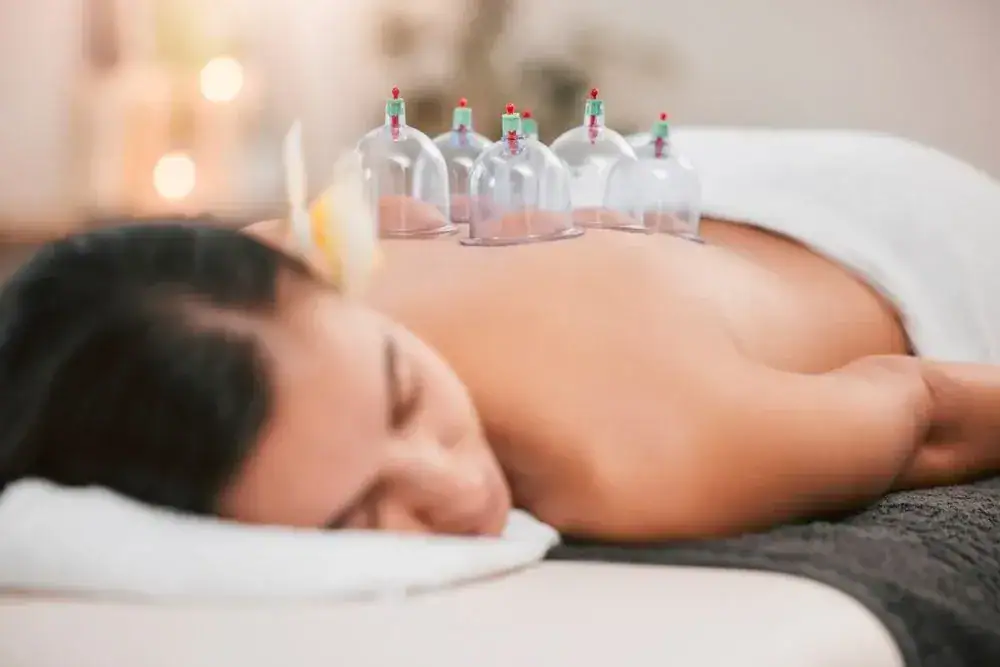

You stop planning your day around what hurts. That’s what happens when cupping therapy addresses the stagnation causing your pain instead of masking it temporarily.
Dry cupping creates suction that lifts tissue, increases blood flow to injured areas, and breaks up adhesions restricting your movement. You’re not just getting temporary relief. You’re giving your body what it needs to actually heal.
Most people notice improved range of motion after their first session. Chronic neck pain, lower back tension, shoulder stiffness—the conditions that make you move differently without realizing it—start releasing. You might feel sore for a day or two as your body processes the increased circulation, but that tightness you’ve been carrying starts letting go.
This works for athletes dealing with performance plateaus and professionals whose desk setup is slowly destroying their posture. The treatment targets myofascial restrictions that develop over time, whether you’re training for competition or just trying to get through your workday without discomfort.
We’ve built our reputation in Nassau County by actually listening before treating. We don’t rush you through appointments or hand you a generic exercise sheet.
Every Google Business Profile we manage is verified and secure because patient trust matters more than convenience. Our staff permissions are controlled, your information stays protected, and you can actually reach someone when you need to reschedule or ask questions.
East Williston residents already know the value of quality healthcare. With a median household income over $269,000, you’re not looking for the cheapest option. You’re looking for the option that works. We integrate cupping therapy with comprehensive physical therapy because your body doesn’t heal in isolated parts—everything connects.
Your first visit starts with an evaluation. We need to understand what’s causing your pain, not just where it hurts. That means discussing your injury history, daily activities, and what you’ve already tried.
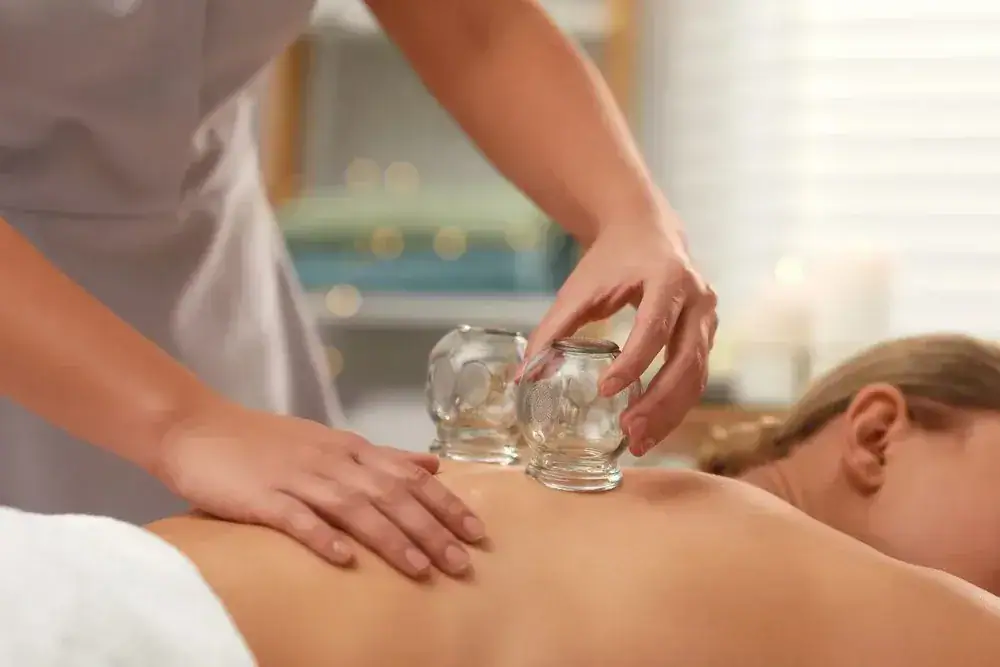
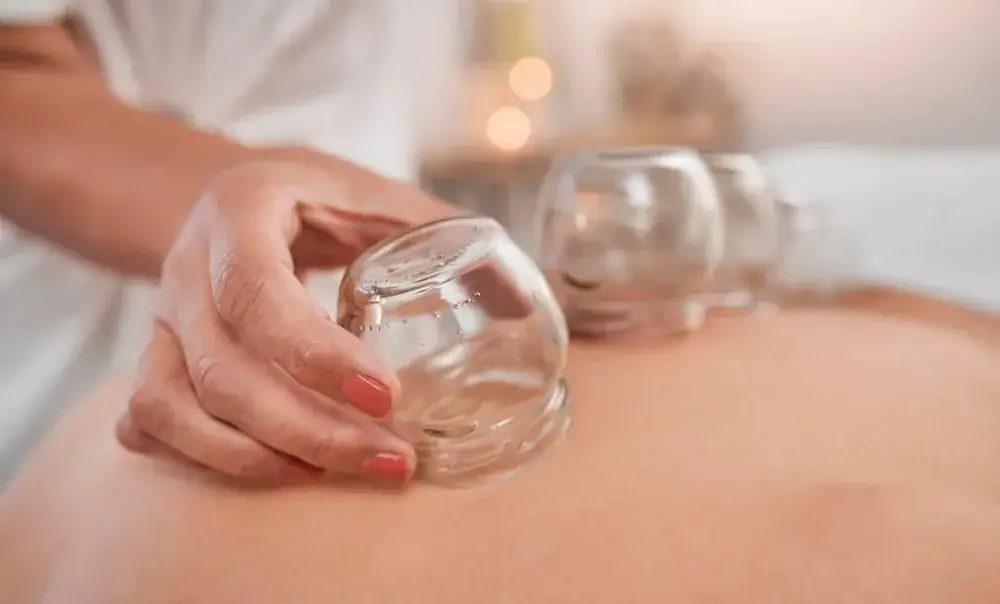
During cupping, we place specialized cups on targeted areas of your body. The suction pulls tissue upward, creating space between layers that have been compressed or stuck together. This isn’t about those circular marks you’ve seen on athletes—though yes, that happens. It’s about creating the conditions for your tissue to release and your blood to flow where it hasn’t been reaching.
Sessions typically last 15-30 minutes as part of your broader physical therapy treatment. We’re not just doing cupping and sending you home. You’re getting a complete approach that might include manual therapy, targeted exercises, and education about preventing the problem from coming back.
You’ll likely need multiple sessions. One treatment can provide immediate relief, but lasting change requires consistency. We’ll map out a realistic timeline based on your specific condition, not a one-size-fits-all protocol.
Ready to get started?
Cupping therapy works for chronic back pain, neck tension, knee pain, and shoulder restrictions. These are the conditions where research shows moderate to good evidence for pain relief and improved function.
In East Williston, we see a lot of professionals dealing with postural issues from desk work and athletes managing training-related inflammation. Both respond well to cupping when integrated with proper physical therapy. The treatment promotes healing by bringing fresh blood and nutrients to areas that have been compensating for too long.
You might be dealing with myofascial pain syndrome, where trigger points in your muscles refer pain to other areas. Cupping addresses this by releasing fascial restrictions and reducing muscle tightness. It’s particularly effective for ITB syndrome, rotator cuff issues, and chronic tension headaches that stem from neck and shoulder dysfunction.
This isn’t a replacement for medical treatment if you need it. Cupping is complementary therapy that works alongside your existing care. If you’re post-surgical, managing a chronic condition, or trying to avoid medication dependence, this gives you another evidence-based option that’s non-invasive and low-risk.
Yes, and the research backs this up. Studies show moderate-quality evidence that cupping provides relief for chronic low back pain, particularly when combined with physical therapy.
Here’s what that means for you: if you’ve been dealing with lower back pain that won’t quit, cupping addresses both the muscle tension and the restricted blood flow contributing to your discomfort. The suction created by the cups lifts tissue that’s been compressed, allowing fresh circulation to reach areas that have been starved of nutrients.
Most patients notice reduced pain within the first few sessions. That doesn’t mean you’re healed after one visit, but you should feel a difference in how you move and where you’re holding tension. We use cupping as part of a complete treatment plan that includes strengthening and mobility work, because releasing the tissue is only part of the solution.
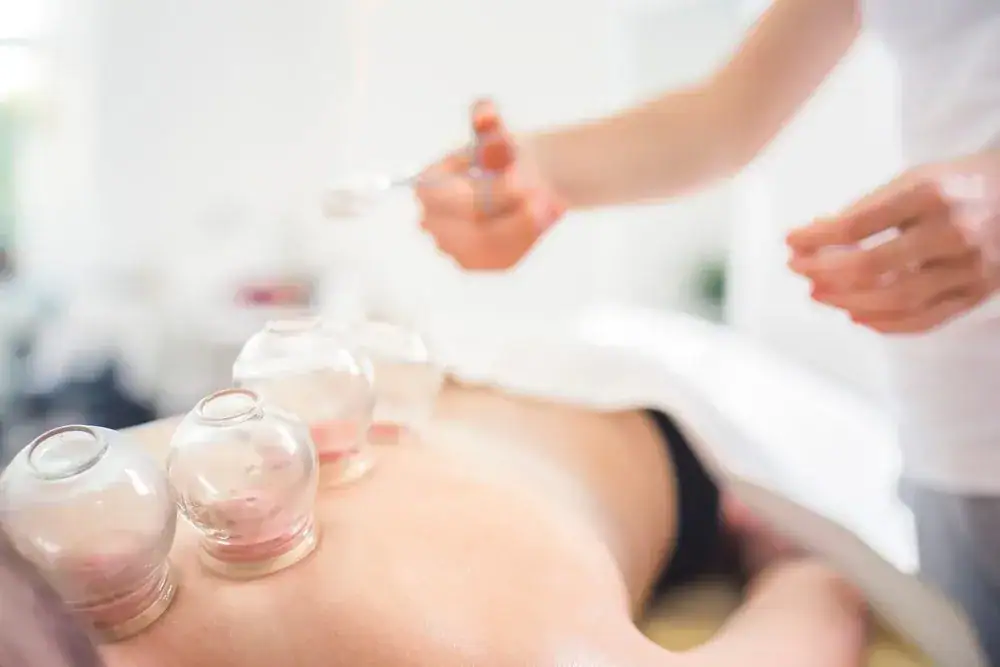
Dry cupping uses suction only—no needles, no incisions, no blood. That’s what we practice at Medcare, and it’s the most common form used in physical therapy settings.
The cups create negative pressure that pulls your skin and underlying tissue upward. This is different from wet cupping, which involves small incisions, or fire cupping, which uses flame to create the suction. Dry cupping is safer, less invasive, and easier to integrate with other physical therapy techniques.
You might also hear the term “myofascial decompression,” which is essentially dry cupping with movement. Instead of placing cups and leaving them stationary, we might have you move through certain ranges of motion while the cups are applied. This helps release restrictions more dynamically and can be more effective for mobility issues.
Yes, cupping typically leaves circular marks that can last anywhere from a few days to two weeks. They’re not bruises in the traditional sense—they’re the result of blood being drawn to the surface.
The marks look more dramatic than they feel. Most people report little to no tenderness in those areas after treatment. The discoloration is actually a sign that stagnant blood and metabolic waste are being moved out of the tissue, which is part of the therapeutic effect.
If you have an event coming up where you’ll be showing skin, let us know beforehand. We can adjust cup placement or intensity. But for most East Williston residents juggling work and family, the marks aren’t visible under normal clothing and they fade on their own without any special treatment needed.
Some people feel immediate relief after one session. Lasting change usually requires 4-8 treatments, depending on what we’re addressing and how long you’ve had the problem.
Acute injuries respond faster than chronic conditions. If you tweaked your shoulder last week, you might need fewer sessions than someone who’s been dealing with neck pain for five years. We’ll give you a realistic timeline after your initial evaluation based on your specific situation.
Treatment frequency matters too. Starting with twice-weekly sessions often produces better results than spacing them out too far initially. Once you’re improving, we’ll reduce frequency and focus on maintaining the progress. The goal isn’t to keep you coming forever—it’s to resolve the issue and give you the tools to prevent it from coming back.
Cupping is considered a low-risk therapy when performed by trained professionals. The most common side effects are the temporary marks and mild soreness that can last 24-48 hours after treatment.
Some people feel lightheaded immediately after their first session, especially if we’re working on a large area. This passes quickly and becomes less common as your body adapts to treatment. Drinking water before and after your appointment helps.
There are situations where cupping isn’t appropriate. If you’re on blood thinners, have a skin condition in the treatment area, or are pregnant, we’ll need to discuss modifications or alternatives. That’s why the evaluation matters—we need to know your complete health picture before starting treatment. Our controlled, professional environment ensures we’re following safety protocols and monitoring your response throughout the process.
Absolutely. Olympic and professional athletes have been using cupping for years because it works for both performance enhancement and injury recovery.
Research on female professional soccer players showed that cupping significantly improved range of motion and reduced pain. That translates to better performance and faster recovery between training sessions. If you’re an athlete in East Williston dealing with chronic ITB pain, rotator cuff issues, or muscle tightness that’s limiting your training, cupping addresses the restrictions holding you back.
The treatment helps by increasing blood flow to muscles that are overworked, breaking up adhesions that limit mobility, and reducing inflammation from repetitive stress. You’re not just recovering faster—you’re creating the conditions for your body to adapt and perform better. We integrate cupping with sport-specific physical therapy, so you’re getting a complete approach that considers your training schedule, competition timeline, and performance goals.
Other Services we provide in East Williston