
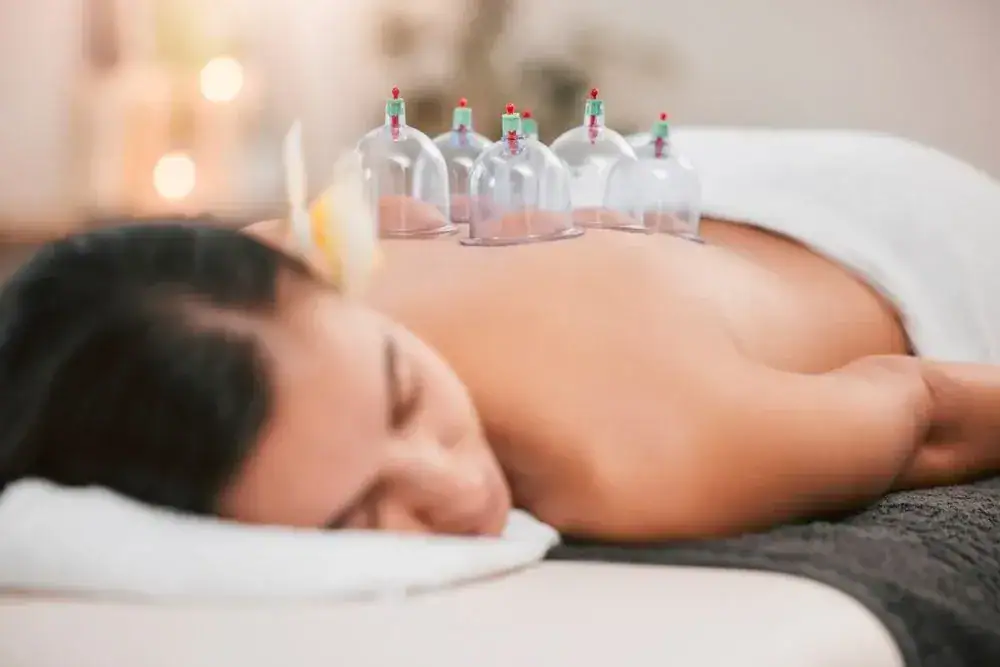

You know that feeling when your shoulders are locked up and nothing seems to touch it? That’s fascia doing what it does when it’s stuck. Cupping therapy uses controlled suction to lift tissue away from underlying muscle, creating space where there wasn’t any before.
The cups increase blood flow to areas that have been tight for weeks or months. More blood means more oxygen, faster healing, and less of that deep ache that follows you through your day. You’re not masking anything. You’re addressing why it hurts in the first place.
Most people notice better range of motion after the first session. That stiffness you’ve been working around starts to give. You sleep better because you’re not waking up trying to find a position that doesn’t hurt. And if you’re training or staying active, recovery between workouts gets shorter and less painful.
We’ve been treating patients across Long Island for years at Medcare Therapy Services, with locations in Smithtown, Speonk, and right here in East Setauket. This isn’t a spa offering cupping as an add-on. We’re a licensed physical therapy practice where cupping is integrated into comprehensive treatment plans designed by professionals who understand musculoskeletal health.
East Setauket has a lot of active people. Runners dealing with IT band issues. Desk workers with chronic neck tension. Athletes recovering from sports injuries. The community here expects results, not relaxation theater. That’s why we use cupping alongside manual therapy, corrective exercise, and other evidence-based techniques that address the root cause.
You’re working with therapists who’ve treated hundreds of cases like yours. We know when cupping makes sense and when something else will get you better results faster.
Your therapist starts with an assessment. We need to know where you’re tight, what movements hurt, and what you’ve already tried. This isn’t guesswork. We’re identifying which areas will benefit most from myofascial decompression.
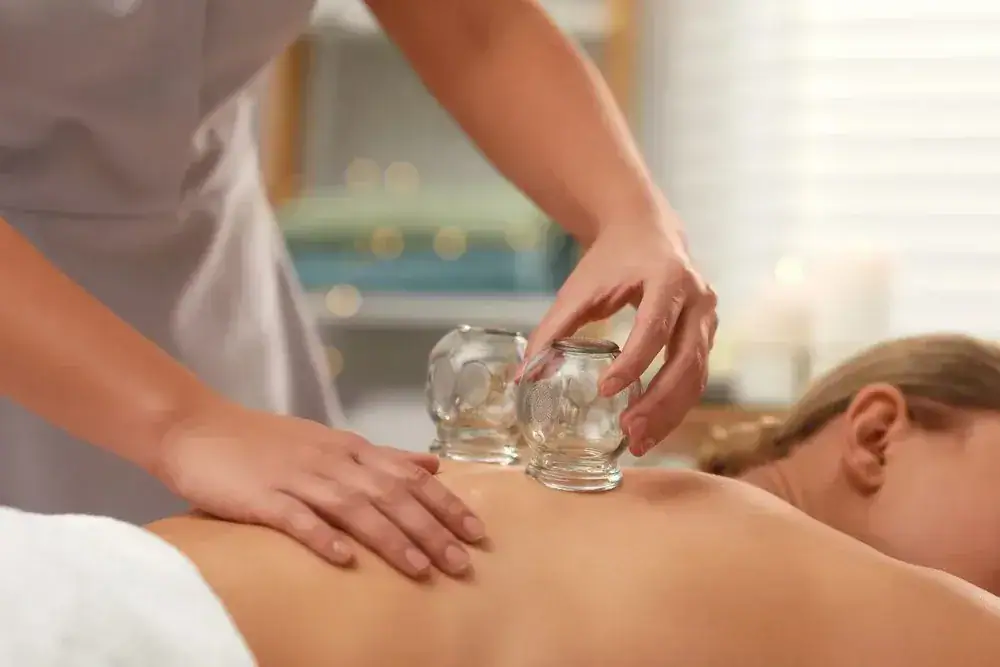
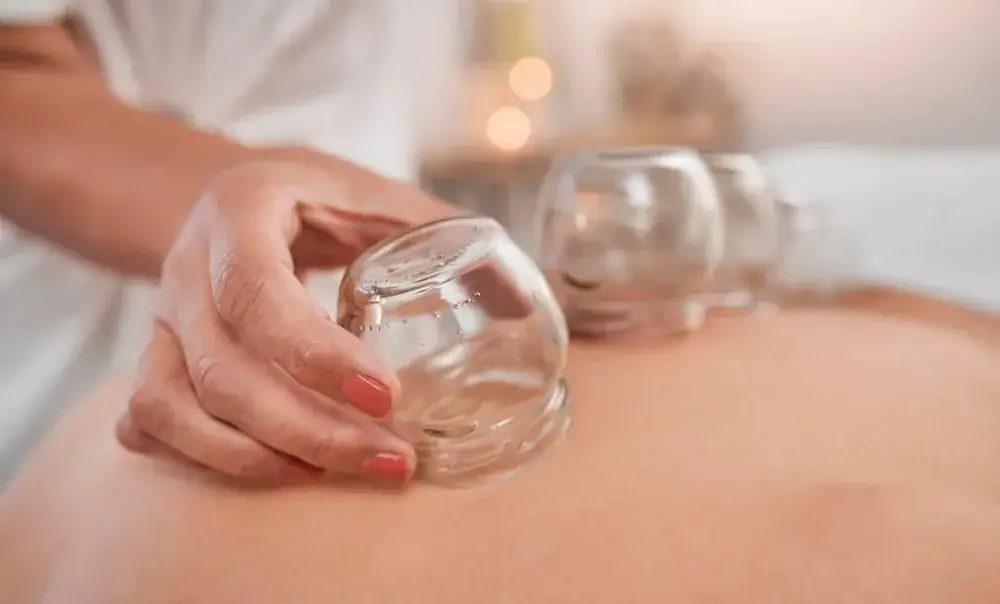
Once we’ve mapped out the treatment area, we place cups on your skin using suction. You’ll feel a pulling sensation, but it shouldn’t hurt. The negative pressure lifts your fascia and draws blood to the surface. Depending on your condition, cups might stay in one spot or get moved across the muscle in a gliding technique.
Sessions typically last 10 to 15 minutes as part of your overall physical therapy appointment. Afterward, you might see circular marks where the cups were placed. Those aren’t bruises in the traditional sense—they’re a sign of increased circulation and metabolic waste being pulled to the surface. They fade within a few days.
Most people feel looser immediately. That tightness you’ve been carrying around feels different. Your therapist will give you guidance on what to do between sessions to keep progressing.
Ready to get started?
Cupping isn’t a standalone fix. At Medcare, it’s one tool in a larger strategy to get you moving better and feeling stronger. Your treatment plan might combine dry cupping with manual therapy to release trigger points, corrective exercises to address muscle imbalances, and education on posture or movement patterns that contributed to the problem in the first place.
In East Setauket, a lot of patients come in dealing with repetitive strain from work or overuse injuries from staying active on the North Shore. Cupping works especially well for conditions like chronic back pain, shoulder impingement, IT band syndrome, and post-workout muscle soreness that won’t quit. It’s also effective for improving mobility before surgery or speeding up recovery afterward.
You’re not locked into one approach. If cupping isn’t giving you the results you need, your therapist adjusts. The goal is always the same: less pain, better function, and getting back to what you actually want to be doing. Treatment frequency depends on your condition, but most people start with twice a week and taper down as they improve.
Yes, but it works best when it’s part of a broader treatment plan, not used in isolation. Cupping creates negative pressure that lifts fascia away from muscle tissue, which increases blood flow and helps release areas that have been locked up for a long time. That’s not theory—it’s mechanical decompression that you can feel immediately.
Research shows cupping can reduce pain and improve function, especially for musculoskeletal conditions like lower back pain, neck tension, and shoulder issues. But here’s the thing: if you only do cupping and don’t address why those muscles got tight in the first place, you’re likely going to end up right back where you started.
That’s why we use it alongside other techniques as licensed physical therapists. You’re not just getting temporary relief. You’re retraining movement patterns, strengthening weak areas, and building resilience so the problem doesn’t keep coming back. Cupping speeds up that process by improving tissue quality and reducing inflammation in targeted areas.
Your therapist will start by asking about your pain, your goals, and what’s been going on with your body. We’ll assess your range of motion and identify which muscles or fascia are restricted. This takes a few minutes but it’s necessary—cupping works better when it’s applied to the right areas for the right reasons.
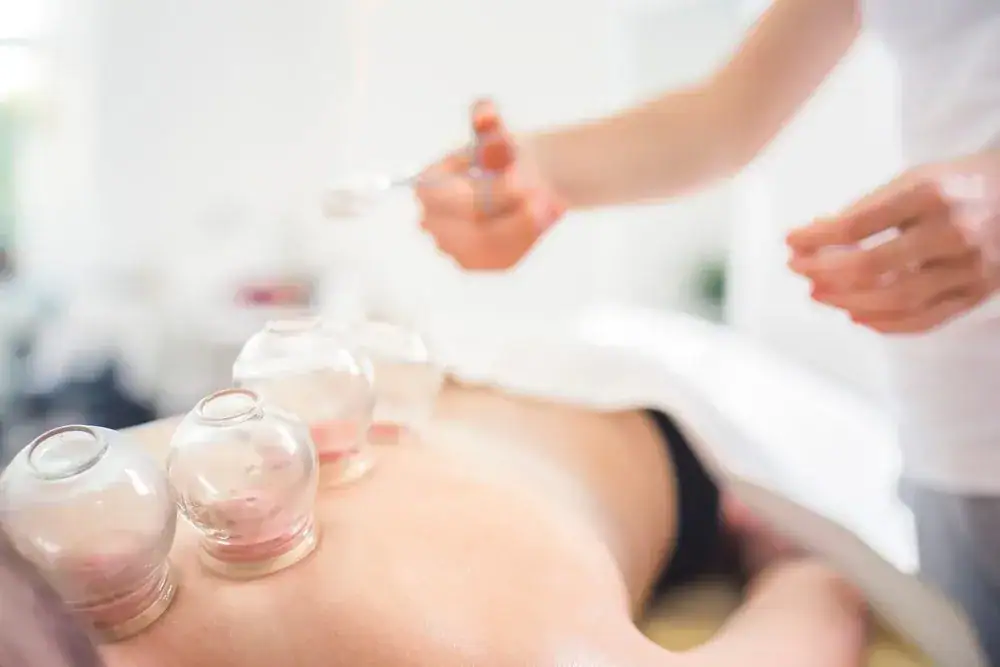
Once we’ve identified the treatment zones, we’ll place cups on your skin using suction. You’ll feel a pulling sensation that’s firm but shouldn’t be painful. Some people find it uncomfortable at first, but most adjust within seconds. Depending on your condition, the cups might stay stationary for several minutes or get moved across the muscle in a gliding motion to release larger areas.
After the cups come off, you’ll likely see circular marks. They’re not bruises in the traditional sense—they’re caused by blood being drawn to the surface and metabolic waste moving out of deeper tissue. The marks fade within three to seven days. Most people feel noticeably looser right away, though some soreness similar to post-workout muscle fatigue can show up the next day. Your therapist will explain what to expect and how to manage it.
Massage uses compression—pushing down into tissue to release tension. Cupping does the opposite. It uses suction to lift tissue up and away from underlying structures. That difference matters because some restrictions don’t respond well to pressure, especially when fascia is adhered or scar tissue has formed.
Physical therapy is the umbrella. It includes manual techniques, exercise, movement retraining, and modalities like cupping. A massage might make you feel better temporarily, but it’s not designed to fix biomechanical problems or retrain how you move. Physical therapy is.
Cupping fits into physical therapy when your therapist determines that myofascial decompression will help you progress faster. It’s particularly useful for releasing areas that are hard to reach with hands alone or for patients who are too sensitive for deep tissue work. You’re getting the benefits of tissue release without the discomfort that sometimes comes with aggressive manual therapy. And because it’s integrated into a structured plan, the results tend to stick.
In most cases, yes—if cupping is billed as part of your physical therapy treatment. Insurance companies typically don’t reimburse for cupping as a standalone service, but when it’s used as a manual therapy technique within a licensed PT session, it falls under your standard physical therapy benefits.
That means your coverage depends on your plan’s PT benefits, not whether cupping is specifically listed. If your plan covers physical therapy, and your therapist documents cupping as a medically necessary component of your treatment, it’s usually covered. You’ll still be responsible for any copays, deductibles, or coinsurance that apply to PT visits in general.
We work with most major insurance providers at Medcare, and our team can verify your benefits before you start treatment. If you’re paying out of pocket, cupping is included in the session rate—you’re not charged separately for it. The key difference between getting cupping at a PT clinic versus a spa is that the former is a medical service designed to address a functional problem, and insurance recognizes that.
Most people feel some improvement after the first session—better range of motion, less tightness, or reduced pain. But one session won’t fix a problem that’s been building for months or years. You’re looking at a series of treatments to create lasting change.
For acute issues like post-workout soreness or a recent muscle strain, you might only need two to four sessions over a couple of weeks. For chronic conditions like ongoing back pain, neck tension, or repetitive strain injuries, expect closer to six to twelve sessions spread out over several weeks. Your therapist will adjust frequency based on how you respond.
The goal isn’t to keep you coming in forever. It’s to get you functional again and give you the tools to maintain that progress on your own. As you improve, sessions get spaced further apart. Some people continue occasional maintenance visits if they’re training hard or dealing with a condition that flares up periodically, but that’s different from needing ongoing treatment just to get through the day.
No, they’re temporary and they’re not harmful. The circular marks you see after cupping are caused by blood and metabolic waste being pulled toward the surface of your skin. They look dramatic, but they’re not bruises in the way you’d get from blunt trauma. There’s no tissue damage happening.
The color and intensity of the marks can tell your therapist something about what’s going on in that area. Darker marks often show up where there’s more stagnation, inflammation, or restricted blood flow. Lighter marks suggest better circulation. Either way, they fade on their own within three to seven days for most people.
If you have an event coming up where you don’t want visible marks—like a wedding or a beach trip—just let your therapist know ahead of time. We can adjust the suction intensity or focus on areas that won’t be visible. The marks aren’t a requirement for cupping to work. They’re just a common side effect of the increased circulation that makes the technique effective in the first place.
Other Services we provide in East Setauket