

You’ve tried heating pads, over-the-counter meds, maybe even prescription options. The pain keeps coming back. Neck tension triggers headaches. Lower back stiffness makes getting out of bed a process. You’re tired of managing it.
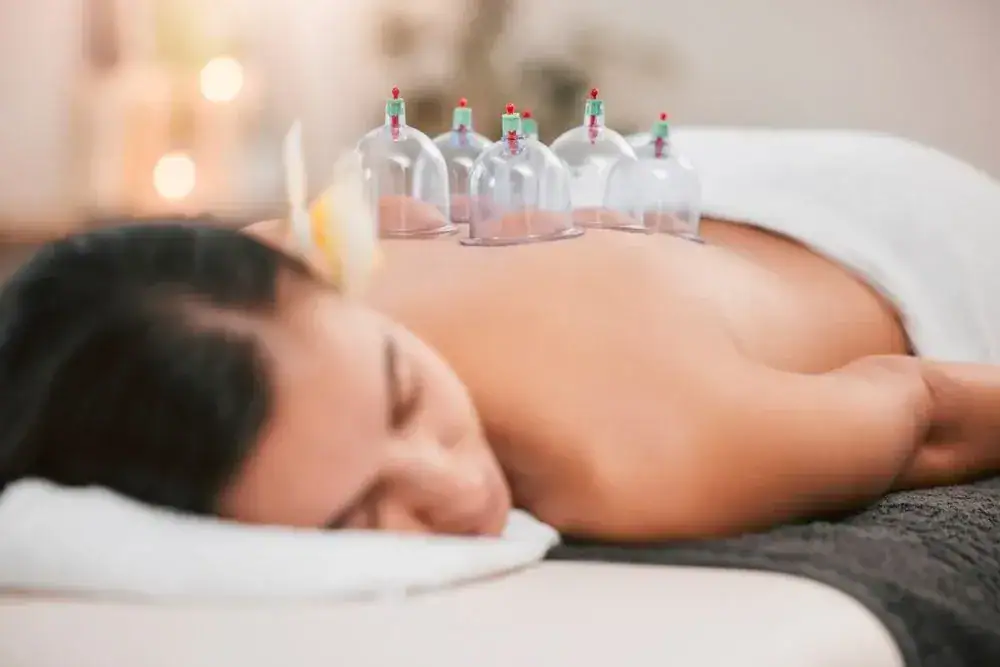
Cupping therapy increases blood flow to areas where you’re hurting. The suction pulls fresh circulation into tight, overworked muscles. That means less inflammation, faster recovery, and actual relief that lasts longer than a hot shower.
Most people notice reduced tension after the first session. Not because cupping is magic, but because it addresses what’s causing the tightness in the first place. Better circulation means your body can finally start healing the areas you’ve been compensating for.
You’re not just masking symptoms. You’re giving your muscles what they need to stop locking up every time you move wrong.
We’ve been providing home-based physical therapy and occupational therapy across Long Island for over a decade. Our licensed therapists are certified in cupping therapy and bring the same level of care you’d get in a clinic directly to your home in East Massapequa.
We work with Medicare and most major insurance plans. Our team manages everything from verification to scheduling so you’re not stuck on hold trying to figure out coverage.
East Massapequa residents choose us because we show up on time, treat you like an actual person, and don’t rush through sessions. You get the same therapist each visit, which means they actually know your case and can adjust treatment as you improve.
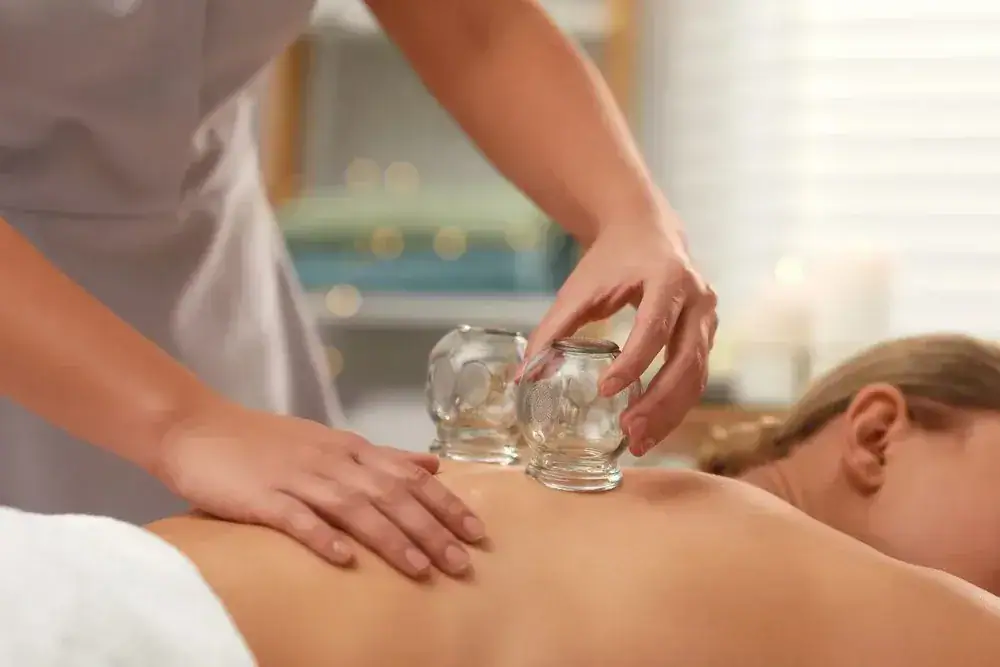
Your therapist starts with an assessment. They’ll ask where you’re hurting, what makes it worse, and what you’ve already tried. This isn’t small talk. It tells them where to focus and how aggressive to be with treatment.
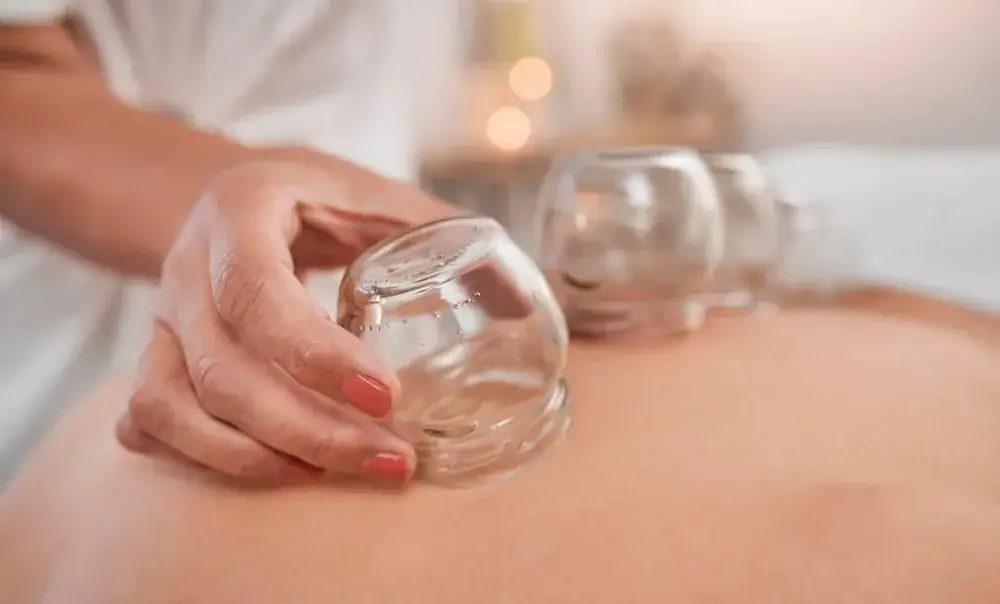
During cupping, small cups are placed on your skin using suction. Dry cupping uses air pressure to create the suction and increase blood flow to tight areas. The cups stay on for 5 to 10 minutes. Most people describe it as intense pressure, not pain. When the cups come off, that’s when you feel the release.
You might have circular marks afterward. They’re not bruises, they’re where blood flow was concentrated. They fade in a few days and don’t hurt.
Your therapist will likely combine cupping with other techniques like stretching or manual therapy. The goal is to address your specific issue, not just go through the motions. Sessions typically last 45 to 60 minutes, and most people start with twice a week depending on severity.
Ready to get started?
Cupping works best for chronic neck pain, lower back pain, and muscle tension that won’t quit. If you’re dealing with stiffness that limits how you move or pain that flares up with certain activities, cupping can help.
In East Massapequa, we see a lot of patients who’ve been managing pain for months or years. Maybe you’ve done physical therapy before and it helped temporarily. Maybe you’re active and your body just doesn’t recover like it used to. Cupping fits into a broader treatment plan that includes strengthening and mobility work.
Athletes use it for recovery. People with desk jobs use it for postural tension. Older adults use it when chronic conditions make movement painful. The common thread is muscle tension and restricted blood flow.
We also treat patients who can’t easily get to a clinic. If mobility is an issue or you’d rather not deal with the trip, home-based cupping therapy removes that barrier. You get professional treatment without the logistics.
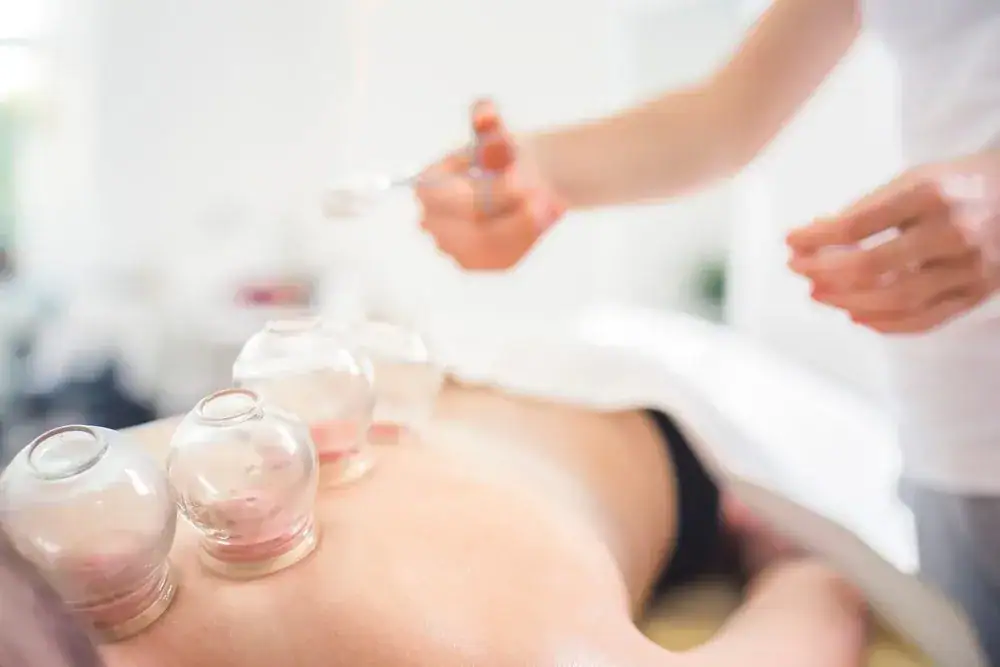
Yes, but it’s not a cure-all. Research shows cupping can reduce pain and improve function for chronic neck pain and lower back pain in the short term. It works by increasing blood circulation to areas that aren’t getting enough, which helps reduce inflammation and muscle tightness.
The key is consistency. One session might give you temporary relief, but a series of treatments combined with stretching or strengthening exercises gives you lasting results. Cupping isn’t a replacement for physical therapy. It’s a tool that makes other treatments more effective.
If your pain is caused by muscle tension, restricted movement, or poor circulation, cupping can help. If it’s nerve-related or structural, you’ll need a more comprehensive approach. Your therapist will tell you upfront if cupping is right for your situation.
Cupping is safe when performed by a licensed professional. The circular marks you see are common and expected. They’re caused by increased blood flow to the area, not broken blood vessels. They don’t hurt and usually fade within three to five days.
Some people have mild soreness after their first session, similar to how you’d feel after a deep tissue massage. That’s normal. Your muscles are adjusting to increased circulation and the release of built-up tension.
Cupping isn’t recommended if you’re on blood thinners, have certain skin conditions, or are pregnant. Your therapist will go through a health screening before starting treatment. If there’s any reason cupping isn’t safe for you, they’ll recommend alternatives.
The biggest risk is improper technique, which is why working with a certified therapist matters. We’ve been doing this since 2010 and follow all safety protocols.
Cost depends on whether you’re using insurance or paying out of pocket. We accept Medicare and most major insurance plans, which often cover cupping when it’s part of a physical therapy treatment plan. Your copay or coinsurance applies like it would for any therapy visit.
If you’re paying out of pocket, sessions typically range from $75 to $150 depending on length and complexity. We’ll give you an exact price before you commit to anything.
Insurance coverage varies, so we verify your benefits upfront. That way you know what you’re paying before your first session. We handle the billing and paperwork so you’re not stuck figuring it out on your own.
Home-based therapy sometimes costs slightly more than clinic visits, but you’re saving time and transportation costs. For patients with mobility issues, that trade-off makes sense.
Most people start noticing improvement after three to four sessions. Depending on severity, you might need six to eight sessions over a few weeks to get lasting results. Chronic issues that have been building for months or years take longer to resolve than acute flare-ups.
Your therapist will assess your progress after each visit and adjust frequency as needed. If you’re improving quickly, you might drop to once a week. If progress is slow, they’ll modify the treatment approach or add complementary techniques.
Some patients use cupping as ongoing maintenance once their pain is under control. Others finish a treatment series and only come back if symptoms return. There’s no one-size-fits-all answer.
The goal is to get you functional and pain-free, not to keep you in treatment indefinitely. We’ll be upfront about what’s realistic based on your condition and how your body responds.
Yes, and that’s usually the best approach. Cupping increases blood flow and releases muscle tension, which makes stretching, strengthening, and manual therapy more effective. Most of our patients receive cupping as part of a broader treatment plan.
For example, if you’re dealing with chronic lower back pain, your therapist might use cupping to reduce tightness, then follow up with exercises to strengthen your core and improve posture. The cupping makes your muscles more receptive to movement, so you get better results from the exercises.
We also combine cupping with techniques like myofascial release, joint mobilization, and therapeutic taping depending on what you need. Your therapist builds a plan based on your specific condition, not a standard protocol.
If you’re already seeing another provider like a chiropractor or massage therapist, let us know. We can coordinate care to make sure treatments complement each other rather than overlap unnecessarily.
Convenience and consistency. You don’t have to drive, find parking, or sit in a waiting room. Your therapist comes to you in East Massapequa at a time that works with your schedule. That removes the biggest barrier most people face with regular therapy: actually getting there.
Home-based treatment also means you’re in a comfortable, familiar environment. For patients with mobility issues, chronic pain, or anxiety about clinical settings, that makes a real difference. You’re more relaxed, which helps treatment work better.
You get the same therapist each visit, so they know your case inside and out. They’re not seeing 12 other patients that day and rushing through your session. You get their full attention, and they can adjust treatment in real time based on how you’re responding.
If getting to a clinic is easy for you, great. But if it’s a hassle or you’ve been putting off treatment because of logistics, home-based cupping removes that excuse. You get professional care without the friction.
Other Services we provide in East Massapequa