
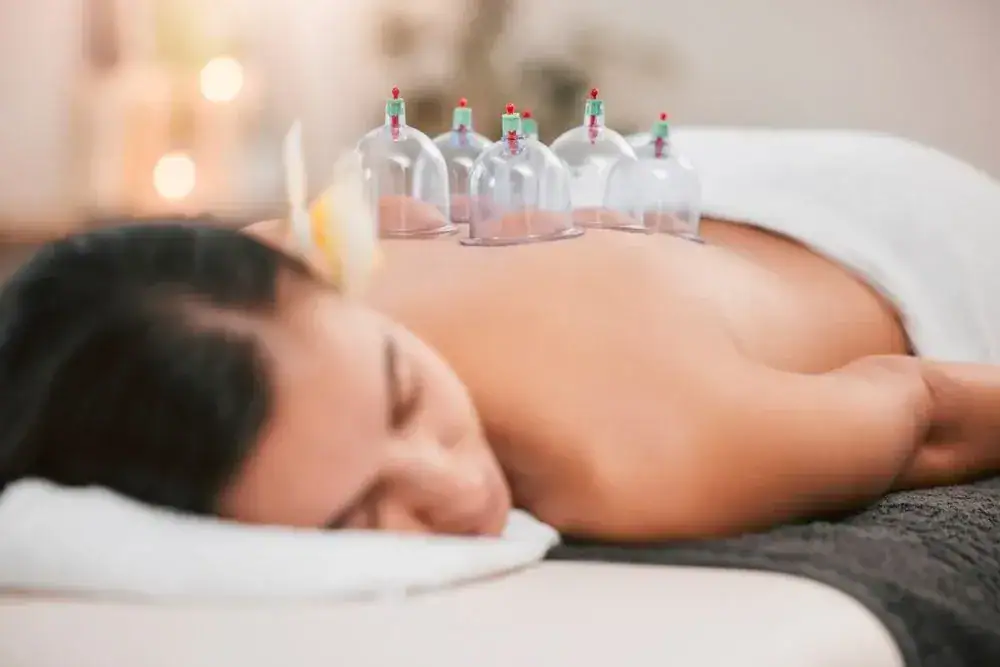
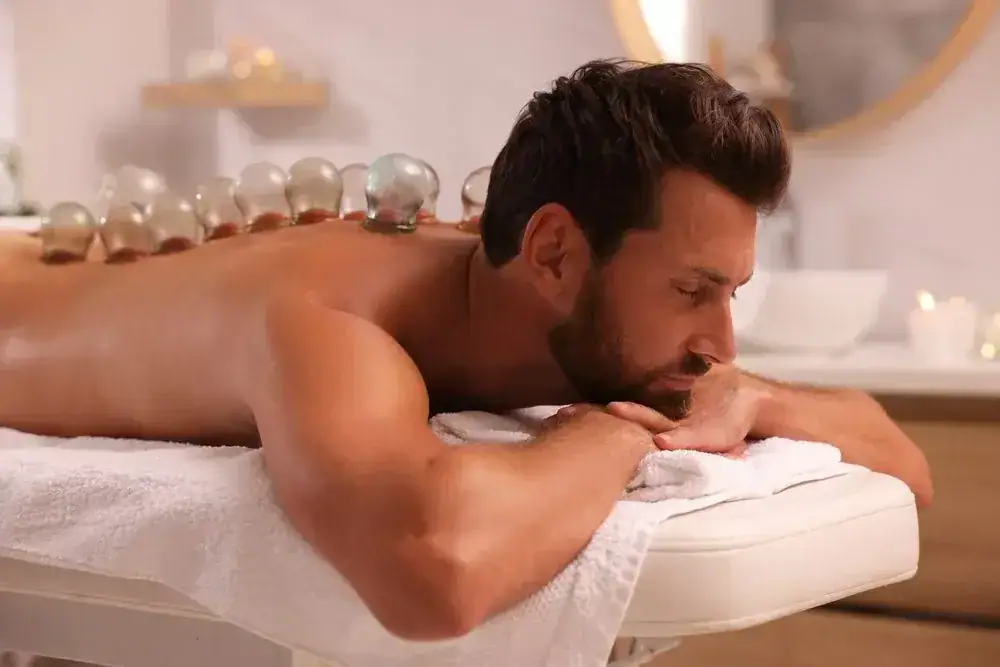
Chronic pain changes how you move through your day. You skip activities you used to enjoy. You plan around stiffness, soreness, and that nagging ache that never quite goes away.
Cupping therapy works by creating suction on your skin, pulling fresh blood into tight, painful areas while lifting tension out of the muscle tissue. It’s called myofascial decompression, and it does the opposite of what massage does—instead of pressing down, it lifts up. That shift in pressure helps your body release what it’s been holding onto.
Most people feel relief during the session. Some notice it builds over the next day or two as circulation improves and inflammation drops. You’re not masking pain—you’re giving your body what it needs to actually heal.
This isn’t a cure-all, but for back pain, neck stiffness, knee discomfort, or muscle tightness that limits your mobility, cupping can make a real difference. Especially when it’s part of a broader physical therapy plan that addresses why the pain showed up in the first place.
We’ve been providing home-based physical and occupational therapy across Long Island for over 15 years. Our affiliated centers in Smithtown and Speonk have served the North Fork community with the same approach: licensed therapists, personalized care, and treatment that fits your life.
East Marion’s population skews older, with more than 40% of residents over 64. That means most of the people we work with are managing chronic conditions, recovering from surgery, or dealing with pain that makes leaving the house harder than it used to be. We come to you because we know transportation is a barrier, and comfort matters when you’re trying to heal.
We accept Medicare and most commercial insurance. Every therapist on our team is licensed, vetted, and trained to deliver evidence-based care in your home. You’re not getting a sales pitch—you’re getting a treatment plan built around what your body actually needs.
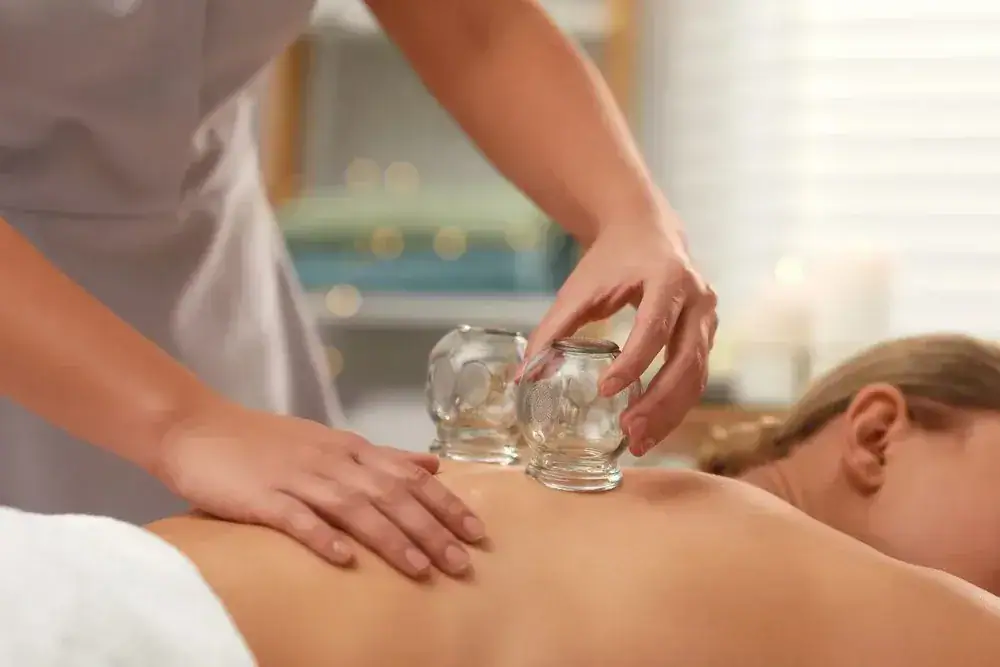
Your therapist starts with an assessment. They’ll ask about your pain, your movement, and what’s been limiting you. Cupping isn’t something we do in isolation—it’s usually combined with stretching, strengthening, or manual therapy depending on what your body needs.
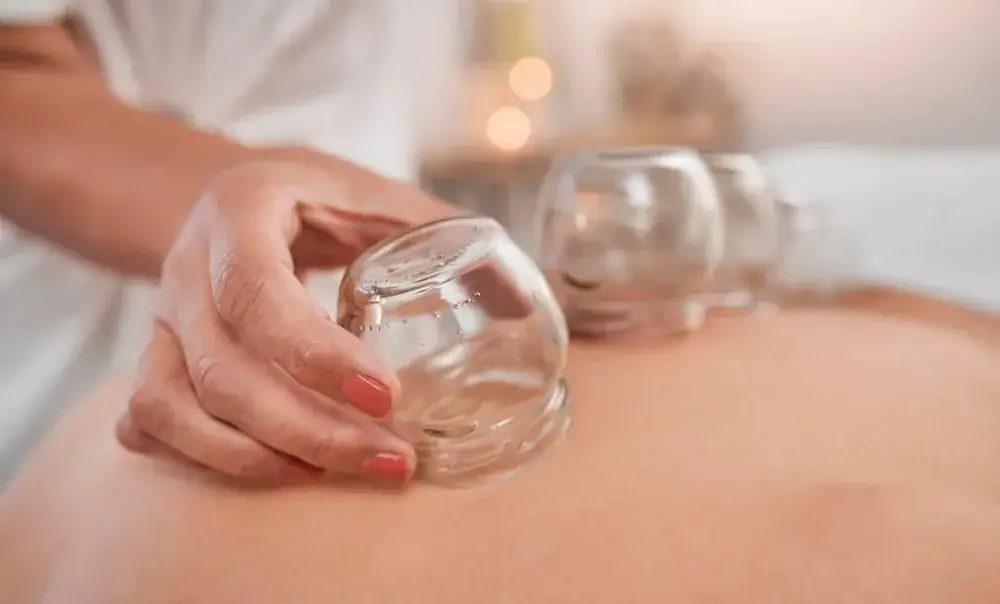
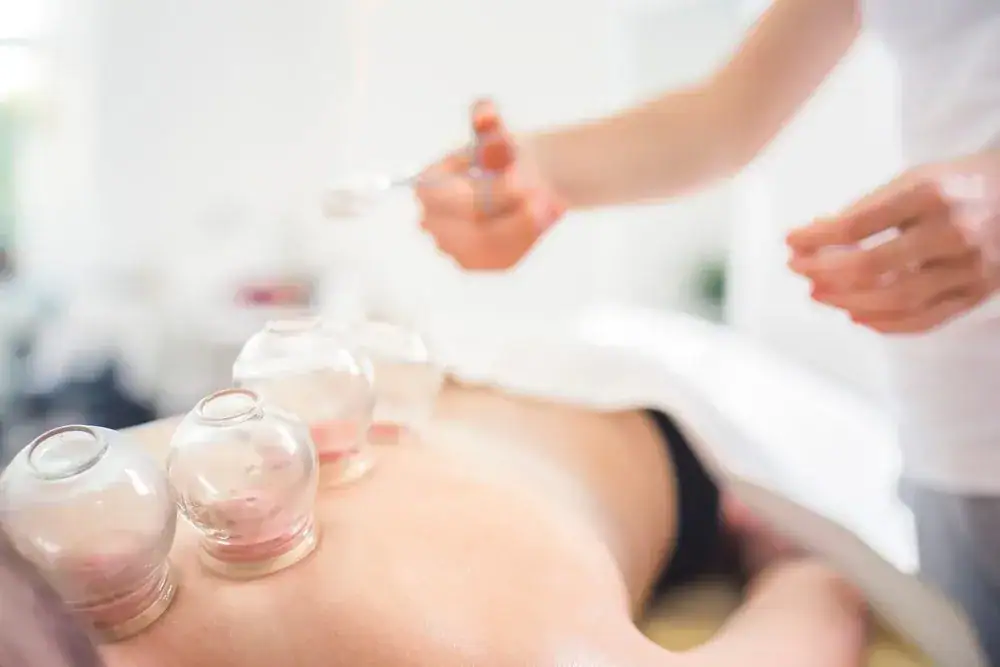
During the session, small cups are placed on your skin, usually on your back, shoulders, neck, or legs. A pump creates suction, lifting the tissue and increasing blood flow to the area. The cups stay on for 5 to 15 minutes. Some people feel immediate relief. Others notice it more after the session ends.
You might see circular marks afterward—they’re not bruises, they’re just where the suction was applied. They fade in a few days and don’t hurt. Most people feel looser, less stiff, and more mobile right away.
If cupping is part of your physical therapy plan, your therapist will integrate it with other techniques to address the root cause of your pain. You’re not just getting temporary relief—you’re working toward long-term improvement in how your body moves and feels.
Ready to get started?
You get a licensed physical therapist who comes to your home in East Marion with everything needed for your session. No waiting rooms, no commute, no stress about parking or getting there on time.
Cupping is one tool in a full physical therapy toolkit. Depending on your condition, your therapist might also use manual therapy, therapeutic exercises, gait training, or pain management techniques. The goal is to reduce pain, restore mobility, and help you move through your day with less limitation.
East Marion has one of the highest rates of Medicare coverage on Long Island, and nearly all residents have some form of health insurance. We work with Medicare and most commercial plans, so cost isn’t usually a barrier. We handle the billing and verification—you focus on getting better.
Because our population here is older and more likely to have mobility challenges, home-based care makes sense. You’re recovering in your own space, on your own schedule, with a therapist who understands what it’s like to manage chronic pain in a small, tight-knit community where everyone knows your name.
Yes, and the research backs it up. Multiple studies show that cupping therapy significantly reduces pain and improves function in people with chronic low back pain, especially when combined with physical therapy or other treatments.
Cupping works by increasing blood flow to painful areas and stimulating your nervous system to release endorphins, your body’s natural pain relievers. It also helps relax tight muscles and reduce inflammation at the tissue level. For back pain specifically, cupping targets the muscles along your spine that tend to lock up from poor posture, injury, or age-related wear.
Most people feel some relief during or right after the first session. Longer-term improvement usually happens over several weeks as your body responds to better circulation and reduced muscle tension. It’s not a one-and-done fix, but it’s a proven option if you’ve been stuck in a cycle of pain that hasn’t responded to other treatments.
No, they’re different techniques. Dry cupping uses suction alone to lift the skin and tissue. Wet cupping involves making small incisions and drawing out a small amount of blood. In the U.S., dry cupping is far more common because it’s less invasive and poses fewer risks.
Dry cupping is what most physical therapists use, and it’s effective for musculoskeletal pain like back pain, neck stiffness, and joint discomfort. Wet cupping has been used traditionally for inflammatory conditions, but it requires more specialized training and isn’t typically part of standard physical therapy practice.
At Medcare, we use dry cupping as part of a broader treatment plan. It’s safe, well-tolerated, and doesn’t require any recovery time. You might see some circular marks on your skin afterward, but they fade quickly and aren’t painful.
In most cases, yes—if cupping is part of a physical therapy treatment plan. Medicare and most commercial insurance plans cover physical therapy services, and cupping is considered a modality within that scope of care.
We accept Medicare and nearly all commercial insurance plans. Before your first session, we verify your coverage and let you know what’s covered and what, if anything, you’ll owe out of pocket. There are no surprise bills.
Because East Marion has such a high percentage of Medicare-eligible residents, we’ve built our billing process to be straightforward and transparent. If cupping is recommended as part of your care, it’s typically bundled into your physical therapy visits, not billed separately as an add-on service.
A typical session lasts 45 to 60 minutes, but the cups themselves are usually on your skin for 5 to 15 minutes. The rest of the time is spent on assessment, other physical therapy techniques, and exercises tailored to your condition.
Cupping isn’t something we do in isolation. Your therapist will combine it with manual therapy, stretching, strengthening exercises, or other treatments depending on what your body needs. The goal is to address the root cause of your pain, not just treat the symptoms.
Because we come to your home, there’s no rush. You’re not being shuffled in and out of a clinic. Your therapist has time to focus on you, answer questions, and adjust the treatment based on how you’re responding.
Cupping doesn’t hurt. Most people describe the sensation as a firm pull or tightness on the skin, but it’s not painful. If the suction feels too strong, your therapist can adjust it immediately.
The circular marks you see after cupping aren’t bruises—they’re the result of increased blood flow to the area. They look like bruises, but they don’t hurt and they fade within a few days to a week. Some people get darker marks than others depending on skin tone, circulation, and how much tension was in the tissue.
If you have concerns about how it looks, talk to your therapist. They can adjust the intensity or placement of the cups. The marks are normal and actually a sign that the therapy is working—your body is responding by bringing fresh blood and oxygen to areas that need it.
Yes. Cupping has been shown to help with neck pain, knee osteoarthritis, shoulder tension, and general muscle stiffness. It’s also used for conditions like carpal tunnel syndrome and chronic pain that limits your ability to move comfortably.
The key is that cupping works best when it’s part of a complete treatment plan. If you have knee pain from arthritis, for example, cupping can reduce inflammation and improve circulation around the joint—but you’ll also need exercises to strengthen the muscles that support your knee.
Your therapist will assess your specific condition and determine whether cupping makes sense for you. Not everyone needs it, and not every condition responds to it. But for musculoskeletal pain, muscle tension, and mobility issues common in East Marion’s older population, it’s a proven option that can make daily life easier.
Other Services we provide in East Marion