
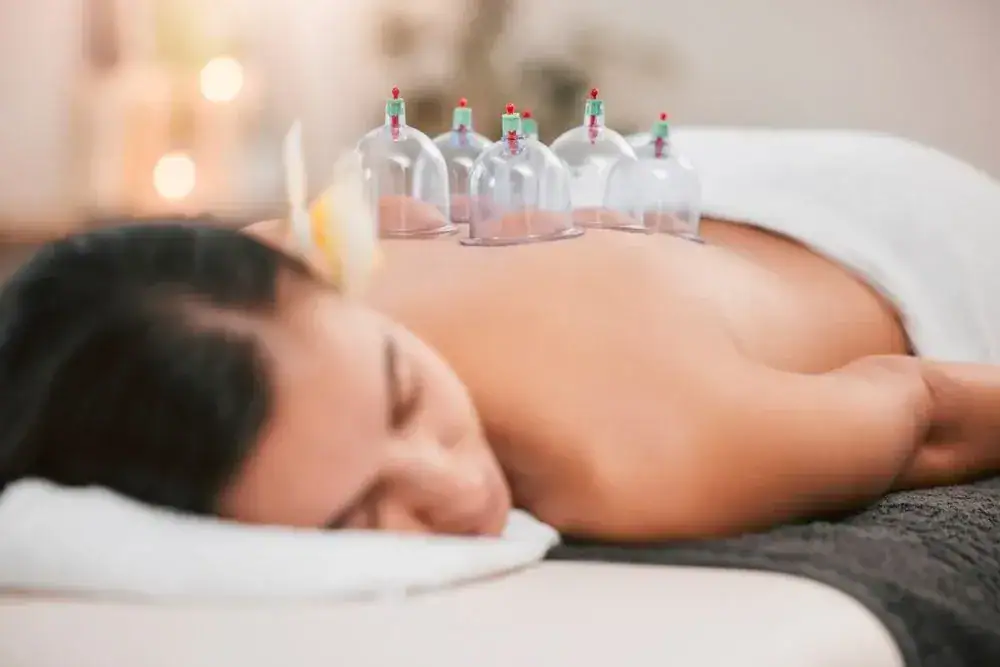

You’ve tried heat packs, foam rollers, maybe even cortisone shots. The pain comes back. The stiffness returns every morning. You’re tired of managing symptoms instead of fixing the problem.
Cupping therapy works differently. It pulls blood to the surface, breaks up adhesions in your fascia, and gives your muscles room to move again. You’re not masking pain—you’re addressing what’s causing it.
Most people notice looser shoulders after the first session. Less morning stiffness within a week. Better range of motion without that constant tightness pulling you back. It’s not magic. It’s increased circulation, reduced inflammation, and your body finally getting what it needs to heal.
If you’ve been dealing with chronic neck pain, lower back tightness, or that nagging shoulder issue that won’t quit, this might be the shift you’ve been looking for. No pills. No downtime. Just targeted relief that actually lasts.
Medcare Therapy Services has been treating patients across Long Island for years, and our East Hampton location brings that same level of care to the East End. We’re not a spa. We’re licensed physical therapists who use cupping as part of a real treatment plan.
East Hampton has plenty of wellness options, but not many combine clinical expertise with hands-on techniques like dry cupping. We do. Every session is built around what’s actually wrong—not what’s trendy or easy to bill.
You’ll work with therapists who’ve treated everyone from weekend warriors to people recovering from surgery. We manage your care from start to finish, and we don’t hand you off to someone different every visit. That consistency matters when you’re trying to get better, not just feel better for an hour.
Your first visit starts with an evaluation. We ask about your pain, your history, and what you’ve already tried. Then we assess your range of motion, muscle tightness, and any areas that are compensating for the injury.
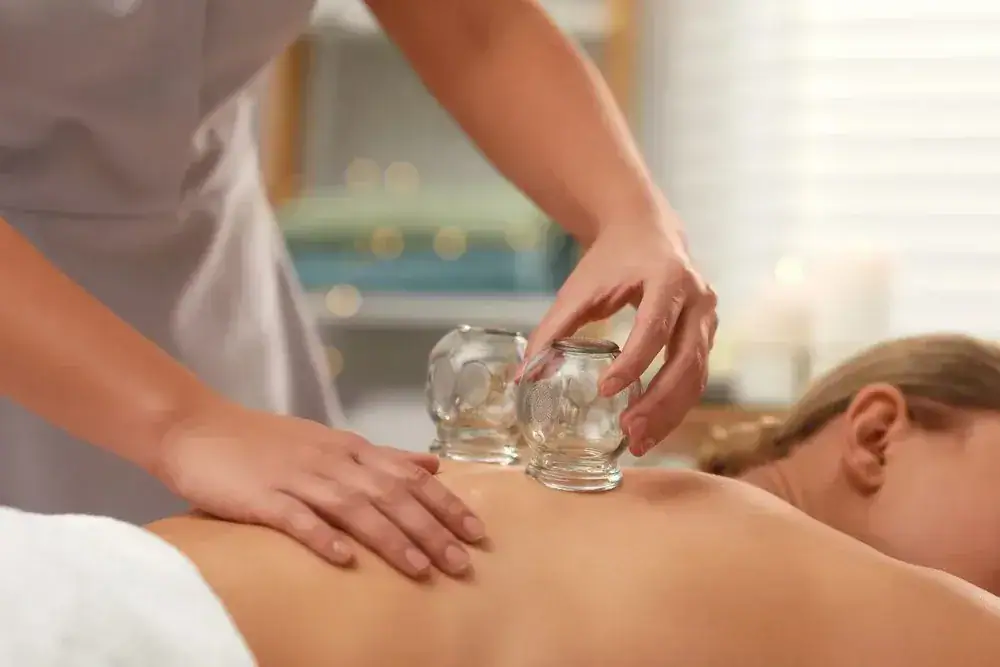
If cupping makes sense for your condition, we’ll explain how it works before we start. We place cups on targeted areas—usually your back, shoulders, neck, or legs—and create suction that draws blood flow to the tissue. It feels like a deep pull, not painful, just intense. Most people find it relaxing once they get used to the sensation.
The cups stay on for 5 to 15 minutes depending on what we’re treating. When we remove them, you’ll see circular marks. Those aren’t bruises—they’re evidence of stagnant blood and metabolic waste being pulled to the surface so your body can clear it out.
We often combine cupping with other physical therapy techniques like manual therapy, stretching, or strengthening exercises. You’re not just getting a single modality—you’re getting a complete plan designed to keep the pain from coming back.
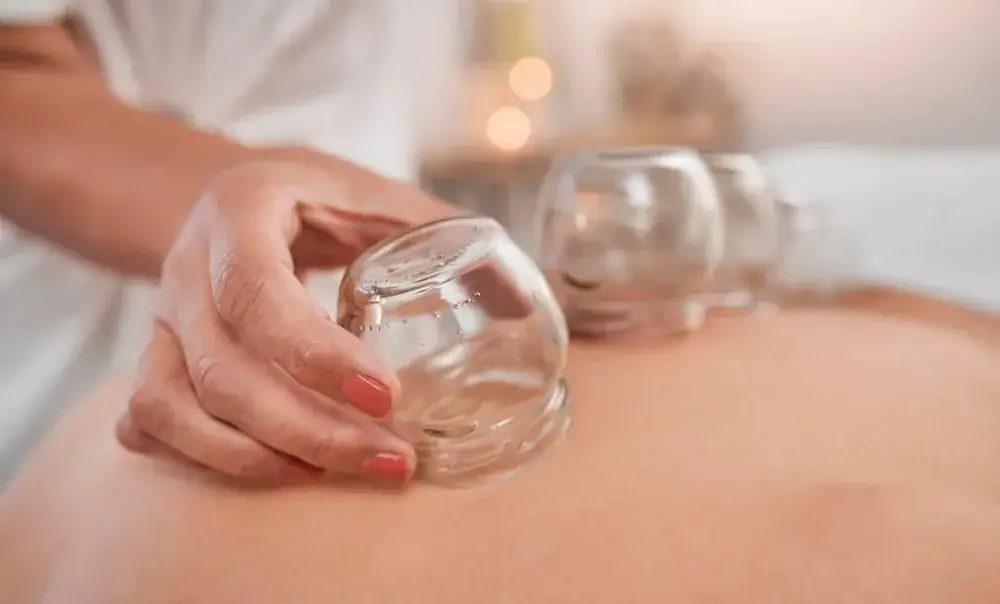
Ready to get started?
Every cupping session is part of a broader physical therapy plan. That means you’re not just lying on a table for 20 minutes and leaving. You’re working with a licensed PT who’s tracking your progress and adjusting your treatment as you improve.
We use dry cupping, which means no needles, no incisions, no fire. Just suction. It’s safe, non-invasive, and effective for conditions like chronic lower back pain, neck stiffness, rotator cuff issues, and muscle tightness from overuse or injury.
East Hampton has a high concentration of active adults—people who golf, surf, garden, and stay physical well into their 60s and 70s. That also means a lot of repetitive strain injuries, arthritis-related stiffness, and age-related mobility loss. Cupping helps with all of it by improving local blood flow and releasing tension that’s been building for months or even years.
You’ll also get education. We’ll show you what’s tight, what’s weak, and what you can do at home to support the work we’re doing in the clinic. That’s how you go from needing us every week to checking in once a month—or not at all.
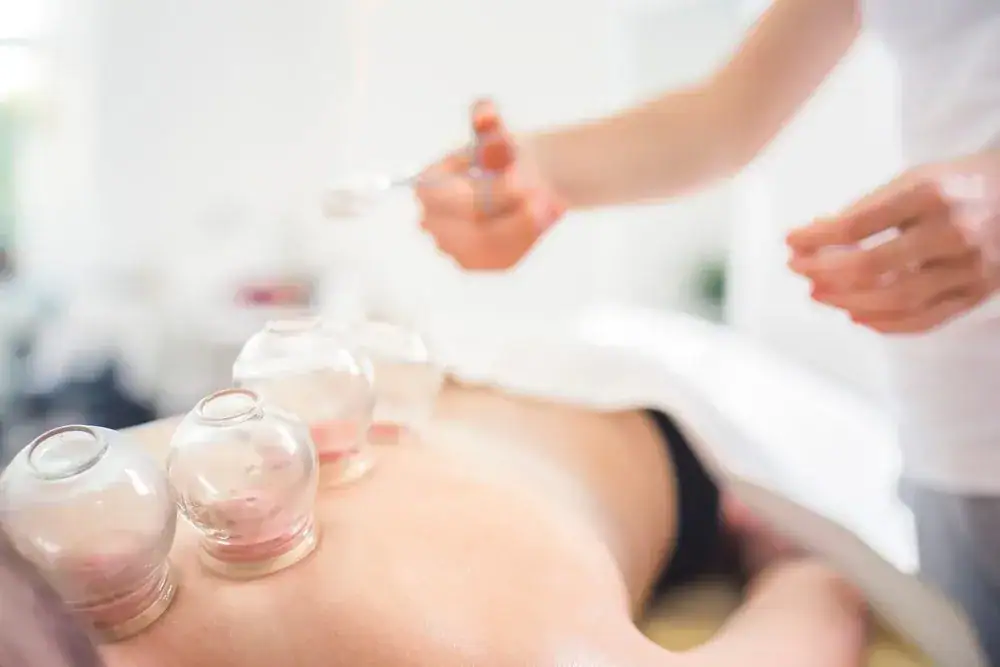
Cupping has been studied in clinical settings, and the research supports its use for chronic pain conditions like lower back pain, neck pain, and knee osteoarthritis. It’s not a miracle cure, but it’s also not pseudoscience.
The suction increases blood flow to areas that aren’t getting enough circulation. That helps reduce inflammation, flush out metabolic waste, and give your muscles the oxygen they need to recover. When combined with physical therapy, it’s even more effective because you’re also addressing the movement patterns and weaknesses that caused the problem in the first place.
If you’ve been dealing with pain for months and nothing else has worked, cupping might be worth trying. It’s low-risk, non-invasive, and most people notice a difference within a few sessions. But it works best when it’s part of a real treatment plan—not a one-off spa service.
You’ll have circular marks where the cups were placed, but they’re not bruises in the traditional sense. They’re caused by blood being drawn to the surface, which is actually the point. The darker the mark, the more stagnant blood was sitting in that area.
Most marks fade within 3 to 7 days. Some people see them disappear in 48 hours, especially after a few sessions when circulation improves. If you have an event coming up or you’re concerned about visible marks, let us know. We can adjust the intensity or place cups in areas that won’t be exposed.
The marks don’t hurt. You might feel a little tender in the treated area for a day or two, similar to how you’d feel after a deep tissue massage. That’s normal and usually means the therapy is working.
Massage works by applying pressure to push into the muscle. Cupping does the opposite—it pulls tissue up and away from the bone, which creates space and releases tension in a way that hands alone can’t replicate.
Physical therapy addresses the root cause of your pain through movement, strengthening, and manual techniques. Cupping is one tool we use within that larger plan. It’s especially helpful for stubborn knots, fascia restrictions, and areas where scar tissue or inflammation is limiting your mobility.
Think of it this way: massage feels good in the moment. Physical therapy fixes the problem. Cupping speeds up that process by improving circulation and breaking up adhesions so the other work we’re doing actually sticks. You’re not choosing between them—you’re getting all three in one place.
Cupping is most effective for musculoskeletal pain and soft tissue injuries. That includes chronic lower back pain, neck and shoulder tightness, rotator cuff issues, IT band syndrome, plantar fasciitis, and tension headaches caused by muscle strain.
We also use it for post-surgical recovery when scar tissue is limiting range of motion, and for athletes dealing with overuse injuries or delayed onset muscle soreness. If your pain is related to tight muscles, poor circulation, or fascia restrictions, cupping can help.
It’s not a good fit for everyone. If you have a bleeding disorder, take blood thinners, or have active skin infections, we’ll recommend a different approach. That’s why the evaluation matters—we don’t just throw cups on and hope for the best. We assess your condition first and build a plan that makes sense for your body.
Most people feel some relief after the first session—less tightness, better range of motion, or a reduction in pain. But one session won’t fix a problem you’ve had for months or years.
For chronic conditions, expect 4 to 8 sessions over a few weeks. Acute injuries or muscle soreness might only need 2 or 3. It depends on how long you’ve been dealing with the issue, how severe it is, and how your body responds to treatment.
We’ll give you a realistic timeline after your evaluation. If you’re not seeing progress within a few sessions, we’ll adjust the plan or try a different approach. The goal isn’t to keep you coming back forever—it’s to get you moving again so you don’t need us anymore.
If cupping is performed by a licensed physical therapist as part of your treatment plan, it’s often covered under your physical therapy benefits. We bill it as part of the overall session, not as a separate service.
Coverage varies by insurance provider and plan, so we recommend calling your insurance company to confirm your PT benefits before your first visit. We can also verify coverage for you and let you know what your out-of-pocket cost will be.
Even if you’re paying out of pocket, cupping is usually included in the session rate—you’re not being charged extra for it on top of your physical therapy visit. We’re transparent about pricing from the start, so there are no surprises when you check out.
Other Services we provide in East Hampton