
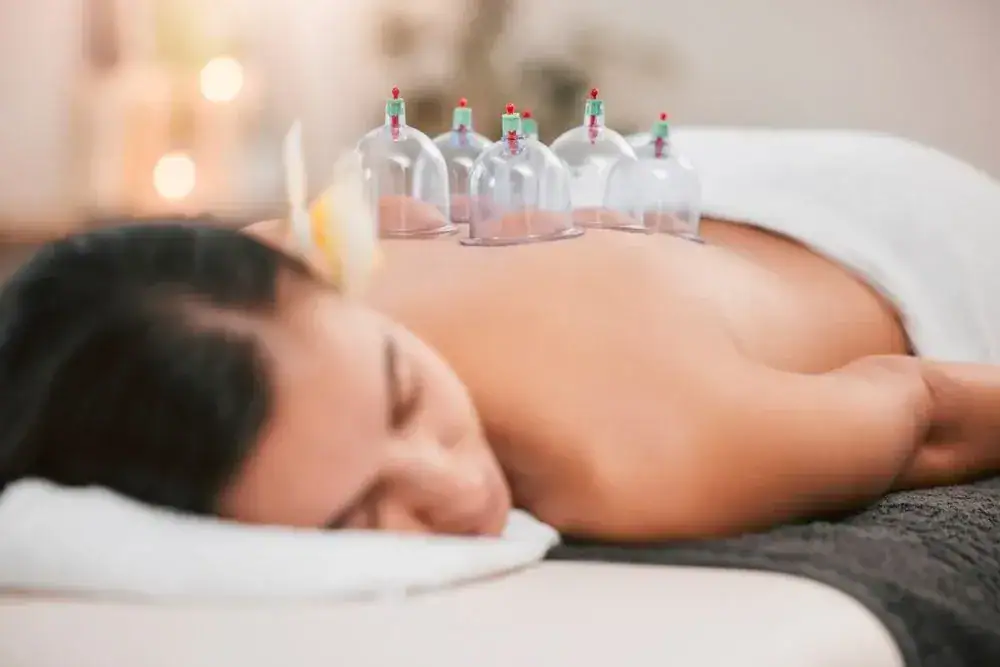

You’ve tried heat. You’ve tried rest. You’ve probably tried ignoring it. But that tightness in your back, that nagging shoulder pain, that stiffness in your neck—it’s still there.
Cupping therapy works by creating suction on your skin that lifts soft tissue, pulls fresh blood into the area, and releases the tension your muscles have been holding onto. It’s not a temporary fix. It’s a reset for tissue that’s been overworked, inflamed, or stuck in a pain cycle.
Most people feel relief during the first session. Not because it’s magic—because it’s mechanical. The suction breaks up adhesions, improves circulation, and gives your body what it needs to actually heal. You’re not masking pain. You’re addressing what’s causing it.
If you’ve been dealing with chronic back pain, neck stiffness, rotator cuff issues, or muscle soreness that won’t quit, this is one of the fastest non-invasive ways to get your body moving the way it should again.
We’ve been delivering home-based physical therapy across Long Island since 2010. That includes East Farmingdale, where getting to an appointment isn’t always easy—especially when you’re already in pain.
Our licensed physical therapists bring cupping therapy, manual therapy, and personalized treatment plans directly to your home. No waiting rooms. No driving when your back’s locked up. Just real care from professionals who’ve been doing this long enough to know what works.
We accept Medicare and most commercial insurance, so you’re not choosing between relief and affordability. And because we’re local to Nassau County, we understand what East Farmingdale residents are dealing with—long work commutes, active lifestyles, and the wear and tear that comes with both.
Your therapist starts with an evaluation. They’ll ask where it hurts, how long it’s been going on, and what makes it worse. Then they’ll assess your range of motion, muscle tension, and any areas of inflammation or restriction.
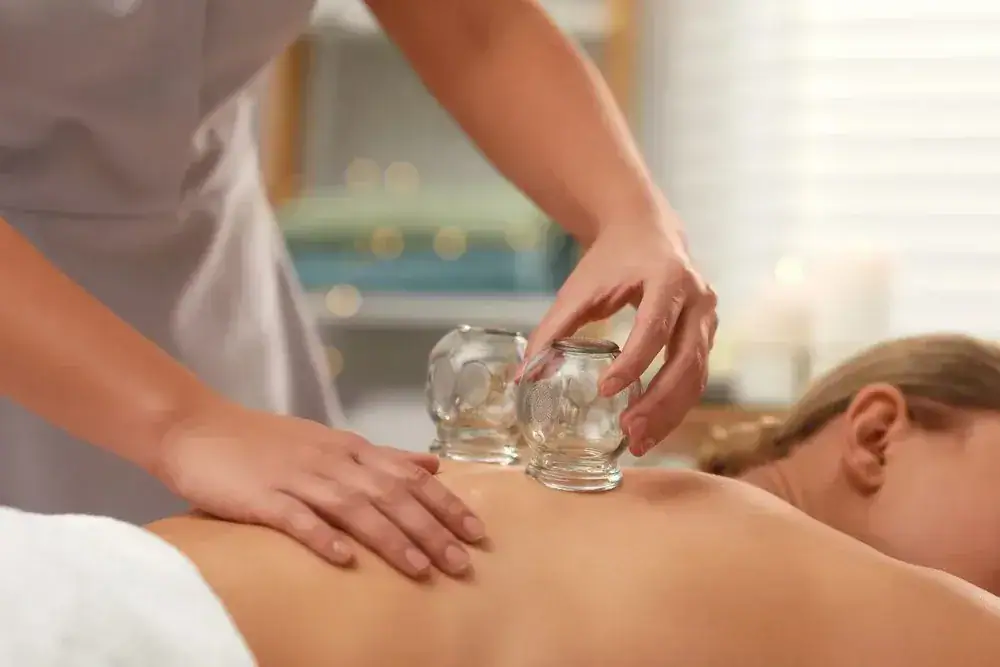
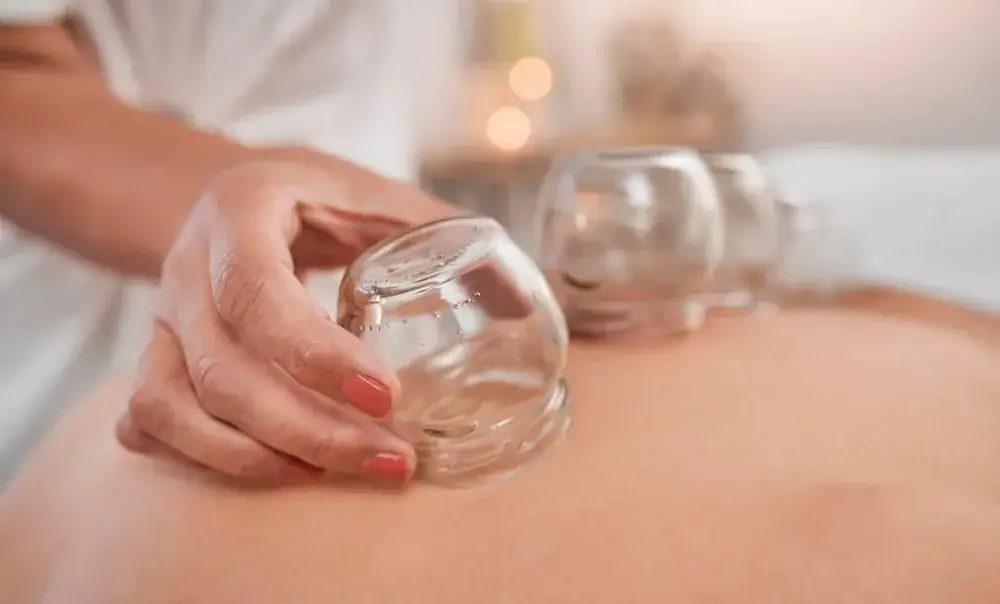
Once they know what’s going on, they’ll apply cups to the affected areas. These aren’t the fire cups you’ve seen on social media—we use modern suction cups that create controlled, consistent pressure. The suction lifts your skin and the tissue underneath, which increases blood flow and encourages your muscles to release.
You’ll feel the pull, but it shouldn’t hurt. Most people say it’s more relieving than uncomfortable. The cups stay on for several minutes while your therapist may move them across the muscle or leave them stationary, depending on what your body needs.
After the cups come off, your therapist will often combine cupping with stretching, manual therapy, or strengthening exercises. That’s because cupping works best when it’s part of a complete plan—not a standalone trick. The goal is to reduce your pain now and keep it from coming back later.
Ready to get started?
Cupping therapy is especially effective for chronic back pain, neck pain, shoulder impingement, and muscle soreness that doesn’t respond to rest alone. If you’ve been dealing with tightness that limits how you move, this is a tool that can help.
It’s also used for rotator cuff injuries, post-workout recovery, and reducing inflammation in overused muscles. Athletes use it to speed up recovery. Office workers use it to undo the damage of sitting all day. Older adults use it to manage arthritis-related stiffness and improve mobility without relying on pain meds.
In East Farmingdale, where nearly half of physical therapy patients are dealing with back-related pain, cupping has become a go-to option for people who want relief without surgery or prescriptions. Research shows that 79% of patients report reduced pain after cupping therapy, and it works even better when combined with physical therapy techniques like stretching and strengthening.
Because we bring this service to your home, you don’t have to worry about how you’ll get there or whether you can sit in a car for 20 minutes. You get the same clinical-grade treatment you’d receive in a clinic—just more convenient and more comfortable.
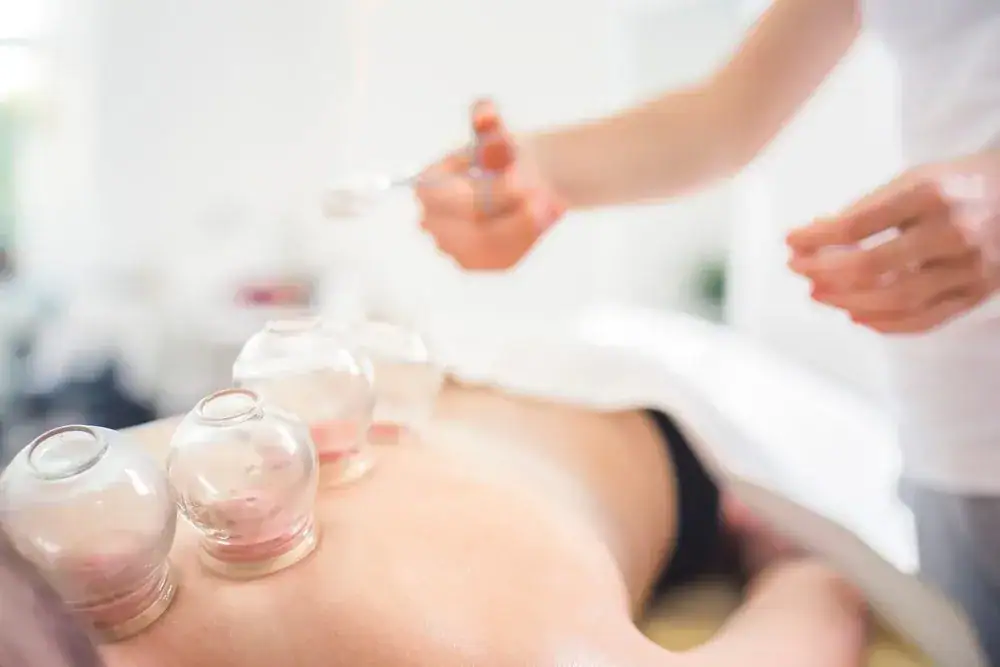
Yes. Peer-reviewed studies show that cupping therapy significantly reduces pain and improves function, especially for chronic back pain, neck pain, and shoulder issues. It’s not a placebo—it’s a mechanical intervention that increases circulation, reduces muscle tension, and helps break up scar tissue or fascial adhesions.
About 79% of patients report noticeable pain reduction after cupping therapy. It works best when combined with other physical therapy techniques like stretching, strengthening, and manual therapy. That’s how we use it at Medcare—not as a standalone gimmick, but as part of a complete treatment plan designed to get you moving better and feeling stronger.
If you’ve been managing pain with heating pads, ibuprofen, or just toughing it out, cupping offers a non-invasive alternative that actually addresses the root cause instead of masking symptoms.
Usually, yes—but they’re not bruises. The circular marks you see after cupping are caused by increased blood flow to the area, not broken blood vessels. They’re painless and typically fade within a few days to a week.
The intensity of the marks depends on how much tension or stagnation is in the tissue. Areas with more restriction tend to show darker marks. As your body heals and circulation improves, the marks often become lighter with each session.
If you’re concerned about visible marks for an event or work situation, let your therapist know. They can adjust the suction level or place cups in areas that are easier to cover. But for most people, the marks are a small trade-off for the relief they get—especially when nothing else has worked.
Yes, when it’s provided as part of a physical therapy treatment plan. We accept Medicare and nearly all commercial insurance plans. Cupping is billed under physical therapy services, not as a separate alternative treatment, which means it’s more likely to be covered.
We handle the billing and work directly with your insurance provider to make the process as simple as possible. Most patients with Medicare or employer-based insurance have little to no out-of-pocket cost for home-based therapy services, including cupping.
Before your first session, we’ll verify your coverage and let you know exactly what to expect. No surprises. No hidden fees. Just transparent care that fits within your plan.
Massage pushes tissue down. Cupping pulls tissue up. That difference matters when you’re dealing with deep muscle tension, fascial restrictions, or chronic pain that massage alone hasn’t been able to touch.
The suction from cupping lifts the skin and underlying tissue away from the muscle, which creates space, increases blood flow, and releases adhesions that manual pressure can’t always reach. It’s especially effective for areas like the upper back, shoulders, and lower back where muscles get locked up from poor posture, repetitive motion, or injury.
Cupping is also more targeted. Your physical therapist uses it on specific problem areas as part of a clinical treatment plan—not for general relaxation. That’s why it’s often combined with stretching, joint mobilization, and strengthening exercises. The goal isn’t just to feel good for an hour. It’s to fix what’s broken and keep it from coming back.
Most people feel some relief after the first session, but lasting results usually take four to six sessions depending on how long you’ve been in pain and what’s causing it. Acute injuries respond faster. Chronic conditions take more time.
Your therapist will evaluate your progress after each session and adjust the plan as needed. If cupping is working, you’ll notice improved range of motion, less pain, and better function within the first few weeks. If it’s not the right fit, we’ll pivot to other techniques.
The advantage of working with a licensed physical therapist is that cupping is just one tool in the toolbox. We’re not locked into one approach. We’re focused on getting you results—whether that’s through cupping, manual therapy, exercise, or a combination of all three. You’re not paying for a set number of sessions. You’re paying for a solution.
Yes. That’s exactly what we do. We specialize in home-based physical therapy for people who have difficulty getting to a clinic—whether that’s due to pain, mobility issues, transportation challenges, or just a packed schedule.
Your therapist brings everything needed for cupping therapy directly to your home. You get the same clinical-grade treatment you’d receive in an office, but without the commute, the waiting room, or the stress of getting there when you’re already hurting.
We serve East Farmingdale and the surrounding Nassau County area. Sessions are scheduled at times that work for you, and because we accept Medicare and most commercial insurance, cost usually isn’t a barrier. If you’ve been putting off treatment because it’s too hard to get there, this removes that obstacle completely.
Other Services we provide in East Farmingdale