
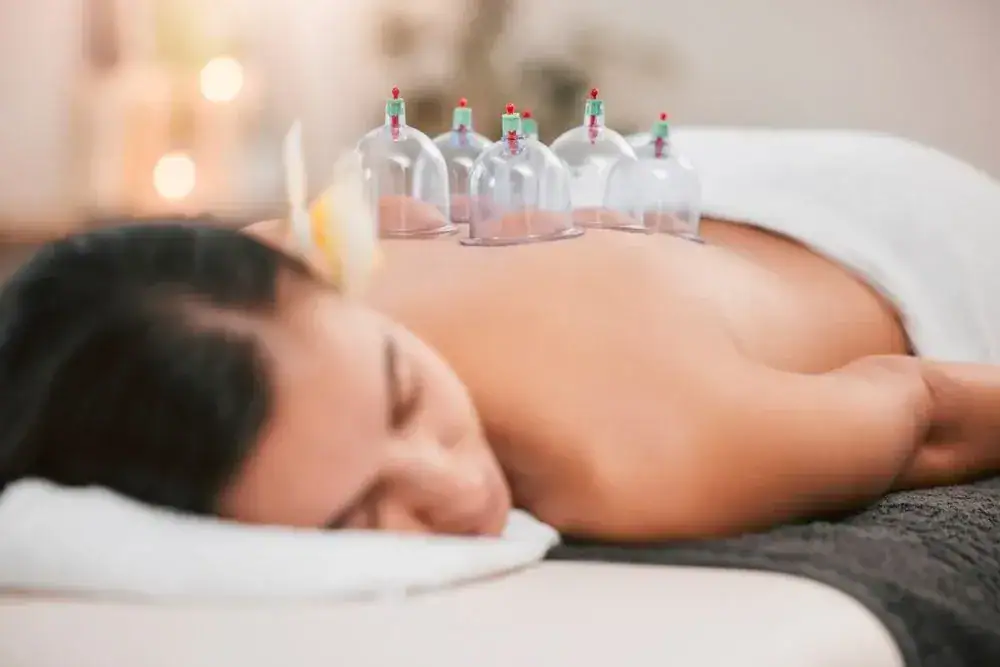

You’ve tried stretching. You’ve tried rest. Maybe you’ve been managing pain with medication you’d rather not take long-term. Cupping therapy works differently because it addresses what’s actually causing the problem: restricted blood flow, fascial adhesions, and muscle tissue that’s been locked up for months or years.
When suction lifts your skin and the tissue beneath it, blood rushes to the area. That increased circulation brings oxygen and nutrients your body needs to heal. At the same time, the mechanical lift separates layers of fascia that have densified and stuck together, which is often what’s limiting your range of motion.
You’re not just masking symptoms. You’re giving your body the conditions it needs to repair itself. That’s why people dealing with chronic back pain, neck tension, sports injuries, and even arthritis see measurable improvements after consistent cupping sessions. Your muscles relax. Your joints move more freely. And you start doing the things you’ve been avoiding because they hurt too much.
We’ve been serving Long Island since 2010, and that includes East Atlantic Beach and the surrounding barrier island communities. Our licensed physical therapists are trained in modern cupping techniques and integrate them into comprehensive treatment plans based on your specific condition.
We’re not a spa offering cupping as a trendy add-on. We’re a physical therapy practice that uses cupping because it works, especially when traditional manual therapy isn’t getting you where you need to be. We accept Medicare and most commercial insurance, and we’ll come to your home if getting to a clinic is difficult.
You’re treated like someone we know, not a number on a schedule. That means personalized care, transparent communication, and a treatment plan that adjusts as you progress.
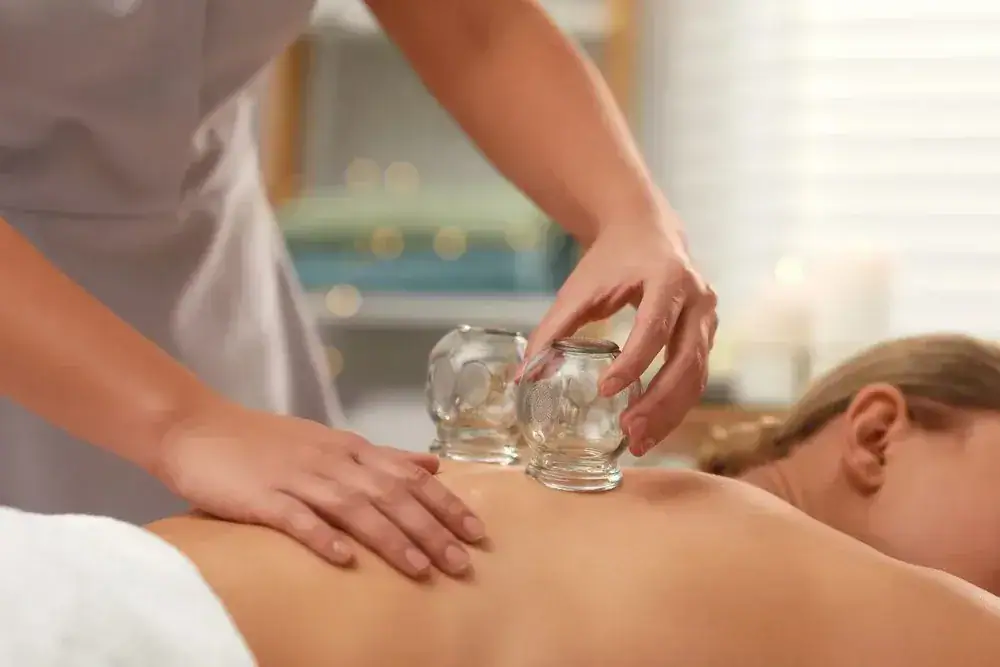
Your therapist starts with an assessment. They need to understand where you’re hurting, what movements are limited, and what’s been tried before. This isn’t a cookie-cutter process.
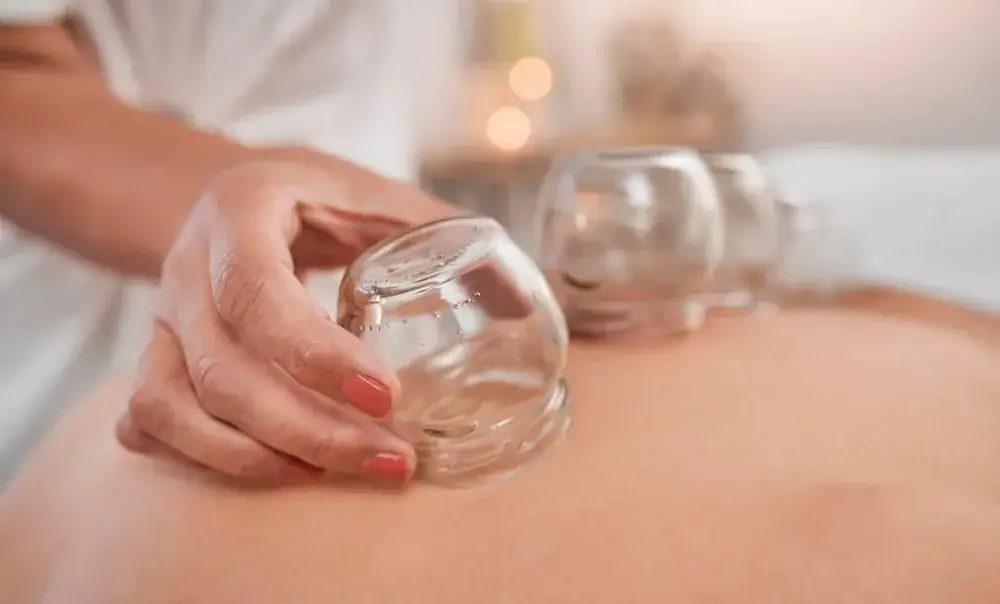
Once they know what they’re dealing with, they’ll place cups on specific areas of your body. These are typically silicone or glass cups that create suction either through a pump or heat. The suction pulls your skin up slightly, which draws blood to the surface and lifts the fascia away from the muscle beneath it.
You’ll feel pressure, but it shouldn’t hurt. Most people say it’s more of a tight pulling sensation. The cups stay in place for several minutes, sometimes longer depending on what your body needs. Some therapists use “sliding cupping,” where they move the cups across your skin after applying oil.
After the cups come off, you’ll notice circular marks. They’re not bruises in the traditional sense—they’re a result of blood being drawn to the surface. They fade within a few days to a week. What you’ll also notice, often immediately, is that the area feels looser. You might have better range of motion right away, though the full effect builds over multiple sessions as your body continues healing between treatments.
Ready to get started?
Cupping isn’t a standalone miracle. It’s part of a broader physical therapy approach that includes manual therapy, therapeutic exercises, and education about how to move without re-injuring yourself. Your therapist will combine cupping with other techniques based on what your body responds to.
In East Atlantic Beach and across Nassau County, we’re seeing more people turn to cupping because they’re tired of relying on pain medication or they’ve hit a wall with traditional therapy alone. If you’re an athlete recovering from a sports injury, cupping can speed up that process. If you’re dealing with chronic neck and shoulder pain from desk work or a long commute into the city, cupping helps release the tension that builds up day after day.
You’ll get a treatment plan that’s specific to your condition. That might mean weekly sessions at first, then tapering off as you improve. You’ll also get guidance on what to do between sessions—stretches, movements, and habits that support the work we’re doing in therapy. And because we accept insurance, you’re not paying out of pocket for every visit unless your plan requires it.
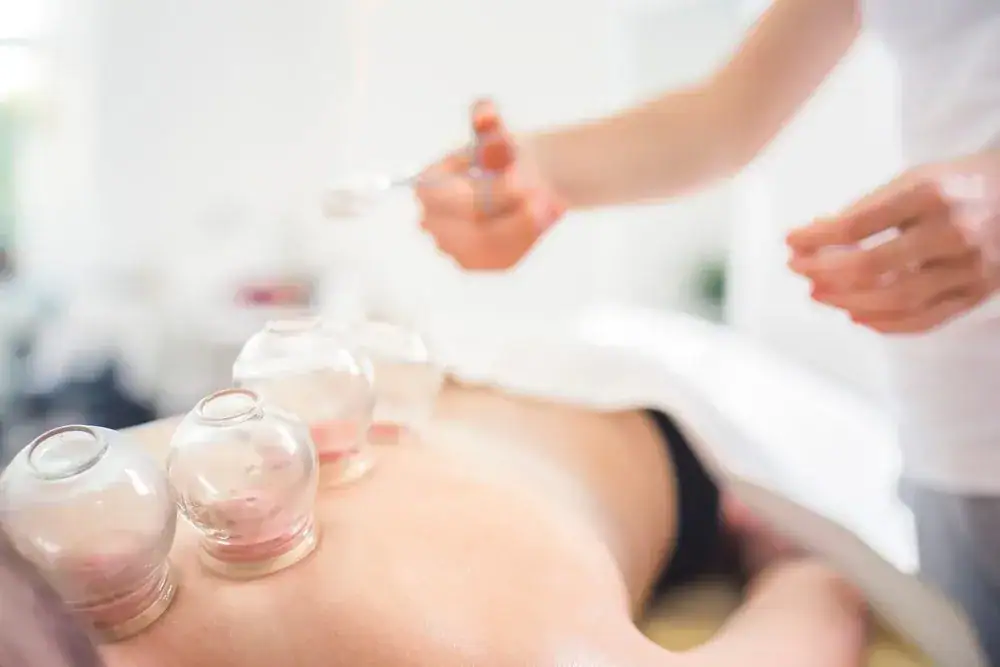
Yes, and there’s research backing it up. Cupping therapy has been shown to reduce chronic back pain by improving blood flow, decreasing muscle tightness, and releasing fascial restrictions that limit movement. When your muscles are chronically tight, they’re not getting enough oxygen and nutrients, which makes the pain worse over time.
Cupping addresses that by increasing circulation to the affected area. It also triggers your body’s natural pain-relief mechanisms—specifically, the release of endorphins. You’re not just covering up the pain; you’re helping your body heal the underlying issue.
That said, cupping works best when it’s part of a complete treatment plan. If your back pain is caused by poor posture, weak core muscles, or repetitive strain, cupping will help, but you’ll also need exercises and movement education to keep the pain from coming back.
Cupping is considered a low-risk therapy when it’s performed by a trained professional like a licensed physical therapist. The most common side effect is the circular marks left behind, which look dramatic but aren’t painful and fade within a few days to a week.
Some people feel mild soreness in the treated area afterward, similar to what you’d feel after a deep tissue massage. That’s normal and usually goes away within 24 hours. Drinking water and moving gently after your session can help.
Cupping isn’t recommended if you have certain skin conditions, are on blood thinners, or are pregnant. Your therapist will go over your medical history before starting treatment to make sure it’s appropriate for you. Serious side effects are rare and usually only happen when cupping is done incorrectly or by someone without proper training.
It depends on what you’re dealing with. If you have acute muscle tension from a recent injury or a particularly stressful week, you might feel significantly better after one or two sessions. If you’re managing chronic pain that’s been building for months or years, you’ll likely need a series of treatments—often six to eight sessions—to see lasting improvement.
Your therapist will give you a clearer timeline after your initial assessment. They’ll look at your range of motion, pain levels, and how your body responds to the first session. Some people notice immediate relief, while others experience gradual improvement over several weeks.
The goal isn’t to keep you coming in forever. It’s to get you to a point where your pain is manageable, your movement is restored, and you have the tools to maintain that progress on your own.
Absolutely. Athletes have been using cupping therapy for years to speed up recovery and improve performance. When you push your body hard, your muscles develop micro-tears and tightness that can limit your range of motion and increase your risk of injury.
Cupping helps by increasing blood flow to those areas, which brings in the nutrients and oxygen your muscles need to repair themselves. It also reduces inflammation and helps break up scar tissue that can form after an injury. Research shows that cupping significantly improved range of motion and reduced pain in professional athletes.
If you’re dealing with a pulled muscle, tendonitis, or joint pain from overuse, cupping can be a game-changer. It’s especially effective when combined with physical therapy exercises that strengthen the affected area and prevent re-injury. You’re not just recovering faster—you’re building resilience so the same injury doesn’t keep happening.
Dry cupping is the most common type we use in physical therapy. It involves placing cups on your skin and creating suction without any other intervention. The suction pulls your skin and underlying tissue upward, which increases blood flow and releases muscle tension.
Wet cupping, by contrast, involves making small incisions in the skin before applying the cups, which draws out a small amount of blood. This method is more common in traditional Chinese medicine but isn’t typically used in a physical therapy setting. Fire cupping uses heat to create suction, while modern dry cupping often uses a pump.
For most people dealing with pain, muscle tension, or mobility issues, dry cupping is what you’ll receive. It’s effective, low-risk, and doesn’t require any recovery time beyond waiting for the marks to fade. Your therapist might also use massage cupping, where they apply oil to your skin and slide the cups around, which combines the benefits of cupping with manual therapy.
If cupping is performed by a licensed physical therapist as part of a physical therapy treatment plan, it’s often covered by insurance. We accept Medicare and nearly all commercial insurance plans, which means cupping therapy may be covered under your physical therapy benefits.
Coverage depends on your specific plan, your deductible, and whether cupping is deemed medically necessary for your condition. We recommend calling your insurance provider to confirm your benefits before your first session, or our team can help verify coverage for you.
If you’re paying out of pocket, cupping is typically billed as part of a physical therapy session rather than as a separate service. That makes it more affordable than going to a spa or wellness center where cupping might cost significantly more and isn’t covered by insurance at all.
Other Services we provide in East Atlantic Beach