
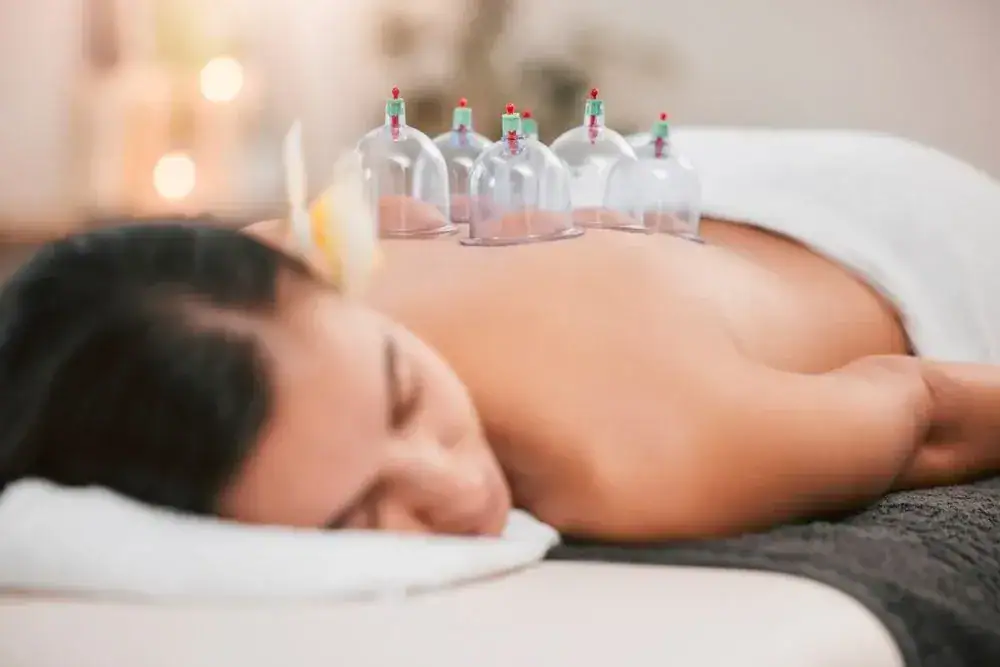

You’re dealing with back pain that won’t quit, neck stiffness that limits your day, or shoulder tension that’s affecting your sleep. You’ve tried heat, ice, stretching, maybe even medications that didn’t work or made you feel worse.
Cupping therapy works differently. It uses controlled suction to pull blood flow into tight, painful areas—breaking up adhesions, releasing trigger points, and giving your muscles the kind of deep relief that surface treatments can’t reach.
Most people notice reduced pain and better range of motion within the first few sessions. Some feel immediate relief right on the table. The circular marks fade in a few days, but the muscle relaxation and pain reduction last much longer. That’s what happens when you address the root cause instead of masking symptoms.
You move easier. Sleep better. Get back to the activities you’ve been avoiding.
We’ve been treating patients across Long Island for years, with locations in Dix Hills, Smithtown, and Speonk. Every therapist on our team is state-licensed, and cupping isn’t something we just added to the menu—it’s integrated into personalized physical therapy treatment plans.
We don’t hand you off to an assistant or rush you through a protocol. You work with the same licensed therapist who evaluates your condition, designs your treatment, and adjusts your plan based on how your body responds.
Our Dix Hills location serves patients throughout Huntington, Melville, Commack, and the surrounding Suffolk County communities. If you’re tired of cookie-cutter care or practices that overbook and underdeliver, we’re the alternative.
Your therapist starts with an evaluation. We’re looking at your pain patterns, range of motion, and what’s not moving the way it should. Cupping isn’t a standalone treatment here—it’s part of a broader physical therapy plan.
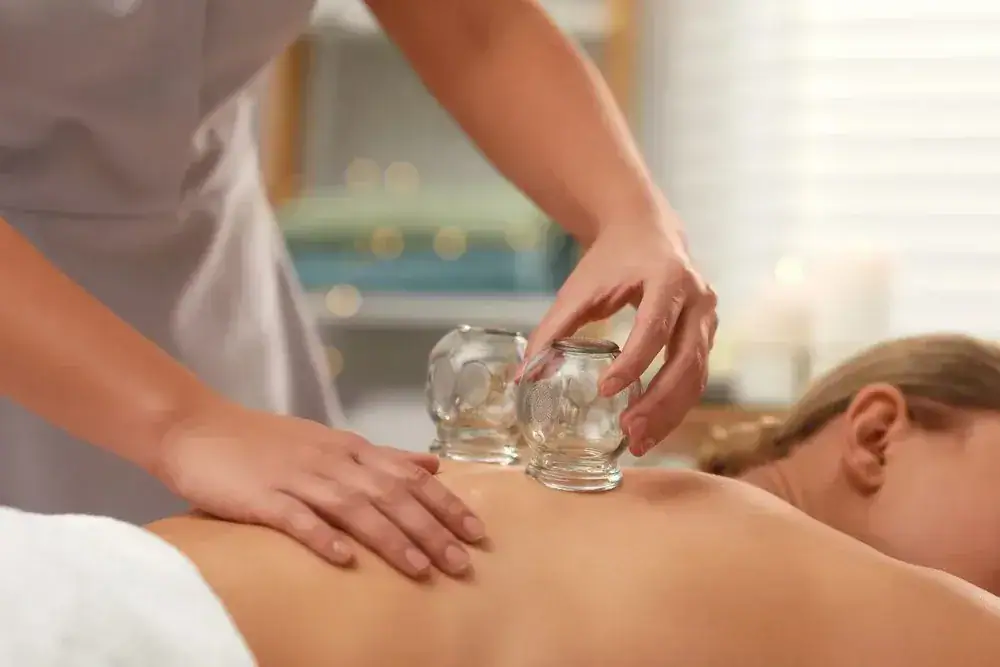
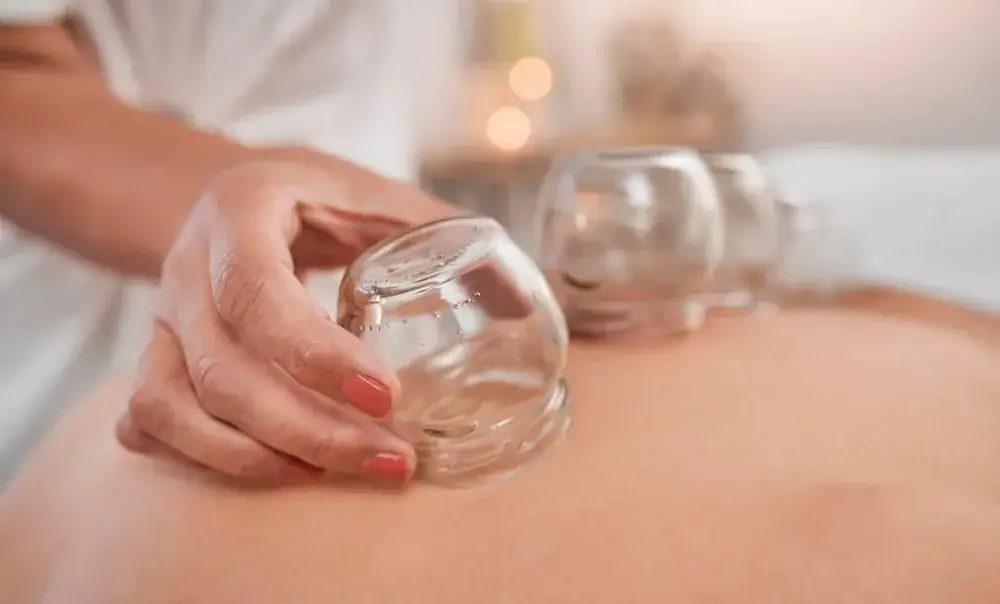
During the session, smooth cups are placed on your skin over the problem areas. Suction is created either manually or with a vacuum pump, pulling tissue upward into the cup. This is dry cupping—no incisions, no blood, just controlled decompression that increases circulation and releases tight fascia.
You’ll feel pulling and pressure, but it shouldn’t hurt. The cups stay in place for several minutes, or your therapist may glide them across your muscles to release larger areas. Afterward, you’ll see circular marks where the cups were. Those aren’t bruises—they’re the result of increased blood flow to areas that weren’t getting enough.
Most patients do a series of sessions, combined with stretching, strengthening, or manual therapy depending on what your body needs. You’re not locked into anything. We adjust based on your progress.
Ready to get started?
Every cupping session at Medcare is delivered by a licensed physical therapist, not a massage therapist or wellness coach. That means you’re getting clinical-grade treatment designed to address musculoskeletal dysfunction, not just relaxation.
We use cupping to treat chronic lower back pain, neck and shoulder tension, IT band tightness, knee pain, and post-injury recovery. It’s especially effective for patients dealing with stubborn soft tissue restrictions that haven’t responded to stretching or manual therapy alone.
In Dix Hills and across Long Island, we’re seeing more patients choose cupping as an alternative to injections or as a way to reduce their reliance on pain medications. The research backs it up—studies show significant pain reduction, improved mobility, and better outcomes when cupping is integrated into a structured physical therapy program.
You’ll also get education on what’s causing your pain and how to prevent it from coming back. That’s the difference between a quick fix and a real solution.
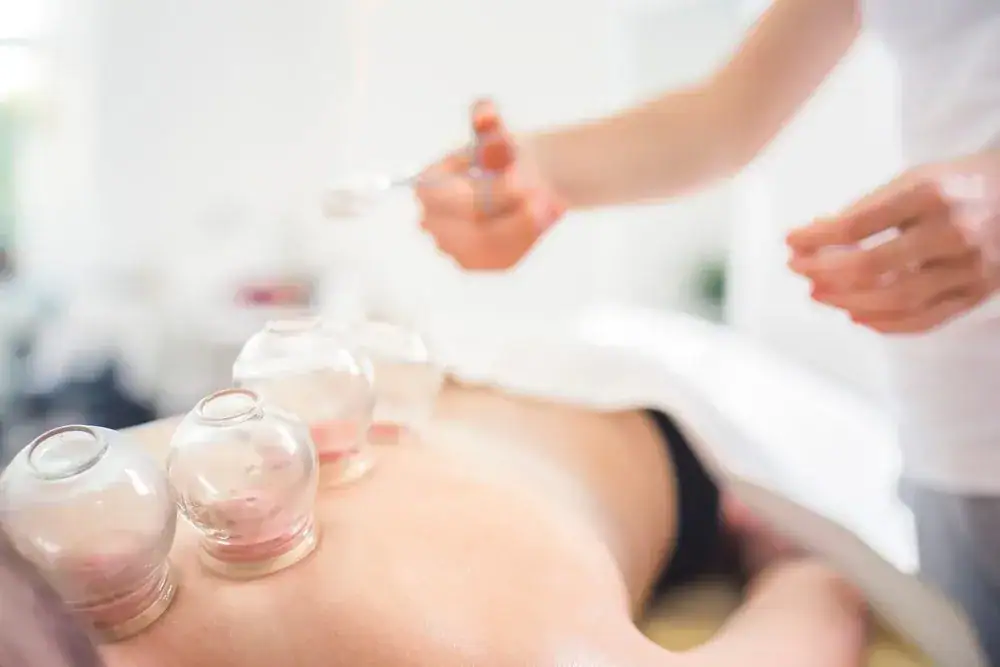
Yes, and the research supports it. Cupping increases blood flow to areas with restricted circulation, which helps reduce inflammation and speed up tissue repair. For chronic lower back pain, it works by decompressing tight muscles and fascia that are pulling on your spine or limiting your movement.
Most people feel some relief after the first session, but real, lasting improvement comes from a series of treatments combined with corrective exercises. If your back pain is caused by muscle tightness, trigger points, or poor movement patterns, cupping can make a significant difference.
It won’t fix structural issues like herniated discs or arthritis, but it can reduce the muscle guarding and compensation patterns that make those conditions more painful. That’s why we use it as part of a complete physical therapy plan, not as a standalone treatment.
Cupping leaves circular marks that look like bruises, but they’re not the same thing. Bruises happen from impact or trauma. Cupping marks are the result of increased blood flow and the release of stagnant fluids in the tissue. They don’t hurt like bruises do.
The marks usually fade within three to seven days, depending on how much tension was in the area and how your body responds. Some people barely mark at all. Others get darker circles, especially in areas with chronic tightness or poor circulation.
If you’re concerned about visible marks for an event or work situation, let your therapist know. We can adjust the intensity or focus on areas that are easier to cover. But for most people, the pain relief is worth a few days of temporary discoloration.
Absolutely. In fact, that’s how we use it most effectively. Cupping works well alongside manual therapy, dry needling, therapeutic exercise, and joint mobilization. It’s not an either-or situation.
For example, if you’re recovering from a shoulder injury, we might use cupping to release tight muscles in your upper back and neck, then follow it with strengthening exercises to stabilize the joint. Or if you have knee pain from IT band tightness, cupping can release the fascia while we work on hip strength and movement patterns.
The goal is always to address the root cause, not just treat symptoms. Cupping is one tool in a larger treatment plan designed specifically for your condition and your goals.
It depends on what you’re treating and how long you’ve been dealing with it. Acute injuries or recent flare-ups often respond quickly—sometimes in two to four sessions. Chronic pain that’s been building for months or years usually takes longer.
Most patients start with one to two sessions per week for a few weeks, then taper off as symptoms improve. Some people feel significant relief after the first session. Others need a few treatments before they notice a real shift in their pain or mobility.
We don’t lock you into a preset number of visits. Your therapist will reassess your progress regularly and adjust your plan based on how your body responds. If cupping isn’t giving you the results we expect, we’ll try a different approach.
In most cases, yes. When cupping is performed by a licensed physical therapist as part of your treatment plan, it’s typically billed under your physical therapy benefits. That means your insurance coverage applies the same way it would for manual therapy or therapeutic exercise.
We recommend calling your insurance provider to confirm your physical therapy benefits, including copays, deductibles, and visit limits. Our team can also verify your coverage before your first appointment so there are no surprises.
If you’re paying out of pocket or have a high deductible, we’ll walk you through the costs upfront. Transparency matters, especially when you’re already dealing with pain and trying to figure out the best way to treat it.
Dry cupping is what we use at Medcare. It involves placing cups on your skin and creating suction to lift the tissue, increase blood flow, and release muscle tension. No cuts, no blood, no needles. It’s non-invasive and safe when performed by a trained professional.
Wet cupping, also called hijama, involves making small incisions in the skin before applying the cups to draw out a small amount of blood. It’s used in some traditional medicine practices, but it’s not part of physical therapy treatment and carries a higher risk of infection or scarring.
Fire cupping uses a flame to create suction inside the cup before placing it on the skin. We use modern suction pumps instead, which give us more control over the pressure and make the treatment more comfortable and consistent. The therapeutic effect is the same—just safer and more precise.
Other Services we provide in Dix Hills