
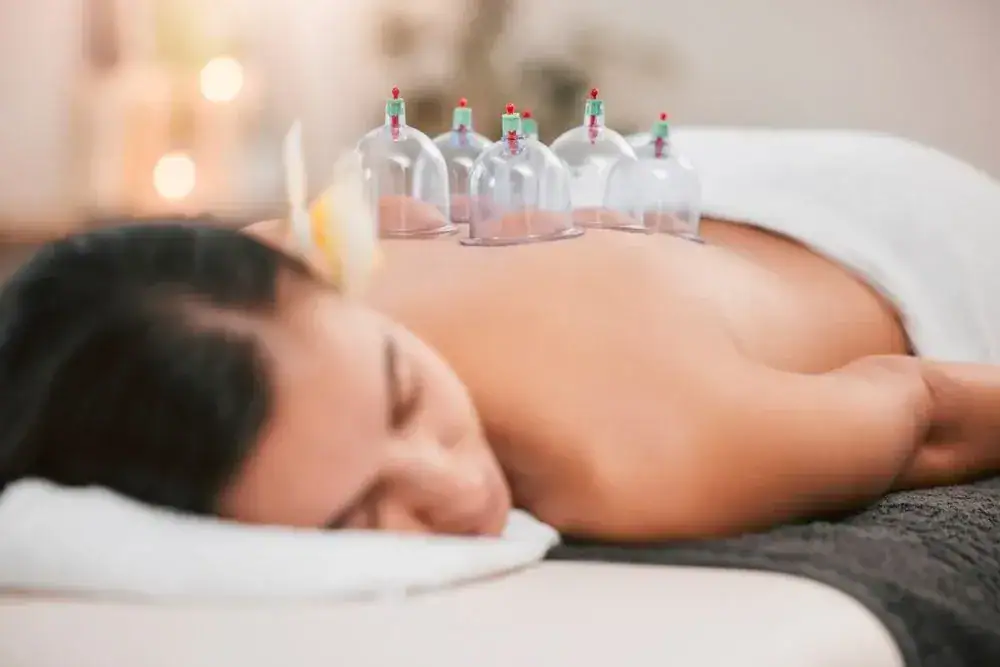

You bend down to pick something up without wincing. You turn your neck to check your blind spot without that sharp catch. You sleep through the night because your lower back isn’t screaming at you every time you shift position.
That’s what cupping therapy can do when it’s done right. It improves blood circulation to areas that have been tight and starved of oxygen. It reduces muscle stiffness so you can move through your day without constantly adjusting how you sit, stand, or reach.
Most people notice a difference after one session. The tightness loosens. The pain dulls. Range of motion improves enough that you remember what normal used to feel like. Cupping isn’t a miracle cure, but for chronic pain, neck tension, lower back issues, and muscle recovery, it’s one of the most effective non-invasive options available.
We’ve been serving Long Island since 2010. We’re located throughout Suffolk County and parts of Nassau County, including right here in Deer Park, NY. Our licensed physical therapists use cupping as part of a broader treatment plan—not as a standalone gimmick.
We don’t rush you through appointments or split our attention between three patients at once. You get real one-on-one time with a therapist who knows your name, your history, and what’s actually bothering you. That’s how we’ve built our reputation across Long Island—by treating people the way we’d want our own family treated.
Cupping therapy works best when it’s integrated with other physical therapy techniques. We combine it with manual therapy, stretching, and strengthening exercises to give you lasting results, not just temporary relief.
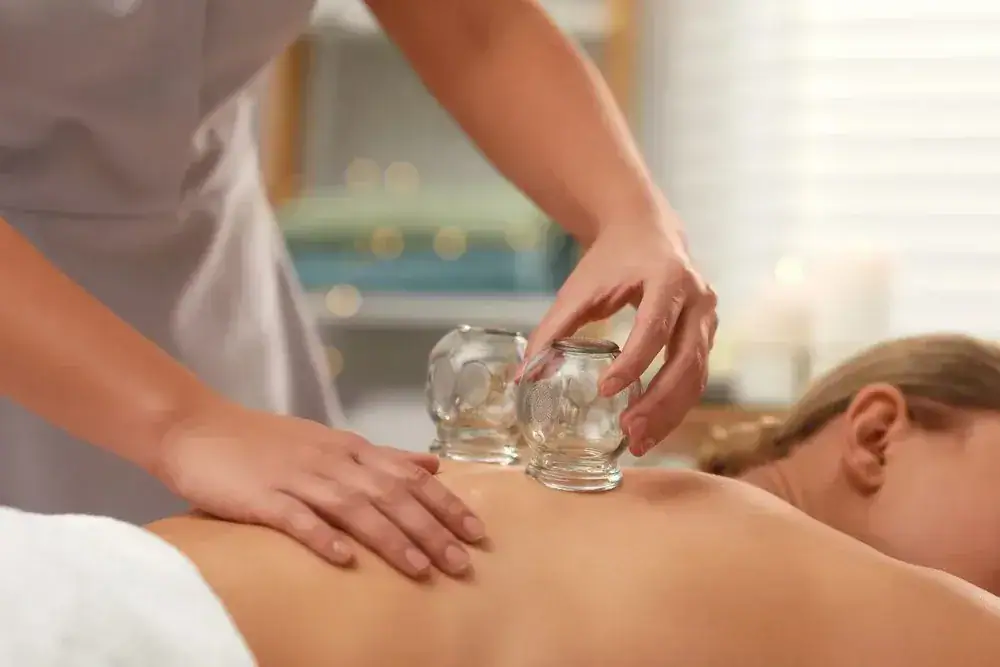
Your therapist starts with an assessment. Where does it hurt? When did it start? What makes it worse? This isn’t a formality—it determines where the cups go and how much suction to use.
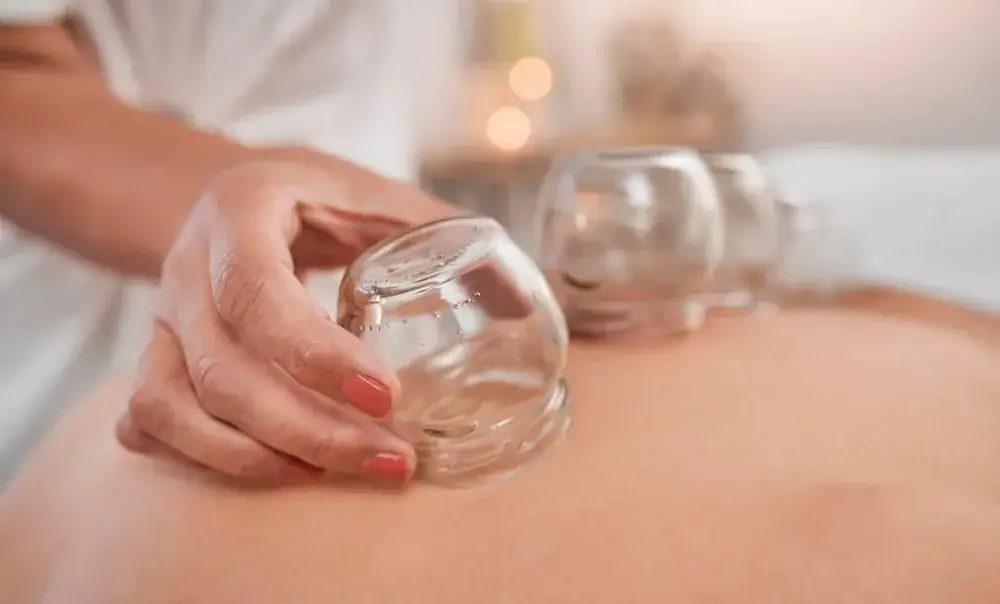
Then comes the cupping itself. We place smooth cups on your skin and create suction, either with a pump or heat. The suction pulls your skin up slightly, which increases blood flow to the area and helps release tight fascia and muscle tissue. Most people say it feels like a deep tissue massage, but without the pressure. Some find it relaxing. Others feel immediate relief.
We typically leave the cups on for 5 to 15 minutes, depending on your condition. Dry cupping doesn’t break the skin—there’s no bleeding involved. You might see circular marks afterward, but they’re not bruises. They’re a sign of increased blood flow, and they fade within a few days.
After the session, your therapist will walk you through any exercises or stretches that’ll help maintain the progress. Cupping works fast, but it works best when paired with movement and strengthening.
Ready to get started?
Cupping therapy is effective for chronic lower back pain, neck pain, shoulder tension, and knee pain. It’s also used for headaches, muscle recovery after sports injuries, and improving range of motion in stiff joints. Research backs this up—moderate-quality evidence shows cupping reduces pain levels and improves blood flow with minimal side effects.
In Deer Park and across Long Island, we see a lot of people dealing with work-related tension. Desk jobs, long commutes, repetitive movements—they all contribute to muscle tightness that builds up over time. Cupping helps break that cycle by targeting the specific areas where tension lives.
We also use cupping for patients recovering from injuries. Athletes use it to speed up muscle recovery. Physical laborers use it to manage chronic strain. Older adults use it to maintain mobility and reduce stiffness. It’s versatile, and when combined with physical therapy, it delivers results that last beyond the treatment table.
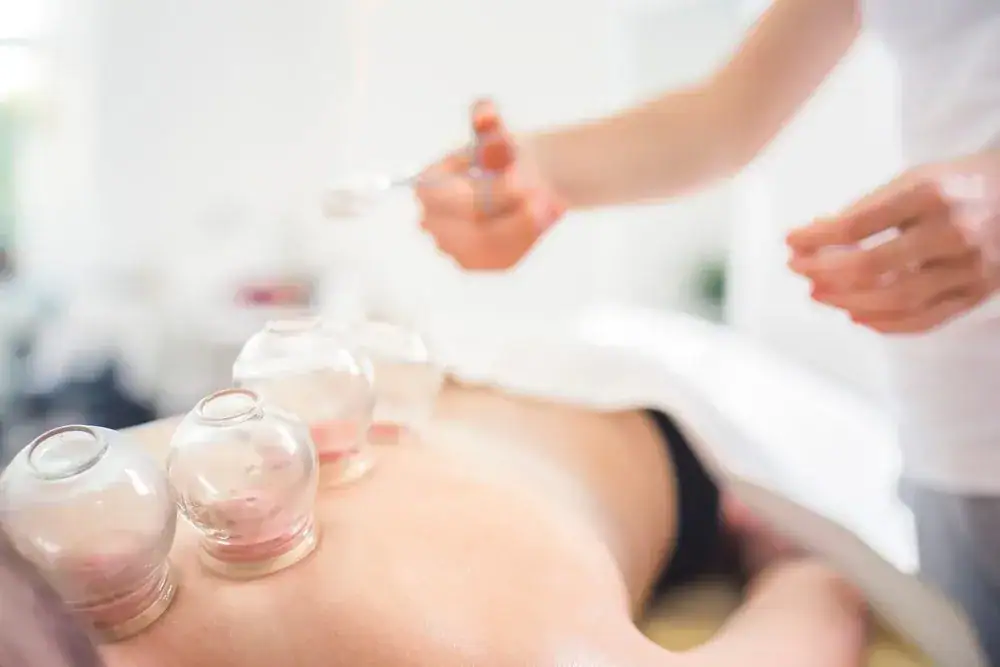
Yes, and there’s research to support it. Studies show that dry cupping can reduce pain levels in people dealing with chronic lower back pain, neck pain, and knee osteoarthritis. It works by improving blood flow to tight or injured areas, which helps reduce inflammation and muscle stiffness.
One session can provide immediate relief, but most people see the best results after a few treatments. Cupping isn’t a cure-all, but it’s a proven tool for managing pain without medication or surgery. When used alongside physical therapy exercises, it helps you maintain progress and avoid setbacks.
The key is working with a licensed physical therapist who knows how to use cupping correctly. Placement matters. Suction strength matters. And it should always be part of a broader treatment plan, not a one-off service.
Dry cupping uses suction alone. Wet cupping involves making small cuts in the skin before applying the cups, which draws out a small amount of blood. At Medcare, we use dry cupping. It’s non-invasive, has fewer risks, and delivers the same pain relief and muscle relaxation benefits.
Dry cupping is what most physical therapists, chiropractors, and massage therapists use in clinical settings. It’s safe, effective, and doesn’t require any recovery time. You can go right back to your day after a session.
The suction from dry cupping increases blood circulation, loosens tight fascia, and helps release trigger points in your muscles. That’s what gives you the relief. No cuts, no blood, no unnecessary complications.
You’ll likely see circular marks where the cups were placed, but they’re not bruises in the traditional sense. They’re caused by increased blood flow to the area, which is actually the point of the treatment. The marks are usually painless and fade within three to seven days.
Some people’s skin marks more easily than others. If you have an event coming up and you’re concerned about visible marks, let your therapist know. They can adjust the suction or place cups in areas that won’t be visible.
The marks are a sign the therapy is working. They show that blood is moving into areas that were previously tight and restricted. Most patients don’t mind them once they understand what they mean.
It depends on what you’re treating. Acute muscle tension might feel better after one or two sessions. Chronic pain usually requires a series of treatments—typically four to six sessions over a few weeks—to see lasting improvement.
Your therapist will give you a clearer timeline after your initial assessment. They’ll also track your progress and adjust the plan as needed. Some people come in weekly. Others space sessions out every two weeks once they start feeling better.
Cupping works faster when combined with stretching, strengthening exercises, and other physical therapy techniques. That’s why we don’t just cup you and send you home. We build a full plan around your specific condition so the results stick.
In most cases, yes—if it’s performed by a licensed physical therapist as part of a physical therapy treatment plan. Insurance companies typically cover cupping when it’s billed under physical therapy services, not as a standalone alternative therapy.
We recommend calling your insurance provider to confirm your coverage before your first visit. Our team can also help verify your benefits and explain what your plan covers. Most patients in Deer Park, NY with standard health insurance plans have at least partial coverage for physical therapy services.
If you’re paying out of pocket, cupping therapy sessions in the New York area typically range from $50 to $150 per session. At Medcare, we include cupping as part of your overall physical therapy treatment, so you’re not paying extra for it as an add-on service.
Absolutely. Cupping works best when it’s part of a comprehensive treatment plan. We combine it with manual therapy, therapeutic exercises, stretching routines, and other physical therapy modalities depending on what your body needs.
For example, if you’re dealing with lower back pain, we might use cupping to release tight muscles, then follow up with core strengthening exercises to prevent the pain from coming back. If you’re recovering from a sports injury, cupping can speed up muscle recovery while we work on rebuilding strength and mobility.
The goal isn’t just to make you feel better for a day or two. It’s to address the root cause of your pain and give you tools to manage it long-term. That’s why cupping is always integrated into a broader plan at Medcare—not sold as a quick fix.
Other Services we provide in Deer Park