
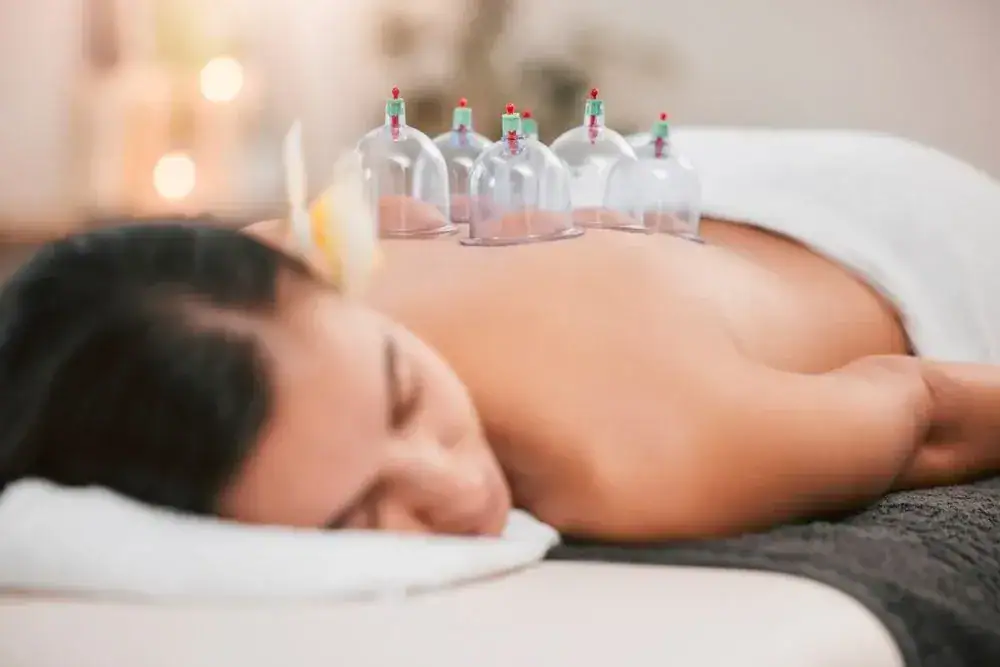

You’re dealing with pain that won’t quit. Maybe it’s your lower back after a long day, your neck from sitting at a desk, or that stubborn shoulder tension that makes reaching overhead feel impossible. You’ve tried stretching, heat, ice, and over-the-counter meds—but nothing sticks.
Cupping therapy works by creating suction on your skin, pulling blood flow to the area and helping tight tissue release. It’s not magic. It’s increased circulation delivering oxygen and nutrients where your body needs them most, plus the mechanical lift that helps fascia and muscle separate and move better.
What you get is less pain when you move, muscles that don’t feel locked up, and better range of motion during daily activities. You’re not just managing symptoms. You’re addressing what’s keeping you stuck—whether that’s chronic tension, post-workout soreness, or lingering stiffness from an old injury.
The treatment itself takes about 15 to 20 minutes. Cups stay on for 5 to 10 minutes while you relax. You might see some circular marks afterward—they’re not bruises, just temporary discoloration from the suction. They fade in a few days and don’t hurt.
We’ve been serving Cutchogue and the surrounding North Fork community for years. We’re not a walk-in spa offering cupping as a standalone add-on. We’re licensed physical therapists who use dry cupping as one tool inside a bigger treatment plan designed around your specific condition.
That matters because cupping works best when it’s paired with the right exercises, manual therapy, and movement education. We know how to assess what’s causing your pain and how to integrate cupping at the right time in your recovery.
We manage multiple locations across Long Island, and every profile, every patient record, and every piece of communication is handled with the same attention to security and accuracy. You’re not getting passed around or dealing with outdated information. You’re working with a team that keeps things organized, accessible, and focused on getting you better.
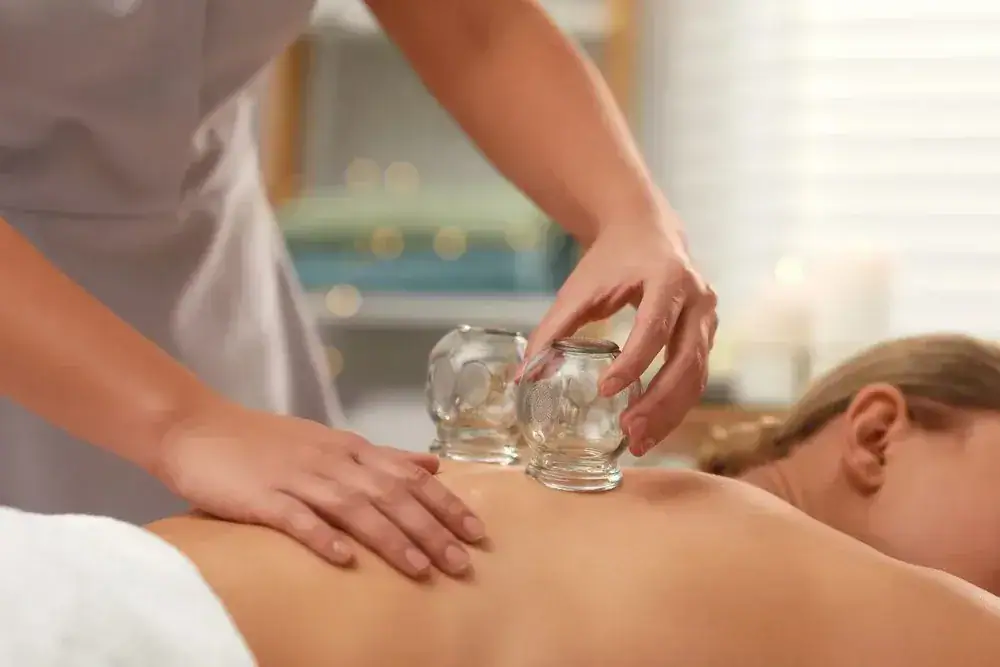
First, your therapist evaluates your pain, your movement, and your goals. Cupping isn’t right for everyone or every condition, so this step matters. If it’s a good fit, we’ll explain what to expect and where we’ll place the cups.
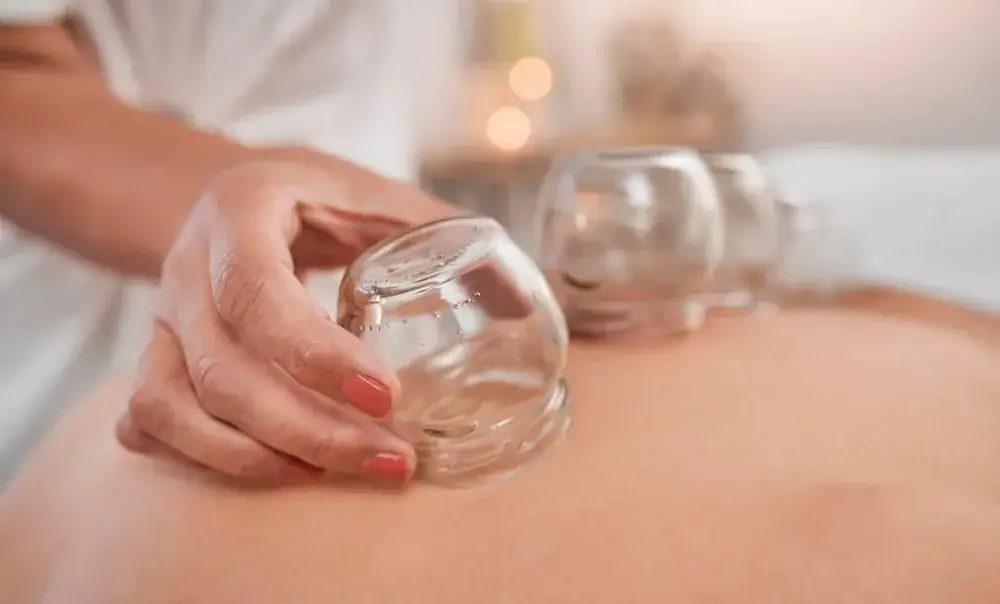
During treatment, small cups are applied to your skin using suction—either through a pump or heat, depending on the method. The suction pulls tissue upward, increasing blood flow and creating space between layers of muscle and fascia. You’ll feel a tight pull, but it shouldn’t hurt. Most people find it relaxing.
Cups stay in place for 5 to 10 minutes. Some therapists use stationary cupping, where cups sit in one spot. Others use sliding cupping, moving the cups across your skin with oil or lotion to release larger areas of tension.
After the cups come off, your therapist may follow up with stretching, strengthening exercises, or manual therapy to reinforce the benefits. You’ll likely see circular marks where the cups were placed. They’re temporary and fade within a few days. Soreness is possible but usually mild.
You might feel relief right away, or it might take a few sessions to notice a difference. That depends on how long you’ve been dealing with pain and how your body responds. Your therapist will track your progress and adjust your plan as needed.
Ready to get started?
Cupping at Medcare isn’t sold as a standalone service. It’s part of your physical therapy plan, which means it’s integrated with other treatments based on what your body needs. You’re not just getting cups slapped on and sent home.
Your session includes an evaluation to determine if cupping is appropriate for your condition, the cupping treatment itself, and any follow-up exercises or manual therapy to support your recovery. We use dry cupping, which is safer and more commonly used in clinical settings compared to wet cupping. There’s no bloodletting, no scarring, and minimal risk.
In Cutchogue, where many residents are over 50 and dealing with age-related stiffness or chronic pain, cupping offers a low-risk option that doesn’t add another prescription to your routine. It’s also popular with the active crowd—runners, golfers, boaters—who need faster recovery between workouts or rounds.
Because we’re a physical therapy clinic, your treatment may be covered by insurance depending on your plan and diagnosis. We’ll verify your benefits and explain your costs upfront. No surprises.
You’ll also get education on what to do between sessions—stretches, movement modifications, and self-care strategies that keep you progressing even when you’re not in the clinic.
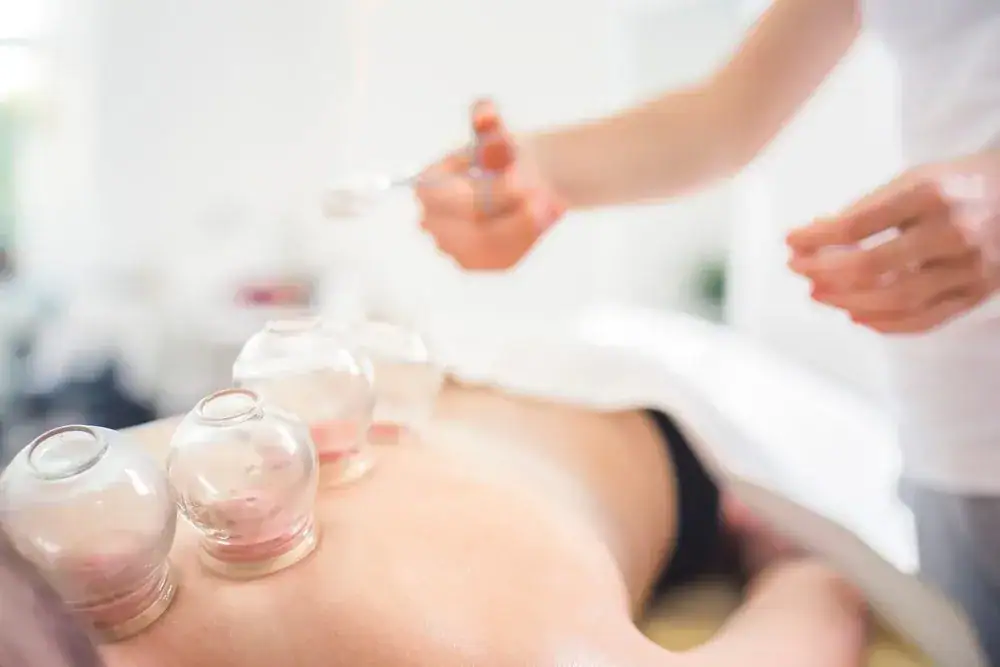
Yes, but it’s not a cure-all. Research shows cupping can reduce pain levels and improve function, especially for conditions like chronic low back pain, neck pain, and muscle tension. The suction increases blood flow, which helps deliver oxygen and nutrients to areas that aren’t healing well on their own.
It also creates a mechanical effect—lifting tissue and fascia, which can release adhesions and improve mobility. That’s why people often feel looser and less stiff after treatment.
The key is consistency and pairing it with other therapies. Cupping alone won’t fix poor posture, weak muscles, or movement patterns that caused the problem in the first place. But when it’s part of a complete physical therapy plan, it can speed up recovery and give you relief that lasts longer than a heating pad or massage.
Cupping is most effective for musculoskeletal pain—things like low back pain, neck stiffness, shoulder tension, and tight muscles from overuse or injury. It’s also used to help athletes recover faster from intense training or competition by reducing soreness and improving circulation.
If you have chronic pain that hasn’t responded well to other treatments, cupping might help break the cycle. It’s also useful for people dealing with limited range of motion due to tight fascia or scar tissue.
That said, it’s not appropriate for everyone. If you have certain skin conditions, blood clotting disorders, or are pregnant, cupping may not be safe. Your therapist will screen for contraindications during your evaluation. The goal is to make sure cupping is the right tool for your specific situation, not just throw it at every problem.
Yes, cupping usually leaves circular marks where the cups were placed. They look like bruises but aren’t the same thing. Bruises happen from trauma that damages blood vessels. Cupping marks come from suction pulling blood to the surface, which is part of how the therapy works.
The marks are typically dark red or purple and fade over 3 to 7 days depending on your skin tone, circulation, and how much suction was used. They don’t hurt, but they’re visible, so plan accordingly if you have an event where you’ll be in a sleeveless shirt or swimsuit.
Some people see lighter marks, others see darker ones. It’s not an indicator of how well the treatment worked—it just reflects how your body responded to the suction. If you’re concerned about marking, let your therapist know. They can adjust the intensity or choose different placement areas.
It depends on what you’re treating and how long you’ve been dealing with it. Acute issues—like muscle soreness from a tough workout or a recent strain—might improve after one or two sessions. Chronic pain that’s been around for months or years usually takes longer, often 4 to 6 sessions or more.
Your therapist will reassess your progress regularly and adjust your plan based on how you’re responding. Some people feel immediate relief after their first session. Others notice gradual improvement over a few weeks.
Cupping works best when it’s part of a broader treatment plan that includes strengthening, stretching, and movement retraining. If you’re only doing cupping and nothing else, you’re missing the bigger picture. The goal is to not just reduce pain temporarily, but to fix the underlying issue so you don’t keep coming back for the same problem.
Sometimes. If cupping is performed by a licensed physical therapist as part of your physical therapy treatment plan, it may be covered under your PT benefits. Coverage depends on your insurance carrier, your specific plan, and your diagnosis.
We verify benefits before you start treatment so you know what to expect. Some plans cover it fully, others require a copay, and some don’t cover it at all. If it’s not covered, we’ll let you know the out-of-pocket cost upfront.
What matters is that cupping at Medcare isn’t billed as a separate luxury service. It’s integrated into your physical therapy session, which means you’re getting a comprehensive treatment approach that’s more likely to be covered than standalone cupping at a spa or wellness center. We handle the insurance paperwork and communicate with your provider so you can focus on getting better.
Absolutely. In fact, that’s how we use it. Cupping is most effective when combined with manual therapy, therapeutic exercise, and movement training. The suction helps release tight tissue and improve circulation, but you still need to strengthen weak areas and correct movement patterns that contributed to your pain.
A typical session might include cupping to loosen up a tight area, followed by hands-on manual therapy to improve joint mobility, then specific exercises to reinforce better movement. That combination addresses the problem from multiple angles and leads to better, longer-lasting results.
Cupping also pairs well with other modalities like dry needling, instrument-assisted soft tissue mobilization, and corrective exercise programs. Your therapist will design a plan that makes sense for your condition and goals. You’re not locked into one approach—you’re getting a customized treatment plan that evolves as you improve.
Other Services we provide in Cutchogue