


You wake up without that stiff neck. You reach for something on a high shelf without wincing. You sit through a work meeting or drive to the North Shore without constantly shifting to find a comfortable position.
That’s what happens when cupping therapy actually works. The suction draws blood to the area that’s been hurting, which means better circulation and faster healing. Tight, knotted muscles start to release. Inflammation goes down. Range of motion improves.
Research backs this up. Studies show that dry cupping significantly reduces pain in people dealing with chronic musculoskeletal conditions—more effectively than conventional treatments in many cases. Athletes use it to recover faster. People with persistent low back pain, neck pain, and joint stiffness see real improvement when cupping is combined with physical therapy.
You’re not masking the problem. You’re addressing what’s causing it. And you’re doing it without adding another prescription to your routine or scheduling a procedure you’d rather avoid.
We’ve been treating patients across Nassau County for years, including right here in Cove Neck. We’re part of a network that includes Physical Therapy Associates of Smithtown and Speonk, which means you’re working with a team that’s seen thousands of cases and knows what works.
We don’t hand out generic treatment plans. Every session is built around what’s going on with your body. Our therapists are trained in cupping therapy as part of a broader physical therapy approach, so you’re not just getting one technique—you’re getting a full strategy designed to help you move better and feel better.
Cove Neck residents deal with the same things everyone on Long Island does: long commutes, active lifestyles, aging joints, old sports injuries that never fully healed. We get it because we treat it every day.
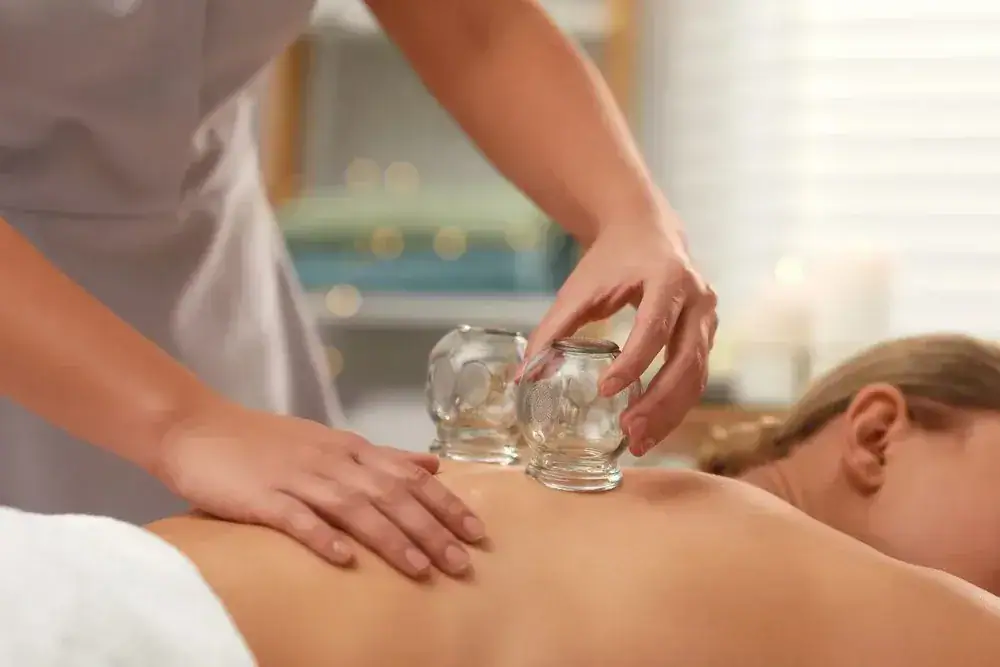
First, your therapist evaluates where you’re feeling pain, how long it’s been going on, and what movements make it worse. This isn’t a one-size-fits-all situation. They need to understand your specific issue before they start treatment.
Then comes the cupping. Small cups are placed on your skin, usually over the muscles that are tight or painful. Suction is created—either manually or with a pump—and the cups stay in place for several minutes. You’ll feel a pulling sensation, but it shouldn’t hurt. Some therapists use “dynamic cupping,” where they move the cups along your muscles while the suction is active.
The suction increases blood flow to the area. That’s not just a theory—it’s been measured with laser Doppler flowmetry in clinical studies. More blood flow means more oxygen and nutrients reaching the tissue, which supports healing and reduces stiffness.
After the cups are removed, you might see circular marks on your skin. They’re not bruises—they’re a result of the suction drawing blood to the surface. They fade in a few days to a week. Most people feel immediate relief in terms of muscle tension. Depending on your condition, you might need a few sessions to see lasting results.

Ready to get started?
Cupping therapy isn’t a standalone miracle. It works best when it’s part of a complete physical therapy plan. That’s how we use it at Medcare.
You’re getting a non-pharmaceutical option for pain management. No injections. No medications with side effects you have to manage. Just a technique that helps your body do what it’s supposed to do: heal itself.
You’re also getting something that prepares your muscles for the rehab exercises that actually rebuild strength and mobility. Cupping loosens things up. It makes the tissue more receptive to movement. That means the stretches, strengthening exercises, and functional training you do afterward are more effective.
For people in Cove Neck dealing with chronic neck pain, lower back pain, or shoulder tightness—common issues given the amount of time people spend sitting, driving, or doing repetitive tasks—cupping offers a way to break the cycle. One study found that a patient with over a year of iliotibial band pain was symptom-free after just two cupping sessions. That’s not typical for everyone, but it shows what’s possible when the right technique is applied to the right problem.
And because we manage multiple locations with a strong focus on secure, verified care, you’re not walking into a pop-up wellness clinic. You’re working with licensed physical therapists who integrate cupping into evidence-based treatment plans.
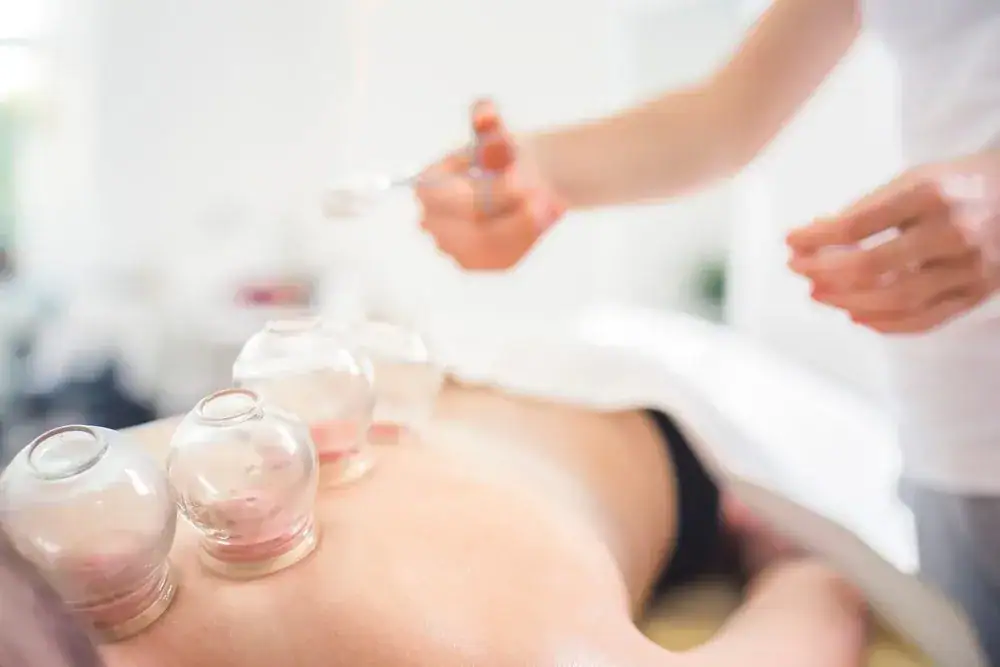
Yes, and there’s clinical evidence to support it. A study published by the National Institutes of Health confirmed that cupping was more effective than sham therapy in improving both pain and functional disability in people with persistent non-specific low back pain.
Here’s why it works: the suction increases blood flow to the affected area, which reduces inflammation and helps tight muscles release. When your lower back has been locked up for months or years, that increase in circulation can make a significant difference. Cupping also reduces the pressure that tight muscles put on surrounding nerves, which is often what’s causing that sharp or radiating pain.
At Medcare, we combine cupping with targeted exercises and manual therapy. That combination addresses both the immediate pain and the underlying weakness or imbalance that’s keeping the problem alive. You’re not just getting temporary relief—you’re working toward lasting improvement.
You’ll feel a pulling or tugging sensation when the suction is applied, but it shouldn’t be painful. Most people describe it as a tight pressure—not comfortable, exactly, but not unbearable either. If it does hurt, that’s a sign the suction is too strong, and your therapist will adjust it.
During the session, some people feel immediate relief as the muscle tension starts to release. Others don’t notice much until afterward, when they realize they can move more freely or the pain has dulled. The circular marks left behind can look dramatic, but they don’t hurt. They’re essentially just increased blood flow under the skin, and they fade within a few days to two weeks depending on your skin and how much suction was used.
Side effects are rare. The most common complaint is just the temporary discoloration. As long as you’re working with a trained physical therapist—like our team at Medcare—you’re in good hands. We adjust the technique based on your tolerance and your specific condition.
It depends on what you’re dealing with. Some people feel significant relief after one or two sessions, especially if the issue is acute muscle tightness or a recent flare-up. Others with chronic pain or long-standing mobility restrictions might need several sessions over a few weeks to see lasting change.
Research shows that cupping is most effective when it’s part of an ongoing physical therapy plan. For example, if you’re coming in for lower back pain, you might get cupping during the first few visits to reduce inflammation and loosen the muscles, then transition into strengthening exercises as your pain decreases. The cupping prepares your body for the rehab work that actually rebuilds function.
At Medcare, we don’t drag out treatment unnecessarily. Your therapist will give you a realistic timeline based on your evaluation. If you’re not seeing progress within a reasonable number of sessions, we adjust the approach. The goal is always to get you better and keep you better—not to keep you coming back indefinitely.
In most cases, yes—if it’s performed as part of a physical therapy treatment plan. Insurance companies typically cover cupping when it’s billed under physical therapy services, which is how we handle it at Medcare. We’re not a spa offering cupping as a standalone wellness treatment. We’re a licensed physical therapy practice using cupping as a clinical tool.
That said, coverage varies depending on your specific plan. Some insurers cover it fully, others apply it toward your deductible, and a few may require prior authorization. We recommend calling your insurance provider before your first visit to confirm your benefits.
Our team can also help with that. We verify insurance coverage as part of our intake process, and we’ll let you know what to expect in terms of out-of-pocket costs. We have a strong track record of working with insurance companies across Nassau County, so we’re familiar with the common plans in this area and how they handle physical therapy services like cupping.
Absolutely. Neck pain is one of the most common reasons people seek out cupping therapy, and research supports its use for that condition. Studies show that cupping can reduce pain and improve function in people dealing with chronic neck pain, especially when combined with other physical therapy techniques.
Here’s what’s usually happening: tight muscles in your neck and upper shoulders are pulling on the structures that support your head. That tension can trigger headaches, limit your range of motion, and cause pain that radiates into your shoulders or up into your skull. Cupping increases blood flow to those tight areas and helps release the muscle knots that are causing the problem.
At Medcare, we also look at why your neck is tight in the first place. Is it your posture? Your workstation setup? An old injury that never fully healed? Cupping addresses the immediate pain, but we also give you exercises and ergonomic advice to prevent it from coming back. That’s the difference between a quick fix and a real solution.
Because you’re not just getting cupping—you’re getting a full physical therapy evaluation and a treatment plan that’s designed around your specific problem. Our therapists are trained in cupping as one tool among many, which means they know when to use it, how to use it, and what to combine it with for the best results.
We’ve been serving Nassau County for years, with locations in Smithtown, Speonk, and access points near Cove Neck. We’re not a franchise or a wellness center that just added cupping to the menu. We’re a physical therapy practice with a reputation for personalized care, secure operations, and real outcomes.
We also take insurance seriously. Our team manages verification, billing, and communication with your provider so you’re not stuck dealing with surprise costs or claim denials. And because we’re part of a larger network, you have access to multiple therapists and specialties if your needs change. You’re working with a team that’s been doing this long enough to know what works—and what doesn’t.
Other Services we provide in Cove Neck