
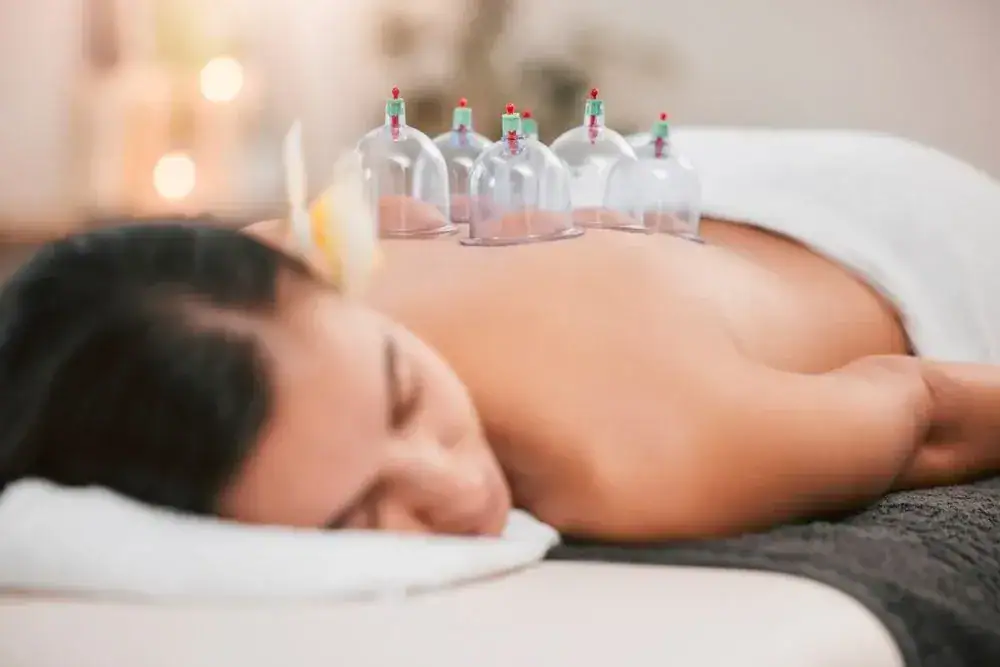

You stop planning your day around what hurts. That’s what happens when cupping therapy addresses the root cause of muscle tension and restricted movement, not just the symptoms.
Dry cupping works by creating suction that lifts tissue, separates fascial layers, and increases blood flow to areas that have been tight or inflamed for months. This isn’t about temporary relief that wears off by dinner. It’s about reducing the densification in your fascia, loosening muscle fibers that have been locked up, and giving your body the circulation it needs to actually heal.
Most people dealing with chronic pain in Copiague know the drill: you’ve tried medications that either don’t work well enough or come with side effects you’d rather avoid. You’ve adjusted your routine, skipped activities, and maybe even wondered if this is just how life is now. Cupping therapy offers a different approach. It stimulates your body’s natural pain-relieving chemicals, reduces inflammation, and improves range of motion without adding another prescription to your routine.
The result? You move better. You sleep better. You stop avoiding the things you used to do because you’re not sure your back or neck can handle it.
We bring professional physical therapy to Copiague with a focus on treatments that actually work. Our therapists are trained in cupping therapy as part of a comprehensive approach to pain management and mobility restoration.
We’re not a spa offering relaxation treatments. We’re licensed physical therapists who use cupping alongside other evidence-based techniques to treat musculoskeletal conditions, chronic pain, and movement limitations. That means every session is built around your specific condition, not a one-size-fits-all protocol.
Copiague residents deal with real challenges: commuter strain from Long Island traffic, physically demanding jobs, and the wear and tear that comes with an active lifestyle. We get it because we treat it every day. Our approach combines clinical expertise with an understanding of what daily life looks like here, so your treatment plan actually fits into your reality.
Your first visit starts with an evaluation. We assess your pain, your movement patterns, and what’s actually limiting you. This isn’t a quick chat—we need to understand what’s going on before we start treatment.
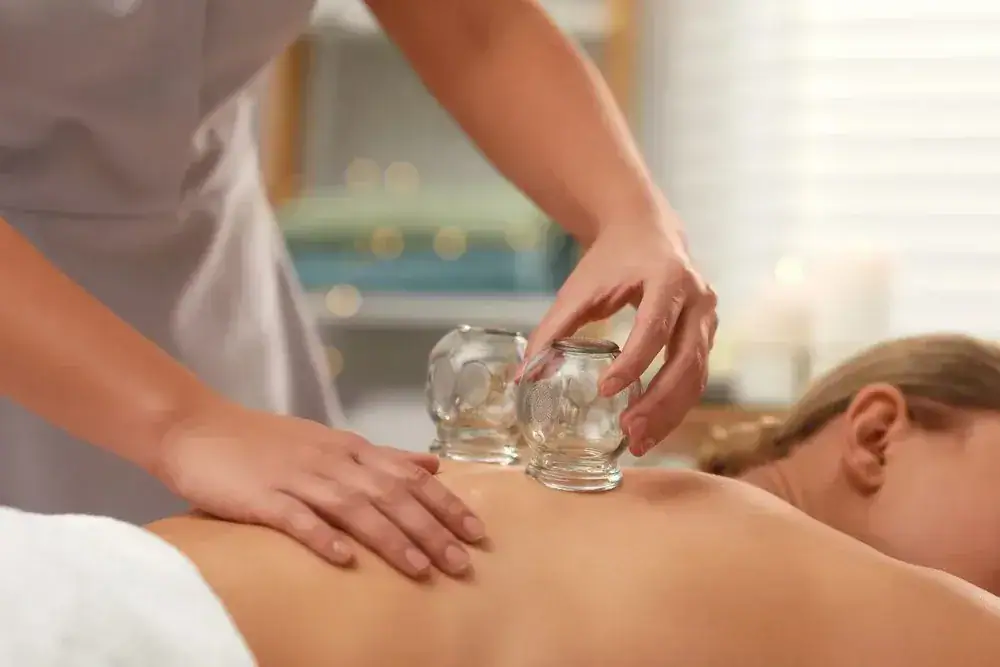
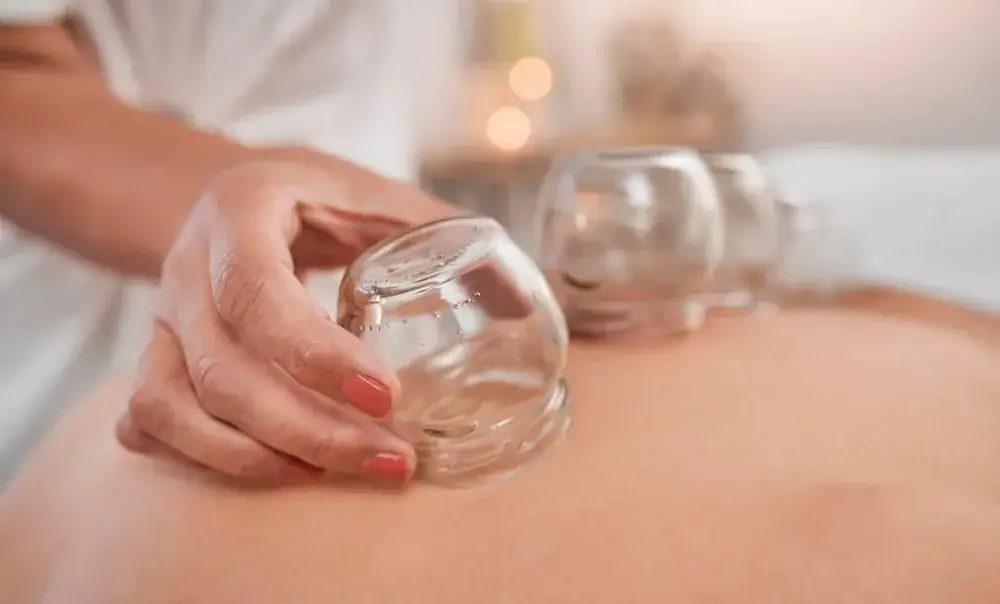
During cupping therapy, we place specialized cups on targeted areas of your body. These cups create suction that lifts the skin and underlying tissue, increasing blood flow and mechanically separating fascial layers that have become stuck or dense. You’ll feel the pull, but it shouldn’t hurt. Most people describe it as a tight pressure that releases tension almost immediately.
Sessions typically last 15 to 30 minutes as part of a broader physical therapy treatment. We often combine cupping with other techniques like manual therapy, targeted exercises, or movement training. The cups may leave temporary circular marks that fade within a few days—that’s normal and indicates increased blood flow to the area.
After your session, many people notice improved range of motion right away. The deeper benefits—reduced pain, better mobility, less stiffness—build over multiple sessions as your body responds to increased circulation and reduced fascial restriction. We’ll track your progress and adjust your treatment plan based on how you’re responding, not some generic timeline.
Ready to get started?
Our cupping therapy addresses chronic pain conditions that impact daily function. We treat lower back pain, neck pain, shoulder tension, and muscle tightness that limits your movement. If you’re dealing with pain that’s lasted months or longer, this is designed for you.
The treatment works on multiple levels. It improves blood circulation to areas that aren’t getting adequate flow, which speeds tissue healing and reduces inflammation. It releases trapped tension in muscles by encouraging fibers to relax. It lifts and separates fascial layers that have become dense or adhered, improving mobility and reducing the viscosity that makes movement feel stiff or restricted.
For Copiague residents dealing with commuter-related strain—hours in the car, repetitive movements at work, or chronic conditions that haven’t responded well to other treatments—cupping offers a non-invasive option. Research shows moderate-quality evidence supporting cupping for chronic pain relief, knee osteoarthritis, low back pain, and neck pain. It’s not a miracle cure, but it’s a legitimate therapeutic tool backed by clinical studies and used by trained physical therapists.
You’re also getting professional oversight. We know anatomy, understand pain mechanisms, and can identify when cupping is appropriate and when it’s not. We don’t just apply cups and hope for the best—we integrate this treatment into a comprehensive plan that addresses your specific condition with the goal of measurable improvement.
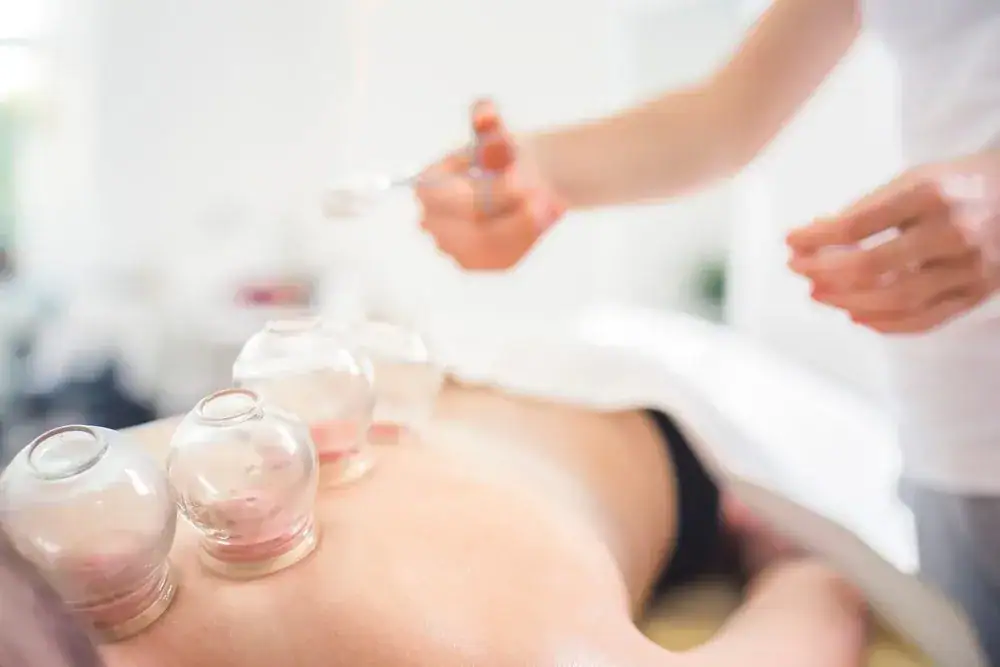
Cupping therapy has moderate-quality research evidence supporting its use for chronic pain conditions, including lower back pain, neck pain, and knee osteoarthritis. That’s not hype—that’s clinical data from multiple meta-analyses covering distinct pain-related conditions.
Here’s what the research shows: cupping increases blood flow to treated areas, stimulates endorphin release (your body’s natural pain relievers), and mechanically separates fascial layers that contribute to stiffness and restricted movement. These aren’t theoretical benefits. They’re measurable physiological responses that explain why people experience pain reduction and improved mobility after treatment.
That said, cupping isn’t magic. It works best as part of a comprehensive physical therapy approach that includes movement training, manual therapy, and patient education. If you’re looking for a single treatment that fixes everything instantly, that doesn’t exist. But if you’re looking for an evidence-based technique that addresses pain mechanisms without medication, cupping has legitimate clinical support and a relatively low risk profile when performed by trained professionals.
Cupping creates a pulling sensation as the suction lifts your skin and underlying tissue. Most people describe it as tight pressure, not pain. You’ll feel the cups working, but it shouldn’t be uncomfortable enough that you’re tensing up or wanting to stop.
During treatment, you might feel an immediate release of tension in the area being treated. Some people find it relaxing once they get used to the sensation. The cups stay in place for several minutes while the suction does its work—increasing blood flow, lifting fascial layers, and encouraging muscle fibers to loosen.
After your session, the treated areas may feel tender, similar to the feeling after a deep tissue massage. You’ll likely see circular marks where the cups were placed. These marks aren’t bruises in the traditional sense—they’re caused by increased blood flow to the surface and typically fade within three to seven days. They don’t hurt, but they’re visible, so plan accordingly if you have events where you’ll be showing that area of your body.
Most people notice some improvement in mobility or pain reduction after the first session, but lasting results typically require multiple treatments. The exact number depends on your condition, how long you’ve had it, and how your body responds to treatment.
For chronic pain that’s been present for months or years, you’re not undoing that in one session. Fascia that’s been dense and restricted doesn’t suddenly become mobile after 20 minutes of cupping. Your body needs time to respond to increased circulation, reduced inflammation, and the mechanical changes cupping creates in your tissue.
A typical treatment plan might include cupping once or twice per week for several weeks, integrated with other physical therapy techniques. We track your progress at each visit—measuring pain levels, range of motion, and functional improvements. If you’re responding well, we continue. If something isn’t working, we adjust. The goal is measurable improvement, not an arbitrary number of sessions. Some conditions respond quickly; others take longer. We’ll be straight with you about what to expect based on what we’re seeing.
Cupping is relatively safe when performed by trained physical therapists who understand anatomy and proper technique. The most common side effect is temporary circular marks on your skin where the cups were placed. These marks are caused by increased blood flow and typically fade within a week.
Some people experience mild tenderness in treated areas for a day or two after their session, similar to post-exercise soreness. This is normal and usually indicates that the treatment is working. Rarely, people may experience dizziness during treatment, which is why we monitor you throughout the session and adjust pressure if needed.
Cupping isn’t appropriate for everyone. We don’t use it on areas with open wounds, severe skin conditions, or over certain medical devices. If you’re on blood thinners or have specific health conditions, we’ll evaluate whether cupping is safe for you during your initial assessment. That’s why working with licensed physical therapists matters—we know when cupping is appropriate and when it’s not. We’re not just applying cups because it’s trendy. We’re making clinical decisions based on your specific situation and medical history.
Yes, and that’s actually how cupping works best. Research supports using cupping as a complementary treatment alongside traditional physical therapy techniques, not as a standalone solution. We integrate cupping into comprehensive treatment plans that may include manual therapy, therapeutic exercise, and movement training.
If you’re currently seeing other healthcare providers or taking medications for pain, cupping can typically be added to your existing routine. We coordinate with your other providers to make sure everything works together. Physical therapy, including cupping, has been shown to reduce the need for opioid medications by 87% in some studies, so adding this to your pain management approach may actually help you reduce reliance on pharmaceuticals over time.
The key is communication. During your evaluation, we’ll review everything you’re currently doing for your condition—medications, other therapies, home exercises—and build a treatment plan that complements your existing care. We’re not asking you to choose between cupping and everything else. We’re adding another evidence-based tool to your pain management strategy, used at the right time and in the right way to support your overall recovery.
Physical therapists are trained healthcare providers who understand musculoskeletal anatomy, pain mechanisms, and how to assess whether cupping is appropriate for your specific condition. We’re not offering cupping because it’s popular—we’re using it as a clinical tool to address fascial restriction, muscle tension, and impaired circulation that contribute to chronic pain.
When you get cupping from a physical therapist, it’s part of a comprehensive evaluation and treatment plan. We assess your movement patterns, identify the root cause of your pain, and use cupping strategically to address specific tissue restrictions. We also know when cupping isn’t the right choice and can offer alternative treatments that might work better for your situation.
Compare that to getting cupping at a spa or wellness center where the focus is relaxation, not rehabilitation. There’s nothing wrong with relaxation, but if you’re dealing with chronic pain that’s impacting your daily function, you need someone who can evaluate your condition, track your progress with measurable outcomes, and adjust your treatment based on clinical reasoning. That’s what we do. We combine cupping with other evidence-based techniques, monitor your response, and work toward specific functional goals—not just temporary relief that fades by tomorrow.
Other Services we provide in Copiague