
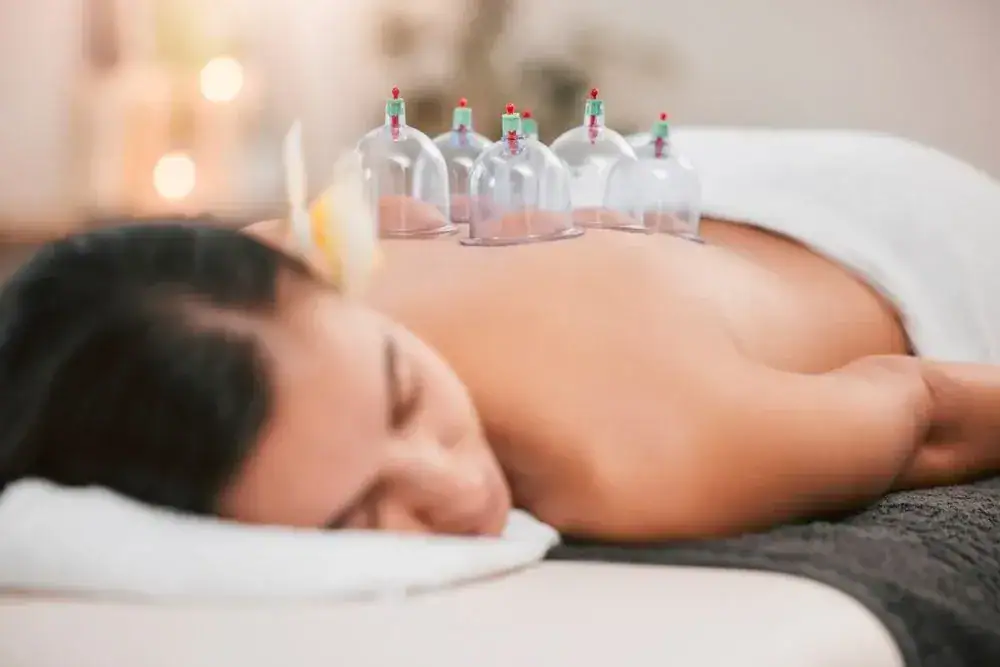

You’ve tried stretching. Maybe medication. Possibly even injections. But that knot in your back or the tightness in your neck keeps coming back, limiting what you can do and how you feel every day.
Cupping therapy works differently. By creating suction on specific areas, it pulls fresh blood into tight, oxygen-starved tissue. That increased circulation helps break up adhesions, flush out metabolic waste, and give your muscles room to relax and heal.
Most people notice looser movement right after their first session. The stiffness that made turning your head or bending over difficult starts to ease. Over multiple treatments combined with physical therapy exercises, that relief builds into something more lasting.
Research backs this up. Studies show cupping significantly reduces pain at two to eight weeks compared to usual care or medication alone. It’s not magic, it’s physiology. And when your therapist knows how to integrate it with strengthening and mobility work, the results tend to stick.
Medcare Therapy Services has been treating patients across Long Island since 2010. Our Cedarhurst location serves the Five Towns area with licensed physical therapists trained in cupping therapy, manual techniques, and therapeutic exercise.
Cupping isn’t offered everywhere because not every therapist learns it in school or takes the time to get certified. Our therapists did. We use it as part of a bigger treatment plan, not as a standalone gimmick.
You’re not walking into a spa. You’re working with healthcare professionals who understand musculoskeletal conditions, insurance billing, and how to document progress. That matters when you want treatment that’s both effective and covered by your plan.
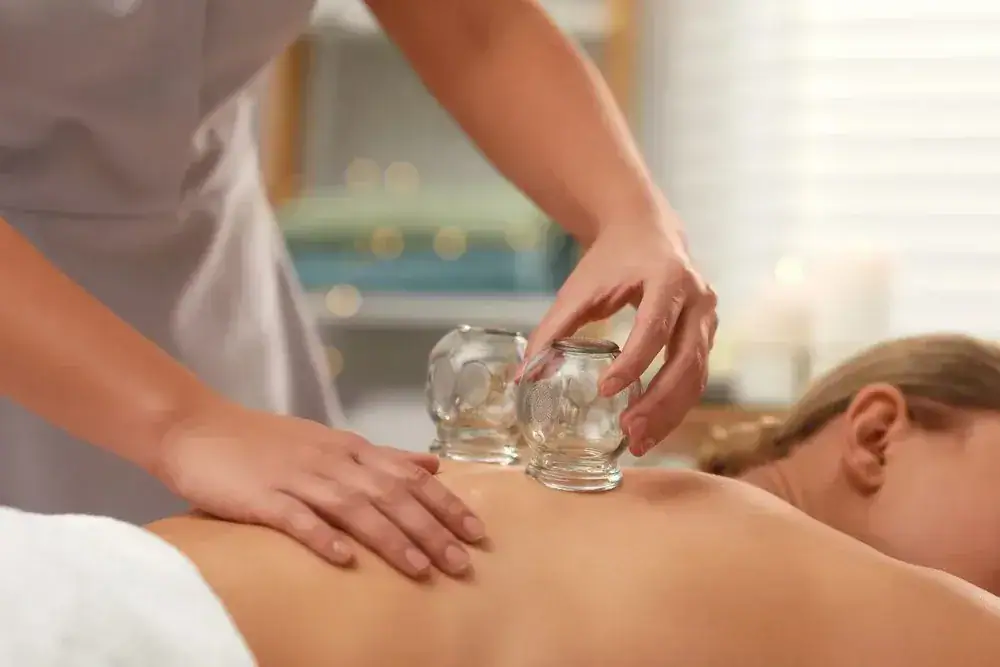
Your therapist starts with an evaluation. They’ll ask where it hurts, what makes it worse, and what you’ve already tried. Then they assess your range of motion, muscle tightness, and movement patterns to figure out where cupping will help most.
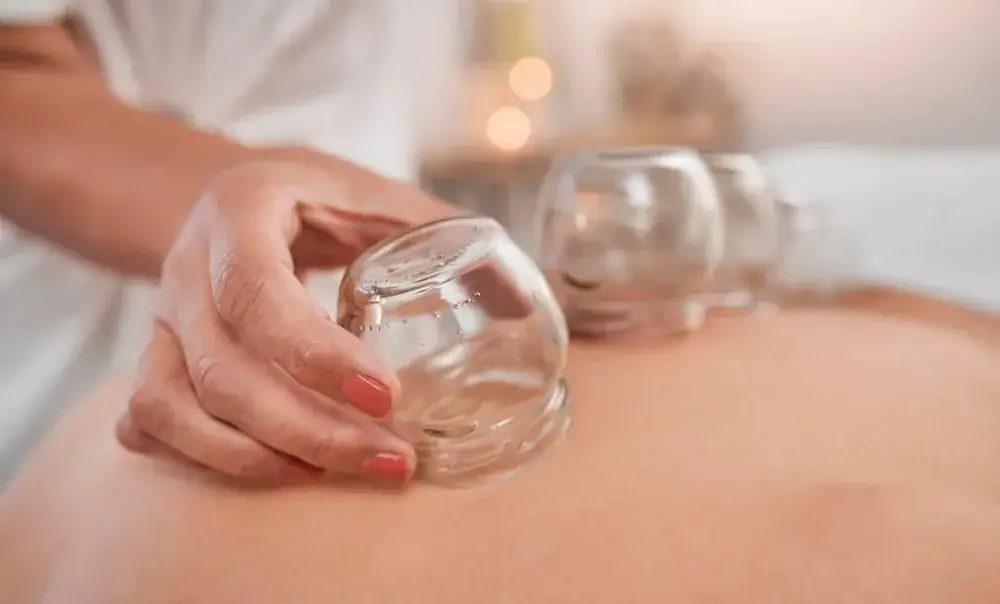
During treatment, small cups are placed on your skin over the problem areas. A pump creates suction that lifts the tissue slightly. You’ll feel pulling, but it shouldn’t hurt. Most people say it’s more relieving than uncomfortable.
The cups stay on for 5 to 15 minutes depending on the area and your tolerance. While they’re working, your therapist might have you move through certain positions or combine cupping with manual therapy to maximize the effect.
After the cups come off, you’ll likely see circular marks. They’re not bruises, they’re a sign of increased blood flow to that area. They fade in a few days. More importantly, the tightness often fades faster.
Cupping is typically done once or twice a week as part of your physical therapy sessions. Between visits, you’ll have exercises to do at home that reinforce the gains and keep your muscles from tightening back up.
Ready to get started?
Cupping works well for chronic low back pain, neck tension, shoulder tightness, and muscle soreness from repetitive strain or sports. It’s especially useful when trigger points, those tight knots in your muscles, are limiting your movement or causing referred pain.
Athletes recovering from intense training use it to speed up muscle recovery and reduce delayed onset soreness. People with desk jobs use it to counteract the forward head posture and upper back tension that builds up over years of sitting.
In Cedarhurst and the surrounding Five Towns area, many patients come in dealing with pain that hasn’t responded well to rest, over-the-counter medication, or basic stretching. They’re looking for something that addresses the root tension without being invasive or requiring time off work.
Cupping fits that need. It’s done in-office, takes less than 30 minutes as part of a full therapy session, and doesn’t require downtime. You can go back to work or your daily routine right after. The circular marks are the only visible sign, and they’re temporary.
Most insurance plans cover cupping when it’s performed by a licensed physical therapist as part of a documented treatment plan. We handle verification and billing, so you know what your responsibility is before starting.
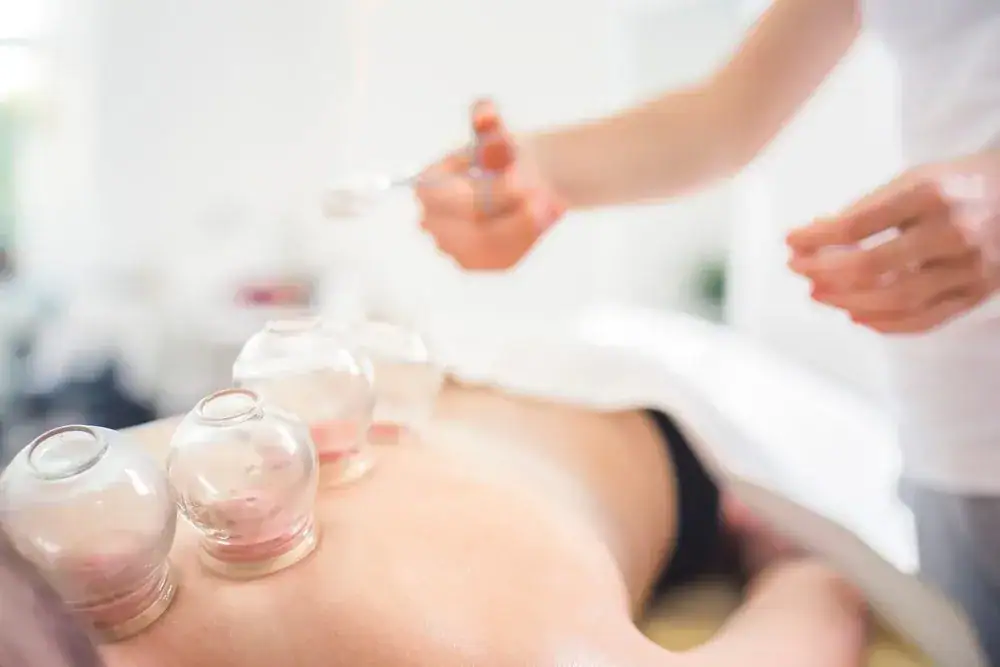
Yes, and there’s research to support it. A comprehensive review of 72 clinical trials involving over 5,700 participants found that cupping therapy provided better pain relief than usual care or medication alone, especially for musculoskeletal conditions.
The effect comes from increased blood flow. When cups create suction, they pull nutrient-rich blood into areas that have been tight and under-circulated for weeks or months. That fresh blood delivers oxygen and helps clear out metabolic waste products that contribute to soreness and stiffness.
Single sessions can provide immediate relief, particularly for low back pain. But the real benefit builds over multiple treatments when cupping is combined with physical therapy exercises that address the underlying movement dysfunction. That’s the difference between temporary relief and lasting improvement.
Dry cupping uses suction only. Cups are placed on your skin, air is pumped out, and the vacuum effect lifts the tissue. There’s no cutting, no blood removal, and it’s completely non-invasive.
Wet cupping involves making small incisions in the skin before applying the cups, allowing a small amount of blood to be drawn out. It’s more invasive and carries slightly higher risk of infection or scarring.
We use dry cupping exclusively at our Cedarhurst location. It’s safer, requires less cleanup, and research shows it’s just as effective for pain relief and muscle relaxation. The reduced invasiveness makes it appropriate for a wider range of patients without compromising results.
Yes, cupping typically leaves circular marks that look like bruises but aren’t actually bruises. They’re caused by increased blood flow to the area and usually range from light pink to dark purple depending on how tight the tissue was and how much suction was used.
These marks are temporary. Most fade within three to seven days. They don’t hurt and they’re not a sign of damage, they’re actually a sign the treatment is working by bringing circulation to areas that needed it.
If the marks bother you cosmetically, let your therapist know. They can adjust the suction level or placement to minimize visibility, though that might slightly reduce the intensity of the effect. Most patients stop worrying about the marks once they feel how much looser and less painful the area becomes.
Absolutely. In fact, that’s how it works best. Cupping is most effective when it’s part of a complete physical therapy plan that includes manual therapy, therapeutic exercise, and movement training.
Your therapist might use cupping at the start of a session to loosen up tight areas, then follow with hands-on stretching or joint mobilization while the tissue is more pliable. After that, you’d move into strengthening exercises that retrain the muscles to function properly so the tightness doesn’t immediately return.
This integrated approach is what separates physical therapy cupping from spa cupping. You’re not just getting temporary relaxation, you’re addressing the mechanical issues that caused the tightness in the first place. That’s how you get results that last beyond the day of treatment.
Most people notice some immediate relief after the first session, particularly a reduction in muscle tightness and improved range of motion. But one session won’t fix a problem that’s been building for months or years.
A typical treatment plan involves cupping once or twice per week for four to eight weeks, depending on your condition and how you respond. Research shows the pain-relieving effects are most significant at the two to eight week mark when treatments are done consistently.
Your therapist will reassess your progress every few visits and adjust frequency as you improve. Once the acute tightness resolves, you might shift to maintenance sessions every few weeks or use cupping only during flare-ups. The goal is always to get you to a point where you don’t need ongoing treatment.
When performed by a licensed physical therapist as part of a documented treatment plan, cupping is typically covered under your physical therapy benefits. It’s billed as part of manual therapy, not as a separate alternative medicine service.
Coverage varies by insurance plan, so we verify your benefits before starting treatment. You’ll know your copay or coinsurance responsibility upfront. Most major insurance plans accepted in New York, including Medicare, cover physical therapy services that include cupping when it’s medically necessary.
If you’re paying out of pocket, cupping adds minimal cost to a standard physical therapy session since it’s integrated into your treatment time rather than billed separately. The focus is on getting you better, not on upselling add-on services.
Other Services we provide in Cedarhurst