
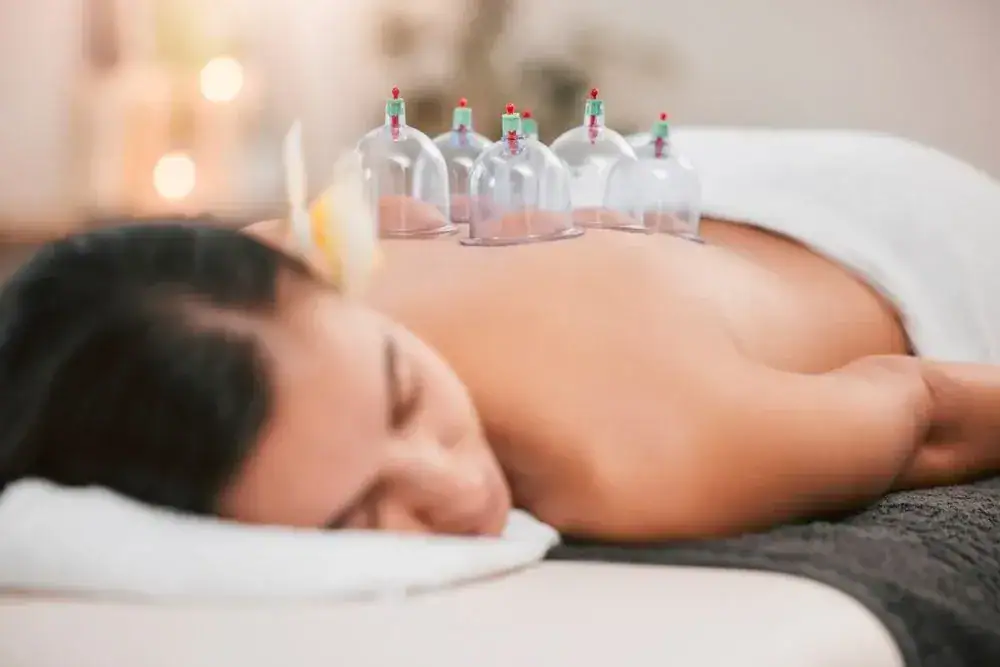

Chronic back pain changes how you move through your day. You adjust your posture getting out of the car. You think twice before lifting anything. You wake up stiff and go to bed the same way.
Cupping therapy works by lifting tissue away from underlying muscle, increasing blood flow to areas that have been tight for months or years. That improved circulation brings oxygen and nutrients while flushing out the metabolic waste that builds up in chronically tense muscles. Most people notice the difference after one session—not just in pain levels, but in how freely they can move.
The treatment itself involves placing cups on specific areas to create suction. This mechanical lift separates fascial layers that have become stuck together, which is often what’s limiting your range of motion. For trigger points—those spots that radiate pain when you press them—cupping can release tension that’s been there so long you forgot what normal felt like.
You’re not masking symptoms. You’re addressing the restriction, the inflammation, and the compensation patterns your body has built up over time.
We’ve provided home-based physical therapy across Brookhaven and Suffolk County since 2010. All our therapists are licensed, and all treatment plans are built around what’s actually limiting your movement—not a one-size-fits-all protocol.
Home-based care matters here. If you’re dealing with sciatica or limited mobility, the 45-minute drive to a clinic in another town can undo whatever progress you’d make in the session. You don’t improve faster by adding more pain to your day.
Brookhaven residents deal with long commutes, physical jobs, and the kind of chronic stress that settles into your neck and shoulders. Cupping therapy fits into that reality. It’s effective, it’s non-invasive, and it doesn’t require you to reorganize your week around appointments.
Your first session starts with an assessment. Your therapist will ask about your pain—where it is, how long you’ve had it, what makes it worse, and what you’ve already tried. They’ll also evaluate your range of motion and identify areas of restriction or tenderness.
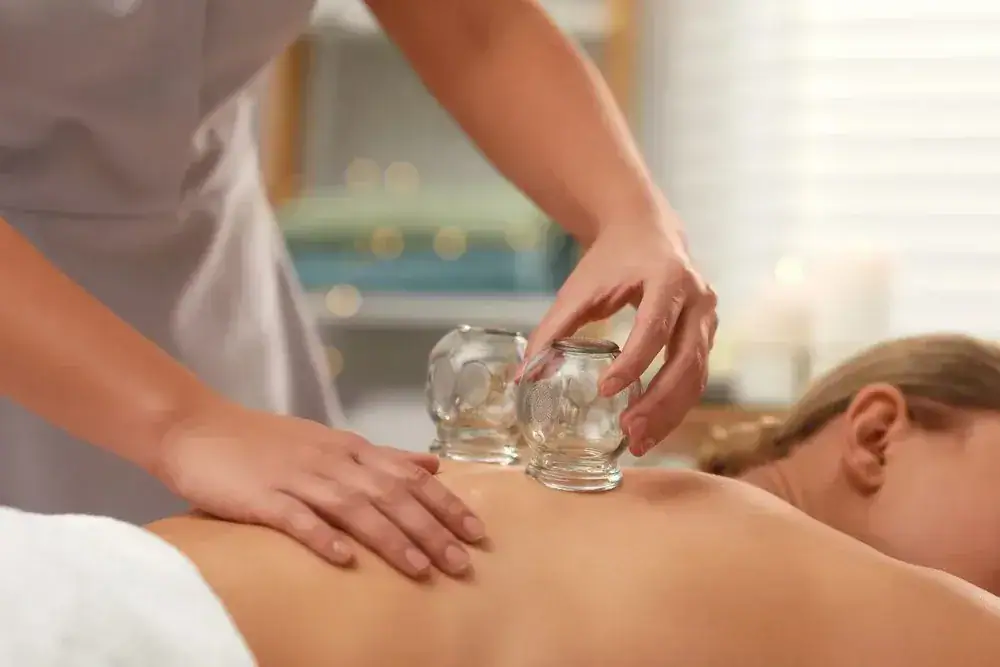
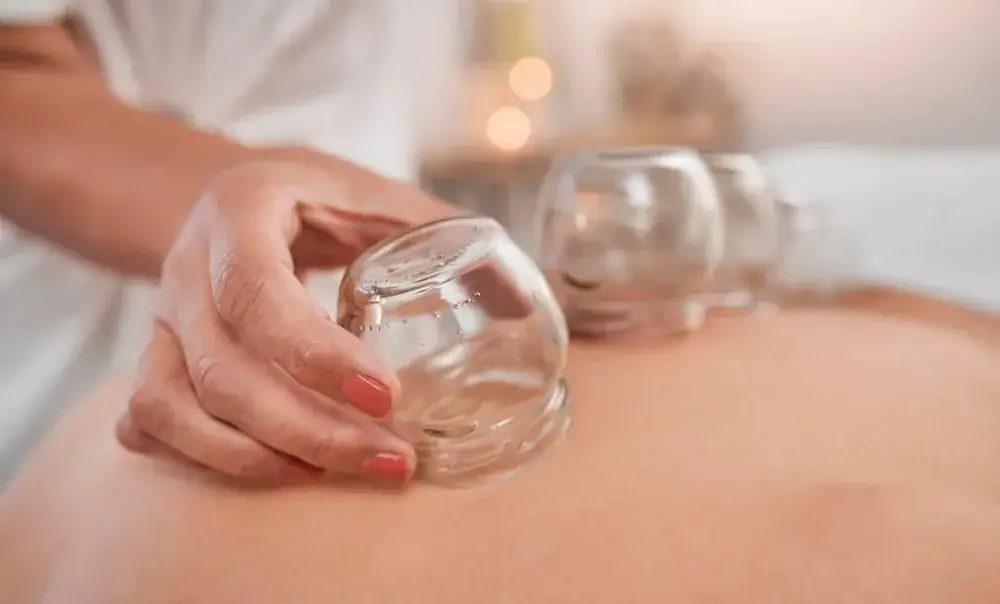
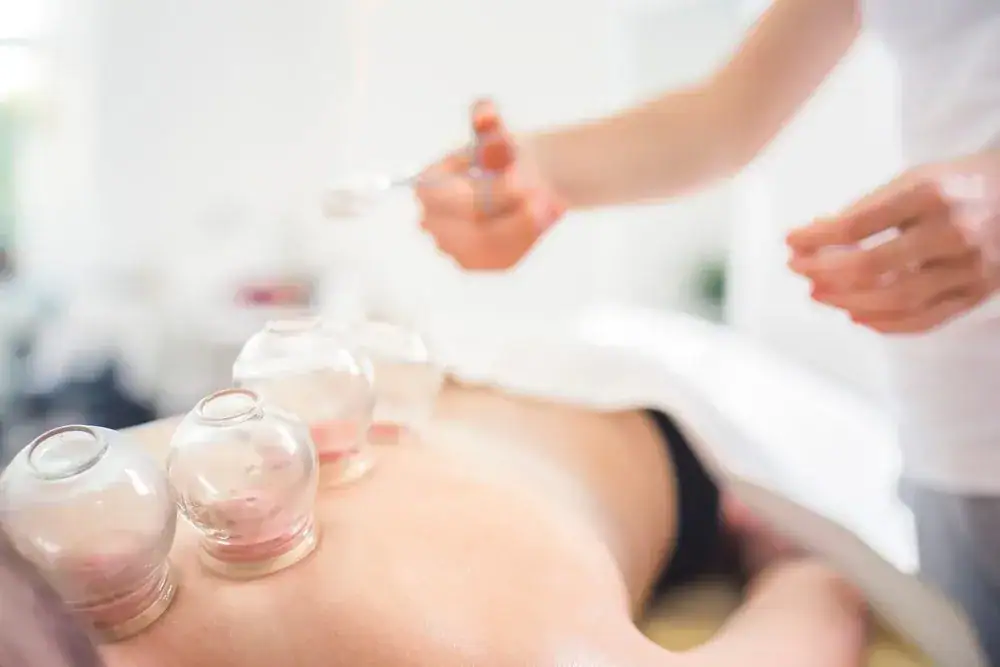
During the treatment, cups are placed on your skin over the affected muscles. The suction can be created through heat (fire cupping) or a manual pump (dry cupping). Most people feel a tight pulling sensation, but it shouldn’t hurt. The cups stay in place for several minutes, or your therapist may move them across your skin in a gliding motion to cover a larger area.
You’ll likely see circular marks afterward. They’re not bruises—they’re the result of increased blood flow to the tissue. They fade within a few days and are generally a sign that the area needed the treatment.
After your session, you might feel immediate relief, or you might feel sore for a day or two as your body adjusts. Either response is normal. Your therapist will give you specific guidance on what to expect and when to schedule your next session based on how your body responds.
Ready to get started?
Cupping therapy is particularly effective for chronic back pain, neck tension, and shoulder tightness—the kind of pain that comes from years of compensation or repetitive strain. We also use it for sciatica, arthritis-related stiffness, and muscle recovery after injury.
If you’re an athlete or regularly active, cupping helps with muscle recovery and can improve your range of motion before it becomes a limiting factor in your training. For people with desk jobs or long commutes, it addresses the forward head posture and upper back tension that builds up over time.
In Brookhaven and across Long Island, we see a lot of patients who’ve tried medication, rest, and stretching without lasting results. Cupping works differently. It targets the fascia and underlying tissue restrictions that other treatments don’t reach. Combined with physical therapy techniques like manual therapy or therapeutic exercise, it becomes part of a complete plan to restore function and reduce pain.
Each session is customized. Your therapist adjusts the placement, duration, and intensity based on your condition and how your body responds. You’re not following someone else’s protocol—you’re getting treatment designed around your specific limitations and goals.
Yes, and the research backs it up. Studies show that cupping therapy significantly reduces pain intensity for conditions like chronic neck pain, lower back pain, and knee osteoarthritis. It’s not a placebo effect—the mechanical action of lifting tissue increases microcirculation and reduces fascial restriction, both of which contribute to pain relief.
That said, cupping works best as part of a broader treatment plan. If your pain is caused by muscle tension, trigger points, or restricted fascia, cupping can provide noticeable relief quickly. If there’s an underlying structural issue or nerve involvement, cupping will likely be combined with other physical therapy techniques to address the root cause.
Most patients notice improvement after the first session, but lasting results typically require multiple treatments. Your therapist will be honest about what to expect based on your condition and how long you’ve been dealing with it.
Cupping is safe when performed by a licensed physical therapist. The circular marks it leaves are not bruises in the traditional sense—they’re caused by increased blood flow to the area, not broken blood vessels. These marks typically fade within three to seven days.
Some people experience mild soreness after treatment, similar to what you’d feel after a deep tissue massage. This is normal and usually resolves within 24 to 48 hours. Drinking water and moving gently after your session can help reduce any post-treatment discomfort.
Cupping is not recommended if you have certain skin conditions, are pregnant, or are taking blood thinners. Your therapist will review your medical history during your initial assessment to make sure cupping is appropriate for you. If it’s not, they’ll recommend alternative treatments that can achieve similar results.
Massage pushes tissue down. Cupping lifts it up. That difference matters when you’re dealing with fascial adhesions or deep muscle tension that doesn’t respond to surface-level pressure.
Cupping creates space between layers of tissue that have become stuck together, which improves mobility and reduces pain. It also stimulates blood flow more aggressively than most manual techniques, which accelerates healing in areas that have been chronically tight or inflamed.
Physical therapy often includes cupping as one tool among many. Your therapist might use cupping to release a specific restriction, then follow it with stretching, strengthening exercises, or manual therapy to reinforce the improvement. The goal is always function—not just feeling better for a day, but actually moving better long-term.
It depends on your condition and how long you’ve been dealing with it. Acute muscle pain or tension might improve significantly after one or two sessions. Chronic pain that’s been present for months or years typically requires a series of treatments to create lasting change.
Your therapist will give you a realistic timeline after your initial assessment. Some patients come weekly for a few weeks, then taper to maintenance sessions once or twice a month. Others need more frequent treatment initially, especially if they’re recovering from an injury or dealing with severe restriction.
The goal is always to get you to a point where you don’t need ongoing treatment. Cupping is part of a plan to restore function, not something you’ll need indefinitely. Your therapist will track your progress and adjust the frequency based on how your body responds.
Yes. We provide cupping therapy as part of home-based physical therapy throughout Brookhaven and Suffolk County. If getting to a clinic is difficult because of pain, mobility limitations, or scheduling, home-based treatment removes that barrier.
Your therapist brings everything needed for the session and conducts the same thorough assessment and treatment you’d receive in a clinic setting. Home-based care is covered by Medicare and many insurance plans for patients who qualify as homebound or have difficulty leaving their residence.
For many people in Brookhaven, home therapy makes more sense. You’re not sitting in traffic with a bad back or trying to find parking when your knee hurts. You’re getting effective treatment in a setting where you’re comfortable, and you can rest immediately afterward if needed.
During the treatment, you’ll feel a pulling or tugging sensation where the cups are placed. It’s tight, but it shouldn’t be painful. If it is, your therapist will adjust the suction. Some areas will feel more sensitive than others, especially if there’s a lot of tension or restriction in that spot.
After the session, you might feel immediate relief—less pain, easier movement, or a sense of looseness in areas that were tight. You might also feel sore or achy for a day or two as your body adjusts to the increased circulation and tissue release. Both responses are normal.
The circular marks will be visible for several days. They’re darker in areas where there was more stagnation or tension, and they’ll fade gradually. Most people feel the best results 24 to 48 hours after treatment, once any initial soreness has passed and the tissue has had time to respond to the increased blood flow.
Other Services we provide in Brookhaven