
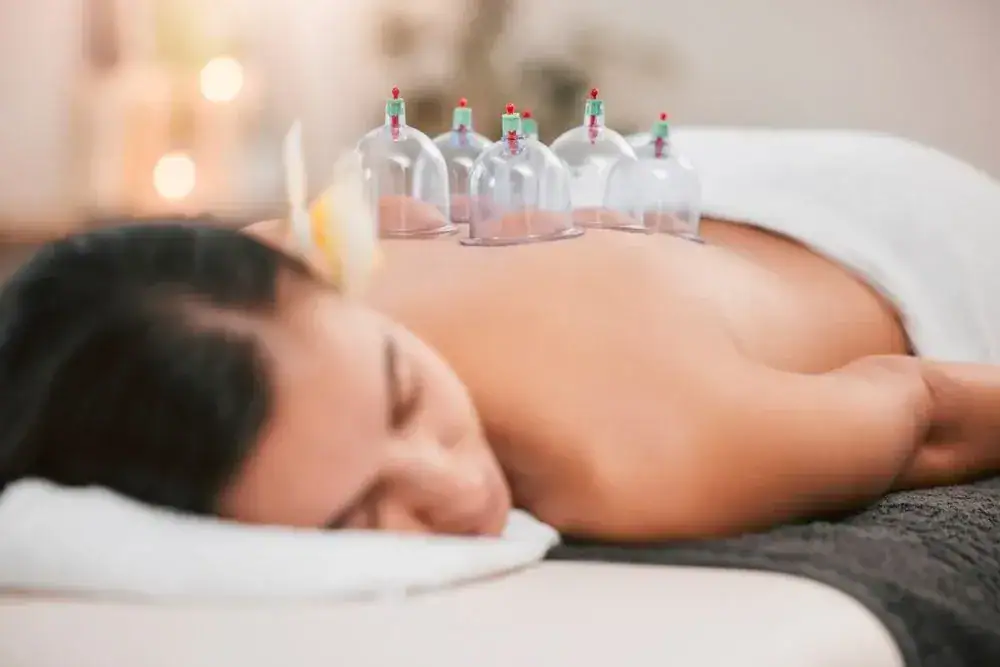

You wake up without that familiar stiffness in your lower back. You turn your neck to check your blind spot without wincing. Small movements stop being calculations about whether they’ll hurt.
Cupping therapy works by improving blood flow to areas that have been tight, inflamed, or restricted for months or years. The suction created during treatment pulls fresh blood and oxygen into muscles that have been starved of circulation. This isn’t about temporary relief that fades by dinner—it’s about addressing why the pain keeps coming back.
Most people notice reduced muscle tension after their first session. Range of motion improves because the tissue isn’t fighting against itself anymore. You move differently when your body isn’t bracing for pain with every step or reach. That’s what actually changes—not just how you feel, but what you can do without thinking about it first.
We’ve been providing physical therapy throughout Queens and Long Island for years, with a focus on treatments that integrate into your existing care plan. Our therapists are trained in cupping as part of comprehensive musculoskeletal treatment—not as a standalone service you’re upsold into.
Bellerose residents deal with the same chronic pain issues we see across our locations: desk jobs that wreck your neck and shoulders, old sports injuries that never fully healed, lower back pain from lifting kids or standing all day. We’ve built our practice around addressing those real problems with evidence-based methods, including dry cupping for pain management and muscle recovery.
Your treatment is managed by licensed physical therapists who understand how cupping fits into a larger recovery plan. We’re not a spa offering relaxation services. We’re a clinical practice focused on functional improvement and measurable outcomes.
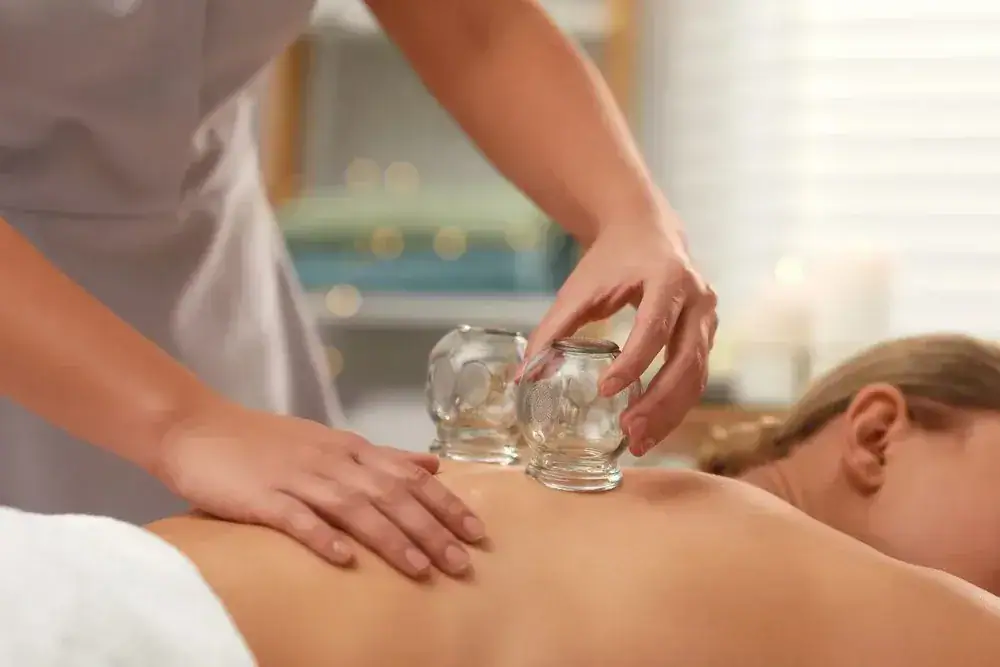
Your first session starts with an assessment of your pain, mobility restrictions, and what you’ve already tried. We need to know if cupping is appropriate for your specific condition and how it should fit into your overall treatment plan.
During the treatment itself, we place specialized cups on targeted areas of muscle tension or pain. The suction pulls tissue upward, increasing blood flow and releasing fascial restrictions. Dry cupping doesn’t involve needles or incisions—just controlled suction that creates temporary marks as blood moves into the treatment area. Sessions typically last 15-30 minutes depending on the areas being treated.
You’ll likely see circular marks afterward that fade within a few days to a week. That’s normal and indicates increased circulation to the area. Most people feel immediate relief in muscle tightness, though some soreness similar to a deep tissue massage can occur. We’ll discuss how many sessions you need based on your response to treatment—some conditions improve quickly, others require consistent sessions over several weeks.
Ready to get started?
Cupping works particularly well for chronic lower back pain, which affects a significant portion of Bellerose residents who commute into the city or spend long hours sitting. Research shows cupping can be more effective than sham therapy for persistent non-specific low back pain, with improvements in both pain levels and functional disability.
We also use cupping therapy for neck pain and shoulder tension, knee pain from osteoarthritis, muscle strains and sports injuries, and myofascial pain syndrome. The treatment helps with conditions where muscle tightness, poor circulation, or fascial restrictions are contributing to your symptoms. It’s particularly useful when traditional physical therapy exercises alone aren’t providing enough relief.
What you’re getting is cupping integrated into a complete physical therapy approach. That means we’re also addressing movement patterns, strengthening weak areas, and teaching you how to maintain improvements between sessions. Cupping is one tool—effective for specific problems—but it’s not the only thing we’re doing to get you better. For Bellerose patients dealing with the physical toll of long commutes, repetitive work tasks, or chronic conditions that limit daily function, combining cupping with targeted exercise and manual therapy produces better long-term outcomes than any single treatment alone.
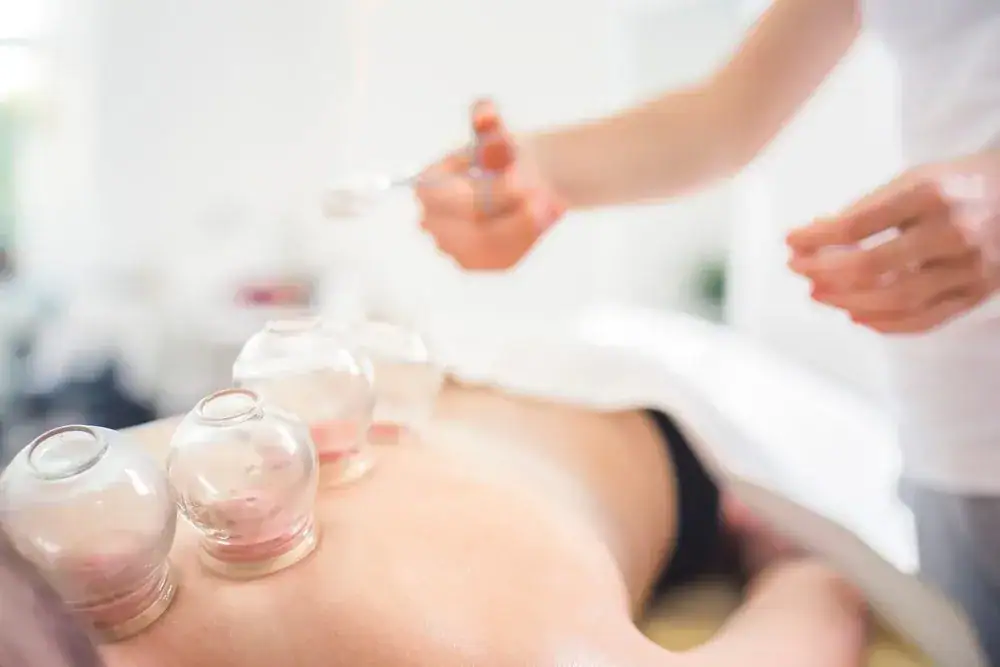
Yes, and the research backs it up. Clinical studies show that cupping therapy significantly improves pain and functional disability in people with persistent non-specific low back pain compared to sham treatments. A single session can provide immediate short-term pain reduction, though most chronic conditions require multiple sessions for lasting improvement.
The mechanism is straightforward—cupping increases blood circulation to areas that have become tight and inflamed. When you’ve had back pain for months or years, those muscles aren’t getting adequate blood flow, which means they’re not getting the oxygen and nutrients needed for healing. The suction created by the cups pulls fresh blood into the tissue and helps release fascial restrictions that contribute to pain and stiffness.
Most of our Bellerose patients with chronic lower back pain notice reduced muscle tension after their first session, with continued improvement over 4-6 weeks of treatment. That said, cupping works best when combined with other physical therapy interventions like targeted strengthening and movement correction. We’re addressing why your back hurts in the first place, not just treating the symptom.
Dry cupping uses suction alone to pull tissue upward and increase blood flow. Wet cupping involves making small incisions in the skin before applying suction, which draws out small amounts of blood. At Medcare Therapy Services, we use dry cupping exclusively—it’s the method most commonly integrated into physical therapy practice and doesn’t involve any cutting or blood removal.
Dry cupping is what most people think of when they see those circular marks on athletes. The cups create suction that lifts the skin and underlying tissue, improving circulation and releasing muscle tension. The marks you see afterward are caused by blood moving into the treatment area, not by any kind of injury or bruising in the traditional sense.
Physical therapists are trained in dry cupping as part of musculoskeletal treatment. It’s a low-risk therapy with minimal side effects when performed by a licensed professional. Wet cupping, by contrast, is typically practiced in traditional Chinese medicine settings and carries additional considerations around infection risk and healing time. For pain management and muscle recovery—the reasons most people seek cupping therapy—dry cupping provides the therapeutic benefits without the added complexity.
It depends entirely on what we’re treating and how long you’ve had the problem. Acute muscle strains or tension might improve significantly in 2-3 sessions. Chronic conditions like persistent lower back pain or neck stiffness that you’ve dealt with for years typically require 6-8 sessions before you see substantial, lasting improvement.
Most people feel some immediate relief after their first session—reduced muscle tightness, better range of motion, less pain with specific movements. But that initial improvement doesn’t mean the problem is solved. Chronic pain involves tissue changes, movement compensations, and nervous system patterns that take time to address. Cupping helps break the cycle, but consistent treatment combined with exercise and movement correction is what produces long-term results.
We’ll give you a realistic timeline after your initial assessment. Some Bellerose patients come in weekly for a month, then spread sessions out as symptoms improve. Others need twice-weekly treatment initially if pain is severe and limiting daily function. The goal isn’t to keep you coming forever—it’s to get you functional again and teach you how to maintain those improvements on your own.
Often yes, because we provide cupping as part of physical therapy treatment, not as a standalone service. Most insurance plans that cover physical therapy will cover cupping when it’s included in your treatment plan and performed by a licensed physical therapist.
Coverage depends on your specific plan, deductible, and whether you need a referral from your primary care physician. We recommend calling your insurance company before your first appointment to verify your physical therapy benefits. Ask specifically about coverage for manual therapy techniques, which is the category cupping typically falls under.
What matters is that cupping is being provided as a medically necessary component of your physical therapy care—not as a wellness or spa service. We document the clinical reasoning for including cupping in your treatment plan, which is what insurance companies need to see for coverage. If you’re dealing with chronic pain, restricted mobility, or musculoskeletal conditions that impact your daily function, there’s a strong case for medical necessity. We’ll work with you to maximize your benefits and provide the documentation needed for reimbursement.
Yes, cupping leaves circular marks that can range from light pink to deep purple depending on the amount of suction used and how much stagnation exists in the tissue. These marks aren’t bruises in the traditional sense—they’re caused by blood moving into areas that previously had poor circulation. That’s actually part of the therapeutic effect.
The marks typically last 3-7 days, sometimes up to 10 days if the treatment was aggressive or if you had significant tissue restriction. They fade gradually and don’t hurt. Most people find them less noticeable than they expected, though you’ll want to consider your schedule if you have an event where you’ll be wearing something that exposes the treatment area.
For Bellerose patients concerned about visible marks, we can adjust the intensity of treatment or focus on areas that are easily covered by clothing. The marks are a normal part of cupping therapy and indicate that the treatment is working—fresh blood is reaching tissue that needed it. They’re temporary and harmless, but we understand if you’d rather not have visible marks for a wedding or beach day. Just let us know and we’ll plan accordingly.
Absolutely, and that’s exactly how we use it. Cupping is most effective when integrated into a comprehensive physical therapy plan that includes targeted exercise, manual therapy, and movement training. We’re not just putting cups on your back and sending you home—we’re addressing the underlying causes of your pain and dysfunction.
A typical session might include cupping to release muscle tension and improve circulation, followed by specific exercises to strengthen weak areas and correct movement patterns that contribute to your problem. Or we might use cupping after manual therapy to enhance the effects of both treatments. The combination produces better outcomes than any single intervention alone.
This integrated approach is particularly important for chronic conditions common among Bellerose residents—lower back pain from prolonged sitting, neck and shoulder tension from computer work, knee pain that limits walking or climbing stairs. Cupping addresses the immediate symptoms and tissue restrictions, while exercise and movement training prevent the problem from returning. You’re not choosing between cupping and traditional physical therapy—you’re getting both as part of a complete treatment plan designed around your specific condition and goals.
Other Services we provide in Bellerose