
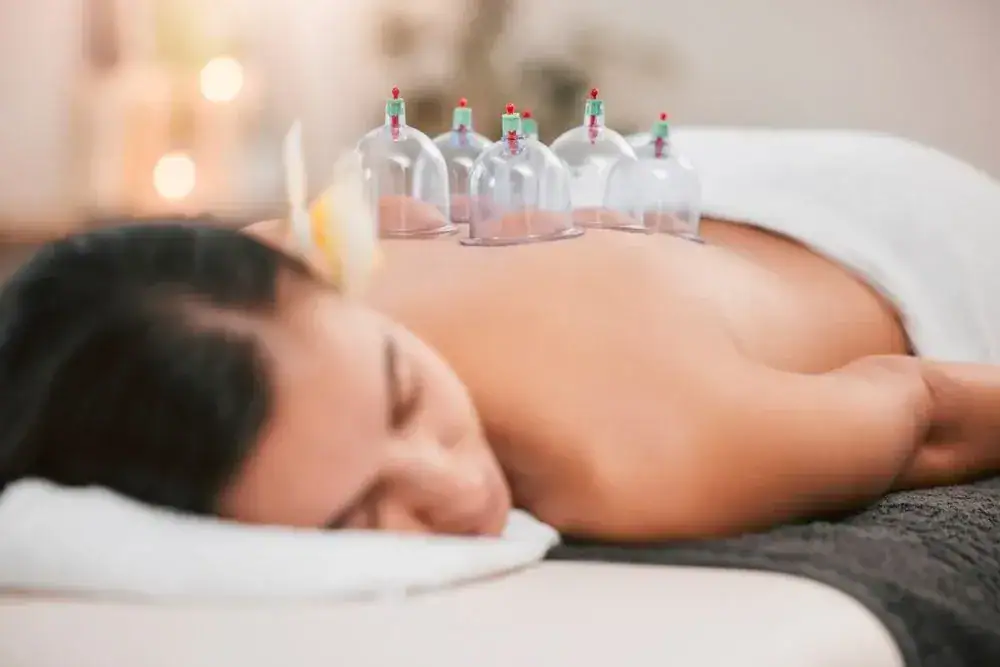

You’re not looking for temporary relief. You want to sleep through the night without waking up stiff. You want to pick up your kids or grandkids without bracing yourself. You want to get back to the gym, the garden, or just moving through your day without that constant ache reminding you something’s wrong.
Cupping therapy works by increasing blood flow to the areas that hurt most. That means faster healing, less inflammation, and muscles that actually relax instead of staying locked up. It’s not a band-aid. It’s a way to address what’s causing the tightness and pain in the first place.
Most people notice a difference after the first session. Not just less pain, but better range of motion. Shoulders that move freely again. A back that doesn’t seize up when you bend over. Knees that let you take the stairs without wincing. That’s what real recovery looks like.
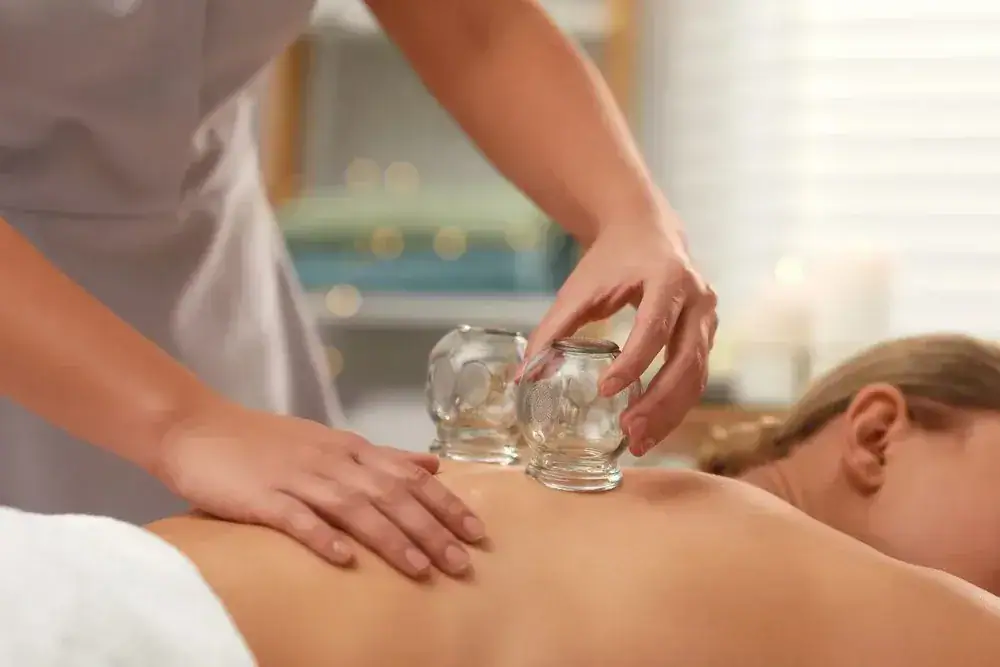
Your first visit starts with an assessment. We need to understand what’s causing your pain, how long you’ve been dealing with it, and what you’ve already tried. We’ll test your range of motion and strength to see exactly where the restrictions are. This isn’t a quick chat and then straight to treatment. We take the time to get it right.
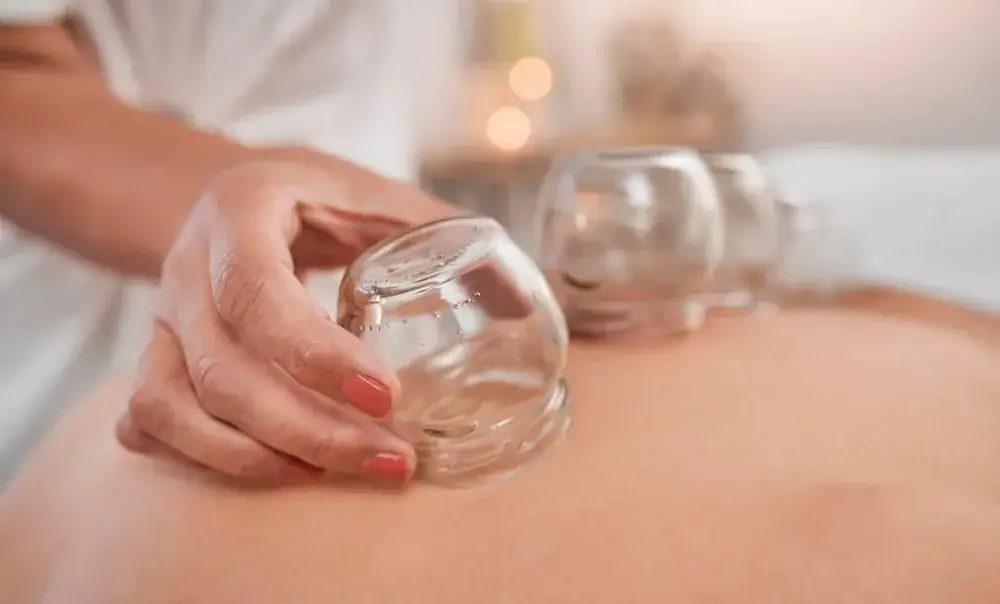
Once we know what we’re dealing with, we’ll explain whether cupping therapy makes sense for your situation. If it does, we’ll walk you through what to expect. Dry cupping uses suction cups placed on your skin to pull blood flow to the area. It increases circulation, releases tight fascia, and helps muscles move the way they’re supposed to. Some of our therapists combine it with movement to maximize the effect.
A typical session runs 15 minutes to an hour, depending on what you need. You might see some circular marks on your skin afterward. That’s normal and they fade within a few days. Most people feel relief that lasts three to five days after a single treatment. For lasting results, we usually recommend weekly sessions for eight to twelve weeks, combined with targeted exercises and other manual therapy techniques.
Ready to get started?
Cupping therapy at Medcare isn’t a standalone treatment. It’s part of a complete physical therapy plan designed around your specific condition. That means you’re getting cupping combined with exercises that rebuild strength, manual therapy that restores mobility, and education on how to prevent the problem from coming back.
We treat the issues Bayport residents deal with most: chronic lower back pain from sitting too much or lifting incorrectly, neck pain from desk work and stress, knee pain from osteoarthritis or old injuries, shoulder tension that limits overhead movement, and post-surgical recovery that’s taking longer than expected. Cupping helps with all of it by improving blood flow and releasing the muscle tightness that keeps you stuck.
Here’s what matters: you get 60 minutes of one-on-one time with your therapist every session. That’s 65% more than the industry standard. No rushing. No getting handed off to an assistant halfway through. Just focused, professional care from someone who knows what they’re doing. And because Bayport has a median household income of $135,750 and 98.7% health coverage, most of our patients have insurance that covers a significant portion of treatment costs.
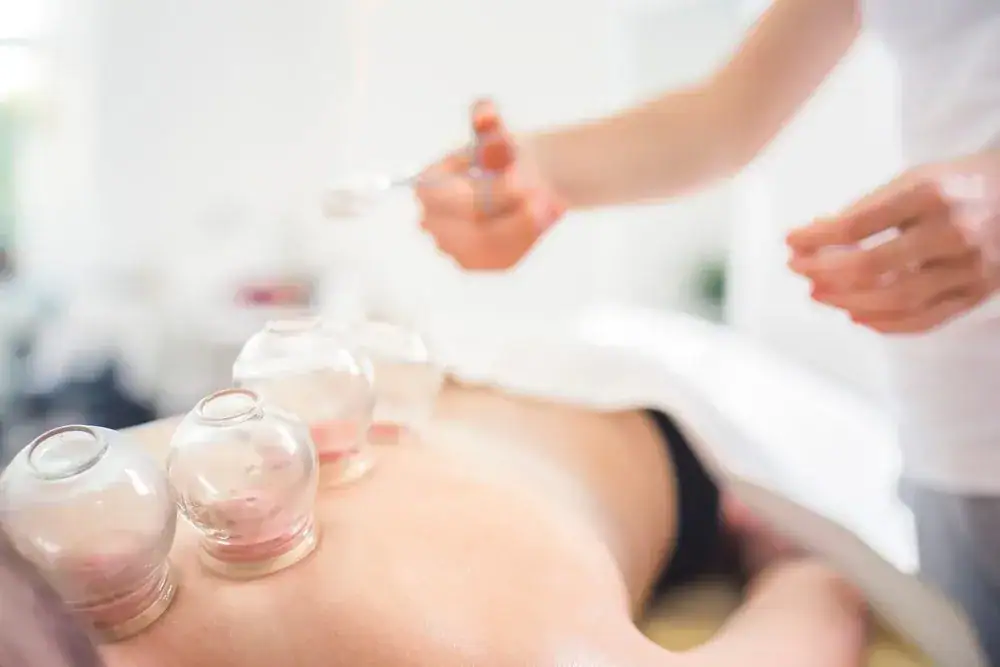
Yes, and the research backs it up. Multiple studies show that cupping therapy provides moderate to strong evidence for relieving chronic low back pain, often more effectively than conventional treatments alone. It works by increasing blood flow to the affected area, which reduces inflammation and helps tight muscles finally relax.
If you’ve been dealing with lower back pain for months or years, cupping can be the thing that breaks the cycle. It’s especially effective when combined with targeted exercises and manual therapy, which is exactly how we use it. You’re not just getting temporary relief. You’re addressing the underlying muscle tension and restricted movement that keeps the pain coming back.
Most patients notice improvement within the first few sessions. The pain decreases, movement gets easier, and daily activities that used to hurt become manageable again. That’s the goal: getting you back to normal life without constant discomfort.
Most people feel some relief after their first session. That initial treatment typically provides three to five days of reduced pain and improved mobility. But if you want lasting results, you need to commit to a full course of treatment.
We usually recommend weekly cupping sessions for eight to twelve weeks, combined with other physical therapy techniques. That timeline gives your body enough consistent treatment to actually heal, not just feel better temporarily. Think of it like physical therapy for any other injury: one session helps, but a structured plan gets you all the way back.
The exact timeline depends on what you’re dealing with. Acute muscle tension might resolve faster. Chronic conditions that have been building for years take longer. During your initial assessment, we’ll give you a realistic expectation based on your specific situation. No false promises, just honest answers about what it takes to get you better.
Cupping is safe when performed by trained professionals, which is exactly who you’re getting at Medcare. Our physical therapists are licensed and specifically trained in cupping techniques. The risk of complications is low, especially with dry cupping, which is what we use most often.
You will likely see circular marks on your skin after treatment. Those marks are caused by the suction bringing blood to the surface. They’re not painful, and they typically fade within three to seven days. Some people barely get them, others get darker marks depending on how much tension and restriction is in the tissue. It’s not bruising in the traditional sense. It’s just increased blood flow doing its job.
If you have concerns about how it looks, plan your sessions accordingly. But most patients stop worrying about the marks once they feel how much better they move and how much less pain they’re in. The temporary appearance is worth the relief you get.
Cupping works best for musculoskeletal pain and tension. That includes chronic lower back pain, neck pain, shoulder tightness, knee osteoarthritis, and muscle soreness from overuse or injury. It’s also effective for headaches caused by muscle tension, post-surgical recovery where scar tissue is limiting movement, and sports injuries that need faster healing.
The treatment is particularly helpful for conditions where tight fascia and restricted blood flow are part of the problem. If your muscles feel locked up, if you can’t move through your full range of motion, or if you have persistent pain that doesn’t respond well to rest or medication, cupping can help. It’s not a cure-all, but for the right conditions, it’s extremely effective.
During your assessment, we’ll determine whether cupping is appropriate for your specific issue. Some conditions respond better to other treatments, and we’ll tell you that upfront. Our goal is to get you better, not to sell you on a treatment that won’t work for your situation.
Absolutely, and that’s exactly how we use it. Cupping therapy is most effective when combined with other treatments like manual therapy, targeted exercises, and movement re-education. The cupping increases blood flow and releases muscle tension, which makes the other treatments work better.
For example, if you’re recovering from a knee injury, we might use cupping to reduce inflammation and improve circulation, then follow it with exercises that rebuild strength and stability. Or if you have chronic neck pain, we might combine cupping with manual therapy to release tight muscles and then teach you exercises that prevent the tension from coming back.
This integrated approach is what produces lasting results. Single-treatment approaches rarely solve complex pain problems. You need a comprehensive plan that addresses all the factors contributing to your condition. That’s what you get here: evidence-based treatment that actually works because it tackles the problem from multiple angles.
Cupping therapy is typically included as part of your physical therapy treatment plan, which means your insurance coverage applies. Most patients in Bayport have health insurance that covers physical therapy services, and with 98.7% of residents insured, chances are good your plan includes these benefits.
The exact cost depends on your specific insurance plan, deductible, and copay structure. We verify your benefits before you start treatment so you know what to expect. There are no surprise bills or hidden fees. Everything is transparent from the beginning.
If you don’t have insurance or if your plan doesn’t cover physical therapy, we’ll discuss payment options during your initial consultation. What matters most is that you get the treatment you need without financial stress adding to your pain. We’ll work with you to find a solution that makes sense for your situation.
Other Services we provide in Bayport