


You wake up without that constant ache in your lower back. You reach for something on the top shelf without wincing. You get through your commute without your neck screaming at you.
That’s what effective pain relief looks like. Not masking symptoms with another round of pills, but actually addressing the muscle tension and restricted movement causing your discomfort.
Cupping therapy works by creating suction on your skin, pulling blood flow to the area and releasing those tight, knotted muscles that limit how you move. Research shows it significantly improves range of motion and reduces pain in conditions like chronic back pain, neck stiffness, and joint discomfort. You’re not just feeling better for a few hours—you’re supporting actual tissue healing.
Most people notice immediate relief after their first session. The tightness loosens. Movement feels easier. And unlike treatments that require weeks of waiting, you can feel the difference right away.
We’ve served Long Island communities for over a decade, bringing licensed physical therapy directly to your home. We’re not a wellness spa offering cupping as a side service—we’re licensed physical therapists who use myofascial decompression as part of comprehensive treatment plans.
Bay Park has a substantial population over 60, many dealing with chronic pain that limits daily activities. Long commutes averaging 37 minutes create neck and shoulder tension. Mobility challenges make getting to a clinic difficult. That’s exactly why we come to you.
We accept Medicare and most commercial insurance. Every therapist on our team is licensed, trained, and focused on getting you real results. Since 2010, we’ve built our reputation on showing up, doing the work, and helping people move better.
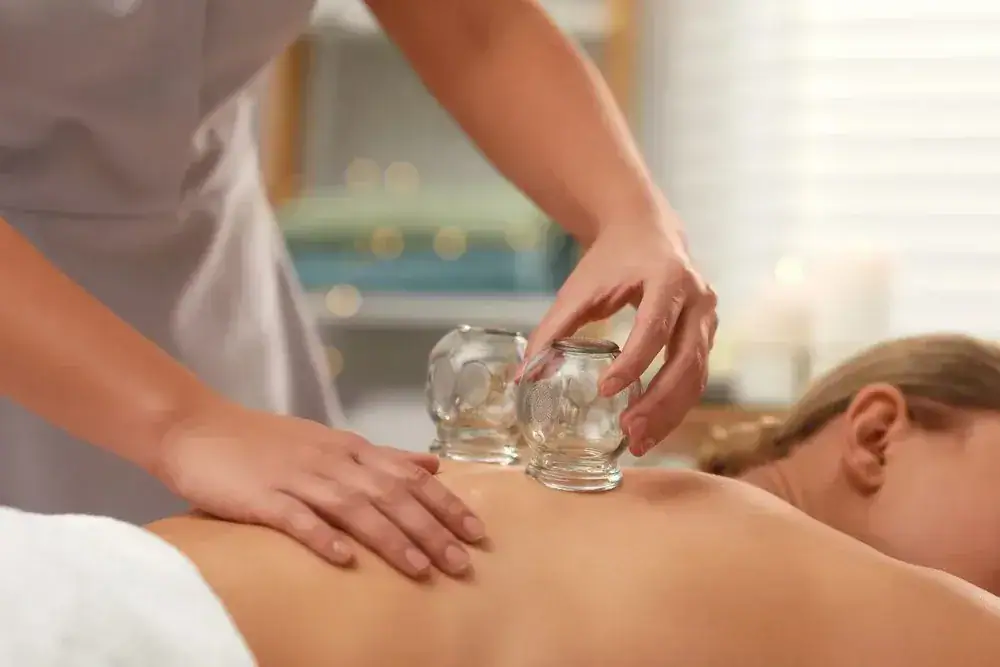
Your therapist starts with an assessment. Where’s the pain? What movements are limited? What’s your goal—getting back to gardening, playing with grandkids, or just sleeping through the night without discomfort?
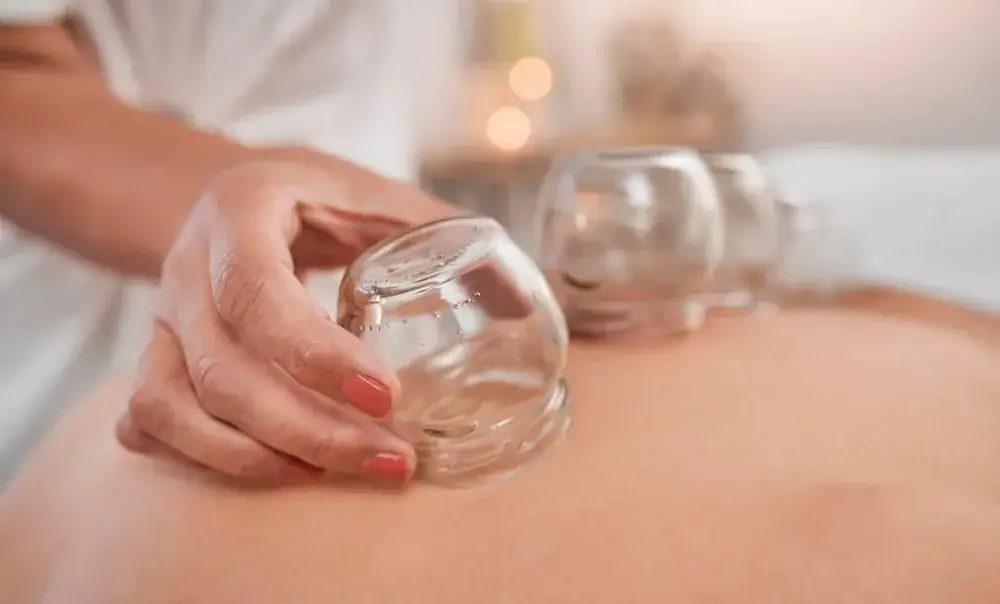
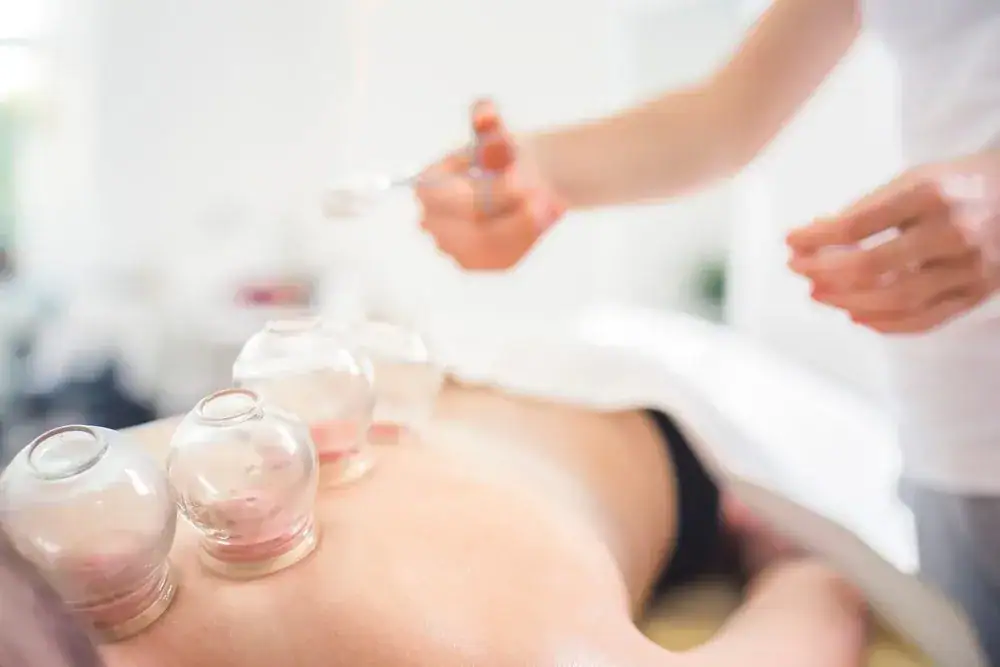
Then comes the cupping. We place specialized cups on the affected area and create suction, either through a pump or heat method. You’ll feel a pulling sensation—not painful, just different. The suction draws blood to the surface, increases circulation, and begins releasing those tight muscle fibers.
Cups typically stay in place for 5-15 minutes. Some therapists use stationary cupping, others move the cups across your muscles for a deeper release. You might see circular marks afterward—that’s normal and fades within a few days.
Most sessions combine cupping with other physical therapy techniques. Stretching, manual therapy, or targeted exercises that reinforce the improvements. You’re not just getting temporary relief—you’re retraining your body to move correctly and reducing the chance of that pain coming back.
Ready to get started?
Every cupping therapy session includes a full physical therapy evaluation, not just cup placement. Your therapist assesses your movement patterns, identifies compensation issues, and builds a treatment plan around your specific needs.
The cupping itself uses FDA-approved equipment and follows strict safety protocols. Dry cupping is non-invasive, poses minimal risk, and doesn’t involve any cutting or bloodletting. It’s a safe, evidence-based treatment method that physical therapists across the country use daily.
You also get education. Why is this pain happening? What movements should you avoid? What can you do between sessions to maintain progress? We’re not just treating symptoms—we’re teaching you how your body works and how to take care of it.
For Bay Park residents, home-based treatment eliminates the stress of driving to appointments, finding parking, or navigating a clinic when you’re already in pain. You get professional care in your own space, on your schedule. We bring everything needed, set up in your home, and work around your routine.
Treatment frequency depends on your condition. Some people need weekly sessions for a month, others benefit from twice-weekly visits initially. Your therapist will be straight with you about what’s realistic and what’s actually necessary.
Yes, and there’s research backing it. Studies show cupping therapy provides moderate-quality evidence for relief of chronic pain conditions including lower back pain, neck pain, and knee osteoarthritis. It’s not a miracle cure, but it’s an effective tool when used correctly.
The mechanism is straightforward. Cupping increases blood flow to the treated area—this has been measured using laser Doppler flowmetry. Better circulation means more oxygen and nutrients reaching damaged tissue, which supports healing. The suction also releases fascial restrictions and reduces muscle tightness, giving you improved range of motion.
One session can provide immediate pain reduction. But for chronic conditions, you’ll typically need multiple treatments to see lasting results. Think of it like physical therapy for any other condition—consistency matters. Your therapist will give you a realistic timeline based on your specific situation, not vague promises.
Dry cupping is safe when performed by a licensed professional. It’s non-invasive, doesn’t break the skin, and has minimal risk compared to other pain management options. We use it specifically because it’s a low-risk treatment with measurable benefits.
You will likely see circular marks where the cups were placed. These aren’t bruises—they’re caused by increased blood flow to the surface. The marks are painless and typically fade within 3-7 days. Some people have more visible marks than others depending on skin sensitivity and the intensity of suction used.
Cupping isn’t recommended if you’re on blood thinners, have certain skin conditions, or are pregnant. Your therapist will review your medical history before treatment. If there’s any reason cupping isn’t appropriate for you, they’ll tell you upfront and suggest alternative approaches. Safety protocols matter, and we follow them.
Massage pushes into your muscles. Cupping pulls them up. That’s the fundamental difference, and it matters for certain conditions.
When you have deep muscle tension or fascial restrictions, sometimes pushing harder isn’t the answer. Cupping creates negative pressure that lifts tissue, improves fascial glide, and reaches areas that are difficult to access with hands alone. It’s particularly effective for stubborn knots and chronic tightness that hasn’t responded well to traditional massage.
We often combine cupping with other techniques—manual therapy, the Graston Technique, or targeted exercises. You’re not choosing between cupping and other treatments. You’re getting a comprehensive approach that uses the right tool for your specific problem. Some issues respond better to hands-on work, others to cupping, most to a combination of both.
If cupping is part of your physical therapy treatment plan, Medicare and most commercial insurance plans cover it. You’re not paying separately for cupping—it’s included as a technique within your covered physical therapy visits.
We accept Medicare and nearly all commercial insurance. Coverage depends on your specific plan, deductible status, and whether you’ve met any therapy visit caps. We verify benefits before starting treatment so you know exactly what to expect.
Some plans require a physician referral for physical therapy. Others allow direct access, meaning you can start treatment without seeing your doctor first. We’ll walk you through what your plan requires and handle the paperwork. If you have questions about a specific bill or coverage issue, you talk to someone who can actually answer them—not a call center three states away.
Most people feel some immediate relief after the first session. But lasting improvement for chronic conditions typically requires 4-8 sessions over several weeks.
Your therapist will assess your condition and give you a realistic treatment timeline. Acute muscle tension from a recent injury might resolve in 2-3 sessions. Chronic pain you’ve dealt with for years will take longer. There’s no standard answer because everyone’s situation is different.
Frequency matters too. Starting with twice-weekly sessions often produces better results than spreading them out. You’re building on each treatment, not starting from scratch every time. As you improve, sessions become less frequent. Eventually, you might just need occasional maintenance visits when pain flares up. Your therapist adjusts the plan based on how you’re actually responding, not some predetermined protocol.
Yes, especially if your pain comes from muscle tension rather than structural damage. Bay Park residents average 37-minute commutes—that’s a lot of time holding your neck and shoulders in static positions, gripping the wheel, and dealing with traffic stress.
Cupping targets the upper trapezius, levator scapulae, and other muscles that get overworked during driving. The suction releases trigger points, improves circulation to chronically tight areas, and restores normal muscle length. Combined with stretching and postural education, it addresses both the symptoms and the underlying cause.
You’ll also learn what you can do during your commute to prevent the pain from coming back. Small adjustments to seat position, steering wheel height, and how often you move your shoulders make a difference. Treatment isn’t just about fixing the problem—it’s about teaching you how to avoid recreating it every day on your way to work.
Other Services we provide in Bay Park