


You’re dealing with tension that doesn’t go away with stretching or rest. Your neck feels locked up by Wednesday. Your lower back tightens after sitting at your desk. You’ve tried massage, heat packs, and over-the-counter pills, but nothing sticks.
Cupping therapy works differently. The suction pulls blood flow directly to the area that’s been starved of circulation. That means oxygen gets where it needs to go, and your muscles finally get a chance to release instead of staying clenched.
Most people notice a difference after the first session. Not just temporary relief, but actual improvement in how their body feels when they move. Less guarding. Less compensating. Just better range of motion and less pain getting through your day.
This isn’t about relaxation or spa treatments. It’s about addressing trigger points, breaking up fascial restrictions, and giving your body what it needs to recover from chronic strain.
We’ve been treating patients across Long Island since 2010. We’re not a wellness center that added cupping to the menu last year. Our physical therapists are licensed, trained, and experienced in using cupping as part of a real treatment plan.
Baldwin residents deal with stress that shows up in their bodies. Commutes, desk jobs, repetitive strain from work. We see it every day. Cupping helps release that built-up tension in ways traditional PT sometimes can’t reach on its own.
You’re not walking into a franchise or a rotating door of new staff. You’re working with therapists who’ve treated thousands of patients dealing with the same issues you’re facing right now. We know what works, what doesn’t, and how to adjust treatment based on how your body responds.
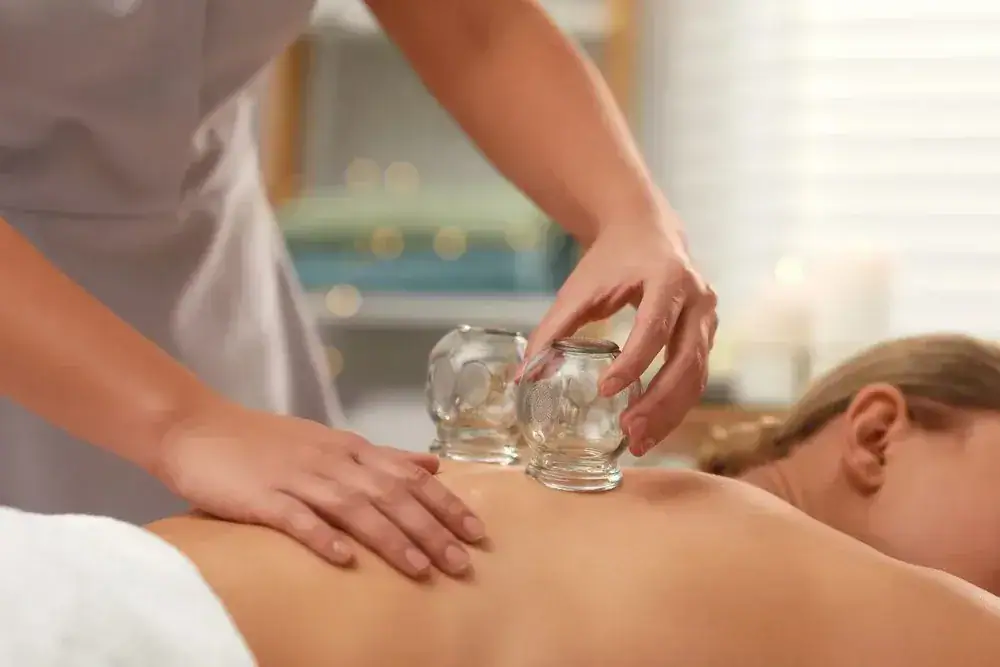
Your therapist starts with an assessment. Where’s the pain? What makes it worse? How long have you been dealing with it? This isn’t a standard protocol, it’s based on what your body actually needs.
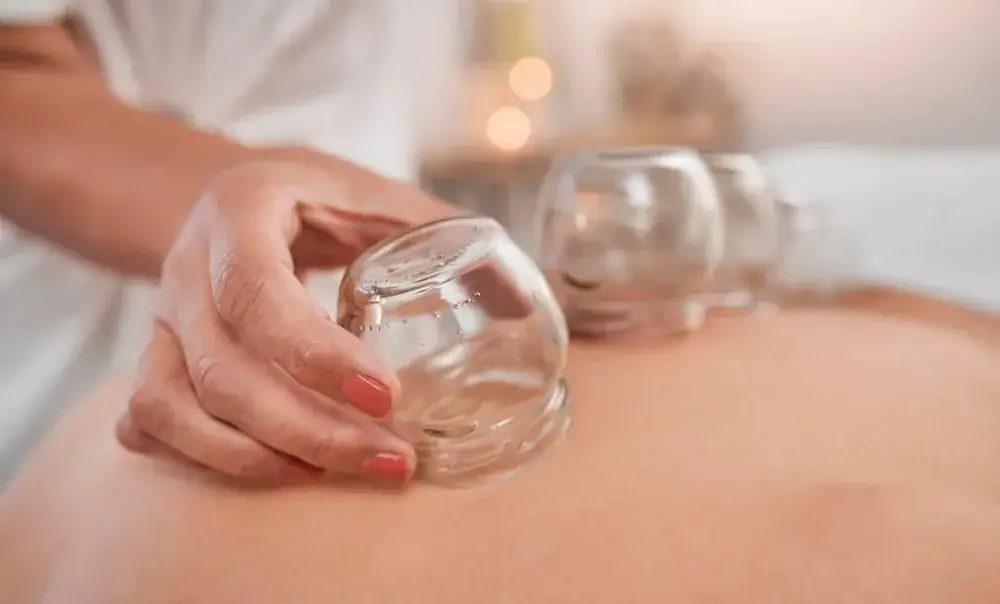
Once we identify the areas causing problems, we apply the cups using suction. Dry cupping pulls tissue upward, increasing blood flow and encouraging your muscles to release. The cups stay in place for 5 to 15 minutes depending on the treatment area and your tolerance.
You’ll feel the suction, but it shouldn’t hurt. Most people compare it to a deep tissue massage, just in reverse. Some areas might be more sensitive if there’s a lot of tension or trigger points present.
After the cups come off, your therapist may incorporate movement, stretching, or manual therapy to maximize the benefits. The goal is to restore normal function, not just make you feel good for an hour. You might see some circular marks where the cups were placed. They’re not bruises, just increased blood flow to the surface, and they fade within a few days.
Ready to get started?
Cupping therapy at our practice isn’t a standalone service you book online and hope for the best. It’s integrated into your physical therapy treatment plan, which means it’s being used strategically to address specific issues.
You’re getting licensed physical therapists who understand musculoskeletal conditions, not just someone who took a weekend certification course. That matters when you’re dealing with chronic pain, post-injury recovery, or nerve-related issues that need more than surface-level treatment.
In Baldwin and across Long Island, we’re seeing more people turn to cupping because they’re tired of relying on medication or they’ve hit a plateau with traditional therapy alone. Cupping helps break through that stagnation by improving circulation, releasing fascial adhesions, and calming down overactive muscle tissue.
We use it for neck and back pain, shoulder tension, IT band tightness, and even headaches caused by muscle strain. It’s particularly effective for people who sit all day or do repetitive physical work. The treatment doesn’t just address symptoms, it helps your body reset the patterns that keep causing the problem in the first place.
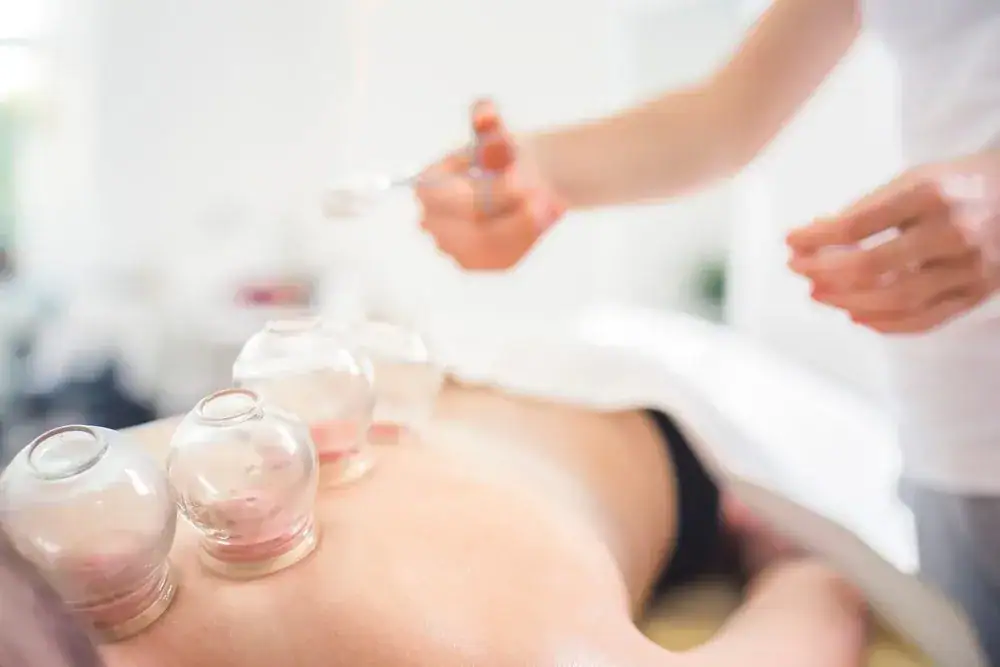
Yes, but it depends on what’s causing the pain. If your back pain is from muscle tension, trigger points, or poor circulation in the soft tissue, cupping can make a real difference. The suction increases blood flow to areas that have been tight or restricted for a long time, which helps those muscles finally relax and heal.
A lot of people with chronic back pain have tried everything: chiropractic, massage, stretching, strengthening exercises. Cupping works well when combined with those treatments because it addresses the tissue quality itself. You’re not just moving a tight muscle, you’re improving the environment that muscle is trying to function in.
That said, if your pain is from a herniated disc, spinal stenosis, or nerve compression, cupping alone won’t fix it. But it can still help manage the muscle guarding and tension that develops around those issues. Your therapist will assess what’s going on and let you know if cupping is appropriate for your specific condition.
Massage pushes tissue down and works from the outside in. Cupping pulls tissue up and works from the inside out. That difference matters when you’re dealing with deep tension or fascial restrictions that don’t respond well to traditional hands-on pressure.
Some people can’t tolerate deep tissue massage because it’s too painful or their muscles just tense up more when pressed. Cupping offers a different stimulus that often feels less invasive but still creates significant change in the tissue. The suction also reaches layers that are hard to access with hands alone.
Cupping is particularly effective for trigger points. Instead of pressing directly on a painful knot, the suction draws blood flow to the area and encourages the trigger point to release on its own. Many patients find this approach more comfortable and just as effective, sometimes more so, than traditional trigger point therapy.
You’ll likely see circular marks where the cups were placed, but they’re not bruises in the traditional sense. Bruises happen when blood vessels break and leak into surrounding tissue. Cupping marks are caused by increased blood flow being drawn to the surface, which is actually part of the therapeutic effect.
The marks can range from light pink to dark purple depending on how much stagnation or tension was in that area. More color usually means more restriction was present. They typically fade within three to seven days and aren’t painful to the touch.
If you’re concerned about visible marks for work or social reasons, let your therapist know. They can adjust the suction intensity or place cups in areas that are easier to cover with clothing. But for most people, the marks aren’t a problem, and they’re a good indicator that the treatment is working.
Most people notice some improvement after the first session, especially if the issue is primarily muscular tension. But lasting change usually takes a series of treatments. For chronic conditions, you’re looking at 4 to 8 sessions to see significant, sustained improvement.
The frequency depends on what we’re treating. Acute muscle strain might only need a few sessions over two weeks. Chronic neck pain from years of desk work might need weekly sessions for a month or two, then maintenance visits every few weeks after that.
Your therapist will give you a realistic timeline based on your specific condition and how your body responds to the first couple of treatments. Some people progress faster than others. The key is consistency. One session every few months won’t create lasting change if you’re dealing with a chronic issue.
Absolutely. Athletes use cupping to speed up recovery, reduce muscle soreness, and improve range of motion before competition. It’s particularly effective for overuse injuries like runner’s knee, tennis elbow, or rotator cuff strain where the tissue is inflamed and restricted.
Cupping increases circulation to injured areas, which brings in oxygen and nutrients needed for healing while flushing out metabolic waste that builds up during intense training. This can significantly reduce recovery time between workouts or games.
We also use it preventatively with athletes who are prone to tightness in specific areas. Regular cupping sessions help maintain tissue quality and catch problems before they turn into injuries that sideline you for weeks. If you’re training hard or competing regularly, cupping can be a valuable tool in your overall recovery strategy.
It depends on your plan and how the service is billed. When cupping is performed by a licensed physical therapist as part of your PT treatment plan, it’s often covered under your physical therapy benefits. It’s not billed separately as “cupping,” it’s included in the overall treatment session.
Most insurance plans in New York cover physical therapy with a copay or after your deductible is met. Since we’re a physical therapy practice and cupping is integrated into your care plan, you’re typically using your existing PT benefits, not paying out of pocket for an alternative therapy service.
The best approach is to contact your insurance provider before your first visit and ask about your physical therapy coverage. Our office can also verify your benefits and let you know what to expect for costs. Don’t assume it’s not covered just because it’s cupping. When it’s part of licensed PT care, the coverage rules are different than if you went to a spa or wellness center.
Other Services we provide in Baldwin